**** **** Uncategorized Articles - Page 3 of 23 - POM Plumbing Blog

How to Remove and Replace Old Plumbing Fixtures Safely

Replacing plumbing fixtures can save you money and improve your home’s plumbing system, but only if done correctly. Mistakes like overtightening parts, skipping safety precautions, or ignoring local codes can lead to leaks, flooding, or damage. Here’s what you need to know:

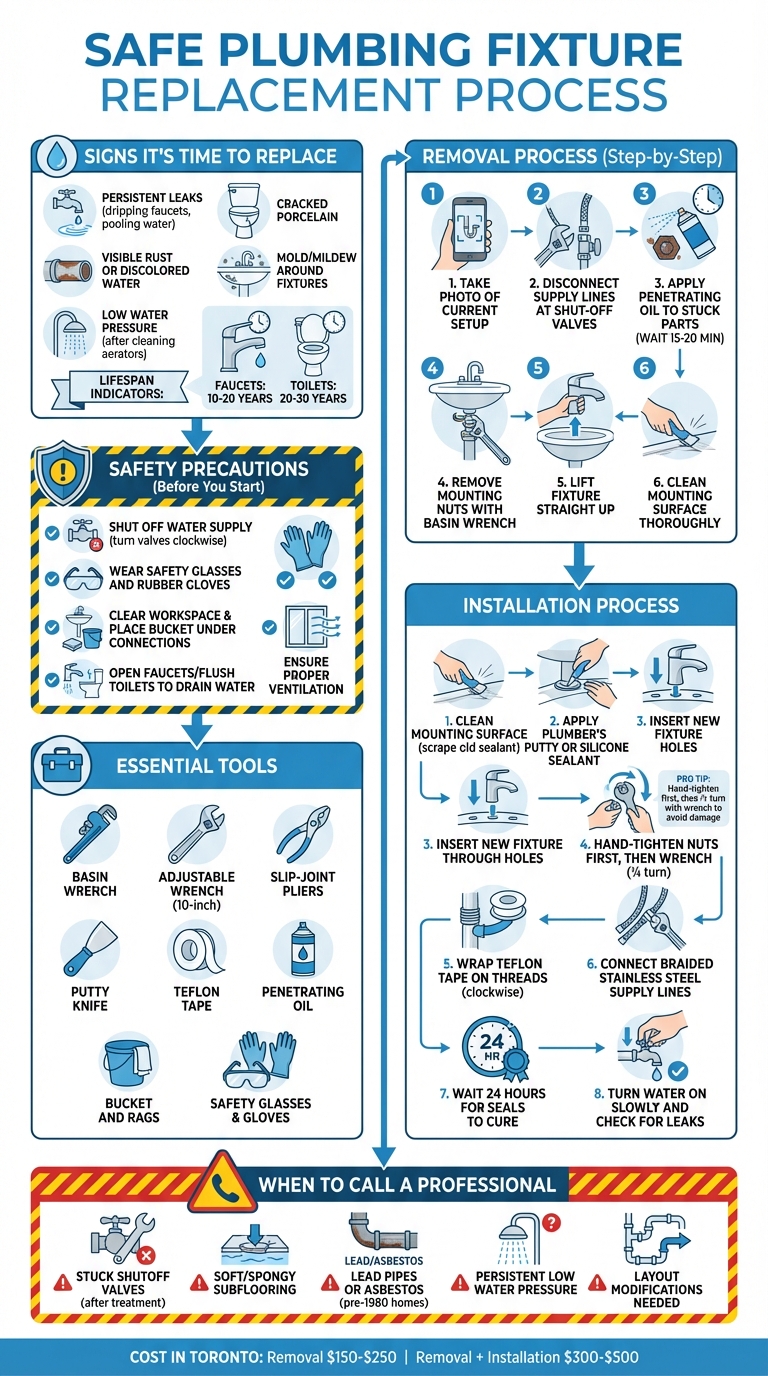
  • When to Replace Fixtures: Persistent common household plumbing issues like leaks, rust, or low water pressure, or fixtures past their lifespan (faucets: 10–20 years; toilets: 20–30 years) signal it’s time for a change.
  • Safety First: Shut off water, wear gloves and safety glasses, and prepare your workspace to avoid accidents. Older homes may require extra caution due to materials like lead or asbestos.
  • Tools You’ll Need: Basin wrench, adjustable wrench, pliers, putty knife, Teflon tape, and cleaning supplies are must-haves.
  • DIY Steps: Drain water, take photos of setups, and carefully remove old fixtures. Use proper techniques and avoid forcing corroded parts.
  • Installation Tips: Clean surfaces thoroughly, use new seals, and follow Canadian plumbing codes. Avoid overtightening to prevent damage.
  • When to Call a Pro: For stuck valves, damaged subfloors, or outdated materials like lead pipes, professional help is recommended.

Regular maintenance like cleaning with mild soap, checking for leaks, and flushing lines can extend the life of your fixtures. If unsure about a project, hiring a licensed plumber can prevent costly mistakes.

Step-by-Step Guide to Safely Removing and Replacing Plumbing Fixtures

Step-by-Step Guide to Safely Removing and Replacing Plumbing Fixtures

How to Replace a Bathroom Faucet and Drain

When Should Plumbing Fixtures Be Replaced?

Replacing plumbing fixtures early can save you from expensive repairs and skyrocketing bills. For instance, persistent leaks – like a faucet that won’t stop dripping or water pooling around the base of a toilet – often mean the internal components are failing. While a single drip might seem trivial, these issues usually indicate that repairs alone won’t cut it anymore.

Another red flag is visible rust or discoloured water, which points to internal corrosion and deterioration.

David Topelko from Homewise Plumbing explains, “Older plumbing fixtures simply weren’t designed with conservation in mind”.

If your fixtures are nearing the end of their lifespan and showing signs of inefficiency, replacing them is often more economical.

Structural problems also demand immediate attention. For example, cracked porcelain in toilet tanks or bowls can’t be repaired and poses a serious flooding risk. Similarly, if you notice mould or mildew around fixtures despite regular cleaning, it’s likely caused by a hidden leak creating constant moisture. You can also perform a quick “rocking test” on your toilet – if it moves, the wax seal or flange might be damaged.

If you’re dealing with low water pressure that persists even after cleaning aerators or showerheads, it’s often due to mineral deposits clogging the internal passages beyond repair. As a general guideline, faucets usually last 10 to 20 years, while well-made toilets can serve you for 20 to 30 years. If your fixtures are reaching or surpassing these timelines and showing any of these issues, it’s smarter to replace them rather than pour money into constant repairs. Spotting these warning signs early can help you decide whether to tackle a DIY replacement or call in a professional. Plus, replacing fixtures at the right time can extend the life of your plumbing system overall.

Safety Precautions Before You Start

Before diving into any plumbing work, the first step is to shut off the water supply to avoid unexpected flooding. For faucets, look for the hot and cold valves inside the cabinet beneath the sink. For toilets, locate the valve on the supply line that connects the wall or floor to the bottom left of the tank. Turn these valves clockwise until they stop. If they’re stuck, don’t force them – apply penetrating oil and let it sit for 15 to 20 minutes. If the local valves are missing or leaking, you’ll need to turn off the water at the main shut-off valve, often found in the basement, garage, or near the water metre. Once the valves are closed, open faucets or flush toilets to drain any remaining water and reduce the pressure in the pipes.

Wear proper protective gear to ensure your safety. Safety glasses or goggles are a must, as older plumbing systems often release rust and debris during disassembly. Rubber gloves are essential when handling toilet components or old wax rings. If you’ll be working on your knees, such as when removing a toilet, knee pads can prevent discomfort and protect your joints. This gear not only keeps you safe but also helps maintain a cleaner and safer work environment for the installation process.

David Rowe, a Master Plumber, advises: “If you are working with a torch be completely aware of what surrounds the area you are working on, and if you are working alone with no others anywhere near you, have a fire extinguisher at hand”.

Clear and prepare your workspace to avoid accidents and damage. Empty out cabinets under sinks or move items around the fixture to give yourself enough room to work. Place a bucket or tray under P-traps and supply lines before disconnecting them to catch any leftover water. Keep old towels or rags nearby for quick cleanups, and cover open drains with a cloth or plug to prevent small parts, like screws or nuts, from falling in. If you’re working near a kitchen sink with a garbage disposal, turn off the power at the circuit breaker. Toilets, which can weigh anywhere from 70 to 120 pounds, can damage flooring, so place cardboard or old blankets under them for protection.

Ensure proper ventilation by opening windows or using fans, especially when working with adhesives or solvents. Block open drain pipes with a rag to stop harmful sewer gases, such as hydrogen sulphide, from entering your workspace. Use a flashlight or work light to brighten dark areas like cabinets, reducing the risk of tool slips or accidental injuries. In older Toronto homes built before 1960, be extra cautious – shut-off valves may be corroded and could break when operated, and you might encounter lead pipes or asbestos-containing materials, which should not be disturbed. Following these precautions will set you up for a safer and smoother plumbing project.

Tools and Materials You’ll Need

Having the right tools on hand can make your project smoother and help avoid damage to your fixtures. To stay organized, group your supplies into three categories: removal tools, installation materials, and cleaning supplies. Most of these items can be found at your local hardware store.

For removal, you’ll need a basin wrench, a 10-inch (250 mm) adjustable wrench, slip-joint (or tongue-and-groove) pliers, a flathead screwdriver, and a utility knife to cut through caulk. For stubborn, corroded bolts, a mini hacksaw comes in handy. If you’re dealing with rusted nuts, apply some penetrating oil and give it about 15 minutes to work its magic before attempting removal. When removing a toilet, a 5-gallon (19 L) bucket and a large sponge are essential for draining both the bowl and tank completely.

Once the old fixture is out, shift your attention to installation supplies. Use Teflon tape to seal threaded joints and plumber’s putty or silicone caulk to create watertight seals. Opt for braided stainless steel supply lines – they’re more durable than plastic alternatives. For toilet installations, you’ll need a new wax ring and a set of closet bolts. Check that your new fixture aligns with your sink’s mounting holes, which typically range from 1 to 4 holes. Also, confirm that your supply lines are compatible with your shutoff valves.

Finally, gather cleaning and safety supplies to wrap things up. A calcium, lime, and rust remover (like CLR or Rust-Oleum) is great for tackling mineral deposits and corrosion. A putty knife will help scrape away old sealant, while wire brushes are ideal for cleaning rust from threads. Keep plenty of rags on hand, along with rubber gloves, safety glasses, and a flashlight to help you work safely and efficiently.

“Once you’ve removed the faucet, make sure to clean any leftover sealant or other gunk.” – Moen

How to Remove Old Plumbing Fixtures Safely

Before diving into fixture removal, make sure the water supply is off. To relieve any pressure in the lines, open faucets or flush the toilet. Place a bucket under the supply line connections to catch any residual water, and keep rags handy to clean up spills. If you’re working near a garbage disposal, disconnect its power at the breaker to avoid accidental activation.

Taking a quick photo of the current setup with your smartphone can save you a lot of trouble when it’s time to reassemble. Also, block the drain with tape to prevent small parts from falling into the pipes.

“The key is being able to get to the fixture and secure both sides of the joint so that they are able to come apart and not damage any pipes, especially plumbing that is inside the wall.” – Pipe Break

These steps will help create a safe and manageable workspace for removing plumbing fixtures.

Removing Faucets

Once the water supply is off and the area is prepped, start by disconnecting the hot and cold supply lines at the shut-off valves using an adjustable wrench. This is often easier than disconnecting them directly at the faucet. If the lift rod is attached to a pop-up drain assembly, slide off the spring clip to release it. Use a basin wrench to access and unscrew the mounting nuts behind the sink. After the nuts are removed, lift the faucet straight up. If it’s stuck, carefully pry the base with a plastic putty knife to avoid damaging the surface.

For rusted or mineral-encrusted nuts, apply penetrating oil like PB Blaster or Pipe Break. Let it soak for 15–20 minutes (or overnight for tougher cases). Use a wire brush and CLR to clean off loosened rust or deposits. If the nut is still stuck, try tightening it slightly first – this can help break the rust bond, making it easier to loosen. Always use two tools: one to turn the stuck part and another to hold the pipe steady. This prevents putting stress on pipes inside the wall, which could lead to leaks or damage.

Removing Toilets

Start by shutting off the water supply. Flush the toilet to empty the tank and bowl, then use a sponge and bucket to remove any leftover water. Disconnect the supply tube from the shut-off valve with an adjustable wrench. Next, unscrew the tank bolts to separate the tank from the bowl. At the base of the toilet, remove the floor bolt nuts. If they’re rusted, apply penetrating oil and wait 15 minutes. If they remain stuck, carefully cut them with a mini hacksaw to avoid cracking the porcelain.

Rock the toilet bowl gently side to side to break the wax ring seal, then lift it straight up and place it on old towels or cardboard. Use a putty knife to scrape away the old wax ring from the floor flange, and dispose of it in a plastic bag. Clean the flange thoroughly to ensure a proper seal when installing the new toilet.

Removing Showerheads and Valves

Shower components can be removed using similar techniques. For showerheads, apply penetrating oil to the connection and let it soak for 15–20 minutes. Use a strap wrench or wrap a rag around the shower arm to protect the finish, then turn counterclockwise to unscrew. If it’s still stuck, gently tap it with a hammer to help the oil penetrate deeper. For particularly stubborn connections, apply controlled heat with a heat gun or hair dryer to expand the metal and break the corrosion.

“A little patience goes a long way. Still resisting? Heat the fitting slightly, being cautious of the surrounding materials.” – Superior Plumbing

To remove valve trim rings and cartridges, start by taking off any decorative caps or screws. If screws are stuck, apply penetrating oil and use a box-end wrench to avoid rounding the edges. For hardware that’s completely seized, carefully cut it with a hacksaw. Avoid using high heat on plastic (PVC/CPVC) components, as they can melt and release harmful fumes.

How to Install New Plumbing Fixtures Correctly

With the old fixtures safely out of the way, it’s time to focus on installing your new plumbing fixtures the right way. Start by thoroughly cleaning the mounting surface to remove any residue left behind. A clean surface is essential for creating a watertight seal. Once prepped, you can move on to installing your new fixtures, beginning with faucets.

When installing faucets, it’s important to follow Canadian plumbing standards. Start by applying a bead of plumber’s putty or silicone sealant to the base of the faucet, unless a gasket is provided. Insert the faucet through the sink holes, then secure it underneath with washers and mounting nuts. Hand-tighten the nuts first to allow for any needed adjustments, then use a basin wrench to finish tightening – just be careful not to overtighten, as this could cause damage. Wrap Teflon tape around the faucet shank threads, and connect flexible, braided stainless steel supply lines to the hot and cold shanks. Attach the other ends of the supply lines to the shut-off valves, tightening them first by hand and then with a wrench.

“You must wait at least 24 hours to ensure all seals have cured before you turn the water supply on; otherwise, you could create leaks.” – Wayfair.ca

Once the faucet is securely in place, you can move on to installing your toilet. Again, make sure you’re following Canadian plumbing standards. Start by placing a new wax ring on the floor flange – reuse of an old wax ring is a no-go. Carefully lower the toilet bowl straight down onto the flange, ensuring the bolts align with the holes. Press down firmly to seat the wax ring, and alternately hand-tighten the floor bolt nuts until they’re snug. Avoid overtightening, as this can crack the porcelain. In cities like Toronto, local building codes often recommend caulking the base of the toilet where it meets the floor to prevent water seepage.

Once everything is in place, remove the faucet aerator and slowly turn the water supply back on. Let the water run for about 30 seconds to flush out any debris, and check all connections for leaks. Make sure the shut-off valves are easily accessible near each fixture. If you’re upgrading to a high-efficiency toilet, you’ll meet current conservation standards while also saving water.

Common Mistakes to Avoid

When installing or maintaining fixtures, a few common DIY mistakes can lead to leaks, damage, or expensive repairs. One frequent error is overtightening connections. Using too much force can crack porcelain, strip threads, or damage seals. A good rule of thumb: hand-tighten connections first, then give them just a quarter-turn with a wrench.

“Installing a new sink and faucet is an impactful way to update your kitchen or bathroom without breaking the bank”

Another misstep is failing to clean the mounting surface. Residue or grime can prevent a watertight seal. Before installing new fixtures, scrape away any old material with a putty knife and clean the area with rubbing alcohol. Additionally, forgetting to flush the lines after installation can clog your new aerator with debris or sediment. To avoid this, run the water for about 30 seconds without the aerator attached to clear out the system.

Using the wrong sealant is another issue to watch for. For example, plumber’s tape shouldn’t be used on compression fittings. When using tape, always wrap it clockwise to prevent it from unravelling during tightening. Reusing old supply lines is also a bad idea, as it increases the risk of leaks or failure.

Lastly, forcing corroded or stuck parts can lead to broken pipes or sink damage. If mounting nuts are stubborn, apply penetrating oil and wait a bit. Then, use two wrenches – one to hold the pipe steady and the other to turn the nut – to prevent kinking or breaking the copper inlet. If you encounter persistent issues despite your best efforts, it may be time to call in a professional.

When to Call a Professional Plumber

Sometimes, tackling plumbing issues on your own just isn’t enough. When DIY fixes fail or the risks of further damage increase, it’s time to bring in a professional. For example, trying to force corroded parts can lead to serious problems like flooding. If a shutoff valve remains stuck even after treatment, stop immediately. A frozen or corroded valve that won’t stop water flow needs to be professionally replaced with a quarter-turn ball valve. Forcing it could snap the valve stem and result in significant water damage to your home.

Structural issues are another clear sign to call an expert. If you find soft or spongy subflooring after removing a toilet, it’s a sign of serious water damage that must be repaired before installing a new fixture. Older homes, especially those built before 1980 in areas like The Beaches, High Park, and Riverdale in Toronto, often contain outdated materials like cast iron flanges, lead pipes, or even asbestos. These materials can pose safety risks and require professional handling.

“If you are having trouble with even the simplest of plumbing fixtures… don’t hesitate to call a professional plumber for repair or maintenance services instead of attempting a DIY repair that could just further the damage.” – Brothers Plumbing

If you’re modifying your sink, countertop, or plumbing layout, professional expertise is essential. Licensed plumbers ensure proper integration of drain and vent systems, handle permits, and comply with Canadian building codes, including specific local requirements like caulking around toilet bases. In Toronto, professional toilet removal typically costs between $150–$250, while removal and installation combined ranges from $300–$500. Emergency same-day service can add an extra $100–$150 to the bill.

Persistent plumbing issues like low water pressure, discoloured water, or mould are often signs of deeper problems that require professional diagnosis. Surface-level fixes won’t address the root causes. Companies like POM Plumbing Service, with over 20 years of experience, have the tools and expertise that most homeowners simply don’t have. A professional consultation can help you avoid turning small problems into costly disasters. Regular maintenance is key to preventing these emergencies.

Preventive Tips for Long-Lasting Fixtures

Keeping your fixtures in good shape doesn’t have to be complicated. A little regular care goes a long way. Start by cleaning them weekly with a soft cloth and mild soap to avoid scratches and wear over time. Skip abrasive cleaners – they can permanently damage surfaces. For hard water buildup or mineral deposits, soak showerheads or faucet aerators in a mix of equal parts water and white vinegar. This gentle solution clears scale without using harsh chemicals.

Regular inspections are just as important as cleaning. Check connections and moving parts twice a year to catch issues early. Turn shut-off valves under sinks and behind appliances on and off occasionally to prevent them from seizing due to corrosion. Toilet flappers should also be checked every few years since faulty ones can cause those annoying “silent leaks” that waste water without making noise. Watch for signs like discolouration, rust, or moisture on exposed pipes – these can indicate corrosion or poor seals. After any new installation or repair, monitor connections for leaks over the next 48 to 72 hours to address problems before they escalate.

Flush your system regularly to keep water flowing smoothly. Remove the aerator and run hot and cold water for at least a minute to clear out sediment and debris. If you notice low water pressure, cleaning the aerator can often solve the problem by removing mineral buildup. It’s also smart to keep Teflon tape and silicone sealant handy for refreshing seals if you notice minor leaks at joints.

When making adjustments or repairs, protect decorative finishes to avoid unnecessary damage. Use a strap wrench or wrap fixtures in a cloth before using pliers, especially on chrome or nickel surfaces, to prevent scratches. Adding a bead of clear silicone caulk around sink basins and backsplashes can stop water seepage. Just be sure to wipe away any excess sealant immediately to avoid unsightly buildup or mould growth.

Tackle corrosion early to keep it from becoming a bigger issue. A wire brush can remove rust or mineral deposits from hardware and mounting surfaces. For stuck parts, try applying penetrating oil and letting it sit for 30 minutes or even overnight. If you spot mould near sinks or tubs, don’t just clean the surface – find the source of the moisture, which is often a hidden plumbing leak. Following these steps consistently will help your fixtures stay reliable and look great for years to come.

Conclusion

To ensure safety during plumbing work, always start by shutting off the water supply – either at the local shutoff valves or the main line – and release any remaining pressure by opening the faucets. If you’re working near a garbage disposal, disconnect its power at the breaker for added safety. Essential tools like a basin wrench, adjustable wrench, and a bucket will make straightforward replacements much easier.

Safety gear is equally important. Wear rubber gloves and safety glasses to protect against contaminants and flying debris. If you encounter issues such as soft or damaged subflooring, a cracked or broken floor flange, or suspect the presence of lead or asbestos in older pipes (common in homes built before 1980), stop immediately and consult a professional. Similarly, call in experts for challenges like frozen shutoff valves or projects that involve new supply lines, which need to meet local building codes.

When using silicone caulk or plumber’s putty, allow it to cure for 24 hours before turning the water back on. Start by hand-tightening connections, then give them an additional quarter to half turn with a wrench. Monitor for leaks over the next couple of days to ensure everything is secure.

For ongoing maintenance, clean fixtures weekly with a soft cloth and mild soap, and soak aerators and showerheads in a water-and-vinegar solution to remove mineral deposits. Periodically inspect connections and operate shutoff valves to prevent them from seizing. These habits not only extend the life of your fixtures but also help you spot potential issues early.

While many top DIY plumbing fixes are manageable on your own, it’s important to recognize when a job is beyond DIY capabilities. If you’re ever uncertain or face complications that go beyond basic repairs, remember that POM Plumbing Service Company has over 20 years of experience serving Toronto and the GTA with licensed and insured professionals. By prioritizing safety, precision, and regular maintenance, you can ensure a successful and long-lasting plumbing installation.

FAQs

Do I need a permit to replace a fixture in Toronto?

In Toronto, straightforward upgrades like replacing a faucet or showerhead typically don’t require a permit. However, if you’re planning to modify plumbing connections, move fixtures, or add new lines, you might need one.

To stay on the right side of the rules, it’s a good idea to contact the Toronto Building Department or speak with a licensed plumber. This can help you follow local regulations and avoid fines or issues when selling your property down the line.

How can I tell if my shutoff valve will break if I turn it?

Inspect the valve closely for signs of corrosion, rust, or mineral buildup, as these can compromise its strength. If the valve feels stiff, difficult to turn, or emits odd noises, it might have internal damage and could be on the verge of failure. Avoid forcing a valve that’s stuck or rusted – doing so could lead to leaks or further harm. If the valve shows noticeable wear or damage, replacing it is a safer option to prevent future problems.

What should I do if a fitting won’t loosen?

If a fitting refuses to budge, try applying some penetrating oil and give it about 15 minutes to work its magic. After that, grab a basin wrench or water-pump pliers to help loosen and remove the nuts more easily. When dealing with particularly stubborn fittings, remember that patience and using the right tools are essential to prevent causing any damage.

Related Blog Posts

Why It’s Important to Have Your Water Quality Tested

Did you know your drinking water could contain harmful contaminants like lead, arsenic, or bacteria – even if it looks clean? Regular water testing is the only way to ensure your water is safe for consumption and won’t damage your plumbing system.

Here’s what you need to know:

  • Invisible Risks: Contaminants such as E. coli, nitrates, or heavy metals often have no taste, smell, or colour.
  • Health Hazards: Exposure to substances like lead, arsenic, or PFAS can lead to serious health issues, including cancer and developmental problems in children.
  • Plumbing Damage: Hard water and corrosion can cause pipe blockages, leaks, and reduce the lifespan of appliances.
  • Testing Frequency: Health Canada recommends testing private wells for bacteria twice a year and checking for chemicals every two years.
  • DIY vs. Professional Testing: DIY kits are affordable but limited, while professional testing offers precise, certified results that can detect trace contaminants.

If you depend on private wells or live in areas like the GTA, where chloride levels from road salt are a concern, testing is even more critical. A professional service ensures accurate results, identifies risks, and helps maintain both your health and plumbing system.

The Importance of Water Testing & Why There is No One-Size-Fits-All Water Filter

What Is Water Quality Testing?

Water quality testing involves monitoring and analysing drinking water to ensure it’s free from harmful microbial or chemical contaminants that exceed the limits set by the Guidelines for Canadian Drinking Water Quality. Think of it as a health check for your water, identifying hidden dangers that aren’t visible to the naked eye. This process looks for microbial contaminants like E. coli, total coliforms, viruses, and protozoa, as well as chemical substances such as lead, arsenic, copper, manganese, nitrates, and uranium. It also measures operational factors like pH levels, iron, water hardness, and total dissolved solids (TDS) to confirm the water meets national safety standards. These tests are essential because they catch problems that a simple visual inspection could never detect.

POM Plumbing Service Company provides highly accurate testing services for both residential and commercial properties in Toronto and the GTA. Their licensed experts use certified collection kits to gather and label samples, which are stored at 2–8 °C to maintain integrity. Samples must reach the lab within 48 hours, as anything above 25 °C is rejected to ensure reliability. The company employs the Membrane Filtration technique with DC Agar to detect and count Total Coliforms and E. coli, achieving 93% sensitivity and 91% specificity in their accredited lab analyses.

In Canada, municipal water systems are regulated at the provincial level. However, private well owners are responsible for independently testing their water. By following strict testing protocols, even the most subtle threats can be identified before they pose health risks or cause damage to plumbing systems.

Common Water Contaminants Found in Homes

Water in Canadian homes can carry a variety of contaminants, often introduced through natural sources, aging infrastructure, or human activities. Microbial contaminants like E. coli, total coliforms, viruses, and protozoa can enter water supplies through failing septic systems, animal waste, or surface runoff into shallow wells. These bacteria are signs of fecal contamination and can lead to gastrointestinal illnesses.

Heavy metals, including lead, arsenic, uranium, and copper, may contaminate water through corroded pipes, natural geological leaching, or corrosive water conditions. In urban areas like the GTA, older water distribution lines increase the risk of lead exposure. Meanwhile, rural regions often face higher levels of nitrates and pesticides due to agricultural activity.

Chemical contaminants are another concern. Nitrates and nitrites, often from agricultural runoff, fertilizers, manure, or sewage, can compromise water quality. PFAS, also known as “forever chemicals”, originate from industrial products, firefighting foams, and landfills. These substances persist in the environment, moving through soil and water. Health Canada has established a precautionary guideline of 30 ng/L for a combination of 25 specific PFAS in drinking water. Additionally, municipal water treatment can create chlorine byproducts, like trihalomethanes, when disinfectants react with organic matter.

Aesthetic factors can affect water quality without posing direct health risks. For instance, water hardness is caused by naturally occurring calcium and magnesium from sedimentary rocks such as limestone and dolomite. Chloride levels, often rising due to road salt use, can also impact water quality. Another common issue is hydrogen sulphide, which forms when organic matter decomposes or when sulphate-reducing bacteria are active, giving water a “rotten egg” odour.

“Many contaminants won’t affect the smell, taste or colour of your drinking water. Even if your water seems fine, you can’t know for sure without testing.” – Health Canada

Recognizing these contaminants is the first step towards evaluating the health risks they may pose.

Health Risks of Poor Water Quality

Contaminated water can lead to both immediate and long-term health problems, depending on the type of contaminants present. Microbial contaminants like E. coli, viruses, and protozoa often cause acute issues such as nausea, vomiting, and diarrhoea. In some cases, they can even lead to infections affecting the respiratory system or central nervous system. On the other hand, chemical contaminants may take years to show their effects, though exposure to certain chemicals – like nitrates or high levels of copper – can cause illness even after a short period.

Certain groups are more vulnerable to these contaminants. Infants, children, seniors, pregnant individuals, and those with weakened immune systems face higher risks. Lead is particularly harmful to developing brains and can pass from a pregnant individual to their fetus or through breast milk. This exposure can result in reduced cognitive abilities and behavioural challenges in children. Nitrates pose a severe risk to bottle-fed infants by causing blue baby syndrome (methaemoglobinaemia), while manganese in formula-fed infants can impair memory, attention, and motor skills.

“Drinking water that contains lead, even for a short time, can be a health risk. Most at risk, because of their developing brains, are fetuses, infants, and children.” – Health Canada

Long-term exposure to chemical contaminants can have grave consequences. Arsenic, for instance, is associated with a higher risk of lung, bladder, liver, and skin cancers, as well as vascular and neurological damage. Prolonged exposure to uranium can harm the kidneys and bones, while copper can cause short-term gastrointestinal issues and, over time, lead to liver and kidney damage. Substances like PFAS (per- and polyfluoroalkyl substances) are linked to adverse effects on the liver, thyroid, kidneys, immune system, and metabolism. To address these risks, Health Canada has established Maximum Acceptable Concentrations for these contaminants in its Guidelines for Canadian Drinking Water Quality.

Private well owners, who supply water to about 4 million Canadians, shoulder the responsibility of ensuring their water is safe. Health Canada recommends testing for microbial contaminants at least twice a year and checking general water quality every two years. Since many harmful contaminants don’t alter the water’s taste, smell, or appearance, regular testing through accredited laboratories or local public health units is the only reliable way to confirm water safety.

Next, we’ll look at how these health risks can impact your plumbing system.

How Water Quality Affects Your Plumbing System

Poor water quality doesn’t just pose health risks – it can also wreak havoc on your plumbing system. When water interacts with metal pipes, it triggers an electrochemical reaction that causes corrosion. This process can release harmful metals like lead and copper into your water or create scale deposits that clog pipes. Over time, corrosion weakens pipe walls, making them prone to small leaks, especially in copper pipes.

Hard water, rich in calcium and magnesium, adds another layer of trouble. It leaves behind limescale inside pipes – whether they’re metal, plastic, or cement. This buildup narrows the pipe’s diameter, restricting water flow. If left unchecked, it can lead to complete blockages and reduce the efficiency and lifespan of appliances.

Homes with Kitec piping, a common choice in Canada between 1995 and 2007, face unique challenges. These systems are particularly vulnerable to dezincification, a process where zinc leaches out of brass fittings due to exposure to moisture and oxygen. This leads to internal blockages and, unlike gradual leaks in standard pipes, Kitec pipes are prone to sudden bursts, which can cause extensive flooding and water damage.

“Corrosion deposits in pipes also provide a major reservoir for a broad variety of contaminants, some of which are a health concern.” – Health Canada

If your home was built or renovated between 1995 and 2007 – or if you’ve noticed issues like reduced water pressure or discoloured water – professional inspection and testing are crucial. Companies like POM Plumbing Service Company offer Kitec piping replacement services and maintenance plans that include regular inspections and system flushing to prevent scale buildup. Routine water quality testing can also detect corrosive conditions or hard water problems early, helping to safeguard your plumbing system and your investment.

These plumbing issues are clear indicators that it might be time to test your water quality.

Signs Your Water May Need Testing

The appearance of your water often provides the first hint that something might be off. If you notice red, orange, or brown stains, it could mean there’s a high iron content. Black stains often point to manganese. Meanwhile, chalky residues on faucets and appliances are a telltale sign of hard water’s threat to your plumbing.

Changes in taste, smell, or clarity are just as critical. A salty flavour might indicate elevated sodium levels, while a metallic taste could suggest copper, zinc, or iron contamination. If your water appears cloudy or suddenly becomes murky, it might signal bacterial contamination or sediment. However, some of the most harmful contaminants – like arsenic, lead, and E. coli – are completely odourless, colourless, and tasteless. Often, subtle sensory changes are the first indicators that something’s wrong.

As Halton Region explains:

“Contaminated water may be odourless, colourless, and tasteless. Testing your well water is the best way to ensure the safety of your well water supply.”

Unexplained health symptoms, such as nausea, vomiting, or diarrhea, may also point to microbial contamination in your water. Environmental factors like heavy rains, flooding, droughts, or nearby construction can disrupt groundwater quality, making immediate testing a priority. These risks highlight the importance of regular water testing to safeguard your home and health.

If you notice any of these warning signs, it’s crucial to act quickly. Scheduling a professional inspection can help identify whether the problem lies in the water source or your plumbing system. POM Plumbing Service Company can assess and address these issues, ensuring your water remains safe and your infrastructure stays intact. Regular testing and upkeep can catch problems early, preventing costly repairs and health concerns down the line.

How Often Should Water Be Tested?

Once you’re aware of potential warning signs, the next step in managing water safety is understanding how often to test. The frequency largely depends on your water source. If you’re connected to a municipal system, your municipality handles monitoring and treatment based on provincial standards. But for private well owners, the responsibility for water safety falls entirely on you.

Health Canada and provincial guidelines recommend testing private wells for microbial contaminants twice a year – ideally in early spring and fall, when surface contamination risks are highest. Chemical testing, covering substances like arsenic, lead, nitrates, and uranium, along with general water quality checks (e.g., pH, hard water solutions, iron), should be done every two years.

For those using surface water sources like lakes or rivers, bacterial testing is also advised every six months, while chemical testing should occur annually.

Certain situations demand immediate testing. Events like heavy rainfall, floods, droughts, wildfires, or any maintenance work can compromise water quality. If you notice unusual changes in taste, smell, or colour, testing should be a priority. This is especially important for households with infants, seniors, pregnant individuals, or immunocompromised members.

To put this into perspective, about four million Canadians rely on private wells for drinking water, and in Nova Scotia alone, over 40% of households use private wells. The cost of bacterial testing typically ranges from $30 to $50, while a comprehensive chemical analysis can cost between $200 and $300.

To make things easier, companies like POM Plumbing Service Company offer maintenance plans that include regular water quality monitoring. These plans take care of scheduling and lab coordination, so you don’t have to.

Regular testing isn’t just about meeting guidelines – it’s a proactive way to avoid health risks and expensive plumbing issues, especially for shallow or dug wells, which are more susceptible to contamination.

Professional Water Quality Testing vs. DIY Kits

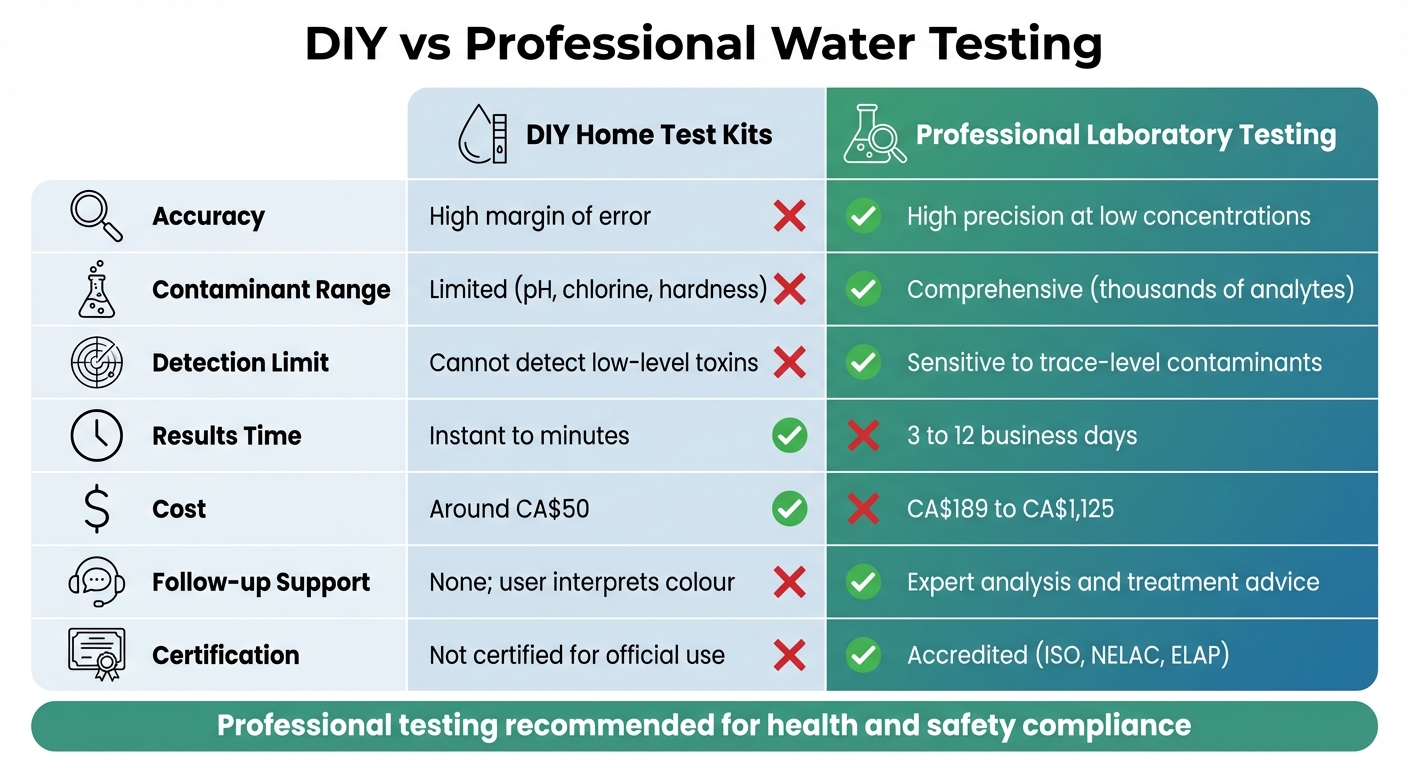
DIY vs Professional Water Testing: Accuracy, Cost and Coverage Comparison

DIY vs Professional Water Testing: Accuracy, Cost and Coverage Comparison

Testing your water is essential for maintaining both your health and the longevity of your plumbing system. But how do you choose the right method? The decision often comes down to DIY test kits versus professional laboratory testing, and the differences are significant.

DIY water testing kits are a budget-friendly option, typically costing around CA$50. They provide quick results for basic parameters like pH, chlorine, and water hardness. While convenient for routine checks, these kits have some major drawbacks. The results rely on colour-matching, which can be subjective and prone to user error. More importantly, they cannot detect low levels of harmful contaminants, such as PFAS, lead, or pesticides. In short, DIY kits work well for simple checks – like pH or total dissolved solids (TDS) – but they fall short when it comes to identifying serious health risks.

On the other hand, professional laboratory testing offers a much deeper and more reliable analysis. These tests, starting at CA$189 and going up to CA$1,125 for comprehensive panels, can detect thousands of contaminants with incredible precision, even at trace levels. While the results take longer – between 3 and 12 business days – you receive a detailed report that includes expert interpretation, a health risk assessment, and tailored recommendations for water treatment. This level of detail is especially important when addressing concerns like lead in older plumbing systems or selecting the right filtration system.

Another critical factor is certification. Only accredited laboratory tests meet Health Canada standards and are accepted for regulatory compliance or official documentation. DIY kits, no matter how advanced, cannot provide certified results. This makes professional testing essential for situations where accuracy and compliance matter most.

A trusted provider like POM Plumbing Service Company simplifies the process by handling everything – from sample collection to lab submission and expert interpretation. This ensures you receive actionable, trustworthy guidance based on certified findings. Be cautious of “free” water tests offered by some treatment companies; these are often marketing tactics designed to sell unnecessary products.

Comparison Table

Factor DIY Home Test Kits Professional Laboratory Testing
Accuracy High margin of error High precision at low concentrations
Contaminant Range Limited (e.g. pH, chlorine, hardness) Comprehensive (thousands of analytes)
Detection Limit Cannot detect low-level toxins Sensitive to trace-level contaminants
Results Time Instant to minutes 3 to 12 business days
Cost Around CA$50 CA$189 to CA$1,125
Follow-up Support None; user interprets colour Expert analysis and treatment advice
Certification Not certified for official use Accredited (e.g. ISO, NELAC, ELAP)

What Happens After a Water Test?

When your water test results arrive – usually within 4 business days for laboratory analysis – POM Plumbing Service Company gets to work by comparing the findings to the Guidelines for Canadian Drinking Water Quality. This step helps identify any contaminants that exceed acceptable health or aesthetic limits. The analysis focuses on microbial indicators, heavy metals, and factors like pH and hardness, which can affect your plumbing system.

If the results reveal any immediate concerns, safety measures are put into place. For residential clients in Toronto and the GTA, the detection of E. coli or total coliforms triggers a recommendation to stop using the water for consumption. Until the issue is resolved, boiled or bottled water becomes the safe alternative. The next step involves shock disinfection of your well and household plumbing, followed by a re-test to confirm the bacteria have been eliminated. As highlighted by Ottawa Public Health:

“The more samples you have tested, the more confident you can be about the quality of the water you are drinking”.

For commercial properties, the process includes additional regulatory steps. POM Plumbing works with local Public Health Units to ensure compliance with Ontario’s Safe Drinking Water Act. This involves determining risk categories and adhering to directives issued by Public Health Inspectors.

The solutions recommended depend on the specific findings. For instance, if lead levels exceed 0.005 mg/L, replacing lead service lines is the most effective solution. If hardness levels surpass 180 mg/L as CaCO₃ (classified as “Very Hard”), ion exchange water softeners are suggested to prevent scale buildup in pipes and appliances. For water with a “rotten egg” smell caused by hydrogen sulphide, aeration or oxidation systems are used to eliminate the odour.

POM Plumbing takes care of everything – from interpreting the results to installing systems and conducting follow-up tests. This ensures your water meets Health Canada standards and addresses any issues, whether they involve bacteria, chemical contaminants, or aesthetic concerns affecting your plumbing.

Conclusion

Regular water quality testing is essential for safeguarding both your health and your plumbing system. As Health Canada points out, “Many contaminants won’t affect the smell, taste or colour of your drinking water. Even if your water seems fine, you can’t know for sure without testing”. This is particularly important for private well owners, who don’t benefit from government monitoring.

Testing for bacterial contaminants every six months and evaluating overall water quality every two years can help prevent health issues and protect your plumbing. Factors like hardness, pH, iron levels, and high TDS can lead to scaling, which reduces the lifespan of appliances.

For residents in Toronto and the GTA, POM Plumbing Service Company brings over 20 years of expertise in water quality testing. They handle everything from lab analysis and result interpretation to treatment installations and follow-ups. Whether dealing with lead service lines in older Toronto homes, bacterial contamination, or damage caused by hard water, professional testing ensures your water complies with Canadian standards.

Keeping your water safe doesn’t just protect your health – it also preserves your plumbing investment. As noted earlier, “The plumbing inside your home is an extension of the distribution system”. With licensed and insured professionals, POM Plumbing provides the knowledge and services you need to maintain safe drinking water and ensure your plumbing operates effectively.

FAQs

What should I do if my water test finds E. coli?

If your water test reveals the presence of E. coli, stop using the water right away for drinking or cooking. You’ll need to disinfect your well or water system and then retest to make sure the issue has been resolved. E. coli in your water means it’s unsafe to consume and demands immediate action to protect your health.

Which water tests should I prioritize for an older home?

When dealing with older homes, it’s important to check for microbial contaminants such as bacteria and viruses, along with chemical contaminants that could seep from old pipes or fixtures. These tests help ensure your water is safe and compliant with quality standards. This is particularly crucial for spotting potential hazards linked to outdated plumbing systems.

Can water testing help me choose the right filtration system?

Water testing pinpoints the exact contaminants present in your water, allowing you to select a filtration system tailored to address those specific issues. This helps make your water safer and more suitable for everyday use.

Related Blog Posts

How to Clean a Clogged Dishwasher Drain

A clogged dishwasher drain can leave water pooling at the bottom, create bad smells, and even damage your appliance. Fixing it is often quick and inexpensive, using tools and supplies you likely already have at home. Here’s how you can tackle the issue:

  • Signs of a clog: Standing water, bad odours, slow drainage, or gurgling sounds.
  • Common causes: Food debris, grease build-up, improper drain hose installation, or foreign objects.
  • DIY steps: Turn off the power, remove standing water, clean the filter, inspect and clear the drain area and hose, and run a cleaning cycle with vinegar and baking soda.
  • When to call a pro: If water still won’t drain, there are mechanical issues, or leaks appear. Professional services typically cost $150–$345.

Prevent future clogs by scraping food off dishes, cleaning the filter regularly, and running a monthly vinegar rinse. If you’re in Toronto or the GTA, companies like POM Plumbing offer expert solutions for stubborn issues.

How to Fix a Dishwasher That Will Not Drain

Common Causes of a Clogged Dishwasher Drain

Dishwasher clogs often result from food debris, installation issues, or foreign objects. Each of these problems requires specific solutions to get the water flowing again.

Food Debris and Grease Build-up

One of the main culprits behind clogged dishwashers is leftover food. Items like popcorn kernels, damp paper from jar labels, and coffee grounds can get stuck in the filter’s fine mesh, stopping water from draining properly.

Dan Simms, a writer at Angi, points out:

“Not scraping leftovers into the garbage before loading your dishwasher is the primary cause of dishwasher clogs.”

Even small food particles can build up over time, creating a blockage that restricts water flow. The problem worsens when fats, oils, and grease (commonly called FOG) are involved. These substances solidify in the drain hose and cling to its walls, forming stubborn clogs. Brett Bidwell, from Mr. Rooter Plumbing of Austin, highlights:

“Fats, oils, and greases may be the most common drain issues you’ll experience likely to have a bearing on slow draining from the dishwasher.”

When FOG combines with soap scum – especially in areas with hard water – the blockage becomes even harder to remove.

But food and grease aren’t the only issues. Installation errors can also lead to drainage problems.

Improper Drain Hose Installation

Drain hoses are another common trouble spot. Kinks or sharp bends in the hose restrict water flow and create spots where debris can collect. These bends often happen when the dishwasher is pushed too far back during installation or cleaning, pinching the hose against the wall or items under the sink.

Another frequent mistake involves the garbage disposal connection. If your dishwasher drains through a new garbage disposal, the “knockout plug” inside the disposal’s dishwasher port must be removed. Forgetting this step prevents water from draining properly. Additionally, if the drain hose isn’t installed in a high loop – secured above the drain level – dirty water from the sink can backflow into the dishwasher.

Foreign Objects in the Drain

Foreign objects like glass shards, pieces of plastic, or even small utensils can end up lodged in the sump. When this happens, these items can jam the pump impellers and block water from draining. Unlike food debris, which might eventually flush out, solid objects usually require manual removal to clear the blockage.

Signs Your Dishwasher Drain Is Clogged

Spotting a clogged dishwasher drain early can save you from costly repairs. Here’s what to look out for:

Standing Water in the Dishwasher

If you notice water pooling at the bottom of your dishwasher after a cycle – especially if it’s about 2.5 cm (1 in) or more – this is a strong indicator of a blockage. Even slow drainage or brief pooling during the cycle could point to a partial clog.

Another clue? Dishes coming out with a gritty residue. This happens when dirty water isn’t draining properly and instead circulates back onto your dishes.

But standing water isn’t the only sign to watch for.

Bad Smells or Slow Draining

Unpleasant odours coming from your dishwasher often mean food particles, grease, or soap scum are trapped in the system. These can encourage mould and bacteria growth, creating a distinct smell even before you see standing water.

Strange sounds like gurgling, thumping, or a “choking” noise may signal water struggling to pass through a blocked or kinked hose. If you notice water backing up into your kitchen sink, it could mean the clog is in a shared drainage line.

Additionally, humming or clicking noises might point to a malfunctioning pump or motor.

Safety Precautions Before Cleaning

Before you begin, take these steps to ensure your safety and protect your home. Remember, water and electricity don’t mix, and clogged drains often contain stagnant water and food waste that may harbour harmful bacteria.

Turn Off Power to the Dishwasher

Start by disconnecting the power. Look under your kitchen sink or inside a nearby cabinet to locate the plug. If you can, unplug the dishwasher directly from the wall. If the plug isn’t accessible or the dishwasher is hardwired, switch off the dedicated circuit breaker at your electrical panel. If your dishwasher is connected to a garbage disposal, make sure to power that down too.

As Steven E from AppliancePartsPros puts it:

This protects you from electric shock and prevents the machine from suddenly starting while you’re elbow-deep in soapy water.

Wear Protective Gear

Put on waterproof gloves. Stagnant water and food debris can be a breeding ground for mould and bacteria, and you might come across sharp objects like broken glass. Gloves shield your hands from grime, sludge, and any lingering hot water.

To safeguard your flooring and cabinetry, lay down old towels or rags around the base of the dishwasher. Caroline Gilbert of Angi cautions that water-related projects can lead to serious damage.

Once you’ve taken these precautions, you’re ready to tackle the clogged drain.

Step-by-Step: How to Clean a Clogged Dishwasher Drain

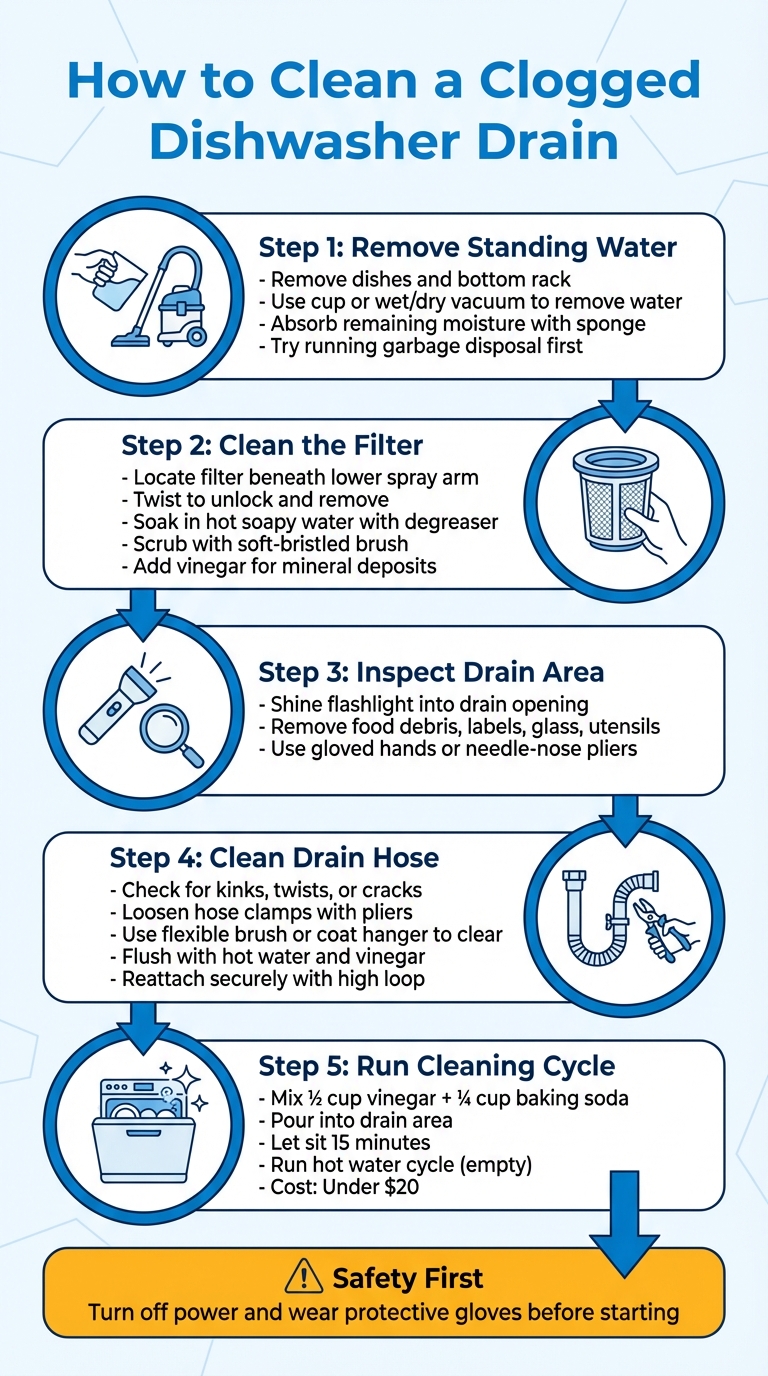
5-Step Guide to Clean a Clogged Dishwasher Drain

5-Step Guide to Clean a Clogged Dishwasher Drain

Clearing a clogged dishwasher drain might seem daunting, but with the right steps, you can tackle it safely and effectively. By following this guide, you’ll restore proper drainage and keep your dishwasher in top shape.

Remove Standing Water

Start by taking out all dishes, silverware, and the bottom rack to access the dishwasher’s tub. Use a cup or a wet/dry vacuum to remove most of the standing water, and then absorb any leftover moisture with a sponge or towel.

If your dishwasher drains into a garbage disposal, run the disposal first – it might clear the clog and allow the water to drain naturally. Alternatively, try holding down the “Cancel” or “Drain” button for three seconds to activate the drain pump, which could help if the blockage is minor.

Clean the Dishwasher Filter

Find the filter, usually located on the interior floor of your dishwasher beneath the lower spray arm. Most filters have a twist-lock mechanism, but use a screwdriver only if necessary.

Soak the filter in a sink or bowl filled with hot water and a few drops of dish soap that contains a degreaser. Use a soft-bristled nylon brush or sponge to scrub away grime – avoid wire brushes, as they can damage the filter’s mesh. If there are mineral deposits from hard water, adding a bit of vinegar can help dissolve them. Rinse the filter thoroughly with hot water and let it air-dry before putting it back.

Inspect and Clear the Drain Area

With the filter out, shine a flashlight into the drain opening at the bottom of the tub. Check for blockages like food debris, labels, broken glass, or small utensils. Carefully remove these using gloved hands or needle-nose pliers. Once the drain area is clear, move on to cleaning the drain hose.

Clean the Drain Hose

The drain hose is usually connected behind the dishwasher or under your sink, leading to the garbage disposal or sink drain pipe. Inspect it for kinks, twists, or cracks, especially if it’s older rubber.

Loosen the hose clamps at both ends with pliers, and have a pan ready to catch any drips. Once disconnected, use a long flexible brush, pipe cleaner, or straightened coat hanger to break up any clogs. Flush the hose with hot water or a mix of hot water and vinegar to remove any lingering residue. As Steve from HomeApplianceGeek.com advises:

avoid chemical drain cleaners – they can harm your dishwasher’s internal components.

Reattach the hose securely and ensure it forms a high loop under the counter to prevent backflow.

Run a Cleaning Cycle

After clearing all blockages, finish by running a cleaning cycle. Mix 120 mL (½ cup) of white vinegar with 60 mL (¼ cup) of baking soda and pour it into the drain area at the bottom of the tub. Let it sit for 15 minutes to break down grease and debris. Then, run a hot water cycle without any dishes to rinse everything out. This method is both effective and budget-friendly, costing under $20.

When DIY Cleaning Isn’t Enough

Sometimes, even your best efforts with home remedies just won’t cut it. If your dishwasher still refuses to drain after you’ve tried all the recommended cleaning steps, it might be time to bring in the experts.

Signs You Need Professional Help

There are several warning signs that indicate it’s time to call a professional:

  • Persistent standing water: If water remains in the dishwasher despite cleaning the filter and drain hose, the blockage could be deeper in your plumbing system.
  • Pump motor issues: Hearing the pump motor running without any water movement? This could mean the impeller is stuck or the motor has burned out, both of which require expert attention.
  • Unusual noises: Gurgling, thumping, or choking sounds during the drain cycle might point to a clog in your secondary or main sewer lines.
  • Sink drainage problems: If water backs up into your sink while the dishwasher runs – or if your sink drains slowly even when the dishwasher is off – the issue could be within your plumbing lines.
  • Visible leaks: Leaks around the door or underneath the dishwasher demand immediate action to prevent damage to your cabinets and flooring.
  • Multiple slow-draining fixtures: If toilets, showers, and the dishwasher are all draining slowly, it could indicate a severely blocked or broken sewer line.

Additionally, mechanical failures like a broken drain pump, solenoid, timer, or control board should be diagnosed by a professional. While hiring a service may cost more upfront than DIY fixes, it can save you from even pricier repairs down the road.

Why Choose POM Plumbing Service Company

POM Plumbing

For over 20 years, POM Plumbing Service Company has been a trusted name in Toronto and the GTA. Their team of licensed and insured professionals specializes in both residential and commercial plumbing issues, offering expertise that goes beyond just your dishwasher.

Using advanced diagnostic tools, they can quickly pinpoint whether the problem lies in your appliance or deeper within your plumbing system. This approach not only saves you time but also prevents unnecessary repairs.

POM Plumbing provides emergency services for urgent issues and scheduled maintenance plans to keep your appliances running smoothly. With clear pricing and solid warranties, they ensure your dishwasher drain is properly cleared and sealed, helping to avoid future leaks or damage.

How to Prevent Dishwasher Drain Clogs

Did you know that 18% of dishwasher-related service requests are due to units that won’t drain? The good news is that many of these issues can be avoided with a few simple maintenance habits.

Rinse Dishes Before Loading

Before loading your dishwasher, scrape off large food particles while leaving behind light residue. According to Scott Flint, a Professional Appliance Repair Technician at Family Handyman:

“Scrape off the chunky stuff but leave on the sauce! Some food residue on the dishes acts as a catalyst to activate your detergent’s cleaning action.”

Also, be sure to remove paper labels from jars before placing them in the dishwasher. Another critical step? Run your garbage disposal before starting the dishwasher. This ensures the shared drain line is clear, as many dishwashers drain through the disposal. Taking these small steps can prevent clogs before they even have a chance to form.

While proper loading habits help, regular maintenance is just as important for keeping your dishwasher in top shape.

Schedule Regular Maintenance

Consistency is the secret to keeping your dishwasher draining smoothly. Here’s what you should do:

  • Clean the filter every two weeks to prevent debris buildup.
  • If you use your dishwasher daily, perform a deep clean every month. For less frequent use, clean it every two to three months.
  • Once a month, run an empty cycle with 120 mL of white vinegar or a commercial cleaner to break down grease and limescale.
  • Inspect the drain hose annually for any signs of damage, and check the drain area weekly to remove any debris.

Lastly, remember that dishwasher filters generally need replacing every five years. However, regular cleaning can significantly extend the filter’s lifespan, saving you time and money in the long run.

Professional Dishwasher Drain Cleaning Services

Sometimes, when DIY efforts just don’t cut it, it’s time to call in the pros.

Complete Drain Cleaning Solutions

If your dishwasher drain woes persist, professional diagnostics can uncover the root of the problem – whether it’s the appliance itself, the drain line, or even your home’s plumbing system. POM Plumbing Service Company serves both residential and commercial clients across Toronto and the GTA, offering thorough inspections to identify the exact cause of the issue.

Their technicians come equipped with specialized tools to tackle stubborn grease, food debris, and sludge build-up. Beyond cleaning, they can also diagnose mechanical issues like a failing drain pump or motor. Common DIY mistakes, such as forgetting to remove the knockout plug during garbage disposal installation, are also addressed by these experts. With over 20 years of experience and advanced tools, POM Plumbing ensures every component is correctly sealed during reassembly, protecting your kitchen from hidden leaks that could damage cabinets or floors.

Emergency Services for Urgent Problems

Some drainage problems require immediate attention, especially if you’re dealing with standing water, recurring backups, or visible leaks. That’s where emergency services come in. POM Plumbing Service Company provides fast-response plumbing assistance for urgent situations throughout the GTA.

The cost of professional drain cleaning typically ranges from $150 to $345, with an average of about $240. While this is a bigger investment compared to the under-$20 price tag of DIY supplies, professional services offer the assurance of proper diagnosis, advanced equipment, and a leak-free reassembly. For a quote tailored to your specific issue, reach out to POM Plumbing today.

Conclusion

Keeping your dishwasher drain clear and clog-free is all about consistent maintenance and quick action when issues arise. Tackling a clogged drain can often be straightforward: disconnect the power, remove any standing water, clean the filter and drain components, and check the air gap. To avoid grease and sludge build-up, consider running a monthly vinegar cleaning cycle.

Preventing future clogs is equally important. Scrape off large food particles before loading dishes. As Scott Flint, a professional appliance repair technician, aptly puts it:

Scrape off the chunky stuff but leave on the sauce! Some food residue on the dishes acts as a catalyst to activate your detergent’s cleaning action.

Additionally, running your garbage disposal before starting the dishwasher can help keep the drain line clear.

If you notice lingering water or hear a persistent humming sound, it could indicate a mechanical issue, such as a failing pump. Address any leaks immediately, and if the problem persists, it’s best to consult a licensed plumber. These preventive efforts, combined with the repair steps mentioned earlier, will help keep your dishwasher running smoothly for the long haul.

For homeowners in Toronto and the GTA, POM Plumbing Service Company provides expert diagnostics and specialized tools to handle even the most stubborn clogs, mechanical issues, and plumbing line blockages. With over 20 years of experience and emergency services available, they’re a trusted partner in keeping your dishwasher – and your kitchen – functioning efficiently.

Need assistance or a custom quote? Contact POM Plumbing today for reliable service you can count on.

FAQs

What should I do first if my dishwasher isn’t draining properly?

If your dishwasher isn’t draining as it should, the first step is to remove any standing water from the bottom of the machine. Once that’s done, take a look at the dishwasher filter – it’s a common spot for food particles and grease to collect, which can lead to clogs. Clean it thoroughly to ensure proper drainage.

Next, check the drain area for any obvious blockages or debris that might be causing the issue. For safety, always make sure the dishwasher is turned off before continuing. You can also inspect the drain hose by disconnecting it and flushing it with water to clear any potential blockages. These simple steps can resolve most drainage problems and get your dishwasher back in action.

How can I stop food debris from clogging my dishwasher?

To keep your dishwasher running without any hiccups, start by scraping off large food remnants into the trash or compost before loading your dishes. This simple step helps prevent food debris from building up in the filter or clogging the drain.

If you want to go the extra mile, give your dishes a quick rinse to remove any stuck-on food or grease. Also, make it a habit to check and clean the dishwasher filter regularly. This ensures proper water drainage and avoids potential blockages. These small efforts can make a big difference in keeping your dishwasher efficient and lasting longer.

When should I call a professional to fix a clogged dishwasher drain?

If your dishwasher drain stays clogged even after trying DIY fixes, it might be time to bring in a professional. Stubborn drainage problems, standing water that won’t drain, or clogs buried deep in the drain system or hose can be tough to tackle without expert tools and knowledge.

Professional help is also a smart move if you’re dealing with bad smells, mould growth, or bacteria buildup that household remedies like baking soda or vinegar can’t fix. Plus, if the problem stems from something more serious – like a damaged hose or an issue with the sewer line – a professional can accurately diagnose and repair it.

If the clog keeps getting worse, happens frequently, or you’re unsure how to address it safely, calling an expert is the best way to protect both your dishwasher and your plumbing system.

Related Blog Posts

Signs Your Basement Might Need a Sump Pump

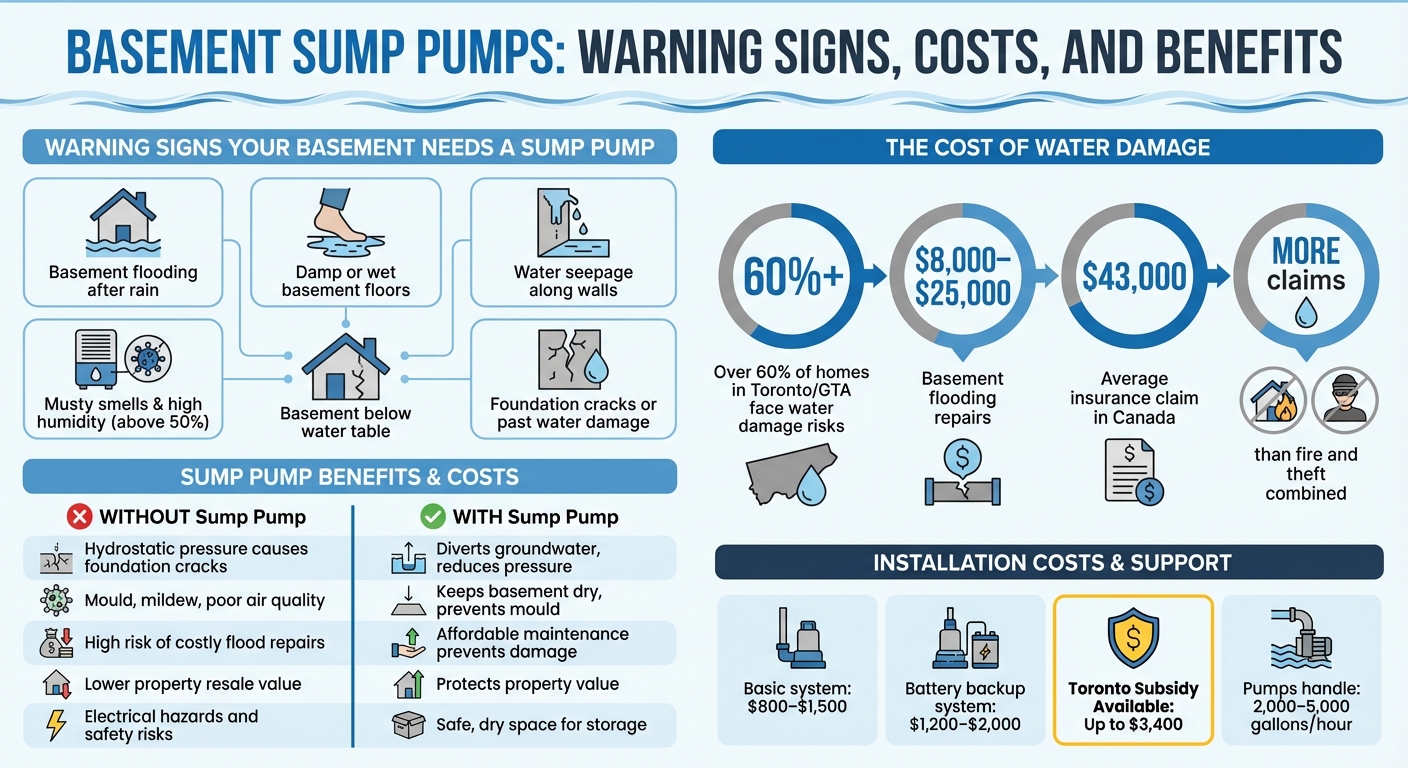
If your basement feels damp, smells musty, or has visible water stains, it may be time to consider installing a sump pump. These issues often signal water intrusion, which can lead to costly damage, mould growth, and structural problems. In Toronto and the GTA, where clay-heavy soil and seasonal weather challenges increase the risk of basement flooding, over 60% of homes face water damage risks. A sump pump can help protect your home by diverting excess groundwater away from your foundation.

Key Takeaways:

  • Warning Signs: Damp floors, musty odours, water stains, or efflorescence (white chalky residue) are early indicators of water problems.
  • Why It Matters: Basement flooding can cost $8,000–$25,000 in repairs, with insurance claims averaging $43,000 in Canada.
  • How a Sump Pump Works: It collects rising groundwater and pumps it away from your home, reducing hydrostatic pressure and preventing flooding.
  • Installation Costs: Basic systems cost $800–$1,500, while battery backup systems range from $1,200–$2,000.
  • Financial Support: Toronto’s Basement Flooding Protection Subsidy offers up to $3,400 for eligible installations.

Don’t wait for water damage to escalate. A sump pump is a simple, effective way to safeguard your home and avoid expensive repairs.

Basement Water Damage Warning Signs and Sump Pump Benefits

Basement Water Damage Warning Signs and Sump Pump Benefits

Signs You Need a Basement Sump Pump

What Does a Sump Pump Do?

A sump pump sits in a pit at the lowest point of your basement (usually about 45–60 cm wide and 60 cm deep). Its job? To collect groundwater from perimeter drainpipes or natural seepage when the water table rises, keeping your basement dry and safe from flooding.

When the water in the pit reaches a certain level, a float switch or pressure sensor activates the pump’s motor. The motor powers an impeller that pushes water out through a discharge pipe. This pipe carries the water away from your home, releasing it at least six metres from your foundation to prevent it from flowing back.

“Consider it the ‘heart’ of your basement waterproofing system.” – Holly Richards-Purpura, Content Writer, Groundworks

This setup is especially crucial in areas with clay-heavy soil, where poor drainage increases hydrostatic pressure, forcing moisture through foundation cracks. It’s also a lifesaver during rapid spring snowmelts or heavy summer storms, which can overwhelm older sewer systems. Many residential sump pumps can handle between 2,000 and 5,000 gallons of water per hour, making them a powerful defence against flooding.

A key feature of the system is a one-way check valve in the discharge pipe. This valve prevents water from flowing back into the pit after the pump shuts off, reducing strain on the motor and extending its lifespan. Without this safeguard, the pump could short-cycle, leading to premature wear and costly repairs. Considering basement water damage repairs can range from $8,000 to $25,000, a sump pump is a smart investment.

Signs Your Basement Might Need a Sump Pump

If you’ve noticed damp floors, musty smells, or water stains on your basement walls, it might be time to consider a sump pump. Catching these issues early can save you a lot of money – flooded basements in Canada average $43,000 per insurance claim. Here’s a closer look at the warning signs that shouldn’t be ignored.

Basement Flooding After Rain

Does your basement floor turn into a puddle zone after heavy rain or spring snowmelt? This could mean your drainage system isn’t keeping up. When the soil around your home becomes saturated, it creates hydrostatic pressure, which pushes water through porous concrete and foundation joints. If you’re constantly mopping up water after storms, it’s a clear sign that your drainage system might not be enough to handle the local water table.

Damp or Wet Basement Floors

A damp or wet basement floor often means groundwater is rising and seeping through floor joints and concrete. You might feel cold, damp spots or notice carpets that are mysteriously wet. Basements should ideally stay below 50% humidity – anything higher can lead to mould growth and even structural damage.

Water Seepage Along Basement Walls

Water stains, peeling paint, or bubbling wall coatings along your foundation walls are red flags. These issues signal moisture trapped behind the surfaces. Efflorescence – a white, chalky residue – is another clue that water is moving through masonry. Here’s a quick breakdown of what these signs mean and what you can do:

Sign of Water Issue What It Means What to Do
Efflorescence (White Powder) Groundwater leaving mineral deposits as it evaporates Check exterior waterproofing and drainage
Peeling/Bubbling Paint Moisture trapped behind wall coatings Seal foundation cracks and improve drainage
Rust on Furnace Bases Previous flooding or persistent dampness Consider installing or upgrading a sump pump

These signs, along with persistent odours and other structural issues, point to potential water problems that need attention.

Musty Smells and High Humidity

That musty, damp smell in your basement isn’t just unpleasant – it’s a sign of ongoing water intrusion and likely mould growth. If humidity levels are above 50%, it’s a clear indicator that water is making its way into your basement.

Basement Below the Water Table

Homes in low-lying areas or regions with high groundwater are particularly at risk. If your property sits below the water table, sump pump protection is crucial. To help divert surface water, the ground around your foundation should slope away for at least 1.5 metres with a drop of 75 mm.

Foundation Cracks or Past Water Damage

Visible cracks in your foundation, rust on metal supports, or a history of flooding are all signs of chronic moisture issues. These cracks often result from hydrostatic pressure caused by saturated soil pressing against your home. If your basement has experienced water damage before, the chances of it happening again are high unless proper water management systems are in place.

To address these risks, some municipalities, like the City of Toronto, offer financial support. For example, Toronto’s Basement Flooding Protection Subsidy provides up to $3,400 per property for eligible flood prevention measures, including sump pump installations. This kind of program highlights how crucial it is to take proactive steps in protecting your basement.

Problems That Can Occur Without a Sump Pump

Skipping a sump pump might save you some money upfront, but it can lead to serious – and costly – problems down the road. Without a way to control groundwater effectively, your basement becomes vulnerable to escalating risks.

The financial toll can be staggering. Did you know that water damage is responsible for more home insurance claims than fire and theft combined? Beyond the immediate expenses of repairs, lingering moisture can weaken your home’s structure. A sump pump plays a crucial role in reducing hydrostatic pressure, which otherwise forces water through foundation cracks and floor joints. Over time, this pressure can cause structural issues like efflorescence (that chalky white residue on walls) and even lead to drainage system failures, such as clogged or deteriorating weeping tiles.

Another issue is humidity. Basements without sump pumps often exceed the ideal 50% humidity level, creating the perfect environment for mould and mildew. These fungi don’t just stay in the basement – they spread throughout your home via the stack effect, potentially triggering respiratory problems like asthma.

There are also hidden costs to consider. Homes with a history of water damage can lose value, becoming harder to sell. Finished basements or storage areas may become unusable, shrinking your liveable space. On top of that, insurance companies may respond by raising your premiums, increasing deductibles, or even denying coverage altogether in high-risk areas. Blair Feltmate, Head of the Intact Centre on Climate Adaptation, underscores the importance of prevention:

“For many Canadians, their home is their biggest asset and ultimately their retirement fund. To protect that investment, any homeowner who lives where it rains can easily and cost‐effectively deploy simple measures to lower their chances of experiencing basement flooding.”

To highlight the difference, here’s a comparison of what happens without a sump pump versus the benefits of having one:

Comparison Table: Risks of No Sump Pump vs. Benefits of a Sump Pump

Feature Risk Without a Sump Pump Benefit With a Sump Pump
Foundation Health Hydrostatic pressure causes cracks and structural damage Reduces water pressure by diverting groundwater away
Mould & Air Quality Dampness leads to mould, mildew, and poor air quality Keeps the basement dry, preventing mould growth
Repair Costs High risk of costly flood repairs Affordable maintenance prevents major damage
Property Value Water damage history lowers resale value Protects resale value and attracts buyers
Safety Increased risks of electrical hazards and contaminated water exposure Keeps the space dry and safe for storage and appliances

The risks of skipping a sump pump are clear, but the benefits of having one are just as compelling. It’s a small investment that can save you from big headaches later.

Certain basements face higher risks, making a sump pump a must-have. Toronto’s clay-heavy soils are a major culprit – they hold onto water and increase hydrostatic pressure, which forces moisture through cracks and joints in basement walls. Neighbourhoods like East York, Scarborough, North York, and Etobicoke are particularly vulnerable. Combine these soil conditions with Toronto’s unpredictable weather, and the need for a sump pump becomes clear.

Spring is one of the riskiest seasons. The thaw between March and April can release the equivalent of months’ worth of rainfall into the ground all at once, quickly saturating the soil. On top of that, summer thunderstorms can overwhelm Toronto’s aging sewer systems, causing water to back up into basements through floor drains. If your basement has flooded during these times, a sump pump isn’t just helpful – it’s essential.

The Ontario Building Code acknowledges these risks, requiring sump pumps in new homes with basements below the water table. For older homes, retrofitting is often necessary. Many houses in Toronto also have weeping tiles (French drains) that connect directly to the municipal sewer system. The City of Toronto advises disconnecting these tiles and instead redirecting water to a sump pump. This reduces the chances of sewer backups during heavy rains.

There’s even financial support to ease the cost. Toronto offers a subsidy of up to $3,400 for sump pump installation. Some insurance companies in Ontario also provide discounts – or even require sump pumps – before they’ll insure finished basements. Considering the cost of basic sump pump installation ranges from $800 to $1,500, the investment pays off in both peace of mind and potential savings. Given these risks and incentives, professional sump pump installation is the logical next step.

Professional Sump Pump Installation and Inspection

Installing a sump pump is no small task – it’s not something you should tackle on a whim over the weekend. It involves precise structural work that needs to align with the Ontario Building Code. That’s where POM Plumbing Service Company steps in. With over 20 years of experience serving the GTA, their licensed and insured team handles everything from the initial site assessment to the final testing phase.

The process starts with pinpointing the lowest point of your basement floor using laser levels. This ensures water naturally flows towards the sump pit. In many cases, this system works in tandem with weeping tile installation to manage foundation drainage. The pit itself needs to be at least 20 cm away from walls and close to a dedicated GFCI outlet. From there, technicians use a jackhammer to dig a hole about 60 cm in diameter and 60–75 cm deep. A plastic sump basin is then placed on a 7.5–15 cm gravel base to stabilize it and improve drainage.

Next, they install a check valve on the PVC discharge line, which is usually 3.8–5 cm in diameter. This line is routed through the basement wall or rim joist and extends at least 3–6 metres from the foundation. To handle Toronto’s harsh winters, an anti-freeze device like IceGuard is added to prevent the exterior pipe from freezing and causing backups into your basement.

Before wrapping up, the system is thoroughly tested. The basin is filled with water until the float activates the pump, which can handle between 7,500 and 19,000 litres per hour. Technicians check for leaks and ensure the float moves freely. Basic installations typically cost between $800 and $1,500, while adding a battery backup system – an excellent safeguard against power outages – ranges from $1,200 to $2,000. Considering even minor basement floods can cost about $2,000 in damages, and major ones can climb to $25,000, this investment offers peace of mind. Plus, a professional installation qualifies your home for Toronto’s Basement Flooding Protection Subsidy.

Speaking of the subsidy, it’s important to note that rebates – up to $3,400 – are only available if the work is done by a registered drain service company. The licensed team at POM Plumbing Service Company ensures your installation meets all municipal requirements, making you eligible for this financial support. Beyond installation, regular inspections (ranging from $150 to $300) are crucial. These annual check-ups can catch early signs of trouble, like rust, strange noises, or sediment buildup, saving you from unexpected headaches when the next big storm hits.

Conclusion

Clear signs like standing water after rain, damp floors, musty smells, water stains, or white chalky residue in your basement are red flags that water is seeping in. These issues demand immediate attention to prevent further damage. Effective water management is crucial, as highlighted earlier.

Without a sump pump, water exposure can quickly lead to mould growth and structural damage caused by hydrostatic pressure. Taking preventative steps, such as selecting and installing a sump pump is a wise choice. Basic sump pump installations generally cost between $800 and $1,500, while systems with a battery backup range from $1,200 to $2,000.

Given the risks, having a professional handle your sump pump installation is essential. This ensures compliance with the Ontario Building Code and may even qualify you for the City of Toronto’s Basement Flooding Protection Subsidy, which offers up to $3,400. With over 20 years of experience in the GTA, POM Plumbing Service Company takes care of everything – from the initial assessment to final testing.

If you’re noticing any of these warning signs, don’t wait for the next storm. Reach out to POM Plumbing Service Company for a professional assessment and installation to safeguard your home.

FAQs

What are the warning signs that your basement might need a sump pump?

If your basement tends to flood or you notice standing water, it might be time to think about installing a sump pump. Other red flags to watch for include damp or wet floors, water seeping along the walls, musty smells, or high humidity levels. These are often signs of poor drainage or a high water table.

Pay attention to water stains, foundation cracks, or evidence of past water damage too. These can point to persistent moisture issues. Tackling these problems early can save you from expensive repairs and help protect your home from further harm.

How does a sump pump protect your basement from flooding and water damage?

A sump pump works to keep your basement dry by automatically getting rid of excess water that gathers at the lowest point of the space. This can be a lifesaver during heavy rainstorms, melting snow, or when groundwater levels rise. By directing water away from your home, it helps prevent flooding, leaks, and potential damage to your foundation.

Without a sump pump, water can build up, leading to expensive repairs, mould growth, and even structural damage. Installing one is a smart step to protect your basement and avoid water-related headaches down the line.

Are there any financial programs in Toronto to help cover the cost of installing a sump pump?

Toronto provides financial assistance through the Basement Flooding Protection Subsidy Program. Homeowners can get up to $3,400 per property to cover the costs of flood prevention measures, such as installing sump pumps. This initiative aims to encourage residents to take preventive steps against basement flooding and safeguard their homes from water damage. Make sure to review the eligibility criteria and application process to benefit from this program.

Related Blog Posts

Plumbing Solutions for Water Conservation

Canadians use 335 litres of water per person daily – double that of Europeans. This high consumption, combined with aging infrastructure and climate change, has led to a growing water crisis. Plumbing solutions can reduce waste, lower bills, and protect ecosystems. Here’s how:

  • Fix Leaks: A leaking toilet can waste up to 200,000 litres yearly. Simple checks save water and money.
  • Low-Flow Fixtures: Faucets, showerheads, and dual-flush toilets cut water use by 40–67%.
  • Smart Tech: Motion-activated taps and leak detectors prevent waste and costly damage.
  • Greywater Systems: Reuse water from sinks and showers for toilets or irrigation.
  • Preventive Maintenance: Regular inspections prevent leaks and prolong system life.

Upgrading to water-efficient plumbing pays off by cutting water bills and reducing energy use for heating. Small changes lead to big savings for households and the planet.

Canadian Water Conservation Statistics and Savings Guide

Canadian Water Conservation Statistics and Savings Guide

How to Choose Water Saving Plumbing Fixtures | Ask This Old House

Ask This Old House

Why Water Conservation Matters in Canada

Canada might be known for its abundant freshwater, but the reality is more complicated. The country is facing a recognized water crisis. Many communities struggle to access safe drinking water, and outdated infrastructure hampers the treatment and delivery of this vital resource. Unlike some other nations, Canada can’t simply tap into new water sources on demand. Protecting what we already have through conservation is absolutely necessary.

The environmental stakes are enormous. Cutting back on water use at home reduces the amount of wastewater that ends up in rivers and lakes, lowering the risk of contamination. Beyond that, conservation ensures there’s enough water left in rivers and reservoirs to support aquatic ecosystems. With climate change ushering in more frequent droughts and extended dry periods, these efforts are becoming essential. This is where modern plumbing solutions and other conservation tools can play a big role.

But it’s not just about the environment – there’s a financial side too. Water isn’t cheap. Between 1994 and 2006, water prices in Canada shot up by 55%, far outpacing the economy-wide inflation rate of 27% over the same period. In 2006 alone, local governments spent more than $4.5 billion to purify and supply water. The City of Ottawa highlights why:

The process of turning water into safe drinking water costs money due to the sophisticated processes, infrastructure, facilities, and chemical and electrical costs required to deliver this valuable product.

By using water more wisely, municipalities can delay or even avoid the need for costly infrastructure upgrades, sparing residents from higher taxes and utility bills. On a personal level, small changes make a big difference. Domestic upgrades can slash water use by up to 40%. And when Canadians pay for water by volume through metered systems, they use 70% less water compared to those on flat-rate plans. It’s proof that awareness and accountability drive change.

The bathroom is where most of the action happens – 65% of indoor water use in Canadian homes comes from this space. Toilets alone account for 24%, while showers make up 19%. Even small inefficiencies can add up fast. Household leaks, for instance, account for 14% of indoor water use. A single dripping faucet can waste over 35,000 litres of water in a year. Upgrading fixtures and keeping up with maintenance isn’t just good for the planet – it’s good for your wallet too.

Plumbing Solutions That Conserve Water

Water conservation is becoming increasingly important in Canadian homes, and modern plumbing solutions offer practical ways to make a difference. By upgrading to water-saving fixtures, households can significantly cut down on waste and enjoy lower utility bills. On average, Canadians use 223 litres of water per person per day. Here’s how specific upgrades can help reduce this number without compromising comfort or performance.

Low-Flow Faucets and Aerators

Aerators are a simple yet effective way to save water. These small devices attach to your faucet, mixing air into the water stream. This maintains the sensation of strong water pressure while reducing the actual flow. High-efficiency faucets typically use a maximum of 5.7 L/min, compared to older models that can exceed 8.3 L/min. Many municipalities even provide aerators for free as part of conservation initiatives.

If replacing an entire faucet isn’t feasible, retrofitting with a 1.9 L/min (0.5 gpm) aerator is an easy fix that delivers immediate savings. Don’t forget to inspect and clean your aerators annually to prevent sediment buildup, which can affect their performance.

Water-Efficient Showerheads

Showers are responsible for about 19% of indoor water use. Older showerheads can use as much as 20 L/min, but modern high-efficiency models cut this down to between 5.6 and 7.6 L/min. This not only reduces water use but also lowers heating costs by up to 40%.

When choosing a water-efficient showerhead, you’ll find two main types: aerating models, which mix air with water for a mist-like spray, and laminar flow models, which create individual streams for a rainfall effect. Look for the WaterSense label to ensure the product meets both efficiency and performance standards.

Dual-Flush and High-Efficiency Toilets

Toilets are the biggest water users in most homes, accounting for 24% of indoor water consumption. Older models can use up to 13 litres per flush, but high-efficiency toilets reduce this to 4.8 litres or less. Dual-flush toilets take it a step further, offering two flush options – typically 4 litres for liquid waste and 6 litres for solid waste.

“Dual flush toilets can cut down your water usage to four litres for a light flush and six litres for a heavy flush.”

  • Andrew Tucker, Waterwise

When shopping for a new toilet, check the Maximum Performance (MaP) rating to ensure it effectively handles waste under everyday conditions. Modern high-efficiency models are designed to work with standard drainpipes, reducing the risk of clogs. Reliable options are available in the $100 to $250 range.

Smart Plumbing Fixtures and Sensors

Smart technology is revolutionizing how we manage water at home. Motion-activated faucets, for example, use infrared sensors to ensure water flows only when your hands are under the tap, reducing waste. Similarly, smart leak detectors monitor your plumbing system in real time, sending alerts to your smartphone if they detect unusual activity. Some systems even include automatic shut-off valves to prevent damage from leaks.

“Smart water meters… allow you to track water usage in real time, helping detect leaks and identify high consumption areas within your home.”

Smart showerheads are also gaining popularity. Some models use proximity sensors to lower water pressure when you step away, while others notify you when the water reaches your preferred temperature, helping to reduce waste while waiting for the shower to heat up.

Greywater Recycling Systems

Greywater systems take wastewater from showers, sinks, and washing machines, filter it, and reuse it for tasks like toilet flushing or outdoor irrigation. These systems are particularly useful in areas with water restrictions or drought conditions. While the initial cost is higher than that of individual fixture upgrades, greywater recycling can lead to long-term savings and a significant reduction in household water use.

Leak Detection and Repair

While installing water-saving fixtures is a great step, catching leaks early is just as important for conserving water. Small leaks can add up fast. Did you know that household leaks make up about 14% of all indoor water use? And roughly 10% of homes have leaks wasting more than 340 litres of water every single day. A continuously running toilet alone can waste between 20 and 40 litres per hour, adding up to a staggering 350,400 litres annually. Even a tiny 1.5mm hole in a pipe can lead to 3,570 litres wasted in just 24 hours, which could cost you over $2,000 in just four months.

The good news? Many leaks are easy to find and fix. Start by checking your water meter when all taps and appliances are turned off. Look for the low-flow indicator – a small red or black triangle, gear, or “+” sign. If it’s moving, you’ve got a leak. Toilets are another common culprit. Add some food colouring to the tank, wait 15 minutes, and see if the colour appears in the bowl. If it does, the flapper valve likely needs replacing. Faucet drips? Those are often caused by worn washers or O‑rings, which are cheap and simple to replace.

Fixing leaks isn’t just about saving water – it’s about saving money, too. For leaks that are harder to detect, smart leak detectors can be a game-changer. These devices monitor your plumbing system around the clock and send real-time alerts to your smartphone when they detect unusual water flow. Some even come with automatic shut-off valves to stop water immediately, preventing major damage from hidden leaks or burst pipes. While traditional methods like visual checks and meter monitoring are free and effective, they require consistent effort. Smart systems, on the other hand, work continuously without any input from you, offering peace of mind and long-term savings.

Traditional vs. Smart Leak Detection Methods

Here’s a quick comparison of traditional and smart leak detection approaches:

Method Water Savings Potential
Traditional Leak Detection Moderate
Smart Leak Detectors High

Traditional methods – like dye tests, visual inspections, and manually checking your water meter – can work well if you stay on top of them. But they rely on you remembering to check regularly. Smart leak detectors, by contrast, provide real-time monitoring and instant alerts, helping you catch leaks before they cause serious damage. While smart systems come with a higher upfront cost, they often pay for themselves by preventing water waste and avoiding expensive repairs.

Preventive Plumbing Maintenance for Water Efficiency

Preventive maintenance is the next step after leak detection to keep your plumbing system running efficiently. Regular upkeep not only prevents leaks but also helps avoid costly repairs down the line. Experts suggest a comprehensive plumbing inspection every two years to catch issues like pipe cracks, corrosion, and drain damage before they escalate into bigger problems. Along with these professional check-ups, simple routine tasks can go a long way in maintaining a leak-free and efficient system.

Here are a few key tasks to include in your schedule:

  • Every six months: Perform a toilet dye test to catch silent leaks, and check your water meter for any hidden leaks in service lines.
  • Annually: Clean faucet aerators to avoid mineral buildup, inspect water pressure to prevent pipe stress, and flush your water heater to remove sediment.
  • Seasonally: Check irrigation systems in the spring and inspect washing machine hoses, upgrading to stainless-steel braided options if needed.

Monitoring water pressure is especially important. Use a pressure gauge to ensure levels aren’t too high, as excessive pressure can strain pipes and joints, leading to leaks or even bursts.

Don’t overlook larger system components either. For example, a yearly flush of your water heater can prevent sediment buildup, extending its lifespan. Similarly, inspecting appliances like washing machines and irrigation systems can help you spot wear and tear early, saving you from unexpected breakdowns.

Maintenance Task Recommended Frequency Primary Benefit
Toilet Dye Test Every 6 months Detects silent leaks wasting up to 40L/hour
Water Meter Check Every 6 months Identifies hidden leaks in service lines
Aerator Cleaning Annually Maintains flow and prevents calcium buildup
Water Heater Flush Annually Prevents sediment buildup and extends lifespan
Pipe Inspection Every 2 years Prevents catastrophic bursts and water damage

Cost Savings and Return on Investment

Beyond the ecological and practical perks of water conservation, it’s worth diving into the financial benefits – both in terms of savings and the return on investment.

Switching to water-efficient plumbing fixtures can lead to noticeable reductions in both water and energy bills. For example, cutting back on water usage also means using less energy to heat water, which can lower monthly energy costs by about 20%. Many water-saving upgrades are budget-friendly DIY plumbing fixes in the long run, with energy savings and a payback period ranging from 2 to 4 years making them a smart investment.

Take high-efficiency fixtures, for instance – they can slash household water use by as much as 50%. If you add metered systems, they encourage even more savings by motivating users to monitor and reduce their consumption. When combined with leak detection tools and regular maintenance, these upgrades not only boost immediate savings but also enhance the long-term value of the property.

The return on investment varies depending on the fixture. Low-flow showerheads, which cost between $15 and $50, can save over $150 in utility bills within their first year by reducing both water and energy use. On the other hand, high-efficiency toilets, priced anywhere from $100 to over $1,000, typically take between 5 and 10 years to pay for themselves. Showerheads tend to recoup their cost faster because they impact both water and energy consumption.

Additionally, water-efficient upgrades can make a property more appealing and valuable over time. In provinces like Ontario and British Columbia, where building codes now require high-efficiency fixtures for new builds and renovations, homes outfitted with these upgrades stand out to buyers. These forward-thinking fixtures not only offer ongoing savings but also align with modern standards, making them a solid choice for homeowners looking to add both immediate and long-term value.

Conclusion

Water conservation is both a responsibility and a practical choice for Canadian property owners. Simple upgrades, like installing low-flow toilets that cut water use by up to 65%, or smart leak detectors that prevent thousands of litres of water from being wasted annually, can make a big difference. These plumbing solutions not only reduce your water consumption but also lower utility bills and increase the value of your property.

For example, greywater recycling systems can cut household water use by nearly 50%, while also reducing the energy needed for heating and pumping water. Even small changes, like replacing older fixtures, can lead to noticeable savings on your monthly expenses.

Regulations are also driving the shift toward water-efficient plumbing. As Kiva Bottero, Director of Green Building Canada, explains:

Sustainable plumbing is not just a nice thing to do for the environment – it’s becoming essential.

In some provinces, such as British Columbia, high-efficiency fixtures are now mandatory for new construction projects. This ensures that adopting sustainable plumbing practices not only protects the environment but also aligns with legal standards.

For more complex systems like greywater recycling or smart leak detection, professional installation is key. This not only ensures compliance with local regulations but also guarantees the best long-term performance. Companies like POM Plumbing Service, with over 20 years of experience in Toronto and the GTA, specialize in delivering these advanced solutions.

Whether you’re upgrading a single fixture or adopting a more comprehensive approach, water-efficient plumbing offers a clear path to lower bills and increased property value. By investing in modern, expertly installed systems, Canadian property owners can enjoy the dual benefits of environmental responsibility and long-term savings.

FAQs

How do low-flow plumbing fixtures help conserve water and lower costs?

Low-flow plumbing fixtures are built to cut down on water usage while maintaining effective performance. They achieve this with features like flow restrictors, aerators, and dual-flush systems, which control the amount of water used per minute or per flush.

Using less water doesn’t just help conserve this essential resource – it also reduces your monthly water bills. Over time, the money saved on utilities can balance out the upfront cost, making these fixtures an environmentally conscious and budget-friendly option for households across Canada.

How does smart technology help conserve water in Canadian homes?

Smart technology is changing the way we manage water at home, making it easier to save both water and money. Take smart leak detectors, for instance – they can spot leaks right away, helping prevent wasted water and potential damage. Some even go a step further by automatically shutting off the water supply if they detect something unusual.

Then there are smart fixtures like sensor-activated faucets and dual-flush toilets. These gadgets use automation to cut down on unnecessary water use. Many can even connect to home systems, allowing you to monitor and control them remotely. By adopting these technologies, Canadian homeowners can reduce water usage, lower utility bills, and do their part to protect the environment.

Why is water conservation important in Canada, even with its vast freshwater resources?

Canada is lucky to have around 7% of the world’s renewable freshwater, but much of it is tied up in lakes, rivers, and aquifers that need careful oversight. Managing these resources wisely is crucial, especially as demands from industries, agriculture, and households continue to rise. Some areas in Canada also face unique hurdles, like droughts or unpredictable weather patterns, which can put extra pressure on local water supplies.

Saving water isn’t just about preserving resources – it also cuts down on the energy required for treatment, pumping, and heating. This, in turn, helps reduce greenhouse gas emissions and lowers utility bills. Small changes can make a big difference: installing low-flow toilets, water-efficient showerheads, or smart leak detectors can significantly reduce water usage while saving money. By being mindful of water use, Canadians can help safeguard this essential resource for future generations and contribute to a healthier environment.

Related Blog Posts

Water Heater Running Out of Hot Water? Here’s Why

Common Reasons for Water Heater Running Out of Hot Water

A properly functioning water heater should provide sufficient hot water for typical household needs throughout the day. When your system consistently fails to meet demand, several mechanical, operational, or design factors may be responsible.

To identify the cause, pay attention to:

  • when shortages occur;
  • how quickly hot water depletes;
  • whether the issue developed gradually or appeared suddenly.

Sediment Accumulation Inside the Tank

Sediment accumulation ranks among the most frequent culprits behind diminished hot water capacity.

Over time:

  • minerals like calcium and magnesium separate from heated water;
  • these minerals settle at the bottom of the tank;
  • a sediment layer forms between the heating element and the water.

This layer:

  • reduces heating efficiency;
  • decreases usable tank volume;
  • forces the system to work harder while producing less hot water.

Thermostat Problems

Thermostat problems also commonly cause hot water shortages.

Most systems include:

  • two thermostats on electric models;
    one gas valve control on gas units.

When these controls:

  • malfunction;
  • drift out of calibration;
  • are set too low;

the water may never reach a comfortable temperature.

Heating Element Failures

Heating element failures in electric water heaters create immediate and noticeable hot water shortages.

Typical scenarios include:

  • upper element working, lower element failed;
  • partial heating of the tank;
  • hot water available briefly, then gone.

This is a common reason water running out of hot water heater problems appear suddenly.

New Hot Water Heater Running Out of Hot Water Immediately

A new hot water heater running out of hot water shortly after installation is especially frustrating.

Common causes include:

1. Incorrect Sizing

Professional installers calculate capacity based on:

  • household size;
  • number of bathrooms;
  • simultaneous usage.

If usage has changed, the new unit may be too small.

water running out of hot water heater

2. Installation Errors

Installation mistakes may include:

  • improper electrical connections;
  • inadequate gas supply or venting;
  • incorrectly installed dip tubes.

Any of these issues can cut heating capacity dramatically.

3. Thermostat Settings

New systems are often left at factory settings, which may be too low for real household needs.

Water Running Out of Hot Water Heater Too Quickly

When water running out of hot water heater systems occurs too quickly, the issue often goes beyond simple capacity limits.

High Simultaneous Demand

Running multiple appliances at once can exhaust hot water rapidly, especially if the system is already struggling.

Hot and Cold Water Crossover

Malfunctioning mixing valves may:

  • allow cold water into hot lines;
  • cause lukewarm water throughout the system;
  • make hot water seem depleted prematurely.

Tank Leaks and Relief Valve Issues

Leaks or faulty pressure relief valves can:

  • drain hot water continuously;
  • replace it with cold water;
  • prevent the system from maintaining reserves.

Hot Water Heater Running Out of Hot Water Quickly: Diagnosis

Diagnosing hot water heater running out of hot water quickly issues requires observation and testing.

Start with:

  1. Measuring water temperature at the tap after rest;
  2. Checking recovery time after depletion;
  3. Listening for rumbling or popping sounds;
  4. Inspecting for moisture or leaks around the tank.

These steps help determine whether the problem is heating, capacity, or water loss related.

Why Is My Water Heater Running Out of Hot Water Systematically?

If you keep asking why is my water heater running out of hot water, the answer is often cumulative.

Contributing factors include:

  • aging equipment;
  • lack of maintenance;
  • increased household demand;
  • seasonal drops in incoming water temperature.

Most tank water heaters last 8–12 years, with efficiency declining over time.

Water Heater Running Out of Hot Water Fast: Solutions

Fixing water heater running out of hot water fast issues depends on accurate diagnosis.

Basic Solutions

  • flushing the tank to remove sediment;
  • adjusting thermostat settings;
  • replacing failed heating elements.
hot water heater running out of hot water quickly

Long-Term Solutions

  • upgrading to a larger tank;
  • switching to tankless systems;
  • ensuring proper professional installation.

Preventive Maintenance and Long-Term Solutions

Preventing future shortages requires routine care.

Recommended steps:

  • annual professional inspections;
  • regular sediment flushing;
  • insulating tanks and pipes;
  • managing peak water usage.
    These actions extend system lifespan and stabilize performance.

Conclusion

Hot water shortages stem from many causes, including sediment buildup, component failure, improper sizing, and age-related decline. Whether the issue is water heater running out of hot water, fast depletion, or inconsistent recovery, systematic diagnosis allows effective solutions.

Regular maintenance and professional support ensure reliable hot water and long-term system efficiency.

Brown or Smelly Water—When to Call a Plumber

Brown or Smelly Water: What It Means and Why It Happens

Turning on your tap and encountering discolored or foul-smelling water can be alarming and unpleasant. 

These water quality issues are more common than you might think, affecting homeowners across various regions and plumbing systems. 

Understanding the causes behind these problems and knowing when to call a professional plumber can help you address issues quickly, protect your health, and maintain your home’s plumbing infrastructure. 

This comprehensive guide will help you identify different types of water quality problems and determine the appropriate course of action.

Understanding brown water problems

Brown water flowing from your taps is often one of the most visually disturbing plumbing issues homeowners encounter. 

The discoloration typically ranges from light tan to dark brown, sometimes appearing almost rusty red. 

This issue can affect all water outlets in your home or may be isolated to specific faucets, and understanding the pattern can help identify the underlying cause.

  • The most common reason for brown water from tap fixtures is rust and sediment in your plumbing system. 
  • Older homes with galvanized steel or iron pipes are particularly susceptible to this problem. 
  • Over time, these metal pipes corrode from the inside, creating rust particles that mix with the water supply. 

When water pressure changes or the system experiences sudden flow variations, these accumulated sediments can dislodge and travel through your pipes, eventually reaching your faucets.

Municipal water main work or repairs in your area can also cause temporary brown water issues. When utility companies flush water mains, perform repairs, or change water pressure in the distribution system, sediment that has settled in public water lines can become disturbed. 

This sediment then travels through the municipal system into your home’s plumbing. While usually temporary, this type of discoloration can persist for several hours or even days after utility work concludes.

smelly water

Why is my water brown? Common causes explained

If you’re asking yourself why is my water brown, several factors could be responsible. Beyond pipe corrosion and municipal maintenance, other causes include water heater problems, well water contamination, and seasonal changes affecting water sources. 

Each cause has distinct characteristics that can help you diagnose the issue.

Water heater sediment buildup frequently causes brown hot water while cold water remains clear. 

Minerals and sediment naturally accumulate at the bottom of water heater tanks over time. When the sediment layer becomes thick enough, it can break apart and enter your hot water lines, causing discoloration. 

his problem typically worsens gradually and may be accompanied by rumbling or popping sounds from the water heater as it operates.

For homes with well water systems, brown discoloration might indicate iron or manganese contamination, surface water infiltration, or disturbances to the well itself. 

Heavy rainfall can wash sediment and organic matter into wells, while drought conditions might lower water tables enough to draw in sediment-rich water from deeper levels. Changes in groundwater chemistry can also mobilize naturally occurring minerals that cause discoloration.

Seasonal variations sometimes affect municipal water supplies, particularly in areas drawing from surface water sources like rivers and lakes. Spring runoff and autumn leaf decay can introduce organic matter and minerals into water treatment facilities. 

While treatment plants work to remove these contaminants, some discoloration may occasionally reach residential areas during peak seasonal changes.

Dealing with smelly water issues

Smelly water presents a different but equally concerning problem. Water odors can range from mild to overpowering and may indicate various underlying issues, some more serious than others. The specific smell often provides important clues about the contamination source and the urgency of the situation.

Smelly water from tap fixtures most commonly smells like rotten eggs, which indicates hydrogen sulfide gas presence. This sulfurous odor can result from several sources including bacterial activity in water heaters, reactions between water and magnesium anode rods in heater tanks, or naturally occurring sulfur compounds in groundwater. 

While unpleasant, low levels of hydrogen sulfide are generally not harmful, though higher concentrations can pose health risks and corrode plumbing fixtures.

A bleach or chlorine smell typically indicates excessive disinfectant in municipal water supplies. 

Water treatment facilities add chlorine to kill bacteria and pathogens, but sometimes chlorine levels spike temporarily, especially after system maintenance or during periods of high contamination risk. While properly chlorinated water is safe to drink, the strong smell can be off-putting and may irritate sensitive individuals.

Musty, earthy, or fishy odors often point to algae, bacteria, or organic matter in the water supply. These smells are more common with surface water sources and typically intensify during warmer months when algae blooms proliferate. 

While usually not indicating dangerous contamination, these odors suggest water quality issues that warrant attention and possible treatment system adjustments.

smelly water from tap

Smelly hot water specific concerns

  • When you notice smelly hot water but cold water smells fine, the problem almost certainly originates in your water heater. This distinction is crucial for diagnosis because it narrows the issue to a single appliance rather than your entire plumbing system or water source. 
  • Several water heater components and conditions can create odor problems.The magnesium anode rod inside water heaters is designed to prevent tank corrosion by attracting corrosive elements in the water. However, sulfate-reducing bacteria sometimes colonize water heaters and react with the magnesium anode rod, producing hydrogen sulfide gas. This reaction creates the characteristic rotten egg smell that many homeowners associate with hot water problems.
  • Water heaters that sit unused for extended periods or operate at low temperatures provide ideal conditions for bacterial growth. Bacteria thrive in warm, stagnant environments, and water heaters set below 140°F may not reach temperatures sufficient to kill microorganisms. Vacation homes, guest bathrooms, or systems with malfunctioning thermostats commonly develop bacterial odor problems for this reason.
  • Temperature and pressure relief valve issues, sediment accumulation, and corroding tank interiors can also contribute to hot water odors. As tanks age, protective liners deteriorate, exposing metal surfaces that react with water chemistry. Combined with sediment that creates anaerobic pockets where bacteria flourish, older water heaters become increasingly prone to odor generation.

Smelly water in bottom of dishwasher problems

Finding smelly water in bottom of dishwasher units is another common complaint related to water odor issues. This stagnant water often develops unpleasant smells between wash cycles, particularly if dishes sit for several days before the dishwasher runs. Several factors contribute to this specific problem, most relating to drainage and cleaning habits.

Dishwashers rely on proper drainage to remove food particles and wastewater after each cycle. When drain hoses become kinked, clogged, or improperly installed, water may pool at the bottom of the dishwasher tub. This standing water provides an ideal environment for bacteria and mold growth, quickly developing foul odors that transfer to dishes during subsequent wash cycles.

Food debris trapped in filters, spray arms, and along door gaskets decomposes over time, creating unpleasant smells. Many homeowners don’t realize dishwashers require regular cleaning beyond simply running wash cycles. Accumulated food particles, grease, and detergent residue create biofilm layers where bacteria proliferate, generating persistent odors that ordinary wash cycles cannot eliminate.

Garbage disposal connections sometimes allow sewer gases to enter dishwasher drain lines when air gaps or high loops are absent or improperly installed. This plumbing deficiency permits odorous gases to travel backward through the drain hose into the dishwasher, creating smells that seem to originate from the appliance itself when the actual problem lies in drain system design.

How to get rid of smelly water solutions

Addressing how to get rid of smelly water depends entirely on identifying the underlying cause. Different problems require different solutions, ranging from simple DIY fixes to professional plumbing interventions. Starting with the least invasive approaches makes sense before escalating to more complex solutions.

For hydrogen sulfide smells from water heaters, flushing the tank to remove sediment and bacteria can help. Temporarily raising water temperature to 160°F for several hours kills bacteria, though you must remember to reduce temperature afterward to prevent scalding hazards. Replacing magnesium anode rods with aluminum-zinc alternatives eliminates the chemical reaction that produces hydrogen sulfide when sulfate-reducing bacteria are present.

When asking how do you get rid of smelly water from municipal sources, sometimes the simplest solution is running faucets for several minutes to flush out stagnant water in pipes. If chlorine smell is the issue, filling a pitcher and refrigerating it allows chlorine to dissipate naturally. Carbon filters effectively remove chlorine taste and odor while also addressing many organic compounds that cause earthy or musty smells.

Well water odor problems may require more comprehensive solutions including chlorination systems, aeration units, or specialized filtration equipment. Professional water testing identifies specific contaminants present, allowing targeted treatment approaches. Shocking wells with chlorine bleach can temporarily eliminate bacterial contamination, though recurring problems indicate the need for permanent treatment systems.

smelly water in bottom of dishwasher

How to fix smelly water from faucet and when to call professionals

Learning how to fix smelly water from faucet outlets starts with determining whether the problem is localized or system-wide. Running both hot and cold water from multiple fixtures throughout your home helps establish the problem’s scope. If only one faucet produces smelly water, the issue likely involves that specific fixture or its immediate supply line rather than your entire plumbing system.

Aerator cleaning sometimes resolves localized odor problems. Faucet aerators trap debris and minerals, creating small pockets where bacteria can grow and produce odors. Removing and soaking aerators in vinegar solution dissolves mineral deposits and kills bacteria. For persistent problems, replacing aerators entirely is inexpensive and often effective.

However, many water smelly problems require professional intervention. 

If discoloration or odors persist after basic troubleshooting, worsen over time, or appear suddenly without explanation, calling a licensed plumber is advisable. 

Professionals have diagnostic tools and expertise to identify hidden problems that homeowners cannot detect, including corroded pipes within walls, failing water heaters, or contaminated well systems.

Significant brown water issues, especially when accompanied by pressure changes or visible particles, may indicate serious pipe deterioration requiring replacement

Similarly, strong sulfur odors that don’t respond to water heater maintenance might signal well contamination or sewer line problems that only professionals can properly address. Health concerns should always prompt immediate professional consultation, as some water contaminants pose serious health risks that aren’t always detectable by smell or appearance alone.

Conclusion

Water quality problems like brown discoloration and unpleasant odors are common plumbing issues with various potential causes. While some situations allow for simple DIY solutions, others require professional plumbing expertise to diagnose and resolve properly. 

Understanding the difference between temporary nuisances and serious problems helps homeowners make informed decisions about when to attempt fixes themselves and when to call qualified plumbers. Regular plumbing maintenance, prompt attention to water quality changes, and professional inspections help prevent minor issues from becoming major problems, ensuring your home’s water remains safe, clean, and pleasant for daily use.

Why Your Pipes Are Making Noises

Why Pipes Are Making Noises: Causes, Risks, and Professional Solutions

When homeowners notice that pipes keep making noises, it often starts as a minor annoyance but quickly turns into a concern. Many clients contact us saying that their pipes started making loud noises suddenly, even though nothing has changed in daily water usage.

Others report that my pipes are making noises mainly at night, after flushing the toilet, or when the heating system turns on.

From an expert plumbing perspective, pipes making noises is not a random issue. These sounds are a signal that something inside the plumbing system needs attention. Understanding what causes noises in pipes allows you to respond early, avoid damage, and maintain a safe and efficient system.

Common Plumbing Noises in Pipes and What They Mean

Plumbing systems can produce different sounds depending on the underlying issue. Identifying the type of noise is the first step toward an effective solution.

Banging and Knocking Pipes

If pipes are making strange noises such as loud bangs or sharp knocks, the most common cause is water hammer. This happens when water flow stops abruptly, forcing pressure back through the system.

Typical reasons include:

  • Sudden valve closure;
  • Excessive water pressure;
  • Failed or missing air chambers.

Over time, water hammer can loosen fittings, stress joints, and increase the risk of leaks.

creaky pipes noises

Gurgling Noises in Water Pipes

Many homeowners ask, why are my water pipes making gurgling noises?
Gurgling sounds usually point to airflow problems or partial blockages.

Common causes of noises in drain pipes include:

  • Clogged drain lines;
  • Improper venting;
  • Debris buildup inside pipes.

These noises in pipes are often heard after flushing toilets, draining sinks, or during heavy water use.

Rattling and Vibrating Pipes

Rattling is one of the most common plumbing noises in pipes, especially in older buildings. When pipes are not properly secured, water movement causes them to vibrate against walls, joists, or other surfaces.

This issue often appears when:

  • Pipes lack proper mounting brackets;
  • Fasteners have loosened over time;
  • Pipe insulation is missing or worn.

Creaky and Squeaky Pipe Noises

Creaky pipes noises are usually related to thermal expansion. As hot water flows, pipes expand and rub against surrounding materials. When they cool, they contract, producing repetitive squeaks or creaks.

These noises in water pipes are not dangerous but can worsen if pipes are tightly constrained without insulation.

What Causes Noises in Pipes?

From a professional plumbing standpoint, the most frequent causes include:

  1. High or fluctuating water pressure;
  2. Trapped air in supply or drain systems;
  3. Loose fittings or unsecured pipe runs;
  4. Thermal expansion from hot water or heating systems;
  5. Blockages, sludge, or sediment buildup.

If pipes started making loud noises, it usually means one of these factors has gradually reached a critical point.

How to Fix Pipes Making Noises

1. Secure and Insulate Pipework

One of the simplest solutions is properly securing exposed pipes. Adding pipe clips, brackets, or insulation can significantly reduce vibration and pipes making noises during normal operation.

This is especially effective for:

  • Rattling supply lines;
  • Vibrating drain pipes;
  • Creaking caused by friction.

2. Adjust Water Pressure

High pressure forces water through pipes too aggressively, increasing noise and wear. Installing or adjusting a pressure-reducing valve can eliminate many noises in pipes and protect fixtures and appliances.

plumbing noises in pipes

3. Address Water Hammer

If your pipes are making strange noises such as loud bangs, installing water hammer arrestors can absorb pressure shocks and prevent long-term damage.

In some cases, resetting air chambers may also help, but persistent hammering should be professionally evaluated.

4. Clear Blockages and Improve Drain Flow

Persistent noises in drain pipes often indicate blockages or sludge buildup. Professional drain cleaning removes debris safely and restores proper airflow and drainage.

This approach prevents:

  • Gurgling sounds;
  • Slow drainage;
  • Pressure imbalance in the system.

When Pipe Noises Become a Serious Problem

While some plumbing noises in pipes are harmless, others can signal risks that should not be ignored.

Call a professional if:

  • pipes keep making noises even after basic fixes;
  • noises increase in volume or frequency;
  • leaks, damp spots, or reduced water pressure appear;
  • noises are accompanied by foul odors from drains.

Ignoring these signs can lead to pipe damage, water leaks, or costly repairs.

Professional Plumbing Services That Help Eliminate Pipe Noises

In many cases, resolving noisy pipes requires targeted plumbing services rather than temporary fixes. Depending on the cause, professional solutions may include:

  • Drain cleaning and camera inspection to identify blockages;
  • Pipe repair or replacement for damaged sections;
  • Installation of pressure regulators or water hammer arrestors;
  • Securing and insulating exposed pipework;
  • Repairing or replacing faulty valves and fittings.

Expert diagnosis ensures the root cause is addressed, not just the symptom.

Final Thoughts from Plumbing Experts

If my pipes are making noises, it’s never something to ignore. Each sound — whether banging, gurgling, rattling, or creaking — provides valuable insight into what’s happening inside the system. By understanding what causes noises in pipes and acting early, homeowners can avoid structural damage, water loss, and unnecessary stress.

A quiet plumbing system isn’t just about comfort — it’s a sign of safety, efficiency, and long-term reliability.

How to Prepare Your Home’s Plumbing for Summer

As the snow melts and the ground thaws, most Canadian homeowners naturally shift their focus to landscaping, gardening, and outdoor projects. However, the transition from winter to summer puts a unique and often underestimated strain on your home’s infrastructure. Increased water usage, rapid root growth, and severe summer storms can all lead to unexpected disasters if you aren’t prepared.

To help you enjoy a worry-free season, we have compiled a comprehensive, professional plumbing checklist for homeowners. Following these detailed steps can save you from costly emergency calls in the middle of a July heatwave and ensure your summer is filled with relaxation, not repairs.

1. Inspect Outdoor Faucets and Hose Bibs

Your outdoor taps have likely been dormant for months. During this time, the freeze-thaw cycle of winter can cause “silent leaks” inside the pipes that feed these taps, even if you drained them last autumn.

Start your season by carefully checking outdoor faucets for leaks. Here is how to do it properly:

  • Visual Inspection: Before turning anything on, check the exterior tap for rust or mineral buildup.
  • The Thumb Test: Place your thumb over the spigot opening. If you turn the water on and can stop the flow easily with your thumb, the water pressure is likely escaping through a crack somewhere else in the pipe.
  • The Hose Test: Attach a garden hose and turn the water on full. If you see water dripping from the handle stem or, worse, damp spots appearing on your basement drywall inside, the pipe may have cracked during a freeze. Addressing this early helps avoid significant water loss and possible foundation issues.
summer plumbing maintenance garden hose

2. Irrigation and Sprinklers: Tune-Up Time

A lush lawn requires a well-functioning irrigation system, but turning it on after a long winter isn’t as simple as flipping a switch. Before you set your timer for the season, thorough sprinkler system maintenance is mandatory.

Walk your property while the system runs through a full cycle. Look for:

  • Misaligned Heads: Ensure sprayers are directing water onto the grass, not your driveway or house siding.
  • Broken Components: Look for heads that are cracked (shooting geysers of water) or failing to pop up due to debris.
  • Underground Leaks: Keep an eye out for soft, soggy patches of grass or areas that are unusually green compared to the rest of the lawn. This often indicates a cracked underground pipe, which can silently drive up your water bill by hundreds of dollars.

3. The Hidden Threat: Sewer Lines

Summer is the prime growing season for trees and shrubs. Seeking moisture and nutrients, aggressive roots can infiltrate even tiny cracks in your main sewer line, causing blockages and backups.

If you live in an older neighbourhood with mature trees, you are at a higher risk. Many homeowners hesitate because of the price, but a sewer line inspection cost (usually a few hundred dollars) is a small price to pay for peace of mind compared to the thousands required to clean up a sewage flood. A professional Drain Camera Inspection can spot root intrusion deep within the pipe before it causes a complete sewage backup into your basement. Watch out for warning signs like slow-draining bathtubs or gurgling sounds from your toilet.

4. Kitchen Disposal Care

Summer brings barbecues, corn on the cob, and fresh fruit salads. Unfortunately, it also brings garbage disposal smells. High temperatures accelerate food decomposition in your pipes, leading to unpleasant odours that can permeate your kitchen.

To keep your disposal running smoothly:

  • Watch What You Grind: Avoid putting fibrous materials (corn husks, celery, watermelon rinds) down the disposal, as they can tangle the blades. Also, never pour grease from your summer BBQ down the drain—it solidifies and causes stubborn clogs.
  • Deodorize: If odours develop, run the disposal with cold water and grind a cup of ice cubes mixed with lemon or orange peels. The ice scours the blades, while the citrus neutralizes bacteria.

5. Storm Readiness: Sump Pumps

Summer thunderstorms in Canada can deliver large amounts of water in minutes. When the ground is saturated, your sump pump becomes your basement’s last line of defense against flooding. A seized pump during a storm guarantees a flooded basement. If your unit is over 7 years old, schedule a Sump Pump Installation & Replacement before heavy rains begin.

General summer plumbing maintenance must include testing your sump pump mechanism.

  • The Bucket Test: Pour a bucket of water slowly into the sump pit to ensure the float switch activates automatically and pumps the water out effectively.
  • Check the Discharge: Ensure the drainage pipe outside is clear of debris and directs water away from your foundation.
  • Power Backup: Consider installing a battery backup system. Summer storms often bring power outages, and a seized or unpowered pump during a heavy rainstorm guarantees a flooded basement.
sewer line inspection camera monitor

6. Vacation Mode Strategy

Heading to the cottage or flying abroad for a well-deserved break? Don’t leave your house vulnerable while you are gone. A solid vacation plumbing checklist involves more than just locking the doors.

  • Shut Off the Main Valve: This is the only 100% guarantee against floods while you are away. If a pipe bursts while you are in Europe, the damage could be catastrophic.
  • Water Heater: Turn the dial to “Vacation” mode. This keeps the pilot light on but stops heating water unnecessarily, saving you money on energy bills.
  • Double-Check Drains: Ensure all taps are tightly closed and no toilets are running.
  • Ask a Neighbor: Have someone check on the house periodically to ensure there are no visible leaks or issues.

Conclusion

A little preparation now helps you relax later. By addressing these tasks early in the season, you ensure your home runs all summer smoothly. Whether you need a camera inspection for your sewer line or assistance with a tricky sprinkler system, the friendly experts at POM Plumbing are ready to help. Don’t let plumbing issues ruin your summer fun — contact us today!

FAQ

Why does my washing machine smell in the summer?

Humidity encourages mold growth in the rubber seal of front-loaders. Leave the door open between loads to allow it to dry out.

Can I pour grease down the drain if I run hot water?

Never. Grease is liquid at high temperatures but solidifies deep in your pipes when it cools (especially underground), creating stubborn clogs. Always dispose of BBQ grease in a container.

How do I know if I have a root intrusion in my sewer?

Common signs include gurgling toilets, slow-draining bathtubs, or sewage smells in the yard.

What is the best way to clean outdoor drains?

Clear leaves and debris from patio or driveway drains to ensure summer rain can flow freely away from your foundation.

The Benefits of Upgrading to Energy-Efficient Plumbing Appliances

For many Canadian homeowners, “going green” is no longer just an environmental statement—it is a financial necessity. With rising utility rates and carbon taxes, the cost of running a home is increasing. Plumbing fixtures, often overlooked, are actually some of the biggest energy and water consumers in your house.

But does energy efficient plumbing save money in the real world, or is it just marketing hype? The truth lies in the data. Modernizing your plumbing infrastructure can yield a significant Return on Investment (ROI) while improving your home’s functionality. Let’s dive into the technical and financial benefits of these upgrades.

1. Tankless Water Heaters: Efficiency on Demand

The biggest energy hog in your basement is likely your water heater. Traditional tanks keep 40–60 gallons of water hot 24 hours a day, even when you are asleep or at work. This “standby loss” is a massive waste of gas or electricity.

To decide if an upgrade is right for your home, it is essential to weigh the tankless water heater pros and cons.

  • The Pros: Tankless units heat water only when needed. When you open a tap, powerful burners ignite instantly. This eliminates standby energy loss entirely, reducing energy use by up to 30%. Additionally, they are wall-mounted, saving valuable floor space.
  • The Cons: They have a higher initial cost compared to a standard tank, and retrofitting may necessitate upgrading gas lines.

Pro Tip: To protect this investment from mineral buildup and ensure longevity, consider pairing your new heater with professional Water Softener Installation.

tankless water heater pros and cons infographic

2. Modern Toilets: High Performance, Low Waste

Back in the 1990s, “low-flow” toilets often experienced frequent blockages. Fortunately, technology has advanced considerably since then. Today, High-Efficiency Toilets feature improved hydraulic systems and larger trap ways.

When evaluating low flow toilets pros and cons, it becomes clear that the technology has matured:

  • Efficiency: Flushing makes up nearly 30% of average indoor water use. Modern units flush effectively using only 4.8 litres or less.
  • Dual Flush: Many models now feature dual flush options—a light flush (3L) for liquid waste and a full flush for solids. This can save a family of four more than 50,000 litres of water each year.

However, modern designs have improved significantly. If your current unit is constantly running or leaking, a simple Toilet Repair might fix it, but upgrading to a high-efficiency model is often the more cost-effective long-term solution.

3. Faucets and Fixtures: The Hidden Savings

You don’t have to tear down walls to enjoy the benefits of low flow fixtures. Swapping out an old shower head (which uses 9.5 liters per minute) for a Water Sense-certified one (just 7.6 liters per minute) can reduce your water use by 20%.

Best of all, since you’re using less hot water, you’ll also see savings on your gas or electric bill. It’s a wonderful double benefit that helps the new fixture pay for itself in just a few months.

4. Smart Leak Detectors: Protection and Peace of Mind

Efficiency isn’t just about lowering consumption; it’s about preventing resource waste. A tiny pinhole leak can waste thousands of litres of water before a damp patch appears.

The smart water leak detector benefits go far beyond simple conservation:

  • Real-time Monitoring: These WiFi-connected devices monitor flow rates and detect unusual activity, like a burst pipe when you’re not home.
  • Automated Safety: They can instantly turn off your main water supply and notify your phone.
  • Insurance Discounts: Many insurance companies now offer discounts on premiums for homes equipped with these systems.
smart water leak detector benefits app

5. The Bigger Picture: Sustainability

Let’s take a moment to look beyond our utility bills. The environmental impact of water conservation is profound and creates a positive ripple effect in our community.

Treating and pumping water require a lot of energy. By being conscious of our water consumption at home and using less, we reduce strain on local infrastructure and decrease our carbon footprint, helping create a cleaner, healthier environment.

Thinking about upgrades? Investing in energy-efficient plumbing is a great step toward increasing your home’s value and efficiency. Whether you’re considering replacing your water heater or upgrading to smarter faucets, the friendly experts at POM Plumbing are ready to assist. We can guide you through available rebates and recommend the best products suited to your needs.

FAQ

How long does it take for a tankless heater to pay for itself?

On average, the energy savings pay for the installation difference in about 3 to 5 years, but the unit lasts 20+ years (twice as long as a tank).

Will a low-flow shower head feel like a drizzle?

No. Modern aerators mix air into the water stream, increasing the pressure velocity. You get a strong, satisfying spray while using significantly less water.

Are smart leak detectors hard to install?

Clamp-on models are DIY-friendly, but the most effective models (with auto-shutoff valves) require professional installation into the main water line.