


A clogged dishwasher drain can leave water pooling at the bottom, create bad smells, and even damage your appliance. Fixing it is often quick and inexpensive, using tools and supplies you likely already have at home. Here’s how you can tackle the issue:
- Signs of a clog: Standing water, bad odours, slow drainage, or gurgling sounds.
- Common causes: Food debris, grease build-up, improper drain hose installation, or foreign objects.
- DIY steps: Turn off the power, remove standing water, clean the filter, inspect and clear the drain area and hose, and run a cleaning cycle with vinegar and baking soda.
- When to call a pro: If water still won’t drain, there are mechanical issues, or leaks appear. Professional services typically cost $150–$345.
Prevent future clogs by scraping food off dishes, cleaning the filter regularly, and running a monthly vinegar rinse. If you’re in Toronto or the GTA, companies like POM Plumbing offer expert solutions for stubborn issues.
How to Fix a Dishwasher That Will Not Drain
sbb-itb-1e3c609
Common Causes of a Clogged Dishwasher Drain
Dishwasher clogs often result from food debris, installation issues, or foreign objects. Each of these problems requires specific solutions to get the water flowing again.
Food Debris and Grease Build-up
One of the main culprits behind clogged dishwashers is leftover food. Items like popcorn kernels, damp paper from jar labels, and coffee grounds can get stuck in the filter’s fine mesh, stopping water from draining properly.
Dan Simms, a writer at Angi, points out:
“Not scraping leftovers into the garbage before loading your dishwasher is the primary cause of dishwasher clogs.”
Even small food particles can build up over time, creating a blockage that restricts water flow. The problem worsens when fats, oils, and grease (commonly called FOG) are involved. These substances solidify in the drain hose and cling to its walls, forming stubborn clogs. Brett Bidwell, from Mr. Rooter Plumbing of Austin, highlights:
“Fats, oils, and greases may be the most common drain issues you’ll experience likely to have a bearing on slow draining from the dishwasher.”
When FOG combines with soap scum – especially in areas with hard water – the blockage becomes even harder to remove.
But food and grease aren’t the only issues. Installation errors can also lead to drainage problems.
Improper Drain Hose Installation
Drain hoses are another common trouble spot. Kinks or sharp bends in the hose restrict water flow and create spots where debris can collect. These bends often happen when the dishwasher is pushed too far back during installation or cleaning, pinching the hose against the wall or items under the sink.
Another frequent mistake involves the garbage disposal connection. If your dishwasher drains through a new garbage disposal, the “knockout plug” inside the disposal’s dishwasher port must be removed. Forgetting this step prevents water from draining properly. Additionally, if the drain hose isn’t installed in a high loop – secured above the drain level – dirty water from the sink can backflow into the dishwasher.
Foreign Objects in the Drain
Foreign objects like glass shards, pieces of plastic, or even small utensils can end up lodged in the sump. When this happens, these items can jam the pump impellers and block water from draining. Unlike food debris, which might eventually flush out, solid objects usually require manual removal to clear the blockage.
Signs Your Dishwasher Drain Is Clogged
Spotting a clogged dishwasher drain early can save you from costly repairs. Here’s what to look out for:
Standing Water in the Dishwasher
If you notice water pooling at the bottom of your dishwasher after a cycle – especially if it’s about 2.5 cm (1 in) or more – this is a strong indicator of a blockage. Even slow drainage or brief pooling during the cycle could point to a partial clog.
Another clue? Dishes coming out with a gritty residue. This happens when dirty water isn’t draining properly and instead circulates back onto your dishes.
But standing water isn’t the only sign to watch for.
Bad Smells or Slow Draining
Unpleasant odours coming from your dishwasher often mean food particles, grease, or soap scum are trapped in the system. These can encourage mould and bacteria growth, creating a distinct smell even before you see standing water.
Strange sounds like gurgling, thumping, or a “choking” noise may signal water struggling to pass through a blocked or kinked hose. If you notice water backing up into your kitchen sink, it could mean the clog is in a shared drainage line.
Additionally, humming or clicking noises might point to a malfunctioning pump or motor.
Safety Precautions Before Cleaning
Before you begin, take these steps to ensure your safety and protect your home. Remember, water and electricity don’t mix, and clogged drains often contain stagnant water and food waste that may harbour harmful bacteria.
Turn Off Power to the Dishwasher
Start by disconnecting the power. Look under your kitchen sink or inside a nearby cabinet to locate the plug. If you can, unplug the dishwasher directly from the wall. If the plug isn’t accessible or the dishwasher is hardwired, switch off the dedicated circuit breaker at your electrical panel. If your dishwasher is connected to a garbage disposal, make sure to power that down too.
As Steven E from AppliancePartsPros puts it:
This protects you from electric shock and prevents the machine from suddenly starting while you’re elbow-deep in soapy water.
Wear Protective Gear
Put on waterproof gloves. Stagnant water and food debris can be a breeding ground for mould and bacteria, and you might come across sharp objects like broken glass. Gloves shield your hands from grime, sludge, and any lingering hot water.
To safeguard your flooring and cabinetry, lay down old towels or rags around the base of the dishwasher. Caroline Gilbert of Angi cautions that water-related projects can lead to serious damage.
Once you’ve taken these precautions, you’re ready to tackle the clogged drain.
Step-by-Step: How to Clean a Clogged Dishwasher Drain
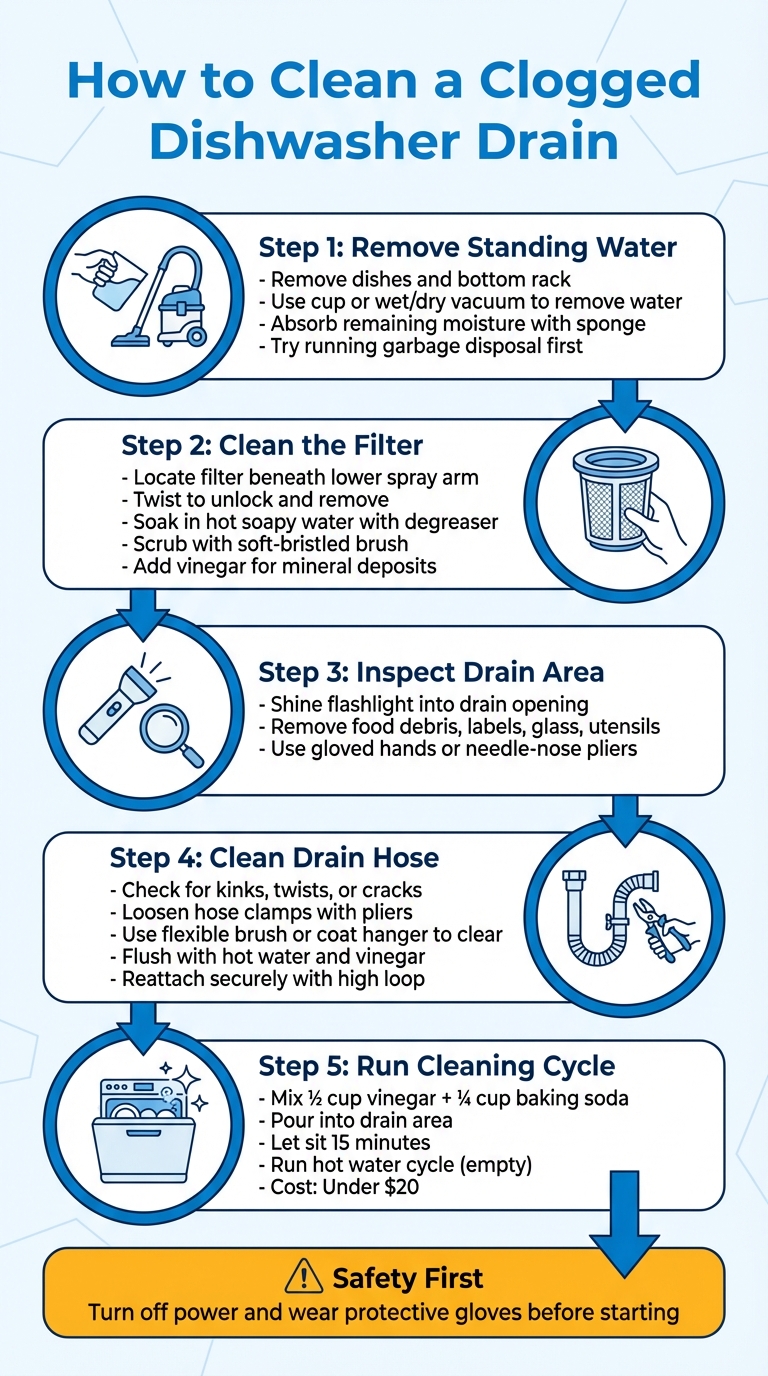
5-Step Guide to Clean a Clogged Dishwasher Drain
Clearing a clogged dishwasher drain might seem daunting, but with the right steps, you can tackle it safely and effectively. By following this guide, you’ll restore proper drainage and keep your dishwasher in top shape.
Remove Standing Water
Start by taking out all dishes, silverware, and the bottom rack to access the dishwasher’s tub. Use a cup or a wet/dry vacuum to remove most of the standing water, and then absorb any leftover moisture with a sponge or towel.
If your dishwasher drains into a garbage disposal, run the disposal first – it might clear the clog and allow the water to drain naturally. Alternatively, try holding down the “Cancel” or “Drain” button for three seconds to activate the drain pump, which could help if the blockage is minor.
Clean the Dishwasher Filter
Find the filter, usually located on the interior floor of your dishwasher beneath the lower spray arm. Most filters have a twist-lock mechanism, but use a screwdriver only if necessary.
Soak the filter in a sink or bowl filled with hot water and a few drops of dish soap that contains a degreaser. Use a soft-bristled nylon brush or sponge to scrub away grime – avoid wire brushes, as they can damage the filter’s mesh. If there are mineral deposits from hard water, adding a bit of vinegar can help dissolve them. Rinse the filter thoroughly with hot water and let it air-dry before putting it back.
Inspect and Clear the Drain Area
With the filter out, shine a flashlight into the drain opening at the bottom of the tub. Check for blockages like food debris, labels, broken glass, or small utensils. Carefully remove these using gloved hands or needle-nose pliers. Once the drain area is clear, move on to cleaning the drain hose.
Clean the Drain Hose
The drain hose is usually connected behind the dishwasher or under your sink, leading to the garbage disposal or sink drain pipe. Inspect it for kinks, twists, or cracks, especially if it’s older rubber.
Loosen the hose clamps at both ends with pliers, and have a pan ready to catch any drips. Once disconnected, use a long flexible brush, pipe cleaner, or straightened coat hanger to break up any clogs. Flush the hose with hot water or a mix of hot water and vinegar to remove any lingering residue. As Steve from HomeApplianceGeek.com advises:
avoid chemical drain cleaners – they can harm your dishwasher’s internal components.
Reattach the hose securely and ensure it forms a high loop under the counter to prevent backflow.
Run a Cleaning Cycle
After clearing all blockages, finish by running a cleaning cycle. Mix 120 mL (½ cup) of white vinegar with 60 mL (¼ cup) of baking soda and pour it into the drain area at the bottom of the tub. Let it sit for 15 minutes to break down grease and debris. Then, run a hot water cycle without any dishes to rinse everything out. This method is both effective and budget-friendly, costing under $20.
When DIY Cleaning Isn’t Enough
Sometimes, even your best efforts with home remedies just won’t cut it. If your dishwasher still refuses to drain after you’ve tried all the recommended cleaning steps, it might be time to bring in the experts.
Signs You Need Professional Help
There are several warning signs that indicate it’s time to call a professional:
- Persistent standing water: If water remains in the dishwasher despite cleaning the filter and drain hose, the blockage could be deeper in your plumbing system.
- Pump motor issues: Hearing the pump motor running without any water movement? This could mean the impeller is stuck or the motor has burned out, both of which require expert attention.
- Unusual noises: Gurgling, thumping, or choking sounds during the drain cycle might point to a clog in your secondary or main sewer lines.
- Sink drainage problems: If water backs up into your sink while the dishwasher runs – or if your sink drains slowly even when the dishwasher is off – the issue could be within your plumbing lines.
- Visible leaks: Leaks around the door or underneath the dishwasher demand immediate action to prevent damage to your cabinets and flooring.
- Multiple slow-draining fixtures: If toilets, showers, and the dishwasher are all draining slowly, it could indicate a severely blocked or broken sewer line.
Additionally, mechanical failures like a broken drain pump, solenoid, timer, or control board should be diagnosed by a professional. While hiring a service may cost more upfront than DIY fixes, it can save you from even pricier repairs down the road.
Why Choose POM Plumbing Service Company

For over 20 years, POM Plumbing Service Company has been a trusted name in Toronto and the GTA. Their team of licensed and insured professionals specializes in both residential and commercial plumbing issues, offering expertise that goes beyond just your dishwasher.
Using advanced diagnostic tools, they can quickly pinpoint whether the problem lies in your appliance or deeper within your plumbing system. This approach not only saves you time but also prevents unnecessary repairs.
POM Plumbing provides emergency services for urgent issues and scheduled maintenance plans to keep your appliances running smoothly. With clear pricing and solid warranties, they ensure your dishwasher drain is properly cleared and sealed, helping to avoid future leaks or damage.
How to Prevent Dishwasher Drain Clogs
Did you know that 18% of dishwasher-related service requests are due to units that won’t drain? The good news is that many of these issues can be avoided with a few simple maintenance habits.
Rinse Dishes Before Loading
Before loading your dishwasher, scrape off large food particles while leaving behind light residue. According to Scott Flint, a Professional Appliance Repair Technician at Family Handyman:
“Scrape off the chunky stuff but leave on the sauce! Some food residue on the dishes acts as a catalyst to activate your detergent’s cleaning action.”
Also, be sure to remove paper labels from jars before placing them in the dishwasher. Another critical step? Run your garbage disposal before starting the dishwasher. This ensures the shared drain line is clear, as many dishwashers drain through the disposal. Taking these small steps can prevent clogs before they even have a chance to form.
While proper loading habits help, regular maintenance is just as important for keeping your dishwasher in top shape.
Schedule Regular Maintenance
Consistency is the secret to keeping your dishwasher draining smoothly. Here’s what you should do:
- Clean the filter every two weeks to prevent debris buildup.
- If you use your dishwasher daily, perform a deep clean every month. For less frequent use, clean it every two to three months.
- Once a month, run an empty cycle with 120 mL of white vinegar or a commercial cleaner to break down grease and limescale.
- Inspect the drain hose annually for any signs of damage, and check the drain area weekly to remove any debris.
Lastly, remember that dishwasher filters generally need replacing every five years. However, regular cleaning can significantly extend the filter’s lifespan, saving you time and money in the long run.
Professional Dishwasher Drain Cleaning Services
Sometimes, when DIY efforts just don’t cut it, it’s time to call in the pros.
Complete Drain Cleaning Solutions
If your dishwasher drain woes persist, professional diagnostics can uncover the root of the problem – whether it’s the appliance itself, the drain line, or even your home’s plumbing system. POM Plumbing Service Company serves both residential and commercial clients across Toronto and the GTA, offering thorough inspections to identify the exact cause of the issue.
Their technicians come equipped with specialized tools to tackle stubborn grease, food debris, and sludge build-up. Beyond cleaning, they can also diagnose mechanical issues like a failing drain pump or motor. Common DIY mistakes, such as forgetting to remove the knockout plug during garbage disposal installation, are also addressed by these experts. With over 20 years of experience and advanced tools, POM Plumbing ensures every component is correctly sealed during reassembly, protecting your kitchen from hidden leaks that could damage cabinets or floors.
Emergency Services for Urgent Problems
Some drainage problems require immediate attention, especially if you’re dealing with standing water, recurring backups, or visible leaks. That’s where emergency services come in. POM Plumbing Service Company provides fast-response plumbing assistance for urgent situations throughout the GTA.
The cost of professional drain cleaning typically ranges from $150 to $345, with an average of about $240. While this is a bigger investment compared to the under-$20 price tag of DIY supplies, professional services offer the assurance of proper diagnosis, advanced equipment, and a leak-free reassembly. For a quote tailored to your specific issue, reach out to POM Plumbing today.
Conclusion
Keeping your dishwasher drain clear and clog-free is all about consistent maintenance and quick action when issues arise. Tackling a clogged drain can often be straightforward: disconnect the power, remove any standing water, clean the filter and drain components, and check the air gap. To avoid grease and sludge build-up, consider running a monthly vinegar cleaning cycle.
Preventing future clogs is equally important. Scrape off large food particles before loading dishes. As Scott Flint, a professional appliance repair technician, aptly puts it:
Scrape off the chunky stuff but leave on the sauce! Some food residue on the dishes acts as a catalyst to activate your detergent’s cleaning action.
Additionally, running your garbage disposal before starting the dishwasher can help keep the drain line clear.
If you notice lingering water or hear a persistent humming sound, it could indicate a mechanical issue, such as a failing pump. Address any leaks immediately, and if the problem persists, it’s best to consult a licensed plumber. These preventive efforts, combined with the repair steps mentioned earlier, will help keep your dishwasher running smoothly for the long haul.
For homeowners in Toronto and the GTA, POM Plumbing Service Company provides expert diagnostics and specialized tools to handle even the most stubborn clogs, mechanical issues, and plumbing line blockages. With over 20 years of experience and emergency services available, they’re a trusted partner in keeping your dishwasher – and your kitchen – functioning efficiently.
Need assistance or a custom quote? Contact POM Plumbing today for reliable service you can count on.
FAQs
What should I do first if my dishwasher isn’t draining properly?
If your dishwasher isn’t draining as it should, the first step is to remove any standing water from the bottom of the machine. Once that’s done, take a look at the dishwasher filter – it’s a common spot for food particles and grease to collect, which can lead to clogs. Clean it thoroughly to ensure proper drainage.
Next, check the drain area for any obvious blockages or debris that might be causing the issue. For safety, always make sure the dishwasher is turned off before continuing. You can also inspect the drain hose by disconnecting it and flushing it with water to clear any potential blockages. These simple steps can resolve most drainage problems and get your dishwasher back in action.
How can I stop food debris from clogging my dishwasher?
To keep your dishwasher running without any hiccups, start by scraping off large food remnants into the trash or compost before loading your dishes. This simple step helps prevent food debris from building up in the filter or clogging the drain.
If you want to go the extra mile, give your dishes a quick rinse to remove any stuck-on food or grease. Also, make it a habit to check and clean the dishwasher filter regularly. This ensures proper water drainage and avoids potential blockages. These small efforts can make a big difference in keeping your dishwasher efficient and lasting longer.
When should I call a professional to fix a clogged dishwasher drain?
If your dishwasher drain stays clogged even after trying DIY fixes, it might be time to bring in a professional. Stubborn drainage problems, standing water that won’t drain, or clogs buried deep in the drain system or hose can be tough to tackle without expert tools and knowledge.
Professional help is also a smart move if you’re dealing with bad smells, mould growth, or bacteria buildup that household remedies like baking soda or vinegar can’t fix. Plus, if the problem stems from something more serious – like a damaged hose or an issue with the sewer line – a professional can accurately diagnose and repair it.
If the clog keeps getting worse, happens frequently, or you’re unsure how to address it safely, calling an expert is the best way to protect both your dishwasher and your plumbing system.