


When your drain gurgles after flushing the toilet, it’s a sign of air pressure imbalances in your plumbing. This happens when air can’t flow properly through vent stacks or when clogs restrict water movement. Ignoring it can lead to bigger issues like sewer backups, sewer gas exposure, or costly repairs. Here’s what you need to know:
- Common Causes: Blocked vent stacks, partial clogs, or main sewer line issues.
- Symptoms to Watch: Gurgling in multiple fixtures, foul odours, slow drainage, or water backing up.
- Quick Fixes: Try plunging, using a drain snake, or checking roof vents for blockages.
- When to Call a Plumber: If multiple fixtures gurgle, odours persist, or water backs up into lower drains.
Taking action early can save you from expensive repairs and health risks. Regular maintenance, like keeping vents clear and avoiding grease in drains, can prevent future problems.
Plumbing Tips: What to do when Sink Gurgles when you Flush the Toilet
sbb-itb-1e3c609
How Your Plumbing Drain and Vent System Works
Your home’s plumbing system is a careful balancing act – it directs wastewater downward while maintaining proper air pressure throughout. When this balance is off, you might hear that telltale gurgling sound. To understand why, it helps to see how drain pipes and vent pipes work together.
Drain pipes are responsible for carrying wastewater and solids away from your sinks, toilets, and other fixtures. As water flows through these pipes – like during a toilet flush – it pushes air ahead of it and leaves a vacuum behind. If there’s no way to replace that displaced air, the system struggles, slowing drainage and creating negative pressure. That’s when air gets pulled through the nearest opening, like your sink or shower drain, causing gurgling noises.
This is where vent pipes come into play. These pipes, which typically exit through your roof, allow fresh air into the plumbing system to replace the air displaced by flowing water. Think of it like pouring juice from a can: without a second hole for air, the liquid glugs out unevenly. Proper venting ensures smooth water flow and keeps air pressure balanced throughout your home.
“A simple way to think about it: water can’t move without air. If the system can’t breathe normally, it steals air through the nearest drain opening, creating that bubbling sound.”
– Sewer Solutions NW
The Role of Vent Pipes
Vent pipes act as the pressure regulators of your plumbing system. When you flush a toilet, the sudden rush of water creates both positive pressure (pushing air ahead) and negative pressure (pulling air behind). Vent stacks prevent these pressure swings from disrupting the system by letting air enter through the roof opening instead of being pulled through nearby drains. They also safely vent sewer gases, like methane and hydrogen sulphide, out above the roofline instead of letting them seep back into your home.
In Canada, vent pipes face specific challenges, especially in winter. Frost can build up at the roof opening, blocking airflow entirely – a phenomenon known as “frost closure.” Leaves, bird nests, and other debris can also obstruct vents. To address these issues, the Quebec Construction Code requires precise installation standards, like a drainage slope of 1:50 (about 2%) for pipes under 3 inches in diameter, ensuring smooth flow and preventing solids from getting left behind.
To avoid blockages, inspect your roof vents regularly, especially after storms or during cold snaps. Adding a mesh screen or an approved vent cap can keep out debris and small animals without disrupting airflow.
The Function of P-Traps
While vent pipes handle airflow, P-traps create a water barrier that protects your home from sewer gases. If you look under any sink, you’ll spot a U-shaped pipe – that’s the P-trap. This design holds a small amount of water, which acts as a seal between your home and the sewer system. Without this water barrier, harmful gases could flow freely into your living space, and gurgling noises would signal an imbalance in the system.
If vent pipes are blocked or drains are clogged, negative pressure can siphon the water out of the P-trap, a process called “trap siphonage.” Once the water seal is gone, sewer gases and unpleasant odours can enter your home.
In Canada’s dry winters, indoor humidity often drops below 20%, which speeds up water evaporation in P-traps – especially in rarely used fixtures like basement floor drains or guest bathrooms. To prevent this, pour about one litre of water into these drains every two to three weeks. This keeps the seal intact and stops both odours and gurgling sounds.
It’s also important to know the difference between P-traps and S-traps. P-traps have a horizontal outlet that connects into the wall, making them easier to vent properly. Older S-traps, which connect directly through the floor, are more prone to siphoning and no longer meet modern building codes. If gurgling persists, checking the type of trap in use might help pinpoint the issue.
Common Reasons Drains Gurgle After Flushing
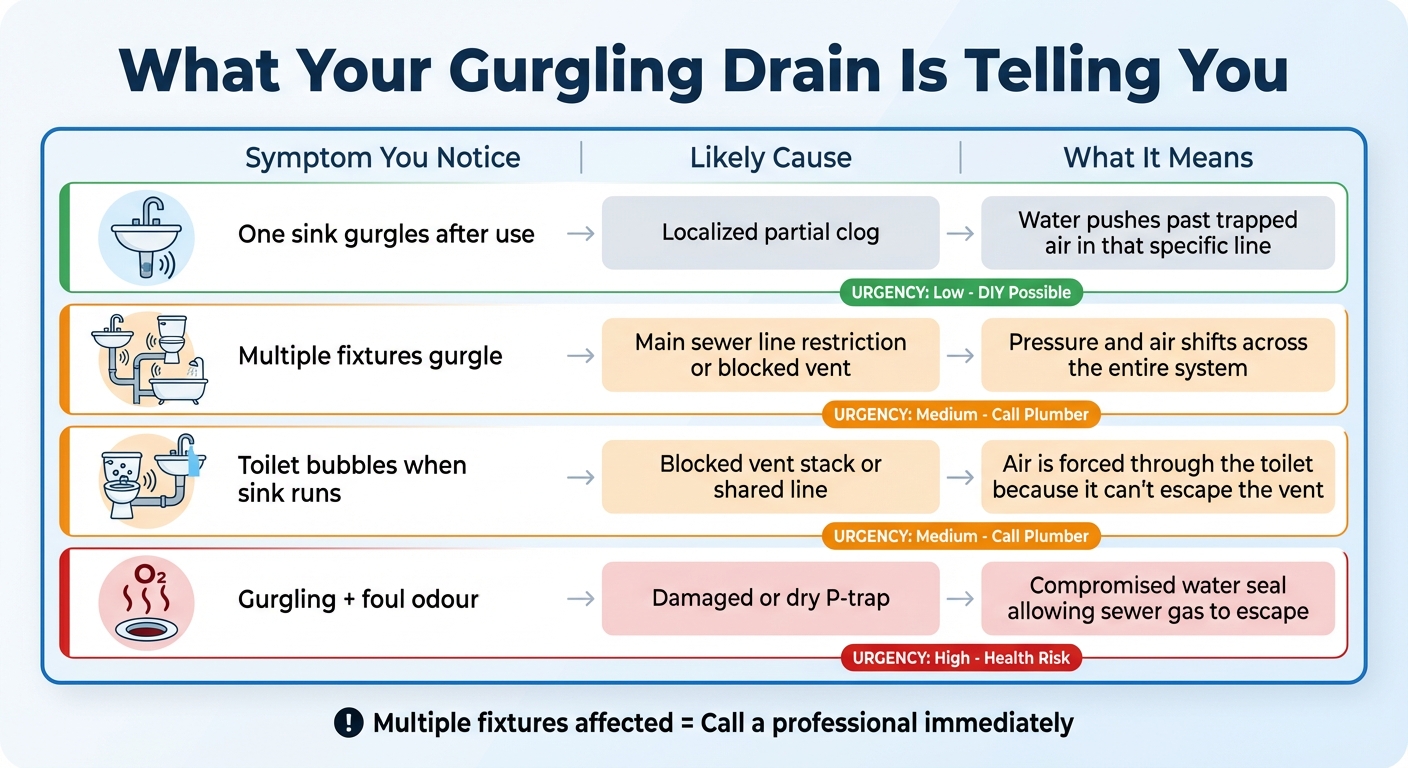
Gurgling Drain Symptoms and Causes Quick Reference Guide
When you hear gurgling after flushing, it’s a sign that your plumbing system is having trouble maintaining proper airflow. The noise happens because air, unable to follow its usual path, is forced through the water in your P-trap.
The underlying issues typically fall into four main categories. For example, if only your bathroom sink gurgles, it’s likely a localized clog. But if flushing the toilet causes your bathtub to bubble, there’s probably a problem affecting the entire system. These symptoms point to blockages or pressure imbalances that disrupt your plumbing’s equilibrium.
| Symptom | Likely Cause | What It Means |
|---|---|---|
| One sink gurgles after use | Localized partial clog | Water pushes past trapped air in that specific line. |
| Multiple fixtures gurgle | Main sewer line restriction or blocked vent | Pressure and air shifts across the entire system. |
| Toilet bubbles when sink runs | Blocked vent stack or shared line | Air is forced through the toilet because it can’t escape the vent. |
| Gurgling + foul odour | Damaged or dry P-trap | Indicates a compromised water seal allowing sewer gas to escape. |
Identifying your specific situation can help you determine whether it’s a DIY fix or time to call a professional. Let’s break down the four common causes of these noises.
Partial or Full Drain Clogs
Clogs happen when debris builds up in a pipe, narrowing the water’s pathway. When water from a toilet flush moves through this restricted area, it traps air, which escapes through nearby drains and creates gurgling noises.
The type of debris causing the clog often depends on the location. Bathroom drains tend to collect hair, soap residue, dirt, and toilet paper. Kitchen drains, on the other hand, are more likely to clog due to grease, food particles, and oil. The worst offenders are items that should never be flushed, such as feminine hygiene products, baby wipes, dental floss, paper towels, and diapers. These obstructions trap air, which then escapes through other drains.
The location of the gurgling often reveals where the clog is. For instance, if flushing the toilet causes your kitchen sink to gurgle, the issue is likely in the main sewer line rather than a single fixture. Blocked vents can also amplify these problems.
Blocked or Improper Plumbing Vent
Your plumbing vent stack is crucial for maintaining airflow. A blocked vent forces the system to pull air from other fixtures, disrupting the balance. Common culprits include leaves, bird nests, rodents, or ice buildup during winter.
“Think of your drain vent pipe as your plumbing system’s lungs. Just as we need air to breathe, your drains need proper airflow to function efficiently.”
– John’s Sewer
When the vent is blocked, negative pressure can form, potentially siphoning water out of your P-traps (trap siphonage). This not only causes gurgling but can also allow sewer gas odors into your home. Since vent issues affect multiple fixtures, they require immediate attention.
Sewer Line Issues
Problems with the main sewer line impact your entire plumbing system. Unlike localized clogs, a blockage here causes air and pressure to back up through multiple drains. For example, flushing an upstairs toilet might cause your basement shower to gurgle, or you might hear noises in your bathtub when using the kitchen sink.
“Drain gurgling across multiple areas usually means pressure is building behind a restriction in the main sewer line.”
– Sewer Solutions NW
Tree roots are a common cause, as they naturally gravitate toward the warmth and moisture of underground pipes. They can penetrate cracks or loose joints, eventually causing significant blockages. Other causes include grease buildup, sludge, or items that shouldn’t have been flushed.
Structural damage from ground settling, temperature shifts, or aging pipes can also disrupt wastewater flow. In colder climates, rapid temperature changes can make PVC pipes brittle and prone to cracking. These cracks trap air, creating pressure imbalances that lead to gurgling sounds.
Start by checking your basement floor drain, as main-line issues often show up at the lowest point in your home. Look for signs like moisture, rising water, or foul odours. Outside, watch for wet patches, unusual soil settling, or sewage smells, which could indicate a broken or leaking pipe.
Septic System Problems (If Applicable)
If your home uses a septic system, it could be another source of gurgling. When a septic tank is overfilled or its drain field becomes clogged, wastewater can’t exit the plumbing system properly. This forces air back through your drains, creating noises similar to those caused by main sewer blockages.
A clogged drain field might result from saturated soil during heavy rain or rapid snowmelt, or from solid waste clogging the distribution pipes. If the drain field can’t absorb treated wastewater, pressure builds in the septic tank and backs up into your home’s plumbing.
Other septic issues include damaged baffles, excessive sludge, or a malfunctioning distribution box. If your tank hasn’t been pumped in several years, waste buildup could be restricting water flow. Regular maintenance – typically every three to five years based on household size and usage – is crucial.
Septic-related gurgling often comes with additional signs, such as slow drains, sewage odours near the tank or drain field, or soggy ground above the system even during dry weather. If you notice these symptoms along with gurgling, it’s time for a professional inspection and possibly pumping or repairs.
Is a Gurgling Drain Dangerous?
A gurgling drain might seem like a minor annoyance, but it often points to plumbing problems that could impact your health, home, and wallet if ignored.
One of the immediate concerns is sewer gas exposure. That gurgling sound often means the water seal in your P-trap has been disrupted by negative pressure. When this happens, sewer gases like hydrogen sulphide (the source of that “rotten egg” smell) can seep into your home. These gases aren’t just unpleasant – they can cause headaches, nausea, and even respiratory issues.
Another red flag is the possibility of a complete blockage. A partial obstruction causing gurgling noises can quickly worsen into a full-blown backup, potentially leading to sewage spilling into your home. This kind of backup is not only a health hazard but also an expensive mess to clean and repair.
There’s also the risk of structural damage. Persistent pressure imbalances in your plumbing system can strain your pipes, leading to cracks, leaks, or even a full sewer line collapse. If sewage starts leaking underground, it can saturate the soil around your foundation, causing it to settle or shift. And the cost difference between early fixes and emergency repairs is significant: preventive measures like installing a cleanout might cost around $300, while emergency excavation and pipe replacement could easily run over $5,000.
If your gurgling drain is accompanied by foul odours, slow drainage across multiple fixtures, or dampness near your basement floor drain, don’t wait. Call a professional right away to avoid a hazardous and costly situation.
Other Warning Signs to Watch For
Gurgling drains rarely happen on their own. Alongside the gurgling sounds, your plumbing might send other signals like slow drainage, unpleasant odours, or simultaneous bubbling across multiple fixtures. Let’s break down these symptoms and what they could mean for your home.
Slow Drains
If water is draining slowly from your sink, tub, or shower, it usually points to a partial clog. This blockage slows the water flow and traps air pockets behind it. When you flush the toilet, the rush of water forces the trapped air to escape, creating bubbling sounds in nearby drains. If the issue is isolated to one fixture, the clog is likely local. However, when multiple drains are slow at the same time, it suggests a larger problem, like a system-wide restriction. Pairing this with other symptoms means your plumbing system may need a closer look.
Foul Odours from Fixtures
Odours can also signal trouble in your plumbing. A “rotten egg” smell isn’t just unpleasant – it’s a red flag that sewer gases might be leaking into your home. This often happens when blocked vents create negative pressure, pulling water out of P-traps and removing the barrier that keeps sewer gases at bay. If you notice odours from multiple fixtures, it could point to a venting issue or a blockage in the main sewer line. During Canadian winters, this problem can worsen due to low indoor humidity caused by forced-air heating, which speeds up water evaporation in P-traps. For a specific sink, try running water for 30 seconds to refill the P-trap; if the smell returns quickly, a blocked vent pipe is likely the culprit. Keeping vents clear ensures proper airflow and prevents these odours.
Multiple Drains Bubbling at the Same Time
When two or more fixtures bubble or gurgle together – especially during a toilet flush – it’s a sign of a more serious issue. This usually points to a partial blockage in the main sewer line. A blocked vent stack on your roof can also cause this by preventing proper pressure equalization. This creates a vacuum that pulls air through P-traps, causing widespread gurgling. If you notice bubbling in multiple fixtures, like your kitchen sink and toilet, it’s a sign of shared pipe blockage. This could also be a warning of an impending mainline backup, which might lead to sewage overflowing into the lowest drains in your home, such as a basement floor drain or shower. If you spot these signs, avoid using appliances that use a lot of water and check your lowest drain for any pooling or moisture. Acting early can help prevent a messy and costly backup.
What You Can Try Before Calling a Plumber
Before you dial a plumber, there are a few simple steps you can take to address minor gurgling issues. Start by running water through different fixtures to see if the problem is confined to one drain or affecting multiple areas. This quick test can help you pinpoint the issue and choose the right solution. Here are three practical methods to resolve clogs and improve airflow in your plumbing system.
Plunge the Affected Drain
A trusty plunger can often handle minor clogs causing gurgling. Ensure there’s enough water in the toilet bowl to fully cover the plunger head. To increase pressure, seal nearby drains in sinks or tubs using stoppers or wet cloths. Once sealed, pump the plunger vigorously about 12 times to loosen the clog. If a plunger doesn’t do the trick, try a toilet auger. Insert the auger into the drain and turn the handle clockwise when you encounter resistance. Mark the cable at the point of resistance to gauge the depth of the blockage.
Inspect and Clean Roof Vents
Blocked roof vents are another common cause of gurgling drains. If it’s safe for you to access the roof, locate the vent pipes – typically 3–4 inches (8–10 cm) in diameter – and check for blockages like leaves, bird nests, or ice. Clear visible debris by hand, then use a garden hose to flush out deeper obstructions. For tougher clogs, insert a plumbing snake into the vent opening.
Safety tip: Only attempt this if you’re comfortable working at heights – otherwise, hire a professional. In Canadian winters, frost can block vent openings, so check for ice and clear any snow covering the pipe.
Use a Drain Snake
For deeper clogs that a plunger can’t reach, a drain snake can be a game-changer. Start by removing the drain plate or stopper to access the pipe. Slowly feed the snake into the drain while turning the handle clockwise. When you hit resistance, keep turning gently to break through the clog – avoid forcing it to prevent pipe damage. Once the clog is cleared, carefully pull the snake back out, which often brings debris like hair with it. Finish by flushing the drain with hot water to remove any remaining residue.
Caution: Never use a drain snake right after pouring chemical cleaners down the pipe, as the chemicals can splash back and cause harm.
| DIY Method | Best For | Key Tool Needed |
|---|---|---|
| Plunging | Minor, localized toilet clogs | Flange plunger |
| Auger/Snake | Stubborn or deep clogs in the trap | Toilet auger |
| Hose Flush | Blocked vent stacks (leaves, nests) | Garden hose |
| Trap Refill | Dry P-traps in unused guest baths | 1 litre of water |
Choose the method that matches the severity and location of your clog. For rarely used drains, pour one litre of water regularly to keep the P-trap from drying out. If there’s minor organic buildup, try a natural fix: pour one cup of baking soda followed by two cups of vinegar, let it fizz for 30 minutes, and then flush with water. Avoid harsh chemical cleaners – they rarely reach the actual clog and can damage your pipes.
When to Call a Professional Plumber
Sometimes, even your best DIY efforts won’t resolve plumbing issues. If you’ve tried the basics and the problem persists, it might be time to bring in a professional. Certain symptoms can signal deeper issues that require expert tools and knowledge.
For instance, if multiple fixtures gurgle at the same time – like a toilet flush causing bubbling in the shower or bathtub – it could point to a blockage in the main sewer line. This kind of “cross-talk” between fixtures suggests the problem is deep within your plumbing system, far beyond the reach of plungers or drain snakes. Fixing this often requires specialized equipment such as motorized augers or hydro-jetting.
Another red flag is water backing up in lower-level drains. For example, flushing a toilet might cause water to rise in a basement shower or floor drain. This indicates a severe restriction in the main line, putting your system at risk of a complete backup. Continuing to use water in this situation can worsen the blockage and lead to a messy sewage overflow.
Sewer gas odours combined with gurgling noises should also be taken seriously. If you notice a “rotten egg” smell, it could mean hydrogen sulphide is escaping due to dry P-traps or blocked vent stacks. Besides being unpleasant, this can pose health risks, so it’s crucial to address it promptly with professional help.
Plumbers have the tools to investigate and resolve these complex issues. Using waterproof video cameras, they can inspect deep within your pipes to identify problems like tree root intrusion, collapsed sections, or stubborn blockages. They can also access roof vents to clear frost blockages – something that’s especially common in Canadian winters – and ensure your venting system is functioning properly. If the problem turns out to be with a municipal sewer main, a professional can confirm this and help coordinate with local authorities.
Here’s a quick guide to help you assess the situation:
| Symptom | Likely Cause | Urgency Level |
|---|---|---|
| Single sink gurgles | Localized partial clog | Low (Try DIY first) |
| Multiple fixtures gurgle | Main sewer line restriction | High (Call a plumber) |
| Gurgling + sewer odour | Blocked vent or dry P-trap | Medium/High (Health risk) |
| Toilet bubbles when sink runs | Shared line/main line blockage | High (Call a plumber) |
| Water backing up in tub | Severe main line blockage | Critical (Immediate action) |
If you notice any of these signs, don’t wait – calling a professional could save you from a much bigger problem down the line.
How a Professional Diagnoses Gurgling Drains
When it comes to gurgling drains, professional plumbers rely on a methodical approach to identify the root cause and avoid unnecessary repairs.
One of the key tools in their arsenal is a camera inspection. By inserting a high-resolution, waterproof camera into the main sewer line, plumbers can visually detect problems like tree roots invading the pipes, heavy grease accumulation, or even a collapsed section. This process can also reveal structural issues, such as a sagging pipe caused by an improper slope, where water tends to pool.
“A camera inspection eliminates guesswork and allows us to recommend the most effective and efficient repair solution – whether that’s a deep cleaning, pipe lining, or replacement.” – Pipelining Northwest
Beyond the camera inspection, plumbers assess other parts of the system. The vent system is carefully examined, including roof vents, which can become blocked by bird nests, leaves, or ice plugs – especially during harsh Canadian winters. They also observe cross-fixture bubbling. For example, if flushing a toilet causes bubbling in a sink or tub, it could point to a blockage in the main sewer line rather than a localized clog. These observations build on earlier signs, like negative air pressure or unusual sounds, helping plumbers pinpoint the issue with precision.
To measure the severity of the problem, some professionals use a point system. Points are assigned for indicators like multiple gurgling drains, bubbling during a flush, unpleasant odours, or slow drainage. A higher score typically signals a more severe blockage that demands immediate attention.
The ultimate goal is to determine whether the issue stems from something minor – like a clogged fixture – or something more serious, such as a blocked vent stack or a major sewer line problem. By diagnosing the issue accurately before starting any invasive work, plumbers ensure you only pay for the repairs you truly need. This careful process not only resolves the current problem but also helps prevent future drain and vent issues.
Preventing Future Drain and Vent Problems
Once you’ve tackled immediate plumbing issues, the next step is to focus on preventing them from coming back. With a few straightforward habits and some regular upkeep, you can keep your plumbing system in great shape and avoid costly fixes down the road.
Schedule Routine Maintenance
Annual plumbing inspections are a smart way to catch problems early. Professionals can identify warning signs like slow drains, minor vent blockages, or even tree roots creeping into your sewer line – issues that, if left unchecked, could lead to major clogs. If you live in an older home or have mature trees on your property, consider scheduling a sewer scope inspection every few years.
Adding a cleanout during a renovation or new construction can also be a game-changer. While it might cost about $300 upfront, it could save you thousands by avoiding emergency repairs – especially if accessing a clog would otherwise require breaking through concrete floors. Regular maintenance helps keep vents and drains working efficiently, preventing the pressure imbalances that cause annoying noises like gurgling.
Avoid Pouring Grease or Debris Down Drains
Hot grease, fats, and oils may seem harmless when liquid, but they solidify as they cool, sticking to your pipes and trapping other debris like food particles or hair. Instead of pouring them down the drain, let them cool and discard them in the trash. Similarly, avoid flushing foods that expand or don’t decompose, as these can lead to stubborn blockages.
To further protect your drains, use screens or hair catchers in sinks and showers to catch debris before it enters your system. If you rely on a garbage disposal, run water for several seconds after use to ensure waste is fully flushed through the pipes.
Monitor Roof Vents Regularly
Roof vents are often overlooked but play a crucial role in your plumbing system. Check them at least twice a year – ideally in spring and fall – for leaves, bird nests, or other debris that could block airflow. After storms or heavy snowfall, inspect vents for obstructions, as moist air can freeze at the vent’s exit, creating an ice plug. To avoid this “frost closure”, insulate the vent pipe in your attic to keep air flowing freely.
You can also install a mesh screen or vent cap to keep out animals and large debris. Trimming overhanging tree branches further reduces the risk of debris falling onto your roof.
For drains that don’t see regular use – like those in guest bathrooms or basement floors – pour about a litre of water into them every two to three weeks to keep them functional. These simple steps, combined with regular maintenance, can keep your plumbing system running smoothly and prevent negative air pressure from causing problems.
Conclusion
A gurgling drain is more than just an annoyance – it’s a warning sign of a plumbing issue. As Plumbing Quebec puts it:
“The gurgle is a distress signal, an indication that this balance has been compromised. The system is literally gasping for air.”
The cause could be anything from a partial clog to a blocked vent or even a main sewer line problem. Acting quickly can save you from expensive repairs and potential health hazards.
To avoid gurgling drains, adopt these habits: flush only human waste and toilet paper, keep grease out of your pipes, and use drain screens to catch debris. For rarely used drains, pour about 1 litre of water into them occasionally to maintain the P-trap seal. Also, inspect your roof vents periodically to ensure they’re clear of obstructions. These simple steps can prevent minor clogs from escalating into major plumbing emergencies.
If plunging or snaking doesn’t solve the problem – or if multiple fixtures are affected – it’s time to bring in a professional. Routine drain cleaning starts at around $99, but more severe issues, like a main sewer line blockage, can cost upwards of $5,000. If you notice multiple gurgling fixtures or sewer odours, treat it as an urgent main-line issue and limit water usage immediately.
FAQs
Why does my toilet flush make other drains gurgle?
If flushing your toilet makes other drains gurgle, it’s usually a sign of a blockage or a problem with the plumbing vent system. These issues cause negative air pressure, which traps air and results in those gurgling noises across multiple fixtures. The most common culprits? Clogged drains, obstructed vents, or trouble with the sewer line.
Can a blocked roof vent cause sewer smells indoors?
Blocked roof vents can indeed lead to sewer odours inside your home. These vents play a key role in maintaining proper airflow in your plumbing system. When they’re obstructed, the imbalance creates negative air pressure, which can pull unpleasant sewer gases into your living space. It’s important to deal with this issue quickly to avoid potential complications with your plumbing.
How do I tell a vent problem from a sewer line clog?
Gurgling sounds in multiple fixtures, especially when they’re far apart – like a toilet and a kitchen sink – often point to a vent issue. This can also lead to problems like sewer odours or sluggish drainage affecting several drains at once. On the other hand, a sewer line clog typically causes more localized problems. You might notice slow drainage or gurgling in one specific fixture, and if multiple fixtures are used simultaneously, water could start to back up.