


If your basement feels damp, smells musty, or has visible water stains, it may be time to consider installing a sump pump. These issues often signal water intrusion, which can lead to costly damage, mould growth, and structural problems. In Toronto and the GTA, where clay-heavy soil and seasonal weather challenges increase the risk of basement flooding, over 60% of homes face water damage risks. A sump pump can help protect your home by diverting excess groundwater away from your foundation.
Key Takeaways:
- Warning Signs: Damp floors, musty odours, water stains, or efflorescence (white chalky residue) are early indicators of water problems.
- Why It Matters: Basement flooding can cost $8,000–$25,000 in repairs, with insurance claims averaging $43,000 in Canada.
- How a Sump Pump Works: It collects rising groundwater and pumps it away from your home, reducing hydrostatic pressure and preventing flooding.
- Installation Costs: Basic systems cost $800–$1,500, while battery backup systems range from $1,200–$2,000.
- Financial Support: Toronto’s Basement Flooding Protection Subsidy offers up to $3,400 for eligible installations.
Don’t wait for water damage to escalate. A sump pump is a simple, effective way to safeguard your home and avoid expensive repairs.
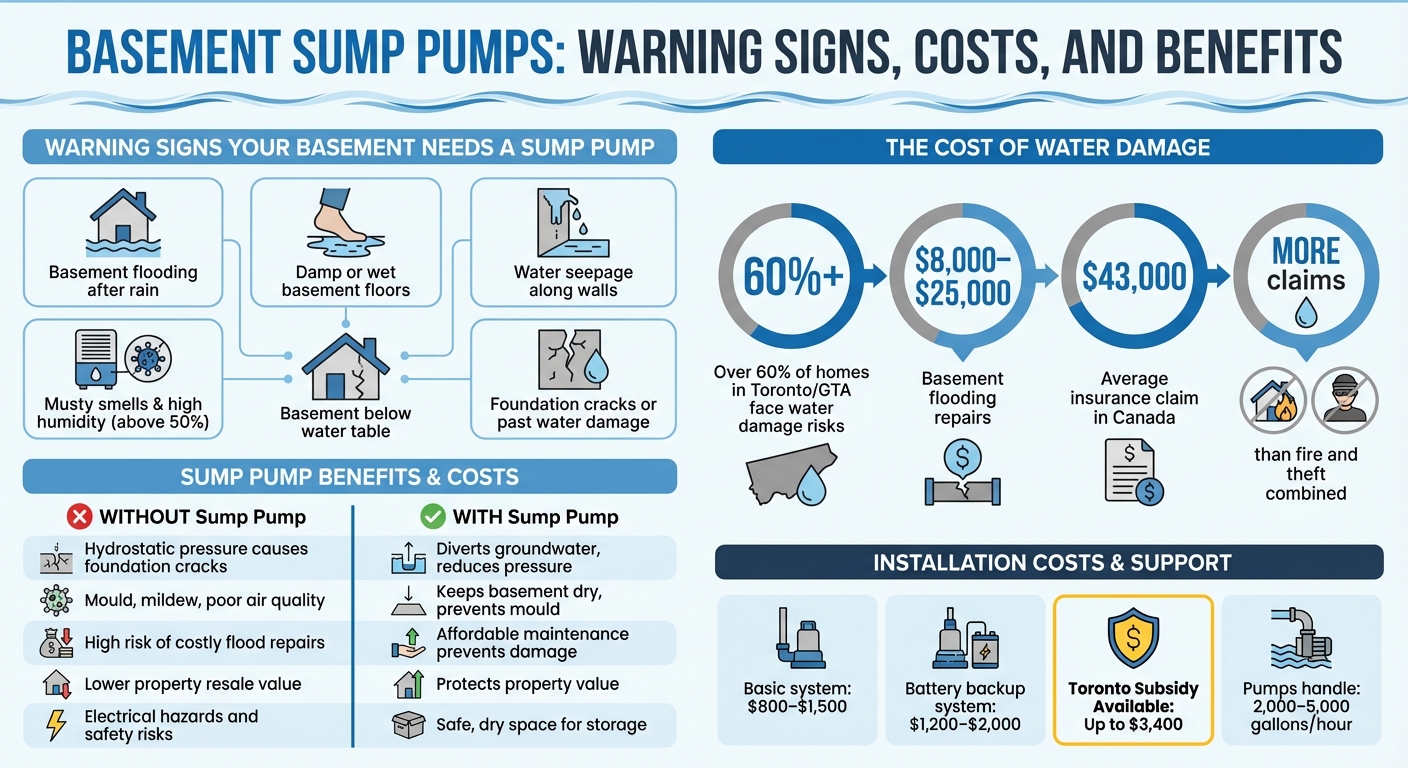
Basement Water Damage Warning Signs and Sump Pump Benefits
Signs You Need a Basement Sump Pump
sbb-itb-1e3c609
What Does a Sump Pump Do?
A sump pump sits in a pit at the lowest point of your basement (usually about 45–60 cm wide and 60 cm deep). Its job? To collect groundwater from perimeter drainpipes or natural seepage when the water table rises, keeping your basement dry and safe from flooding.
When the water in the pit reaches a certain level, a float switch or pressure sensor activates the pump’s motor. The motor powers an impeller that pushes water out through a discharge pipe. This pipe carries the water away from your home, releasing it at least six metres from your foundation to prevent it from flowing back.
“Consider it the ‘heart’ of your basement waterproofing system.” – Holly Richards-Purpura, Content Writer, Groundworks
This setup is especially crucial in areas with clay-heavy soil, where poor drainage increases hydrostatic pressure, forcing moisture through foundation cracks. It’s also a lifesaver during rapid spring snowmelts or heavy summer storms, which can overwhelm older sewer systems. Many residential sump pumps can handle between 2,000 and 5,000 gallons of water per hour, making them a powerful defence against flooding.
A key feature of the system is a one-way check valve in the discharge pipe. This valve prevents water from flowing back into the pit after the pump shuts off, reducing strain on the motor and extending its lifespan. Without this safeguard, the pump could short-cycle, leading to premature wear and costly repairs. Considering basement water damage repairs can range from $8,000 to $25,000, a sump pump is a smart investment.
Signs Your Basement Might Need a Sump Pump
If you’ve noticed damp floors, musty smells, or water stains on your basement walls, it might be time to consider a sump pump. Catching these issues early can save you a lot of money – flooded basements in Canada average $43,000 per insurance claim. Here’s a closer look at the warning signs that shouldn’t be ignored.
Basement Flooding After Rain
Does your basement floor turn into a puddle zone after heavy rain or spring snowmelt? This could mean your drainage system isn’t keeping up. When the soil around your home becomes saturated, it creates hydrostatic pressure, which pushes water through porous concrete and foundation joints. If you’re constantly mopping up water after storms, it’s a clear sign that your drainage system might not be enough to handle the local water table.
Damp or Wet Basement Floors
A damp or wet basement floor often means groundwater is rising and seeping through floor joints and concrete. You might feel cold, damp spots or notice carpets that are mysteriously wet. Basements should ideally stay below 50% humidity – anything higher can lead to mould growth and even structural damage.
Water Seepage Along Basement Walls
Water stains, peeling paint, or bubbling wall coatings along your foundation walls are red flags. These issues signal moisture trapped behind the surfaces. Efflorescence – a white, chalky residue – is another clue that water is moving through masonry. Here’s a quick breakdown of what these signs mean and what you can do:
| Sign of Water Issue | What It Means | What to Do |
|---|---|---|
| Efflorescence (White Powder) | Groundwater leaving mineral deposits as it evaporates | Check exterior waterproofing and drainage |
| Peeling/Bubbling Paint | Moisture trapped behind wall coatings | Seal foundation cracks and improve drainage |
| Rust on Furnace Bases | Previous flooding or persistent dampness | Consider installing or upgrading a sump pump |
These signs, along with persistent odours and other structural issues, point to potential water problems that need attention.
Musty Smells and High Humidity
That musty, damp smell in your basement isn’t just unpleasant – it’s a sign of ongoing water intrusion and likely mould growth. If humidity levels are above 50%, it’s a clear indicator that water is making its way into your basement.
Basement Below the Water Table
Homes in low-lying areas or regions with high groundwater are particularly at risk. If your property sits below the water table, sump pump protection is crucial. To help divert surface water, the ground around your foundation should slope away for at least 1.5 metres with a drop of 75 mm.
Foundation Cracks or Past Water Damage
Visible cracks in your foundation, rust on metal supports, or a history of flooding are all signs of chronic moisture issues. These cracks often result from hydrostatic pressure caused by saturated soil pressing against your home. If your basement has experienced water damage before, the chances of it happening again are high unless proper water management systems are in place.
To address these risks, some municipalities, like the City of Toronto, offer financial support. For example, Toronto’s Basement Flooding Protection Subsidy provides up to $3,400 per property for eligible flood prevention measures, including sump pump installations. This kind of program highlights how crucial it is to take proactive steps in protecting your basement.
Problems That Can Occur Without a Sump Pump
Skipping a sump pump might save you some money upfront, but it can lead to serious – and costly – problems down the road. Without a way to control groundwater effectively, your basement becomes vulnerable to escalating risks.
The financial toll can be staggering. Did you know that water damage is responsible for more home insurance claims than fire and theft combined? Beyond the immediate expenses of repairs, lingering moisture can weaken your home’s structure. A sump pump plays a crucial role in reducing hydrostatic pressure, which otherwise forces water through foundation cracks and floor joints. Over time, this pressure can cause structural issues like efflorescence (that chalky white residue on walls) and even lead to drainage system failures, such as clogged or deteriorating weeping tiles.
Another issue is humidity. Basements without sump pumps often exceed the ideal 50% humidity level, creating the perfect environment for mould and mildew. These fungi don’t just stay in the basement – they spread throughout your home via the stack effect, potentially triggering respiratory problems like asthma.
There are also hidden costs to consider. Homes with a history of water damage can lose value, becoming harder to sell. Finished basements or storage areas may become unusable, shrinking your liveable space. On top of that, insurance companies may respond by raising your premiums, increasing deductibles, or even denying coverage altogether in high-risk areas. Blair Feltmate, Head of the Intact Centre on Climate Adaptation, underscores the importance of prevention:
“For many Canadians, their home is their biggest asset and ultimately their retirement fund. To protect that investment, any homeowner who lives where it rains can easily and cost‐effectively deploy simple measures to lower their chances of experiencing basement flooding.”
To highlight the difference, here’s a comparison of what happens without a sump pump versus the benefits of having one:
Comparison Table: Risks of No Sump Pump vs. Benefits of a Sump Pump
| Feature | Risk Without a Sump Pump | Benefit With a Sump Pump |
|---|---|---|
| Foundation Health | Hydrostatic pressure causes cracks and structural damage | Reduces water pressure by diverting groundwater away |
| Mould & Air Quality | Dampness leads to mould, mildew, and poor air quality | Keeps the basement dry, preventing mould growth |
| Repair Costs | High risk of costly flood repairs | Affordable maintenance prevents major damage |
| Property Value | Water damage history lowers resale value | Protects resale value and attracts buyers |
| Safety | Increased risks of electrical hazards and contaminated water exposure | Keeps the space dry and safe for storage and appliances |
The risks of skipping a sump pump are clear, but the benefits of having one are just as compelling. It’s a small investment that can save you from big headaches later.
When a Sump Pump Is Recommended
Certain basements face higher risks, making a sump pump a must-have. Toronto’s clay-heavy soils are a major culprit – they hold onto water and increase hydrostatic pressure, which forces moisture through cracks and joints in basement walls. Neighbourhoods like East York, Scarborough, North York, and Etobicoke are particularly vulnerable. Combine these soil conditions with Toronto’s unpredictable weather, and the need for a sump pump becomes clear.
Spring is one of the riskiest seasons. The thaw between March and April can release the equivalent of months’ worth of rainfall into the ground all at once, quickly saturating the soil. On top of that, summer thunderstorms can overwhelm Toronto’s aging sewer systems, causing water to back up into basements through floor drains. If your basement has flooded during these times, a sump pump isn’t just helpful – it’s essential.
The Ontario Building Code acknowledges these risks, requiring sump pumps in new homes with basements below the water table. For older homes, retrofitting is often necessary. Many houses in Toronto also have weeping tiles (French drains) that connect directly to the municipal sewer system. The City of Toronto advises disconnecting these tiles and instead redirecting water to a sump pump. This reduces the chances of sewer backups during heavy rains.
There’s even financial support to ease the cost. Toronto offers a subsidy of up to $3,400 for sump pump installation. Some insurance companies in Ontario also provide discounts – or even require sump pumps – before they’ll insure finished basements. Considering the cost of basic sump pump installation ranges from $800 to $1,500, the investment pays off in both peace of mind and potential savings. Given these risks and incentives, professional sump pump installation is the logical next step.
Professional Sump Pump Installation and Inspection
Installing a sump pump is no small task – it’s not something you should tackle on a whim over the weekend. It involves precise structural work that needs to align with the Ontario Building Code. That’s where POM Plumbing Service Company steps in. With over 20 years of experience serving the GTA, their licensed and insured team handles everything from the initial site assessment to the final testing phase.
The process starts with pinpointing the lowest point of your basement floor using laser levels. This ensures water naturally flows towards the sump pit. In many cases, this system works in tandem with weeping tile installation to manage foundation drainage. The pit itself needs to be at least 20 cm away from walls and close to a dedicated GFCI outlet. From there, technicians use a jackhammer to dig a hole about 60 cm in diameter and 60–75 cm deep. A plastic sump basin is then placed on a 7.5–15 cm gravel base to stabilize it and improve drainage.
Next, they install a check valve on the PVC discharge line, which is usually 3.8–5 cm in diameter. This line is routed through the basement wall or rim joist and extends at least 3–6 metres from the foundation. To handle Toronto’s harsh winters, an anti-freeze device like IceGuard is added to prevent the exterior pipe from freezing and causing backups into your basement.
Before wrapping up, the system is thoroughly tested. The basin is filled with water until the float activates the pump, which can handle between 7,500 and 19,000 litres per hour. Technicians check for leaks and ensure the float moves freely. Basic installations typically cost between $800 and $1,500, while adding a battery backup system – an excellent safeguard against power outages – ranges from $1,200 to $2,000. Considering even minor basement floods can cost about $2,000 in damages, and major ones can climb to $25,000, this investment offers peace of mind. Plus, a professional installation qualifies your home for Toronto’s Basement Flooding Protection Subsidy.
Speaking of the subsidy, it’s important to note that rebates – up to $3,400 – are only available if the work is done by a registered drain service company. The licensed team at POM Plumbing Service Company ensures your installation meets all municipal requirements, making you eligible for this financial support. Beyond installation, regular inspections (ranging from $150 to $300) are crucial. These annual check-ups can catch early signs of trouble, like rust, strange noises, or sediment buildup, saving you from unexpected headaches when the next big storm hits.
Conclusion
Clear signs like standing water after rain, damp floors, musty smells, water stains, or white chalky residue in your basement are red flags that water is seeping in. These issues demand immediate attention to prevent further damage. Effective water management is crucial, as highlighted earlier.
Without a sump pump, water exposure can quickly lead to mould growth and structural damage caused by hydrostatic pressure. Taking preventative steps, such as selecting and installing a sump pump is a wise choice. Basic sump pump installations generally cost between $800 and $1,500, while systems with a battery backup range from $1,200 to $2,000.
Given the risks, having a professional handle your sump pump installation is essential. This ensures compliance with the Ontario Building Code and may even qualify you for the City of Toronto’s Basement Flooding Protection Subsidy, which offers up to $3,400. With over 20 years of experience in the GTA, POM Plumbing Service Company takes care of everything – from the initial assessment to final testing.
If you’re noticing any of these warning signs, don’t wait for the next storm. Reach out to POM Plumbing Service Company for a professional assessment and installation to safeguard your home.
FAQs
What are the warning signs that your basement might need a sump pump?
If your basement tends to flood or you notice standing water, it might be time to think about installing a sump pump. Other red flags to watch for include damp or wet floors, water seeping along the walls, musty smells, or high humidity levels. These are often signs of poor drainage or a high water table.
Pay attention to water stains, foundation cracks, or evidence of past water damage too. These can point to persistent moisture issues. Tackling these problems early can save you from expensive repairs and help protect your home from further harm.
How does a sump pump protect your basement from flooding and water damage?
A sump pump works to keep your basement dry by automatically getting rid of excess water that gathers at the lowest point of the space. This can be a lifesaver during heavy rainstorms, melting snow, or when groundwater levels rise. By directing water away from your home, it helps prevent flooding, leaks, and potential damage to your foundation.
Without a sump pump, water can build up, leading to expensive repairs, mould growth, and even structural damage. Installing one is a smart step to protect your basement and avoid water-related headaches down the line.
Are there any financial programs in Toronto to help cover the cost of installing a sump pump?
Toronto provides financial assistance through the Basement Flooding Protection Subsidy Program. Homeowners can get up to $3,400 per property to cover the costs of flood prevention measures, such as installing sump pumps. This initiative aims to encourage residents to take preventive steps against basement flooding and safeguard their homes from water damage. Make sure to review the eligibility criteria and application process to benefit from this program.