



Kaidan Kaidan
4 months ago

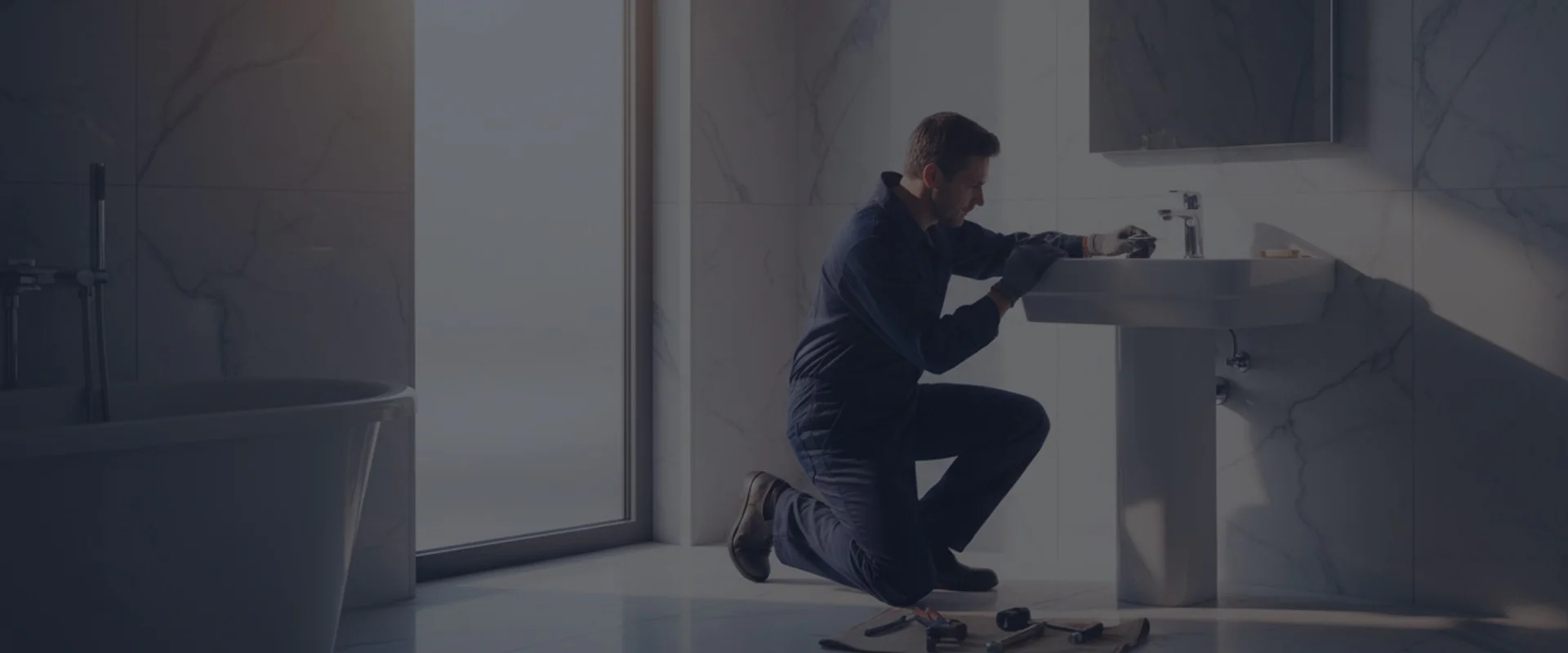
Downtown Toronto has the widest mix of plumbing in the city: glass condo towers with booster pumps and pressure reducing valves, 100-year-old Victorian and Edwardian row houses with cast iron stacks and clay sewer laterals, and busy restaurants with grease interceptors that need regular service. Parking, loading docks, building management rules and tight work windows are part of every job here.
POM Plumbing works downtown every day for suite owners, condo managers, landlords and businesses. We book elevators and shut-downs with management, carry the parts for common condo repairs, and give you a written price before any work starts.
Most downtown calls fall into two very different groups. In condo towers built from the 1990s onward, problems usually come from shared building systems: kitchen stacks clogged with grease, failing zone valves at fan coils, leaking washing machine hoses and pressure problems on upper floors. In the older low-rise streets of Cabbagetown, Corktown, Trinity Bellwoods and the Annex edge, homes often still have galvanized supply lines, lead service pipes on the private side, cast iron drain stacks and clay laterals with root intrusion.
Commercial properties add grease traps, backflow testing required by the City of Toronto, and after-hours scheduling so stores and restaurants can stay open.
Supply hose failures, toilet seals and shower valves are the most common causes of damage to the unit underneath.
Grease in shared stacks pushes water up into lower-floor sinks; the fix is stack flushing, not just a sink snake.
Booster pump and PRV problems affect whole sections of a building at once.
Pre-1950 homes downtown may still have lead service lines and corroded galvanized supply pipes.
Interceptors, kitchen lines and annual backflow tests keep downtown restaurants open and compliant.
Downtown work means century homes, condo towers and busy businesses, often in the same block. Here is what we do most in the core.
Row houses in Cabbagetown, Corktown and around the University often have lead water services, cast iron stacks and clay laterals over 100 years old. We repair and replace them with care for original plaster and trim.
Learn moreDowntown towers built from the late 1990s to 2007 may have Kitec. We replace it suite by suite, fix mixing valves and leaks, and work within building rules on noise, elevators and shut-off notices.
Learn moreKitchens on King West, Queen West and in the Entertainment District need grease lines cleaned, floor drains cleared and backflow devices tested every year. We work early or late to avoid closing your business.
Learn moreGrease build-up in kitchen stacks causes backups into lower floors. We power-flush stacks floor by floor and schedule the work with the property manager.
Learn moreToronto's by-law requires backflow devices on many commercial properties, tested every year. We install, test and file the report with the City.
Learn moreOn narrow downtown lots, digging is expensive. We camera the line first and use relining where possible, so the front garden and sidewalk stay intact.
Learn moreDowntown homes often have the water heater in a small basement or closet. We replace tanks and install compact tankless units with the right venting.
Learn moreA leak in a condo can damage several units below. Our emergency line is open around the clock to stop the water and fix the source.
Learn moreResidential, condo and commercial plumbing, drain and sewer work for Downtown Toronto homes and businesses.
Typical ranges before tax. You get an exact written price before any work starts. See the full plumbing price guide.
| Service | Typical cost |
|---|---|
| Drain clog (sink, tub or toilet) | $180 – $350 |
| Main sewer line cleaning | $250 – $650 |
| Sewer camera inspection | $250 – $450 |
| Water heater replacement (tank) | $1,400 – $3,000 |
| Backwater valve installation | $1,800 – $3,500 |
| Sump pump replacement | $800 – $2,000 |
What to check through the year, based on the homes and weather we see in Downtown Toronto.
Check basement floor drains in older homes and run water into them so the trap does not dry out and let sewer gas in.
Restaurants should book grease line cleaning before the patio season rush. Homeowners should check the backwater valve before storm season.
Condo owners: test shut-off valves under sinks and toilets. Older homes: camera the lateral if large street trees are nearby.
Exposed pipes in older homes on exterior walls freeze first. Keep the heat on and open cabinet doors on the coldest nights.
Downtown Toronto homeowners can use the City of Toronto Basement Flooding Protection Subsidy Program. It reimburses 80% of eligible costs, up to $6,650 per property. The work must be done by a City-licensed plumbing contractor, and a backwater valve needs a building permit.
Homes built before the mid-1950s may still have a lead water service. Under the City's Priority Lead Water Service Replacement Program, the City replaces the public section up to the property line. Replacing your private section at the same time removes the lead completely. See lead pipe replacement.
| Eligible work | Maximum subsidy |
|---|---|
| Backwater valve (per valve, up to two) | $1,600 |
| Sump pump and alarm | $2,250 |
| Sump pump battery backup | $300 |
| Home plumbing assessment | $500 |
| Total per property | $6,650 |
80% of eligible costs, up to the limits shown. We handle the permit and inspection, and give you the paperwork you need to apply.
| Problem | Who to call |
|---|---|
| No water on the whole street, or a water main break | City of Toronto: call 311 |
| Water service or sewer pipe between the property line and the main | City of Toronto (public side) |
| Sewer backup that a camera shows is in the City section | City of Toronto: we give you the video for your 311 report |
| Pipes, drains and the sewer lateral from the property line into the house | Homeowner: call a licensed plumber |
| Fixtures, water heater, sump pump, backwater valve | Homeowner: call a licensed plumber |
Not sure which side the problem is on? A sewer camera inspection shows the exact location and depth, so you only pay for work on your section.
Plumbing work in a condo is different from a house. Some pipes are yours and some belong to the corporation, so before we start we confirm with management what is a suite element and what is a common element. We book the service elevator, protect hallways, and give notice for any riser shut-off. When a leak reaches the suite below, we document the cause so you and the corporation can deal with insurance.
See our condo and high-rise plumbing page for more detail.
Parking is one of the biggest challenges downtown. We plan visits around building loading docks and street parking rules, and for larger jobs we arrange permits for street occupancy where needed. Tell us about access when you book, such as a lane, a loading dock or a concierge, and we will plan the visit around it.
Downtown has some of Toronto's oldest housing. Homes in Cabbagetown, Corktown, Moss Park and around the University can be well over 100 years old. Common findings are lead water services, cast iron drain stacks that have rusted thin, clay laterals with root intrusion, and old renovations that were never properly vented. We repair what can be saved and replace what cannot, using small openings and protecting plaster, trim and hardwood.
Kitec was used in many downtown condos built between the late 1990s and 2007. Its brass fittings corrode and can fail without warning, causing floods that reach units below. Some insurers ask about it. We confirm whether your suite has Kitec, replace it with PEX or copper, and coordinate the work with your building. See Kitec replacement.
Restaurants, bars, shops and offices need repairs done fast and without closing. We clean grease lines and floor drains, install and test backflow devices, fix washroom fixtures and handle water heater replacements, often early in the morning or after closing. Many downtown businesses use our maintenance contracts for planned visits.
Many downtown houses have been split into two or more rental units, and there are hundreds of small walk-up apartment buildings in the core. Landlords need repairs that are quick, documented and fairly priced. We handle no-hot-water calls, stack and drain backups, shut-off valve replacements and water heater upgrades for multi-unit buildings, and we give you a written report you can keep for your records and insurance.
Low or fluctuating pressure is common in downtown buildings, but the cause differs. In older houses it is usually corroded galvanized pipe or a small lead service. In condo towers it is often a failing pressure reducing valve (PRV) on your floor or a booster pump issue, which is a building matter. In walk-up apartments, several units drawing water at once can overwhelm undersized risers. We test pressure at the meter and at the fixtures to find out which applies, and if it is a building system, we report it to management with the readings.
Replacing fixtures like for like does not usually need a permit. A permit and inspection are needed for new drains or relocated fixtures, a backwater valve, a new water service, sewer lateral replacement and most basement bathroom additions. In condos, the corporation may also require its own approval and insurance certificate before work starts. We prepare the documents and arrange inspections so your work is on record, which matters when you sell.
A few minutes of the right action can save thousands in water damage.
In a house, the main valve is usually on the basement wall facing the street, next to the water meter. Turn it clockwise until it stops.
Keep away from water near outlets and appliances. If you can reach the electrical panel safely, switch off power to the wet area. If the water heater is leaking, turn its gas valve to pilot or switch off its breaker.
If a floor drain is backing up, stop using water in the house. Move valuables, rugs and boxes off the floor and open cabinet doors under leaking sinks.
Take photos and video for your insurer, then call (905) 625-8777. Our emergency line is answered 24/7 and we tell you when to expect us.
We cover every part of Downtown Toronto. Here is how the area breaks down by neighbourhood and postal code.
| Area | Neighbourhoods | Postal codes |
|---|---|---|
| Financial District and Waterfront | Financial District, Union Station, Harbourfront, Queens Quay | M5H, M5J, M5K, M5L, M5X |
| Entertainment District and King West | Entertainment District, King West, Fashion District, CityPlace | M5V |
| Old Town and East | St. Lawrence, Distillery District, Corktown, Moss Park, Regent Park | M5A, M5B, M5C, M5E |
| Church-Wellesley and Cabbagetown | Church-Wellesley, Cabbagetown, St. James Town, Garden District | M4X, M4Y |
| Midtown edge | Yorkville, Bay Street Corridor, Discovery District, University | M4W, M5G, M5R, M5S, M5T |
Tell us what is happening and where in Downtown Toronto you are.
A licensed plumber finds the cause, using a camera where needed.
You approve the price before any work starts.
We fix the problem, test it and leave the area clean.
Licensed plumbers, written prices and a 24/7 emergency line.