



Drain Cleaning in Toronto – Plumber for Clogged Drains
Slow sink, backed-up floor drain or a toilet that won’t clear? Our licensed plumbers clear clogged drains in homes, condos and commercial buildings across Toronto and the GTA — and find out why the clog happened.
Call Us: (905) 625-8777Our Awards





Request Reliable Clogged Drain Cleaning Services in Toronto, ON
Professional Drain Cleaning Services in Toronto
A clogged drain rarely fixes itself. What starts as a slow sink or a gurgling toilet can turn into standing water, sewer odours, a backed-up floor drain or water damage in your basement. Store-bought chemicals may open a small channel for a few days, but they don’t remove grease, hair, scale or roots — and the clog comes back.
POM Plumbing provides drain cleaning plumbing services for houses, condominiums, rental units and commercial properties across Toronto and the GTA. Our licensed plumbers choose the right method for each drain — drain snaking for local clogs, hydro jetting for grease and buildup, and a CCTV camera inspection when the cause is unclear or the problem keeps returning.
Whether you need a plumber for a clogged drain today or a regular maintenance plan for a building, we restore proper flow, test the line and explain what caused the blockage so you can prevent it next time.
Drain Cleaning Plumbing Services We Provide
Kitchen Sink Drain Cleaning
Grease, food particles and coffee grounds are the most common reasons a kitchen sink stops draining. We clear the trap and branch line and, where needed, hydro jet the pipe to remove hardened grease from the walls.
Bathroom Sink, Shower and Tub Drains
Hair, soap scum and toothpaste build up inside bathroom drains over time. We remove the blockage without damaging fixtures, finishes or older pipes.
Toilet Clogs
Wipes, excess paper and foreign objects can block a toilet or the line behind it. If the toilet keeps clogging, we check whether the problem is in the toilet itself or further down the drain. See also our toilet repair services.
Floor Drain Cleaning
Basement, laundry and garage floor drains collect sediment, lint and debris. A blocked floor drain is often the first place water appears during a backup, so we clear it and check the line beyond it.
Main Sewer Line Cleaning
When several fixtures are slow at the same time, the problem is usually in the main line. We clear roots, grease and scale from the building’s sewer connection — learn more about our sewer cleaning services.
Kitchen Stack Cleaning for Condos
In multi-unit buildings, grease collects in the shared kitchen stack and causes backups on lower floors. We provide kitchen stack and drainage cleaning for condominiums and high-rise buildings.
Commercial Drain Cleaning
Restaurants, offices, retail units and warehouses need drains that work every day. We schedule work around your business hours — see our commercial plumbing services.
Catch Basin and Outdoor Drains
Parking lots, driveways and yards rely on clear catch basins and outdoor drains to handle rain and melted snow. We provide catch basin cleaning and clear outdoor drain lines.
Laundry and Utility Sink Drains
Lint, detergent residue and debris from work clothes slowly narrow laundry standpipes and utility sink drains. When the washing machine drains, water may overflow the standpipe or appear in a nearby floor drain. We clear the line and check whether the problem extends to the main drain.
Signs You Need a Plumber for a Clogged Drain
Most clogs build up slowly and give you warning signs before a drain stops completely. Calling a plumber at the first signs is cheaper than dealing with a full backup or water damage.
Common signs that you may need professional drain cleaning include:
- Water draining slowly from sinks, bathtubs, or showers.
- Standing water that doesn't clear properly.
- Gurgling sounds coming from drains or toilets.
- Unpleasant odours caused by trapped grease, food waste, or organic debris.
- Frequent drain clogs that return after temporary fixes.
- Water backing up into sinks, floor drains, or other plumbing fixtures.
- Multiple drains becoming slow or blocked at the same time.
One slow drain usually means a local clog in that fixture. Several slow drains, gurgling in other fixtures or water appearing in a floor drain point to a blockage further down the system — in that case, stop using water where possible and call a plumber.
What Happens If You Ignore a Clogged Drain
A slow drain is easy to put off, but a partial clog rarely stays partial. Every time water passes, more grease, hair and debris catch on the blockage until the drain stops completely — often at the worst possible moment. Standing water in sinks and tubs breeds bacteria and odours, and constant moisture around a leaking or overflowing fixture can damage cabinets, flooring and drywall.
When the blockage is in the main line, the consequences are more serious: wastewater can back up through the lowest drain in the building, usually the basement floor drain. Cleaning up after a sewage backup costs far more than clearing the line early. If you notice warning signs, book a drain cleaning before the problem turns into an emergency.
Drains We Clean
Our drain cleaning Toronto team provides professional blocked drain services for residential, commercial, and multi-unit properties throughout Toronto and the GTA.
| Drain Type | Typical Location | Common Causes of Blockages |
| Kitchen Drains | Kitchen sinks and food preparation areas | Grease, cooking oils, food particles |
| Bathroom Drains | Bathroom sinks | Soap residue, toothpaste, hair |
| Shower & Bathtub Drains | Showers and bathtubs | Hair, soap scum, mineral buildup |
| Toilet Drains | Residential and commercial washrooms | Paper buildup, wipes, foreign objects |
| Floor Drains | Basements, laundry rooms, garages | Dirt, sediment, debris |
| Main Sewer Lines | Underground drainage system | Tree roots, grease buildup, pipe scale |
| Commercial Drains | Restaurants, offices, retail facilities | Grease, food waste, heavy daily usage |
No matter what type of drain is blocked, timely professional cleaning helps restore proper drainage, reduce the risk of recurring clogs, and protect your plumbing system from more serious damage.
Common Causes of Drain Clogs
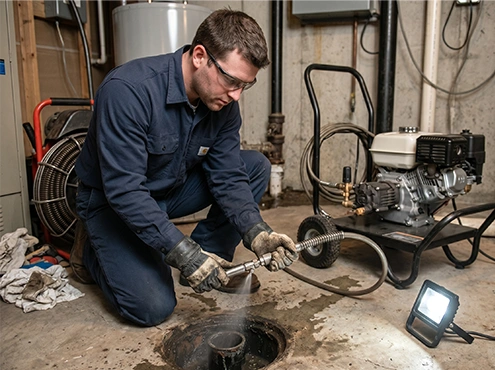
Drain clogs can develop gradually as debris accumulates inside the pipes or appear suddenly when a foreign object blocks the flow. Understanding the most common causes can help property owners recognize problems early and know when to schedule a professional clogged drain cleaning service.
Some of the most frequent causes of clogged drains include:
- Grease and cooking oils that harden inside kitchen pipes and restrict water flow.
- Hair and soap residue that accumulate in bathroom sinks, showers, and bathtubs.
- Food waste, coffee grounds, and other materials that should not be washed down the drain.
- Tree roots that penetrate underground sewer lines through small cracks or joints.
- Mineral scale that gradually narrows older pipes and reduces drainage capacity.
- Foreign objects, including wipes, paper towels, and hygiene products that should never be flushed.
For condominium and apartment buildings, grease buildup inside shared kitchen stacks is one of the leading causes of recurring drainage issues. Regular kitchen stack and drainage cleaning helps remove accumulated grease before it restricts pipe capacity and leads to wastewater backups.
Identifying the cause of a blockage is essential for selecting the right cleaning solution and reducing the likelihood of future drainage problems.
Older Toronto homes add one more factor: cast iron and clay drain pipes with rough, scaled interiors catch debris much faster than modern PVC. If your home is several decades old and clogs keep returning, a drain camera inspection shows whether the pipe itself is part of the problem.
What Not to Pour Down the Drain in Toronto
According to the City of Toronto’s guide on what not to flush or pour down the drain, many everyday items — including products labelled “flushable” or “biodegradable” — do not dissolve. Flushing or pouring them down the drain can clog pipes in your home and in the City’s sewer system and increase the risk of sewer backups and basement flooding. The City lists these items as things that should never go down a drain:
- hygiene products, including wipes, sanitary products, cotton swabs, dental floss and diapers;
- fats, oils and cooking grease;
- medication;
- household hazardous waste such as paint, pesticides and cleaning products;
- car and garage products such as motor oil and antifreeze.
Keeping these out of your pipes is the simplest way to avoid repeat clogs and costly service calls.
Our Professional Drain Cleaning Methods
Every blockage is different, which is why our technicians choose the cleaning method based on the type of drain, the severity of the clog, and the condition of the plumbing system. Using the right equipment ensures a thorough drain flushing service while helping minimize the risk of damage to your pipes.
Drain Snaking
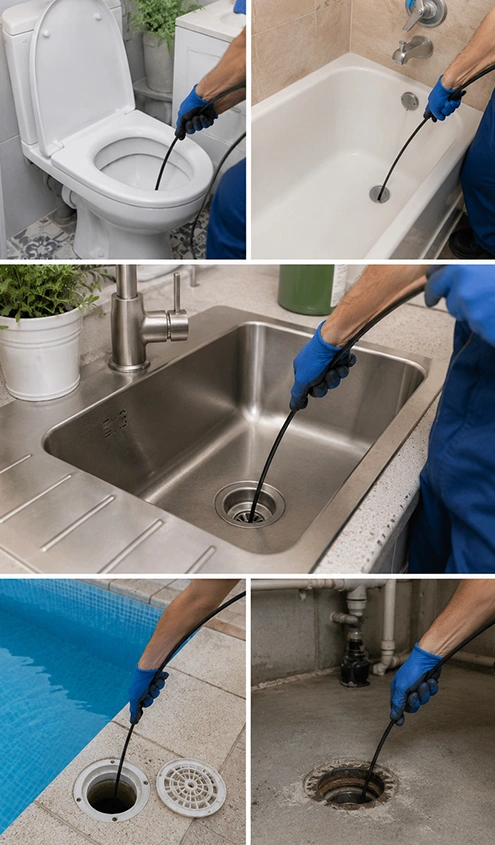
Drain snaking is an effective solution for localized clogs caused by hair, soap residue, food particles, or small objects. A flexible auger is inserted into the drain to break apart or remove the obstruction, restoring normal water flow. This method is commonly used for kitchen sinks, bathroom drains, showers, and toilets.
Hydro Jetting
Hydro jetting uses high-pressure water to clean the entire interior surface of the pipe, removing grease, sludge, mineral deposits, and other stubborn buildup. Unlike traditional methods that create a path through the blockage, hydro jetting helps restore pipe capacity and is especially effective for recurring or heavy drain clogs.
CCTV Drain Camera Inspection
When the cause of a blockage is unclear or recurring, a CCTV inspection allows plumbers to examine the inside of the drain without unnecessary excavation. This technology helps identify hidden issues such as tree root intrusion, cracked pipes, corrosion, or collapsed sections. If additional repairs are required, our drain camera inspection service provides the detailed assessment needed to recommend the most appropriate solution.
Power Flushing and Scrubbing
For drains and stacks with heavy grease and sludge, power flushing and scrubbing cleans the pipe walls along the full length of the line instead of just opening a path through the clog.
Drain Repair After Cleaning
If the camera shows a cracked, sagging or collapsed section, cleaning alone will not solve the problem. We explain the findings and recommend drain repair or replacement only when it is needed.
Professional drain cleaning not only removes existing blockages but also helps identify underlying plumbing issues before they develop into more extensive and costly repairs.
Drain Cleaning Method Comparison
| Method | Best for | Not enough when |
|---|---|---|
| Drain snaking | Local clogs from hair, soap, food or small objects in sinks, tubs, showers and toilets | Grease or scale coats the entire pipe; the clog keeps coming back |
| Hydro jetting | Grease, sludge, mineral deposits and recurring clogs in kitchen lines and main drains | The pipe is cracked, collapsed or badly corroded |
| Power flushing and scrubbing | Heavy buildup in kitchen stacks and long drain runs in multi-unit buildings | The problem is a single local blockage |
| CCTV camera inspection | Unclear or recurring clogs, suspected roots, cracks or sagging pipe | — (inspection, not cleaning) |
| Drain repair | Damaged, broken or collapsed sections confirmed by camera | — |
Snaking vs Hydro Jetting: Which Do You Need?
Both methods clear clogged drains, but they solve different problems. Our plumbers recommend one or the other after looking at the drain and, when needed, at the camera footage.
When Drain Snaking Is the Right Choice
Snaking is fast and effective for a single clog close to the fixture — a hair blockage in a shower, a toilet clogged with paper or a kitchen trap packed with food. It opens the line so water flows again and is usually the first step for a recently clogged drain.
When Hydro Jetting Works Better
Hydro jetting uses high-pressure water to scour the full inside of the pipe. It is the better option when grease, sludge or scale has narrowed the line, when the same drain clogs repeatedly, or when a main line needs a thorough cleaning. Before jetting older pipes, we check their condition so the cleaning does not cause damage.
When a Camera Inspection Should Come First
A camera inspection is not needed for every clog. We recommend starting with a drain camera inspection when:
- the same drain has clogged several times in a short period;
- several fixtures are slow or backing up at once;
- you suspect tree roots in the sewer line;
- the property has older cast iron or clay pipes;
- you are buying a home or planning a renovation and want to know the condition of the drains;
- water backs up into a basement floor drain.
The footage shows exactly where the problem is and what it is, so you only pay for the work that is actually needed.
One Clogged Drain or a Main Line Blockage?
Knowing where the clog is helps you decide how urgent the problem is. A blockage in one fixture usually affects only that sink, tub or toilet. A blockage in the main line affects the whole building, because every drain eventually flows into it.
Signs the problem is in the main line rather than a single drain:
- water comes up in the basement floor drain when you run the washing machine or flush a toilet;
- the toilet gurgles or bubbles when the bathroom sink or tub drains;
- several fixtures on the lowest floor drain slowly at the same time;
- you notice sewer odours near the floor drain or cleanout.
If you see these signs, avoid running water, the dishwasher and the washing machine until a plumber clears the line. A main line clog will not respond to plunging a single fixture, and continued use can push wastewater into your basement.
Our Clogged Drain Cleaning Process
Our clogged drain cleaning services follow a systematic approach to ensure blockages are removed safely and efficiently. Every service begins with a thorough assessment, allowing our technicians to identify the source of the problem and select the most effective cleaning method.
1. Initial Assessment
We evaluate the affected drain, discuss the symptoms you've experienced, and inspect the plumbing system to determine the likely cause of the blockage.
2. Drain Cleaning
Based on the inspection, we use the most appropriate equipment to remove the blockage and restore normal water flow while protecting your plumbing system.
3. System Testing
Once the drain has been cleaned, we test the system to confirm that water flows freely and that the blockage has been completely removed.
4. Recommendations
Our technicians provide practical maintenance advice to help prevent future clogs. If we identify damaged or deteriorated piping during the service, we can recommend drain repair & installation when additional work is required.
From the first call to the final test, our goal is simple: a drain that flows freely, a clear explanation of what caused the clog and no surprises on the invoice.
What’s Included in Every Drain Cleaning Visit
- a licensed plumber who arrives with professional drain cleaning equipment;
- a review of the symptoms and a check of the affected fixtures;
- a clear recommendation and estimate before work begins;
- clearing the blockage with the method that suits your drain;
- flow testing after the cleaning;
- clean-up of the work area;
- advice on preventing the clog from coming back and on any further work the drain may need.
How to Prepare for Your Drain Cleaning Appointment
A few simple steps help the visit go faster:
- stop using the clogged fixture and, if water is backing up, limit water use elsewhere in the home;
- clear the area under the sink and around the floor drain or cleanout;
- tell us what you have already tried, including any chemical drain cleaners — they can be hazardous to work with;
- note when the problem started and whether other drains are affected;
- in condos, let building management know if access to shared areas or stacks may be needed.
What Affects the Cost of Drain Cleaning in Toronto
Every clog is different, so the price depends on what we find. We explain the options and give you an estimate before any work begins.
| Factor | How it affects the cost |
|---|---|
| Type of drain | A single sink or tub is usually quicker to clear than a main sewer line or a kitchen stack |
| Location of the clog | Clogs close to the fixture are faster to reach than blockages deep in the line |
| Severity and cause | Hair or food clears quickly; hardened grease, scale or roots take more time and equipment |
| Method required | Snaking, hydro jetting, power flushing and camera inspection use different equipment |
| Access | Easy access through a cleanout saves time compared with removing fixtures or working in tight spaces |
| Timing | Emergency and after-hours visits may cost more than scheduled appointments |
| Property type | Commercial and multi-unit buildings often need longer runs and coordination with management |
Drain Cleaning vs Drain Repair: When Cleaning Is Not the Fix
Cleaning removes what is inside the pipe. It cannot fix a pipe that is broken. If a drain keeps clogging soon after a professional cleaning, the cause is often a damaged section: a crack that lets roots in, a sag where waste settles, a joint that has separated or a pipe that has partly collapsed.
In these cases we use a camera to confirm the problem and its exact location. Depending on what we find, the solution may be a spot repair, replacing a section of pipe, installing a cleanout for easier future access or a full sewer repair. We will always show you the footage and explain why repair is recommended.
Main Sewer Line Cleaning and Tree Roots
Mature trees are common on Toronto residential streets, and their roots look for moisture. They can enter sewer lines through small cracks and loose joints, grow inside the pipe and trap paper and waste until the line blocks completely. Typical signs are gurgling toilets, slow drains on the lowest floor and water coming up through the basement floor drain.
We clear root blockages and buildup from the main line and then inspect the pipe with a camera. If roots have damaged the pipe, we recommend the right repair so the problem does not return every few months. See our sewer cleaning and sewer repair services.
Floor Drain Backups and Basement Flooding in Toronto
A basement floor drain that backs up is more than an inconvenience — it can mean a blocked main line or an overloaded sewer. The City of Toronto notes on its basement flooding page that sewers can become overloaded during heavy rain, and that City improvements alone cannot completely protect a home from basement flooding. The City also offers a Basement Flooding Protection Subsidy Program of up to $6,650 per property for eligible flood protection work.
If your floor drain backs up, we clear the line, check it with a camera and recommend protection where it makes sense — for example, a backwater valve or a sump pump. If water has already entered your basement, our flood restoration team can help.
Drain Cleaning for Older Toronto Homes
Many houses in established Toronto neighbourhoods still have original cast iron stacks and clay sewer laterals. These materials served well for decades, but their interiors become rough with scale and corrosion, joints can shift and tree roots find their way in. As a result, older drains clog more often and need a gentler, more careful approach.
Before using high-pressure equipment on an older line, our plumbers assess its condition — often with a camera — and choose a method that clears the blockage without putting the pipe at risk. If the inspection shows that the pipe is near the end of its life, we explain the options for repair or replacement so you can plan the work instead of dealing with an emergency.
Kitchen Stack Cleaning for Condos and High-Rise Buildings
In condominium and apartment buildings, kitchen sinks on every floor drain into a shared vertical stack. Grease and food waste stick to the inside of the stack, and the lower floors are usually the first to see backups. Regular stack cleaning helps property managers prevent repeat service calls, unit damage and tenant complaints.
We schedule kitchen stack cleaning with building management, notify residents where needed and use power flushing to clean the full height of the stack. Learn more about our high- and low-rise plumbing services.
Commercial Drain Cleaning in Toronto
Restaurants, cafés, offices, retail stores and warehouses put their drains under heavy daily use. A blocked drain can mean closed washrooms, a stopped kitchen or water on the sales floor. We clear commercial drains, floor drains and main lines and can set up a maintenance schedule so problems are caught early.
Food service establishments in Toronto must also comply with the City’s mandatory grease trap requirements. Keeping kitchen lines clean helps your grease interceptor work properly and reduces the risk of backups. For larger facilities, see our commercial and industrial plumbing services.
Drain Cleaning for Property Managers and Landlords
Clogged drains are one of the most common maintenance calls in rental and multi-unit buildings. A single blocked stack can affect several units at once, and repeat backups lead to damaged finishes, insurance claims and unhappy tenants. A planned approach costs less than reacting to every call.
For property managers, condo boards and landlords, we can:
- schedule regular cleaning of kitchen stacks and main lines;
- coordinate access with building staff and give residents advance notice;
- document the work with a service report and, when needed, camera footage;
- respond to urgent backups in occupied units;
- recommend long-term fixes for lines that clog again and again.
Learn more about our Value Protection Plan or contact us to discuss a maintenance schedule for your building.
Emergency Clogged Drain Service
Some clogs can’t wait: sewage coming up through a floor drain, a toilet overflowing, a kitchen that can’t operate or water spreading across the basement. Call us and describe what is happening — we will tell you what to do right away to limit damage and when a plumber can be on site. Learn more about our emergency plumbing service.
Prevent Future Drain Clogs
While professional drain cleaning restores proper flow, routine maintenance is the best way to reduce the risk of recurring blockages. Simple preventative measures can help extend the life of your plumbing system and minimize the need for emergency clogged drain services near me.
To help keep your drains flowing properly:
- Avoid pouring grease, fats, and cooking oil down kitchen drains.
- Use drain strainers to catch food particles and hair before they enter the pipes.
- Flush drains regularly with hot water to help reduce minor buildup.
- Never flush wipes, paper towels, hygiene products, or other non-flushable items.
- Schedule periodic professional drain cleaning, especially for older properties or buildings with high plumbing usage.
- Keep wipes — even those labelled “flushable” — out of toilets.
- Run water for a few seconds after using a garbage disposal, and don’t put fibrous or starchy food into it.
For commercial properties and multi-unit buildings, preventative maintenance is equally important. Regular catch basin cleaning and scheduled drain maintenance help improve drainage performance, reduce debris buildup, and lower the risk of unexpected plumbing issues.
Taking proactive steps today can help prevent costly repairs, extend the lifespan of your drainage system, and keep your plumbing operating efficiently year-round.
Recommended Drain Maintenance Schedule
| Property type | Recommended professional cleaning | What to watch for between visits |
|---|---|---|
| Houses with newer plumbing | Every 1–2 years | Slow sinks and tubs, gurgling toilets |
| Older homes with cast iron or clay drains | Yearly, plus a camera inspection if clogs repeat | Floor drain odours or backups, tree roots |
| Condos and apartment buildings | Kitchen stacks on a regular schedule agreed with management | Backups on lower floors |
| Restaurants and food service | Kitchen lines more often, based on volume | Slow floor drains, odours, grease buildup |
| Offices, retail and warehouses | Yearly or as part of a maintenance plan | Washroom and floor drain issues |
DIY Drain Cleaners vs Professional Drain Cleaning
A plunger or a simple hand snake can clear a minor clog in a sink or toilet. Chemical drain cleaners are a different story: they may burn a small hole through a clog without removing it, sit in the pipe if the drain is fully blocked, and make the work more hazardous for whoever clears the drain next. The City of Toronto also lists household cleaning products among the items that should not be poured down the drain.
If a clog returns within weeks, several drains are slow or water comes up from the floor drain, the problem is deeper in the system. Professional equipment reaches the blockage, removes it completely and lets us check the pipe so you are not paying for the same clog twice.
Winter and Your Drains in Toronto
Cold weather adds its own drain problems. Pipes in unheated garages, crawl spaces and exterior walls can freeze, and holiday cooking sends more grease into kitchen drains than at any other time of year. When melted snow and rain arrive in spring, a partly blocked floor drain or catch basin is quickly overwhelmed.
A few simple steps help: keep grease out of the sink during the holidays, keep heat on in areas with plumbing, and have floor drains and catch basins checked before the spring thaw. If a pipe has already frozen, see our frozen pipe repair service.
Have a question? Give us a call, we’re here to help
Contact usWhy Choose POM Plumbing for Drain Cleaning in Toronto
Licensed, Experienced Plumbers
Every drain cleaning visit is handled by licensed plumbing professionals with experience in houses, condos and commercial buildings.
Recognized by HomeStars
POM Plumbing was named HomeStars Best of 2022, 2023 and 2024 and has 300+ verified HomeStars reviews.
The Right Equipment for Every Drain
Drain snaking, hydro jetting, power flushing and CCTV camera inspection — we choose the method that fits the drain, not the most expensive one.
We Fix the Cause, Not Just the Symptom
We find out why the drain clogged and explain how to prevent it, so you don’t need the same service again next month.
Clear Recommendations
You get an explanation and an estimate before we start, and we only recommend repairs that the camera or the drain itself confirms.
Clean, Respectful Service
We protect your floors and fixtures, clean the work area and leave your home or business the way we found it — minus the clog.
Drain Cleaning Across Toronto & the GTA
From our base in Etobicoke, we provide drain cleaning in Downtown Toronto, Etobicoke, North York, Scarborough, Mississauga, Brampton, Vaughan, Markham, Richmond Hill, Oakville, Burlington, Milton and across the GTA.
Need Professional Drain Cleaning Near You?
Slow drains, repeat clogs or a backed-up floor drain won’t get better on their own. Our plumbers clear clogged drains in homes, condos and commercial properties across Toronto and the GTA, test the line and explain how to keep it flowing. Contact us to book a visit or request an estimate.
Drain Cleaning FAQ
-
How do I know if I need a plumber for clogged drain problems?

Minor clogs may respond to basic home remedies, but recurring blockages, slow drainage, unpleasant odours, or water backing up into sinks, showers, or floor drains usually indicate a deeper issue. A professional plumber can identify the cause of the blockage and remove it safely while helping prevent future plumbing problems.
-
How long do clogged drain cleaning services usually take?
Most drain cleaning appointments can be completed within one to two hours, depending on the location and severity of the blockage. More complex issues involving main sewer lines or multiple clogged drains may require additional time and inspection.
-
How often should I schedule a clogged drain cleaning service?
For most homes, professional drain cleaning every one to two years is recommended. Older properties, restaurants, and multi-unit buildings may benefit from more frequent maintenance to reduce the risk of recurring blockages.
-
Do you provide emergency clogged drain services?
Yes. If a drain is completely blocked, sewage is backing up or water is spreading, call (905) 625-8777. We will advise you on immediate steps and tell you when a plumber can be on site.
-
How much does drain cleaning cost in Toronto?
The price depends on the type of drain, where the clog is, what caused it and which method is needed. We assess the drain and give you an estimate before any work begins.
-
What is the difference between drain snaking and hydro jetting?
Snaking breaks up or removes a local clog so water can flow again. Hydro jetting uses high-pressure water to clean the full inside of the pipe and is better for grease, scale and recurring clogs.
-
Should I book drain cleaning or a camera inspection first?
For a single, recent clog, drain cleaning is usually enough. If the drain keeps clogging, several fixtures are slow, or you suspect roots or a damaged pipe, a camera inspection first shows exactly what needs to be done.
-
Are chemical drain cleaners safe for my pipes?
Chemical cleaners rarely remove the full clog and can make the drain more hazardous to work on. The City of Toronto lists household cleaning products among the items that should not be poured down the drain.
-
Why does my basement floor drain back up?
A backed-up floor drain usually points to a blockage in the main line, such as roots, grease or debris, or to an overloaded sewer during heavy rain. We clear the line, check it with a camera and recommend protection such as a backwater valve if needed.
-
Do you clean drains in condos and commercial buildings?
Yes. We clean drains in condo units, shared kitchen stacks, restaurants, offices, retail units and warehouses across Toronto and the GTA.
CUSTOMER REVIEWS











GET STARTED TODAY – REQUEST
YOUR FREE ESTIMATE!
OUR SERVICE LOCATIONS
- Toronto
- Oakville
- Brampton
- Mississauga
- Burlington
- Richmond Hill
- Scarborough
- North York
- Downtown Toronto
- Vaughan
- Markham
- Milton
- Etobicoke
- GTA Plumbers

