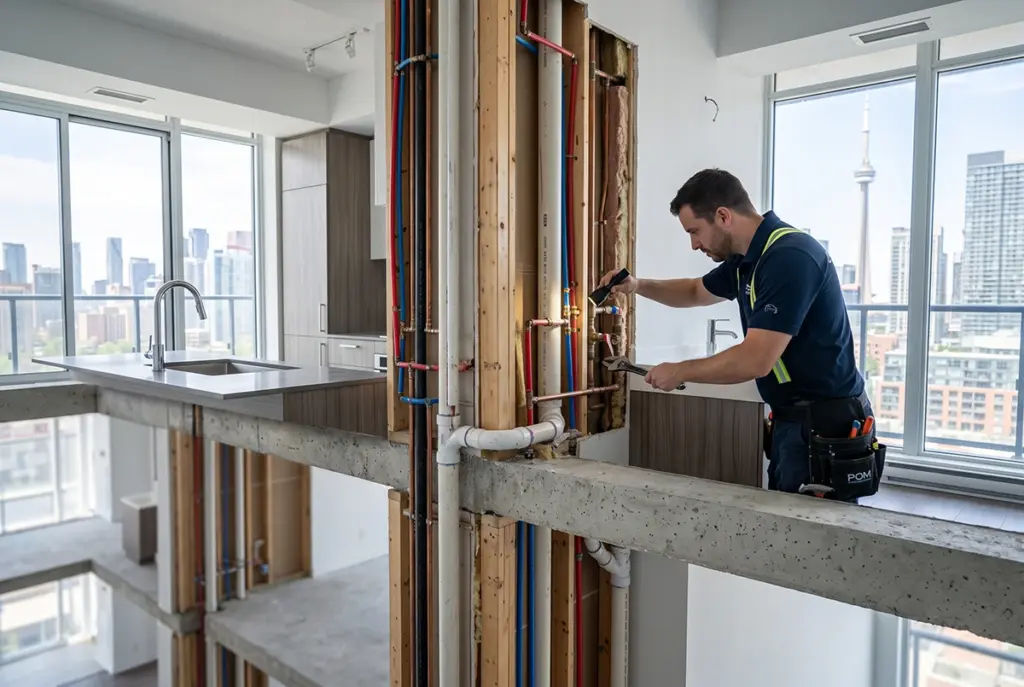


Industrial plumbing means installing, maintaining and repairing water supply, drainage and related piping in factories, manufacturing plants, warehouses and other industrial facilities. It serves the people who use the building and, where applicable, equipment that needs water or produces wastewater. In practical terms, if you are asking what is industrial plumbing, think of it as plumbing adapted to the operating demands of an industrial site rather than simply a larger household system.
The work depends on what happens inside the facility. A warehouse with staff washrooms has different needs from a food processing plant with daily washdowns. Understanding those needs helps you choose the right contractor, protect the water supply and plan repairs around your operation.
What industrial plumbing includes
Industrial plumbing systems can include incoming water services, hot and cold water distribution, pumps, valves, fixtures, sanitary drainage and stormwater drainage. Equipment connections may also need water treatment or protection against contamination.
Typical work includes:
- Installing or replacing water lines, fixtures and equipment connections.
- Finding leaks and investigating pressure or flow problems.
- Clearing obstructions and repairing damaged drainage pipes.
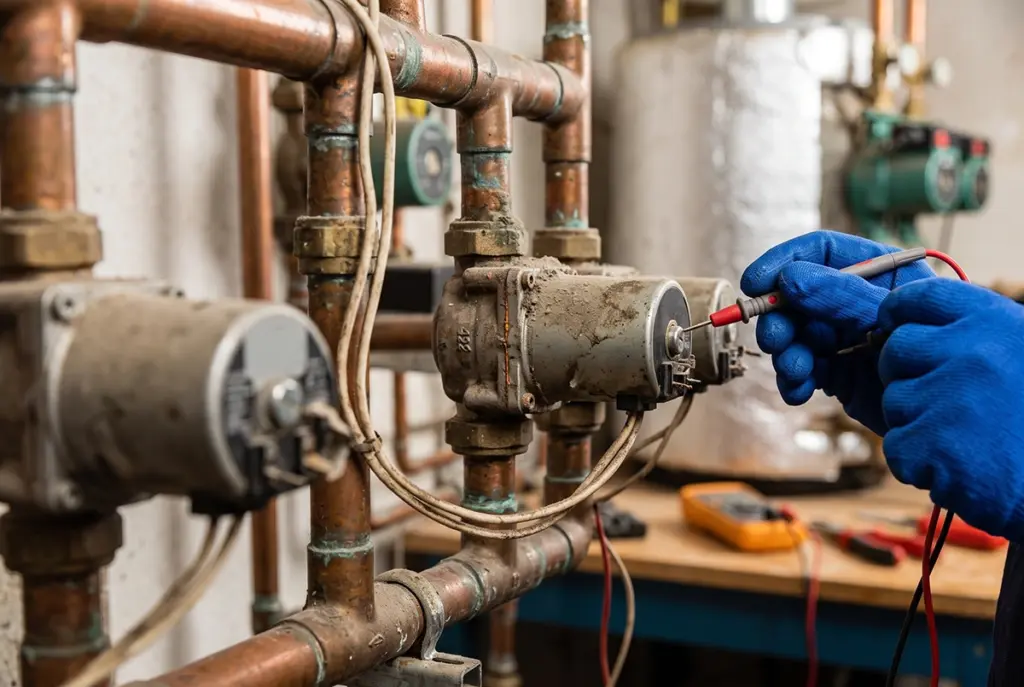
- Maintaining pumps, valves and water heating equipment within the contractor’s qualifications.
- Testing completed work and documenting the systems affected by a repair or upgrade.
The Ontario plumber trade description covers water supply and disposal for domestic and industrial purposes, as well as certain process piping work. The job title alone does not tell you whether a contractor has experience with your particular equipment.
How the facility changes the work
These examples illustrate different requirements; they are not specifications for every building of that type.
| Facility | Typical plumbing need | What to establish before work |
|---|---|---|
| Warehouse | Staff facilities, water supply and roof or yard drainage | Which areas can be isolated while the site remains occupied |
| Food processing plant | Washdown water, equipment connections and wastewater collection | Water quality needs, cleaning temperatures and discharge requirements |
| Manufacturing plant | Building services alongside process water or other piping | What each line carries and which equipment depends on it |
What is the difference between domestic and industrial plumbing?
Domestic plumbing serves everyday household needs, such as washing, cooking and sanitation. Industrial plumbing serves a facility whose operations may place additional demands on water supply and waste removal. Those demands can involve longer operating hours, different fluids, more equipment connections or a greater consequence when service stops.
Size matters, but it is not the only difference. A large office building can have complex commercial plumbing, while a small production facility may need specialist attention because of what its pipes carry.
| Factor | Domestic plumbing | Industrial plumbing |
|---|---|---|
| Main purpose | Household water use and sanitation | Building services and applicable operational needs |
| Demand | Household peaks and fixture use | Demand determined by shifts, equipment and processes |
| Materials | Selected for the home’s water and drainage systems | Selected for the fluid, pressure, temperature and site conditions |
| Service interruption | Loss of household facilities | Possible disruption to production, cleaning or occupied work areas |
| Repair planning | Access to the affected household system | Isolation boundaries, site coordination and restart requirements |
Both settings need safe, compliant work. Industrial does not automatically mean that every pipe operates at high pressure or carries hazardous material. The specification should reflect the actual duty of each system.

What is a commercial plumber?
A commercial plumber installs, repairs and maintains plumbing in business and institutional premises, including offices, restaurants, shops and schools. The work commonly involves water distribution, fixtures, water heating and drainage serving many users.
Commercial and industrial work overlap. A factory’s staff washrooms may involve familiar commercial plumbing tasks, while a production line requires additional knowledge of its operating conditions. When choosing a commercial plumber, describe the systems involved and ask about similar work, rather than relying only on the service label.
What are the 4 types of plumbing systems?
For a practical overview of a building, four useful categories are potable water supply, sanitary drainage, venting and stormwater drainage. This divides systems by function. Combining sanitary drainage and venting gives a three-part description instead; specialist industrial systems add further categories. The number depends on what is being grouped.
1. Potable water supply
This system delivers water suitable for drinking to fixtures and approved equipment connections. It includes the incoming service and distribution pipework, with hot water supplied through the building’s water heating system. Industrial water piping must be sized for the demand it actually serves, with suitable pressure control and protection at connections to equipment.
2. Sanitary drainage
Sanitary drainage carries sewage and permitted wastewater away from fixtures and equipment. It can include fixture drains, floor drains, stacks and a building drain. Production wastewater needs separate assessment: its temperature or contaminants may make direct discharge unsuitable. A floor drain’s location does not establish where it leads or what may enter it.

3. Venting
Venting allows air movement in the drainage system and helps protect the water seals in traps against pressure changes. Those seals help keep sewer gases out of occupied spaces. Plumbing vents perform a different job from the ducts that ventilate rooms, even though both involve air.
4. Stormwater drainage
Stormwater drainage manages rain and snowmelt through features such as roof drains, leaders and catch basins. Its connections and maintenance requirements depend on the building and site. Sanitary wastewater and process waste must not be treated as interchangeable with stormwater.
Gas, steam, hydronic heating and fire protection can involve additional piping systems and specialist requirements. Identify them separately when defining the scope of a plumbing project.
Industrial plumbing and process piping
Some industrial pipe systems move fluids as part of making a product or operating machinery. These are process systems. Different types of process piping may carry treated water, steam, compressed air, chemicals or product ingredients, depending on the facility.
The distinction is useful when describing a job. A line supplying a staff sink has a different function from a line carrying a manufacturing chemical, even if both are in the same building. ASME’s process piping standard covers areas including materials, design, assembly, inspection and testing. Its applicability must be established for the particular installation.
In Ontario, plumber and steamfitter scopes can overlap. The steamfitter trade description specifically includes heating, cooling, process and high-pressure piping. Confirm the qualifications, engineering input and inspection requirements for the actual work. A general plumbing service description is not enough to establish competence for every process or fire protection system.
Choosing plumbing pipe types
Material selection starts with what flows through the pipe and the conditions it must withstand. Copper, cast iron, approved plastics and stainless steel can all have appropriate applications, but they are not interchangeable.
The specification needs to account for the fluid, operating temperature, pressure, chemical compatibility and joining method. Valves, seals and fittings must also suit the service. Replacing a damaged section with a familiar material without checking the whole specification can leave the underlying problem unresolved.
Protecting water quality and managing wastewater
A connection between potable water and equipment containing non-potable fluid can create a contamination risk if flow reverses. Backflow protection addresses that risk at the appropriate connection or boundary.
Toronto’s Backflow Prevention Program requires industrial properties to have backflow prevention on their incoming water supply lines. Device selection depends on the facility’s hazard classification. The program requires testing at installation, at least annually and within 72 hours after specified servicing or repair work. POM’s guide to backflow prevention explains the underlying concepts.
Wastewater needs its own assessment. Toronto inspects industrial discharges and sets contaminant limits. Depending on the waste, a facility may need treatment, an appropriate discharge agreement or another disposal route. Connecting a new machine to an available drain does not resolve those requirements.
How to reduce unplanned plumbing downtime
Maintenance is most useful when it follows the facility’s actual problems and operating conditions. Repeated leaks, unexplained changes in water use, recurring blockages or unreliable valves deserve investigation before they become a larger interruption.
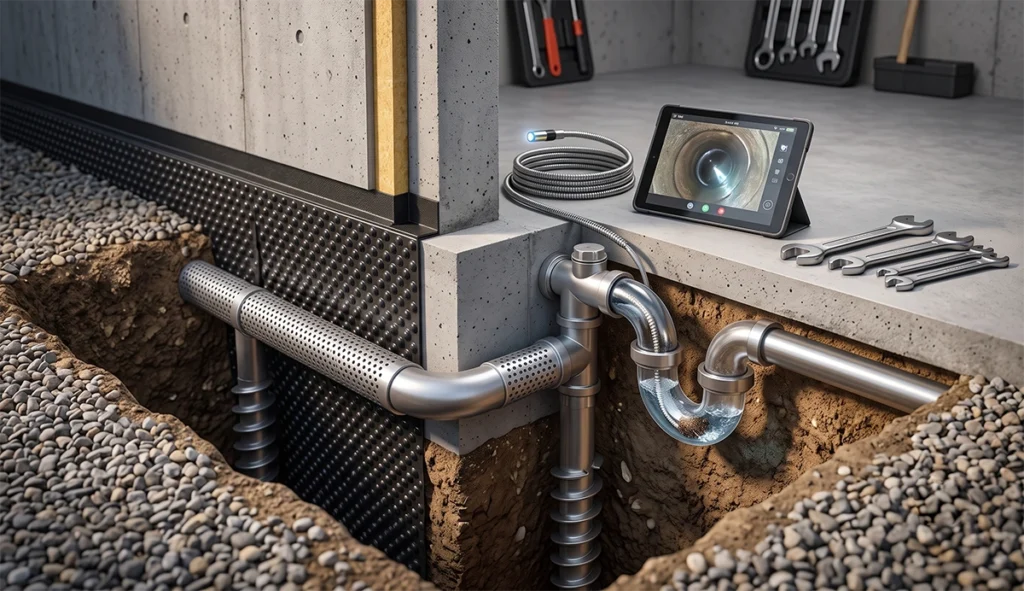
For recurring drainage problems, establish whether the line has an obstruction or physical damage. Cleaning cannot repair a cracked pipe or failed joint. If the defect is in the facility’s sewer line, a sewer repair assessment helps determine whether a local repair or replacement is appropriate.
Before arranging work, prepare:
- The affected line or equipment location, with drawings and valve information if available.
- A description of the symptoms, when they occur and any previous repairs.
- Details of the fluid and operating conditions, including relevant equipment documents.
- The areas and processes that would lose service during isolation.
- A suitable work window and the person responsible for authorizing shutdown and restart.
Ask the contractor to identify what is included in the assessment, which specialists are needed, how completed work will be tested and what records you will receive. Review the system again when equipment or production demand changes; a previous arrangement may no longer suit the new use.
POM Plumbing provides industrial plumbing services in Toronto and the GTA. Contact the team with your facility type, affected systems and operating schedule to discuss an assessment and a suitable scope of work.
FAQ
By work setting, the main categories are residential, commercial and industrial plumbing. By function, plumbing can be described in terms of water supply, sanitary drainage, venting and stormwater drainage. Pipe materials form another classification. These groupings answer different questions: where the work happens, what the system does and what it is made from.
There is no single highest-paid type across all regions and employers. As an illustration, Job Bank reports Ontario median hourly wages of CAD 32.50 for plumbers and CAD 45.96 for the occupational group covering steamfitters, pipefitters and sprinkler system installers. Both estimates use 2023–2024 data and were updated on November 19, 2025. They compare separate occupational groups, not residential and industrial plumbing specialisms, and do not establish a universal ranking. See the plumber wage data and steamfitter-pipefitter wage data.
Set the schedule according to equipment instructions, usage, system condition, previous failures and applicable requirements. A heavily used process connection may need different attention from an infrequently used fixture. There is no single inspection interval for every system in a facility; specific obligations, such as Toronto’s annual backflow device testing, still apply.