



Foundation problems can affect the safety, stability, and value of a home. Whether the issue involves minor cracking, water intrusion, or significant structural movement, repairs should be addressed before the damage worsens. Many homeowners begin their research by asking how much does foundation repair cost, but there is no single answer that applies to every property. Repair costs in 2026 depend on the severity of the damage, the foundation type, local labour rates, soil conditions, and the repair methods required. This guide explains the factors that influence pricing, common repair solutions, and what Canadian homeowners can expect when budgeting for foundation repairs.
Foundation Repair Costs in 2026: An Overview
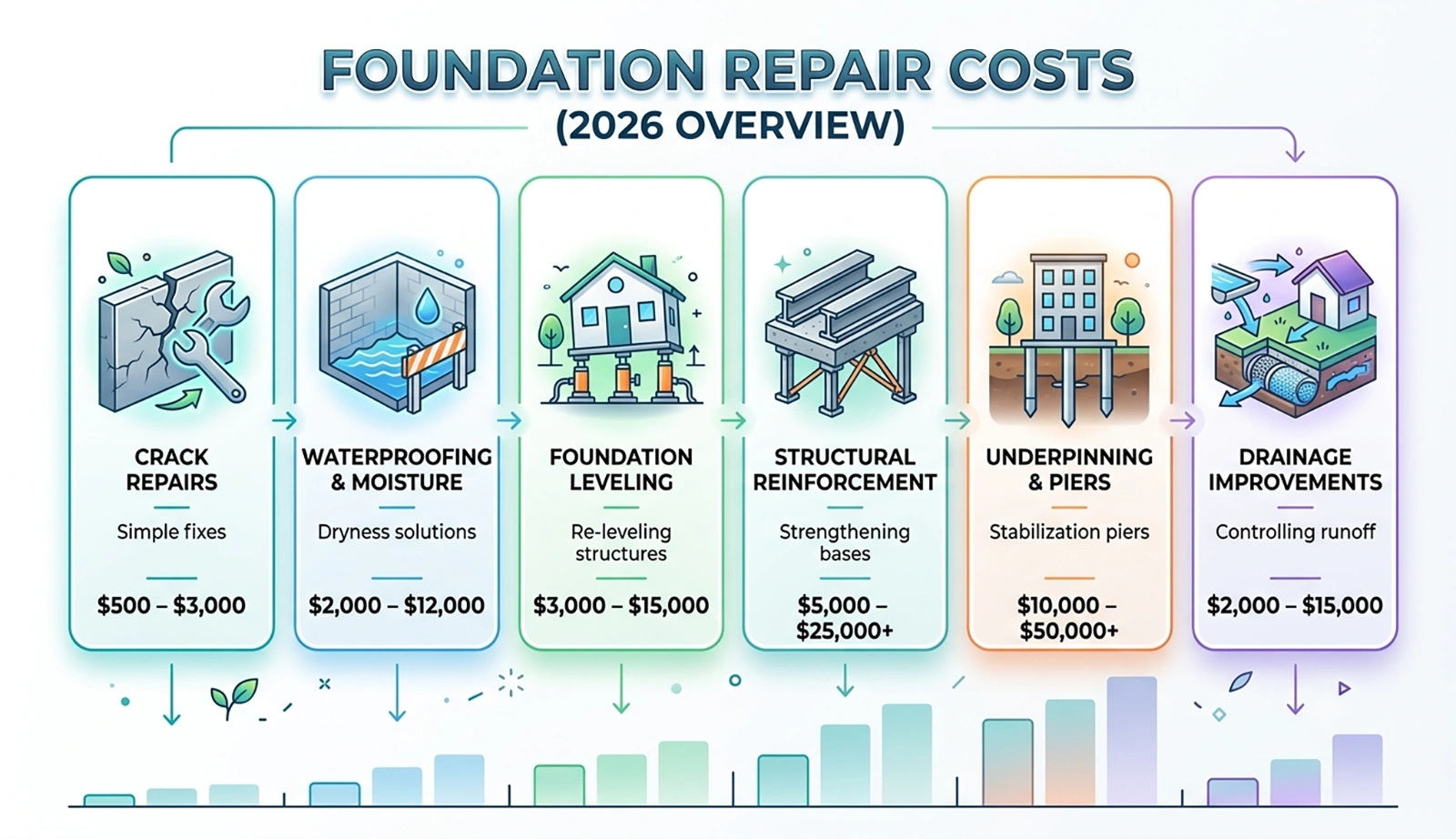
Foundation repair costs vary widely depending on the nature of the problem. A small crack may require only a simple repair, while structural settlement can involve extensive stabilisation work and excavation.
| Repair Type | Typical Cost Range |
|---|---|
| Crack Repairs | $500–$3,000 |
| Waterproofing and Moisture Control | $2,000–$12,000 |
| Foundation Leveling | $3,000–$15,000 |
| Structural Reinforcement | $5,000–$25,000+ |
| Underpinning and Pier Installation | $10,000–$50,000+ |
| Drainage Improvements | $2,000–$15,000 |
The earlier a problem is identified, the lower the overall repair cost is likely to be. Delaying repairs often allows damage to spread to walls, floors, and other structural components.
Signs That Your Foundation May Need Repair
Recognising early warning signs can help prevent more extensive and expensive repairs.
Common symptoms include:
- Cracks in drywall or masonry
- Uneven floors
- Doors and windows that no longer close properly
- Gaps around window frames
- Bowing basement walls
- Water infiltration in the basement
- Visible settlement around the property
These issues may indicate that the foundation is shifting, settling, or experiencing moisture-related damage.
The Most Common Types of Foundation Damage
Foundation damage can develop for many reasons, including soil movement, excessive moisture, poor construction practices, and natural aging.
The most common problems include:
- Hairline cracks
- Structural cracks
- Differential settlement
- Foundation sinking
- Basement wall movement
- Water damage
- Concrete deterioration
Many structural issues are directly linked to drainage failures. For this reason, contractors often work with plumbing and drainage specialists when diagnosing the underlying cause of foundation movement.
What Factors Affect Foundation Repair Costs?
Homeowners frequently ask what affects foundation repair costs because estimates can vary significantly from one project to another.
Several factors influence pricing:
- Type and severity of damage
- Foundation design
- Accessibility of the repair area
- Soil conditions
- Labour costs
- Equipment requirements
- Local regulations
- Material costs
Drainage is another major consideration. If excess groundwater is contributing to foundation problems, contractors may recommend upgrading drainage installation services alongside structural repairs.
| Repair Type | Typical Complexity | Relative Cost Level |
|---|---|---|
| Minor crack repair | Low | Low |
| Epoxy crack injection | Low to Moderate | Low |
| Waterproofing repairs | Moderate | Moderate |
| Slab lifting | Moderate | Moderate |
| Foundation leveling | High | High |
| Pier installation | High | High |
| Underpinning | Very High | Very High |
| Structural reinforcement | High | High |
Average Cost of Foundation Crack Repairs
Cracks are among the most common foundation issues. The final foundation crack repair cost depends on crack size, location, cause, and whether structural movement is still occurring.
Typical repair techniques include:
- Epoxy injection: $500–$1,500
- Polyurethane injection: $600–$2,000
- Carbon fibre reinforcement: $1,500–$5,000
- Crack stitching: $2,000–$8,000
- Surface sealing: $300–$1,000
Small cosmetic cracks generally require less work than active structural cracks that indicate ongoing movement.
Professional inspections are important because not every crack represents a serious structural concern. Determining the underlying cause helps ensure that repairs address the actual problem rather than simply covering visible damage.
Foundation Leveling and Structural Stabilization Costs
When a foundation begins to settle unevenly, stabilisation measures may be necessary to restore structural integrity.
The foundation leveling cost depends on:
- Degree of settlement
- Foundation type
- Soil conditions
- Number of support points required
- Repair technology used
Common stabilisation methods include:
- Helical piers
- Push piers
- Slab jacking
- Underpinning systems
- Structural support beams
Although these repairs can be substantial investments, they often prevent more serious structural failures and preserve property value over the long term.
How Home Size and Foundation Type Impact Pricing
Every property is different, which is why homeowners often ask how much does it cost to fix a house foundation before requesting estimates.
Several factors related to the structure itself affect repair costs:
- Total square footage
- Number of storeys
- Foundation depth
- Construction materials
- Accessibility
Different foundation systems also require different repair approaches.
Common residential foundation types include:
- Concrete slab foundations
- Crawl space foundations
- Basement foundations
- Pier and beam foundations
The basement foundation repair cost is often higher because repairs may involve waterproofing, excavation, wall reinforcement, and moisture control measures.
Similarly, the concrete foundation repair cost may vary depending on whether repairs involve cracking, settlement, spalling, or structural reinforcement.
Foundation Repair Costs Across Different Canadian Regions
Regional conditions play a major role in determining repair expenses.
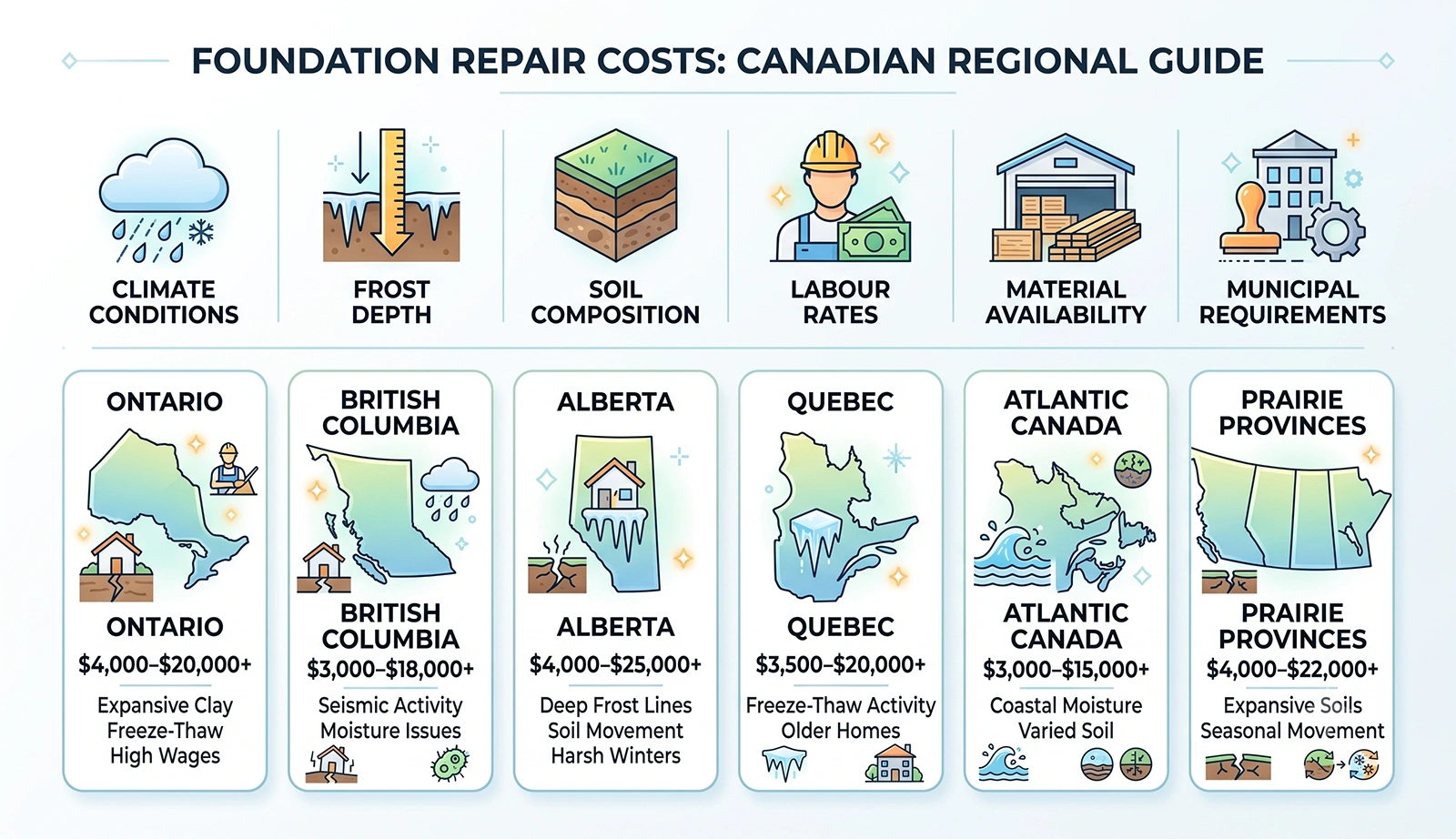
When researching foundation repair cost in Canada, homeowners should consider:
- Climate conditions
- Frost depth
- Soil composition
- Labour rates
- Material availability
- Municipal requirements
| Region | Approximate Repair Cost | Why Costs Vary |
|---|---|---|
| Ontario | $4,000–$20,000+ | Expansive clay soils, freeze-thaw cycles, higher labour costs |
| British Columbia | $3,000–$18,000+ | Seismic considerations, moisture-related foundation issues |
| Alberta | $4,000–$25,000+ | Deep frost lines, soil movement, harsh winters |
| Quebec | $3,500–$20,000+ | Significant freeze-thaw activity and older housing stock |
| Atlantic Canada | $3,000–$15,000+ | Coastal moisture exposure and varying soil conditions |
| Prairie Provinces | $4,000–$22,000+ | Expansive soils and seasonal ground movement |
Properties located in regions with expansive clay soils or severe freeze-thaw cycles often experience greater foundation stress than homes in more stable environments.
The average cost of foundation repair can therefore differ considerably between provinces and even between neighbouring cities. Local inspections remain the most reliable way to determine expected costs.
Ways to Reduce Foundation Repair Expenses Without Cutting Corners
Preventive maintenance remains one of the most effective ways to reduce future repair costs.
Homeowners can protect their foundations by:
- Maintaining gutters and downspouts
- Directing water away from the home
- Monitoring cracks regularly
- Addressing moisture problems promptly
- Scheduling routine inspections
- Maintaining proper grading around the property
Installing a properly designed foundation drainage system can also help reduce hydrostatic pressure around foundation walls and minimise future structural issues.
Another useful benchmark when comparing projects is the foundation repair cost per square foot. While this metric should not replace a professional inspection, it can provide a general reference point when reviewing multiple contractor estimates.
How to Choose a Foundation Repair Contractor and Get an Accurate Estimate
Selecting an experienced contractor is critical to the success of any repair project.
Before making a decision, homeowners should:
- Verify licensing and insurance
- Review previous projects
- Check customer reviews
- Request detailed inspections
- Compare multiple proposals
- Ask about warranties
A professional contractor should provide a comprehensive foundation repair estimate that clearly outlines labour, materials, repair methods, project timelines, and any additional work required.
Transparent pricing helps homeowners understand exactly what is included and reduces the risk of unexpected costs during construction.
Conclusion
Foundation repair costs in 2026 depend on many variables, including the type of damage, repair method, foundation design, soil conditions, and regional market factors. Whether the issue involves minor cracks, moisture intrusion, or significant structural settlement, addressing problems early can help avoid larger and more expensive repairs in the future. By understanding common repair methods, comparing professional estimates, and investing in proper drainage and maintenance, homeowners can protect both the structural integrity and long-term value of their property.
FAQ
Foundation repair costs vary depending on the type of damage, repair method, and location. Minor repairs may be relatively affordable, while major structural stabilization projects typically require a larger investment.
The most important factors include the severity of the damage, soil conditions, foundation type, accessibility, labour rates, and whether additional drainage or waterproofing work is required.
Foundation leveling is generally more complex than repairing individual cracks because it often involves underpinning, piers, or other structural support systems. As a result, leveling projects usually cost more than standard crack repairs.
Yes. Small cracks and minor settlement issues can develop into significant structural problems over time. Early repairs often help prevent more extensive damage and higher future costs.
A professional inspection and detailed estimate are strongly recommended. An assessment helps identify the root cause of the problem and ensures that the proposed repair solution is appropriate for the property’s specific conditions.