

Faucets are used every day, so even a small issue can quickly become noticeable. A dripping spout, weak water flow, stiff handle, unusual noise, or water appearing around the base can indicate anything from a worn washer to a damaged cartridge or supply problem.
The most common faucet issues are usually related to seals, cartridges, aerators, valves, handles, or water connections. Some problems can be resolved with a simple repair, while others indicate that the fixture has reached the end of its useful service life.
Knowing the symptoms can help you identify the likely cause and decide whether the faucet needs cleaning, a component replacement, or professional service.
What Are the Most Common Faucet Problems?
The most frequent problems can be grouped according to the symptom and the component involved.
| Faucet problem | Possible cause | Typical solution |
| Dripping from the spout | Worn cartridge, washer, or seal | Replace the damaged component |
| Water around the base | Worn O-ring or loose connection | Replace seal or tighten connection |
| Low water pressure | Clogged aerator, supply issue, or valve problem | Clean, inspect, or repair |
| Handle is stiff | Mineral buildup or damaged cartridge | Clean or replace cartridge |
| Faucet makes noise | Loose parts, restricted flow, or water pressure issue | Inspect and correct the cause |
| Faucet stops producing water | Closed valve, blocked aerator, cartridge, or supply problem | Check supply and internal components |
| Water temperature is inconsistent | Cartridge, mixing component, or supply issue | Inspect and replace the faulty part |
| Sprayer does not work correctly | Clogged sprayer, hose, or diverter | Clean or replace the affected component |
A faucet does not always need to be replaced when one of these symptoms appears. In many cases, an individual component can be repaired or replaced.
What Is the Most Common Reason for a Leaky Faucet?
A leak usually develops when an internal sealing component can no longer stop water from passing through the fixture. Depending on the faucet design, this may be a cartridge, washer, O-ring, valve seat, or another seal.
Common causes include:
- Worn or damaged cartridge.
- Deteriorated rubber washer.
- Damaged O-ring.
- Mineral deposits.
- Corrosion.
- Loose internal components.
- Excessive water pressure.
- Improper installation.
- Normal wear from repeated use.

The location of the water can provide an important clue. Water coming from the spout when the faucet is closed usually points toward an internal sealing component. Water around the handle or base can indicate a different problem.
For a persistent leak, faucet repair can help determine whether the affected component can be repaired or should be replaced.
How Do You Diagnose a Leaky Faucet?
The first step is to identify exactly where the water is coming from. Simply seeing water around the fixture does not tell you which component has failed.
Start by:
- Drying the faucet and surrounding countertop or sink.
- Turning the faucet on and off several times.
- Checking whether water comes from the spout after the handle is closed.
- Looking around the base and handle for moisture.
- Checking the supply connections underneath the sink.
- Inspecting the aerator for mineral buildup.
- Observing whether the leak changes when the handle moves.
A leak from the spout can point toward a cartridge or washer problem. Moisture around the base may indicate a worn seal or O-ring, while water underneath the sink may be related to a supply connection rather than the faucet itself.
This distinction matters because replacing the wrong component will not resolve the source of the leak.
How Do I Know If My Faucet Cartridge Needs Replacing?
A cartridge regulates water flow and, in many single-handle faucets, controls temperature as well. When it becomes worn or damaged, several symptoms can appear.
A cartridge may need attention when:
- The faucet continues dripping after being turned off.
- The handle becomes unusually difficult to move.
- Water temperature changes unexpectedly.
- The handle does not control flow smoothly.
- Water continues flowing when the handle is in the closed position.
- Cleaning the aerator does not resolve the problem.
Before replacing a cartridge, it is important to identify the faucet model and the correct replacement component. Cartridges are not universal, and installing an incompatible part can create additional problems.
The correct faucet cartridge replacement should match the fixture’s manufacturer and model whenever possible.
Why Would a Faucet Suddenly Stop Working?
A faucet that suddenly stops producing water can have several possible causes. The problem may be inside the fixture, but it can also occur in the water supply.
If both hot and cold water stop at the same faucet while other fixtures work normally, an internal obstruction or valve problem becomes more likely. If several fixtures lose water at the same time, the cause may be outside the faucet.
A sudden loss of water should therefore be diagnosed before the fixture is replaced.
What to Know Before Replacing a Kitchen Faucet?
Replacing a kitchen faucet is not only a matter of choosing a design that fits the sink. The new fixture needs to be compatible with the existing installation.
Before purchasing a replacement, check:
- Number and location of mounting holes.
- Faucet height and reach.
- Sink or countertop configuration.
- Supply-line connections.
- Available space underneath the sink.
- Sprayer configuration.
- Water-flow requirements.
- Manufacturer specifications.
- Whether the existing shut-off valves are in good condition.
It is also worth checking the condition of the connections before removing the old fixture. Corroded shut-off valves or supply lines can turn a simple faucet installation into a larger plumbing job.

How Do You Know When Your Faucet Is Going Bad?
Age alone does not determine whether a faucet needs replacement. A well-maintained fixture may continue working for many years, while a heavily used or poorly maintained faucet may develop problems sooner.
Signs that replacement may make more sense include:
- Multiple components are failing.
- The faucet body is corroded or damaged.
- Replacement parts are difficult to find.
- The fixture repeatedly develops leaks.
- The handle or valve mechanism is severely worn.
- Repairs are becoming more frequent.
- The faucet no longer meets the household’s functional requirements.
A single failed cartridge does not necessarily justify replacing the entire fixture. If the faucet body remains in good condition and compatible parts are available, repairing it can be a practical option.
What Is the Average Lifespan of a Faucet?
The lifespan of a faucet varies according to its construction, materials, frequency of use, water quality, installation, and maintenance. Many residential faucets can remain functional for around 10–15 years, while higher-quality fixtures may last longer when properly maintained.
The useful life of individual components can be shorter than the fixture itself. A cartridge, washer, O-ring, aerator, or supply connection may require service several times during the faucet’s overall lifespan.
| Factor | Effect on faucet lifespan |
| Water quality | Hard water can accelerate mineral buildup |
| Frequency of use | Heavy use increases component wear |
| Installation | Incorrect installation can cause premature problems |
| Maintenance | Regular cleaning can reduce deposits |
| Component quality | Better components can provide longer service |
| Water pressure | Excessive pressure can increase stress on seals and valves |
| Corrosion | Can damage the faucet body and connections |
This is why an older faucet is not automatically defective, but repeated repairs or significant corrosion can make replacement more practical. POM Plumbing can help assess the condition of an existing faucet and determine whether repair or replacement is appropriate.
When Is Faucet Repair Better Than Replacement?
The choice between repair and replacement depends on the condition of the entire fixture.
Repair is often reasonable when:
- The faucet body is in good condition.
- The problem is limited to a cartridge, washer, O-ring, or aerator.
- Replacement parts are readily available.
- The faucet is relatively new.
- The repair can restore normal operation.
Replacement may be more appropriate when:
- The body is cracked or severely corroded.
- Multiple components have failed.
- The fixture has become difficult to maintain.
- Replacement parts are no longer available.
- The faucet has repeated leaks despite previous repairs.
- The cost of repeated service approaches the cost of a new fixture.
Professional faucet repair can help establish whether a repair is practical before replacing the entire fixture.
Can Water Pressure Cause Faucet Problems?
Water pressure can affect both the performance and durability of a faucet. Excessive pressure can place additional stress on cartridges, seals, supply lines, and other components, while low pressure can reduce flow and make a faucet appear to be malfunctioning.
If only one faucet has weak flow, start by checking its aerator and supply valves. If several fixtures have reduced pressure, the problem may be associated with the building’s plumbing system.
For broader pressure-related problems, hot and cold water pressure investigation and repair can help identify whether the issue extends beyond the faucet itself.
When Is a Faucet Problem a Plumbing Problem?
A faucet issue becomes more likely to be a wider plumbing problem when the symptoms are not isolated to the fixture.
Examples include:
- Multiple faucets have low water pressure.
- Several fixtures suddenly lose water.
- Water is leaking from a supply line or shut-off valve.
- There are signs of corrosion under the sink.
- Hot or cold water problems affect multiple fixtures.
- Water pressure changes throughout the property.
- A repair does not resolve the underlying symptom.
In these situations, replacing the faucet may only address the visible symptom rather than the actual source.
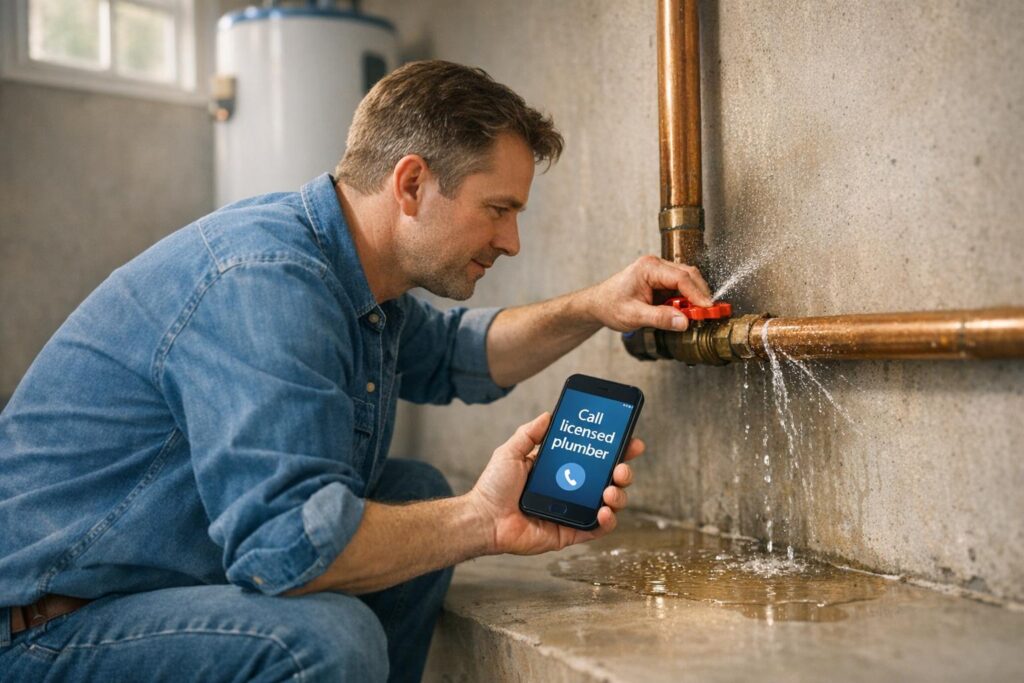
For urgent leaks or sudden loss of water, emergency plumbing service may be appropriate when the problem cannot safely wait for routine service.
FAQ
You do not normally need to leave every faucet dripping. During freezing conditions, allowing a small amount of water to flow from a vulnerable faucet can help reduce the risk of frozen pipes, but the appropriate approach depends on the property’s plumbing layout, temperature, insulation, and local conditions.
Yes. A leaking faucet is a plumbing issue, although the cause may be limited to a replaceable cartridge, washer, O-ring, or seal. If the leak comes from the supply connection, shut-off valve, or piping underneath the sink, the problem may require broader plumbing repair.
The most common causes are worn cartridges, washers, O-rings, or other sealing components. Mineral buildup and corrosion can also prevent internal parts from creating a proper seal.
WD-40 may temporarily loosen a stiff mechanism, but it does not repair a damaged cartridge, seal, valve, or faucet body. It should not be treated as a substitute for the correct plumbing lubricant or component replacement.
Frequent leaks, recurring component failures, corrosion, difficult operation, unavailable replacement parts, and repeated repairs can indicate that replacing the fixture is more practical than continuing to repair it.