


Water damage is costly and preventable. Proper drainage systems protect your home by directing water away from vulnerable areas, reducing risks like foundation cracks, basement flooding, and mould growth.
Here’s what you need to know:
- Damage Costs: Ignoring drainage issues in Ontario can lead to repair bills averaging over $8,000.
- Key Risks: Water intrusion causes 90% of foundation damage, worsened by the region’s clay-heavy soils and freeze-thaw cycles.
- Types of Systems: Surface drains, French drains, and stormwater systems manage rainwater, wastewater, and groundwater effectively.
- Maintenance Tips: Regularly clean gutters, inspect catch basins, and ensure water flows at least 1.8–3 metres away from your home.
- Signs of Trouble: Watch for pooling water, soggy lawns, musty basement smells, or foundation cracks.
Act early to avoid expensive repairs. If you’re in Toronto or the GTA, professional services like POM Plumbing can assess, repair, or upgrade your system to keep your property safe year-round.
Keep Water OUT of Your House: Installing a Landscape Drain – The Great Outdoors 6701
sbb-itb-1e3c609
What Is a Drainage System?
A drainage system is essentially a network of pipes, drains, and other infrastructure that manages and redirects excess water – whether it’s from rainfall, groundwater, or wastewater. Its main purpose is to protect your property from issues like flooding, erosion, and structural damage. By directing water away from vulnerable areas, it ensures your home or business stays safe and dry.
Most systems use gravity to move water downhill and away from buildings. However, in Ontario’s flatter or low-lying regions, pumps are often used to give gravity a helping hand.
Types of Water Managed by Drainage Systems
Drainage systems are designed to handle three main types of water:
- Rainwater: Collected by gutters, catch basins, and roof surfaces, it’s channelled through underground pipes to natural outlets like rivers or municipal storm drains.
- Wastewater: This includes water from sinks, toilets, and appliances. In urban areas, it flows through sanitary sewers to treatment plants, while rural properties rely on septic systems to process it before returning it to the environment.
- Groundwater: Managed through subsurface drainage systems, such as perforated pipes buried 1 to 1.5 metres deep. These pipes lower the water table and keep excess moisture away from soil and foundations.
How the System Works
A drainage system’s components work together to manage water efficiently. Surface features like gutters, trench drains, and catch basins handle the initial collection of water. Subsurface elements, including French drains, lateral pipes, and sump pumps, take over from there, managing water beneath the ground. Finally, outfalls serve as the system’s exit points, releasing the collected water into ditches, watercourses, or municipal systems.
"A well-functioning drainage system is essential for keeping homes, businesses, and communities safe, dry, and healthy." – Shawn Ashworth, Owner and Operator, BEST Plumbing and Drainage Contractors
Pro Tip: Keep a Drainage Plan Handy
It’s a smart idea to keep a detailed drainage plan with your property documents. This plan should show the location of lateral drains, outfalls, and surface inlets. If you ever experience a problem or plan renovations, this document can save you a lot of time and money.
Types of Drainage Systems
Different drainage systems are designed to target specific water sources, and most properties rely on a combination of them to ensure thorough water management.
Surface Drainage Systems
Surface drainage is the most noticeable type. It involves shallow ditches, swales, and proper lot grading to direct rainwater and snowmelt toward a main drain. On paved areas, channel drains collect runoff before it can pool or seep into structures.
To keep swales functioning properly, avoid obstructing them with dirt, rocks, shrubs, or trees. These can block water flow and increase the risk of flooding.
Subsurface Drainage Systems
While surface drainage handles visible water, subsurface systems tackle water underground. A French drain is a common example. This system consists of a perforated pipe placed in a gravel-filled trench and wrapped in geotextile fabric to prevent soil from clogging it. As the water table rises, groundwater enters the pipe from below and is safely carried away from the foundation.
When installing a French drain, ensure that the perforated holes in the pipe face downward. This orientation allows groundwater to flow naturally into the pipe as it rises.
Slope and Gutter Drainage
Slope and gutter drainage focus on managing water from roofs and sloped surfaces. Gutters collect rainwater along the roofline and channel it down through downspouts. From there, splash blocks or underground extensions guide the water away from the foundation. On sloped terrain, slope drain pipes are installed at an incline to direct water downhill, keeping it from pooling near walls or foundations.
Regular maintenance is key for these systems. Clean gutters and downspouts twice a year – once in the spring and again in the fall – to prevent blockages that can lead to water overflowing directly against your home’s foundation.
Stormwater Drainage Systems
Stormwater systems are designed to handle intense rainfall. Catch basins, which are box-like structures with grates, are placed in low areas to capture large amounts of runoff quickly. These basins filter out debris and redirect water into municipal storm lines.
"A proper drainage system prevents water from pooling around the foundation, preventing cracks, shifting, and costly structural damage." – Vodaland
To keep stormwater systems functioning during Ontario’s spring thaw and summer storms, clear catch basin grates and inspect inlets regularly, especially in the spring and fall.
Why Proper Drainage Systems Are Important
Proper drainage isn’t just about keeping water off your property – it plays a crucial role in protecting your home’s structure and maintaining indoor safety. Without an effective system, water can seep into foundations, walls, and living spaces, causing damage that can be costly to repair.
Protecting Building Foundations
A well-designed drainage system helps reduce hydrostatic pressure and prevents water from seeping into porous materials, which can weaken foundations and lead to damp interiors. In Canada, the freeze-thaw cycle adds extra challenges. When water pools and freezes, it expands, potentially cracking or lifting driveways, patios, and foundation walls. Addressing drainage issues early can save up to 70% on repair costs.
By protecting the foundation, you also help guard against internal water damage.
Preventing Water Damage
When drainage systems fail, water doesn’t stay outside – it finds its way into basements and crawl spaces, causing rot, staining, and even structural issues like sagging floors. Features like perimeter drains and properly extended downspouts can redirect water before it reaches your home. Experts recommend extending sump pump discharge pipes and downspouts 1.8 to 3 metres (6 to 10 feet) from the foundation to avoid water pooling near the house.
Proper drainage also plays a big role in controlling indoor moisture levels, which is key for preventing mould.
Reducing Mold and Mildew Growth
Mould thrives in damp environments, and it can start growing within 24 to 48 hours of water exposure in areas like basements or crawl spaces. Since around 50% of indoor air comes from crawl spaces, mould growth under your floors can directly impact your home’s air quality. High humidity – anything above 60% – creates the perfect conditions for mould and mildew. Prolonged exposure to these can lead to health issues, including respiratory problems and chronic fatigue.
"Water-damaged areas and materials should be cleaned and dried within 24–48 hours to help prevent mold growth after crawl space water intrusion." – U.S. Environmental Protection Agency (EPA)
Preventing Soil Erosion
Runoff doesn’t just carry water – it often takes soil along with it. Over time, this erosion can destabilize patios, retaining walls, and sidewalks. Proper drainage systems slow water flow and help preserve topsoil. In areas with clay-heavy soils, like parts of Ontario and the Fraser Valley, water drains more slowly, increasing the risk of erosion. Solutions in these regions often need to account for the soil’s low permeability to effectively manage runoff.
Improving Property Safety
Standing water isn’t just inconvenient – it can be dangerous. Wet surfaces like walkways and driveways can become slippery, especially when overnight temperatures cause water to freeze – a common issue in Canada from late autumn through early spring. Pooled water can also attract mosquitoes, which only need shallow water to breed. By keeping surfaces dry and ensuring water flows away from problem areas, proper drainage helps reduce these risks, enhancing safety for everyone using your property.
Signs of Poor Drainage Around Your Property
Drainage issues often sneak up on homeowners, developing over time and causing damage that may go unnoticed until it becomes costly to fix. Spotting the warning signs – both outside and inside your home – can help you address problems before they escalate.
Outdoors, keep an eye out for standing water near your foundation after a rainfall. If puddles linger for more than one or two hours, it could point to poor grading or slow-draining soil. Other red flags include soft, soggy patches in your lawn, erosion grooves in your soil or mulch, and gravel washing away from your driveway. Water should naturally flow away from your home, so if you see soil pulling away from the foundation, it could indicate settling and a drainage slope directing water inward.
Indoors, watch for musty smells in the basement, water stains, or white, powdery deposits (efflorescence) on your foundation walls – these are signs of ongoing moisture issues. Cracks in the foundation, especially horizontal or stair-step ones, may indicate pressure from saturated soil. Additionally, sagging floors or slow-draining sinks could point to structural or plumbing problems lurking beneath the surface.
A helpful way to assess your property is by conducting a rain audit. Walk around your home during or right after a heavy rainfall to observe how water flows and identify areas where it pools. In provinces like Ontario, the combination of snowmelt and spring rains from April to June often highlights drainage trouble spots. If you notice the same soggy areas appearing every spring, it’s a clear sign of an ongoing drainage issue.
Experts agree that recurring seasonal issues are often tied to the natural behaviour of the site rather than isolated weather events. As Jaspreet Singh, P.Eng., from Soil Engineering Ontario, explains:
"Seasonal recurrence usually means the issue is part of the site behaviour, not just a one-time weather event."
The stakes are high when it comes to water intrusion, which is responsible for 90% of foundation damage. In Ontario, drainage repairs average over $8,000. However, addressing problems early can save you significant money. For instance, a simple re-grading job might cost as little as $500, while delaying repairs could lead to much more expensive waterproofing projects. Early detection through a rain audit can make all the difference in protecting your property.
Common Causes of Drainage Problems
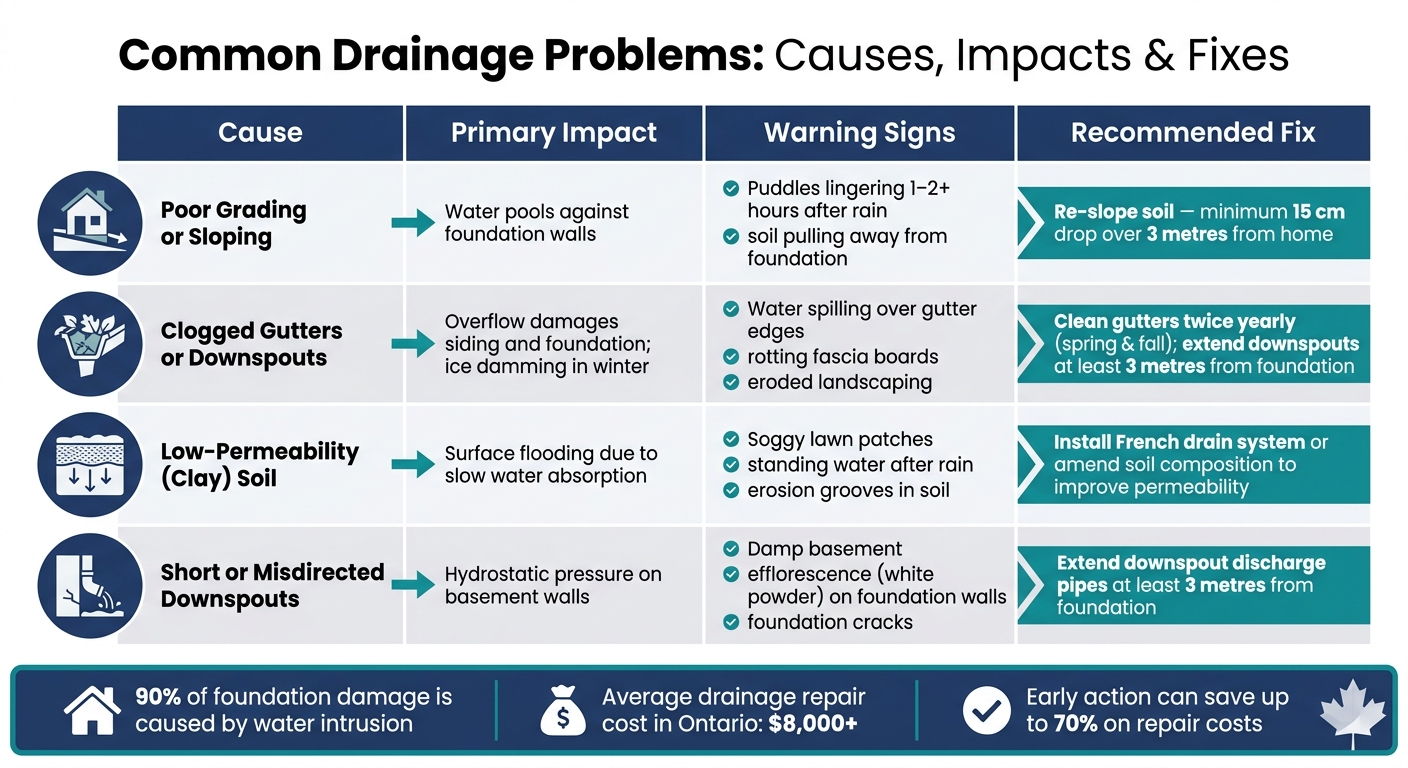
Common Drainage Problems: Causes, Impacts & Fixes
Getting to the root of drainage issues is the first step in resolving them effectively. Most problems stem from a handful of common causes, which makes identifying and addressing them more manageable. These causes often align with the warning signs discussed earlier and play a key role in maintaining proper drainage around your home.
Poor Grading or Sloping
The slope of the ground around your home, known as grading, is crucial for directing water away from the foundation. Ideally, the soil should slope down by at least 15 centimetres over a distance of 3 metres from your home. If the slope is too shallow or uneven, water tends to collect against the foundation walls instead of flowing away.
Grading issues often develop gradually. Over time, soil naturally settles, and in Canada, repeated freeze–thaw cycles can shift the ground enough to undo proper grading. This can create conditions where water flows toward your foundation rather than away. As one drainage contractor explains, "in sloped yards or improperly graded landscapes, water can flow toward the foundation instead of away from it". Re-grading the area promptly can save you from more extensive and costly repairs down the road.
Clogged Gutters or Downspouts
Gutters and downspouts play a vital role in managing rainwater, but they’re prone to blockages from leaves, twigs, and even granules from asphalt shingles. When clogged, water spills over the gutter edges, landing right at the base of your home. This not only saturates the foundation but can also lead to problems like rotting fascia boards, eroded landscaping, and, in winter, ice damming. Michael DiMartino, Senior Vice President of Installations at Power Home Remodeling, highlights the risks:
"Ice damming, the process of water thawing and refreezing on the roof, can be a major culprit behind home leaks."
To avoid these issues, clean your gutters twice a year – once in the spring and again in the fall. Also, make sure your downspouts direct water at least 3 metres away from your foundation.
Low-Permeability Soil
The type of soil surrounding your home can significantly impact drainage. Clay-heavy soils, which are common in areas like Ontario and the Prairies, absorb water very slowly. During heavy rains, this slow absorption can cause water to pool on the surface or run off too quickly. Combined with poor grading or short downspout extensions, this can lead to serious drainage problems.
| Cause | Primary Impact | Recommended Fix |
|---|---|---|
| Poor Grading | Water pools against foundation walls | Re-slope to create a 15 cm drop per 3 m |
| Clogged Gutters | Overflow damages siding and foundation | Clean twice a year; consider gutter guards |
| Clay Soil | Surface flooding due to slow absorption | Add French drains or amend soil composition |
| Short Downspouts | Hydrostatic pressure on basement walls | Extend downspouts at least 3 metres |
In areas with clay-heavy soil, enhancing drainage is crucial. This might involve installing a French drain system or improving soil composition to boost permeability. By understanding these common causes, you can take proactive steps to maintain effective drainage and protect your home.
How to Maintain a Drainage System
Understanding what causes drainage problems is just the beginning – regular maintenance is what truly protects your home. Thankfully, keeping up with drainage maintenance is simple, requiring only basic tools. This routine care works hand in hand with the design and installation practices mentioned earlier.
Cleaning Gutters and Downspouts
Gutters and downspouts play a key role in preventing water damage, but they can only do their job if they’re kept clean. Aim to clean them twice a year – once in the spring and again in late October after most leaves have fallen.
Make sure your downspouts direct water at least 2 metres away from your home’s foundation. If they discharge closer, it increases the risk of soil saturation right against your basement walls. In the fall, disconnect rain barrels and redirect overflow hoses to prevent ice buildup near your foundation during freeze–thaw cycles. Keeping your gutters in good shape lays the groundwork for inspecting the rest of your drainage system.
Inspecting Drainage Components
Cleaning is just one part of the equation – regular inspections are crucial to ensure every part of your drainage system is working properly. This includes checking catch basins, grates, silt boxes, and outfall pipes. For most systems, inspect catch basins and storm drains every three months, but if your property has heavy tree coverage or high traffic, monthly checks are better.
When inspecting, watch out for these red flags:
- Reddish-orange slime inside outfall pipes, which signals iron ochre – a bacterial buildup that can clog openings quickly.
- Small holes or depressions in the soil above drain lines, known as "blowouts" or "wash-ins", which could mean a pipe is broken and allowing sediment into the system.
- Foul odours near grates or basins, often a sign of organic buildup that needs to be cleared.
Additionally, consider installing metal rodent guards on all outfall pipes to keep animals from getting inside.
Monitoring Water Flow
Another essential maintenance step is monitoring how water flows during rainfall. This simple practice can help identify issues early, saving you money and headaches. Watching your property during a rainstorm is one of the easiest ways to see where water collects, moves too quickly, or flows toward your home instead of away from it.
Take note of areas where water pools for more than 1–2 hours or where erosion grooves appear in the soil or mulch. Catching these issues early can reduce repair costs by as much as 70%.
When to Upgrade or Repair a Drainage System
Sometimes, regular upkeep just isn’t enough to keep a drainage system working properly. While cleaning gutters or checking water flow can handle minor issues, there are moments when more serious intervention is needed. Knowing when to call in a professional can save you from costly repairs later.
Recurring Water Pooling
If water consistently pools near your home’s foundation for more than an hour or two after rain or snowmelt, it’s a sign your system is either overwhelmed or failing. This isn’t just a one-off problem – it’s likely tied to deeper issues like slow-draining clay soil, high groundwater levels, or an inadequate drainage setup. If simple fixes like extending downspouts or regrading the area don’t solve the issue, it’s time to bring in a professional. Persistent water pooling can lead to significant problems for your home’s foundation, including cracks and soil erosion.
Foundation or Erosion Problems
Visible foundation cracks, especially horizontal or stair-step ones, are a red flag. Other warning signs include soil pulling away from the base of your home or a damp basement. Erosion channels cutting through your yard or garden beds suggest that water is bypassing your drainage system altogether. Since water intrusion is the leading cause of foundation damage, addressing these issues early can save you a lot of money. For instance, spending $500 on re-grading in the spring could prevent a $15,000 waterproofing project down the line.
Damaged or Undersized Systems
Older drainage systems, especially those made with clay or cast-iron pipes, are prone to corrosion and eventual collapse. Additionally, systems that weren’t designed with your property’s slope, soil type, or runoff volume in mind might simply be too small to handle the job. Warning signs include small sinkholes (blowouts) above drain lines or sediment appearing in outfall pipes. If the cost to repair your system is more than 70% of the price of a new installation, replacement is usually the smarter option. In Ontario, ignoring drainage problems can cost homeowners upwards of $8,000 on average.
To tackle these challenges, professionals use advanced tools to assess the situation. For example, POM Plumbing Service Company employs equipment like camera inspections and moisture metres to identify failing components and recommend the best solutions.
Professional Drainage Solutions for Homeowners
Sometimes, regular maintenance just isn’t enough to tackle drainage issues. That’s when calling in the experts becomes a must. For over 20 years, POM Plumbing Service Company has been a trusted name for homeowners in Toronto and the Greater Toronto Area (GTA), offering services that range from routine drain cleaning to advanced flood prevention systems.
POM Plumbing covers a wide variety of drainage solutions. Their services include the installation and repair of backwater valves, sump pumps, French drains, and weeping tiles, all designed to protect basements from flooding. When it comes to diagnostics, they rely on tools like sanitary drain camera inspections, leak detection, and pressure testing to identify hidden problems such as corroded pipes or damaged sewer lines. To ensure smooth operation, they also offer professional drain cleaning using methods like snaking, power flushing, and catch basin cleaning.
One major advantage of hiring a licensed plumber is the potential to save money through rebates. For instance, Toronto homeowners who install backwater valves or sump pumps under the city’s Basement Flood Protection Program can qualify for subsidies – but only if the work is done by a certified professional. This not only helps offset installation costs but also ensures the work meets safety and quality standards, adding an extra layer of confidence.
"POM was prompt, courteous and thorough. We would recommend to anyone. After calling on a Sunday and receiving a quote on Monday, the backwater valve installation was completed the following Monday, with the necessary building permit issued." – Trisha Grant
POM Plumbing stands out with its upfront pricing, no overtime charges, and a 1-year warranty on labour. They also offer free inspections and no-obligation quotes for repair and restoration work. In emergencies, their team is available 24/7 across the GTA – including Mississauga, Brampton, Vaughan, Markham, and Scarborough – to handle flooding and water extraction. For those looking to avoid costly repairs down the line, POM provides service contracts for regular pipe diagnostics and maintenance, helping homeowners stay ahead of potential problems.
Conclusion: Keep Your Property Protected with Good Drainage
A reliable drainage system does more than manage water – it protects your home’s foundation, prevents expensive repairs, reduces the risk of mould, and keeps your landscaping intact. Ignoring signs like slow-draining water or soggy patches can quickly lead to serious issues, such as cracked foundations or basement flooding.
The secret to avoiding these problems? Regular maintenance. Catching drainage concerns early makes them much easier (and cheaper) to address. Simple steps like inspecting your system in spring and late fall, clearing gutters, and cleaning catch basins annually can make a world of difference. As the Ontario Ministry of Agriculture, Food and Agribusiness wisely notes:
"A subsurface drainage system is a significant financial investment. There is no better way to protect that investment than with regular and proper inspection and maintenance of the system."
Sometimes, though, professional help is unavoidable. Persistent pooling, recurring foundation problems, or ongoing system failures call for expert attention. Acting quickly can save you from even bigger headaches down the road. If you’re in Toronto or the GTA, POM Plumbing Service Company is available 24/7 to assess, repair, or upgrade your drainage system. Taking action now can protect not just your property, but also your peace of mind for years to come.
FAQs
Do I need a French drain or just regrading?
Whether you should opt for regrading or a French drain depends on the specific drainage problems your property faces.
Regrading involves adjusting the slope of the soil to guide surface water away from problem areas. This solution works well if water is pooling on the surface due to improper grading. On the other hand, a French drain is designed to handle water beneath the surface. It uses perforated pipes surrounded by gravel to collect and redirect underground water.
If surface water pooling is your primary concern, regrading might be all you need. However, if subsurface water is causing issues, a French drain could be the better choice. For the best outcome, it’s wise to consult a professional who can assess your property and recommend the right solution.
Who’s responsible for stormwater on my property?
As a property owner, it’s your responsibility to manage stormwater on your property. This means having proper drainage systems in place, like surface drains, sloped landscaping, and gutter systems. These systems help direct surface water runoff properly, reducing the risk of water damage or erosion.
What permits or rebates apply for sump pumps or backwater valves in Toronto?
Currently, there aren’t any specific permits or rebates listed for sump pumps or backwater valves in Toronto based on the information provided. To get the most accurate and current details, it’s best to check local municipal guidelines or reach out to the City of Toronto directly.