
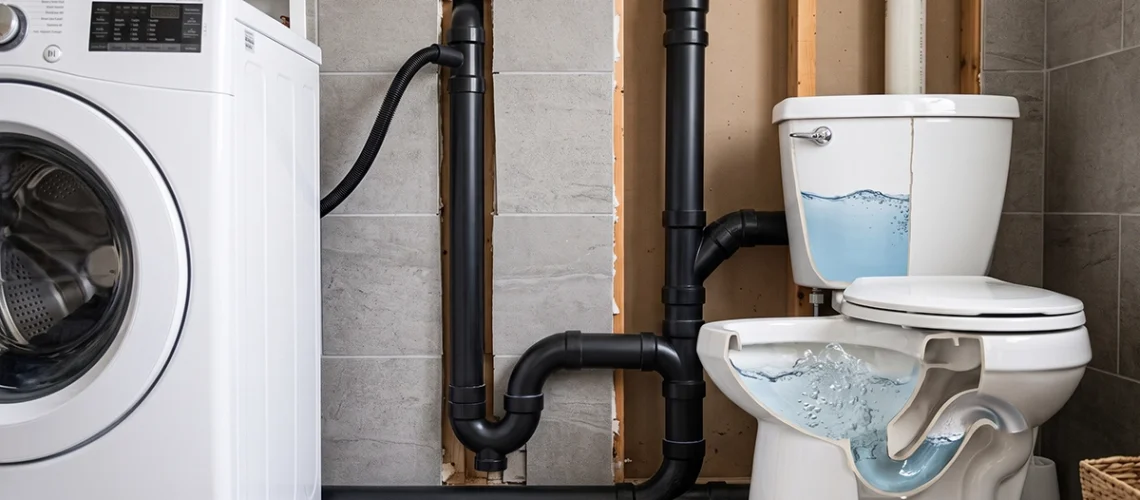

If your toilet makes a glugging noise or releases bubbles when the washing machine empties, the washer may be exposing a drainage or venting problem. Its pumped discharge changes conditions in the connected pipes. A restriction can push displaced air back toward a fixture, while inadequate venting can allow suction to disturb the toilet’s water seal.
If your toilet gurgles when the washing machine drains, that is a useful clue rather than confirmation of a blocked sewer. The first questions are where the sound comes from, whether the bowl water changes, and whether wastewater is rising anywhere. Stop adding water if a fixture begins backing up. If there is only noise, use the observations below to arrange a focused inspection without repeatedly running laundry to reproduce it.
Start with the sound and the washer cycle
A washing machine uses both water-supply and drainage plumbing. Noise during filling can therefore have a different cause from bubbling during discharge. Listen from a dry, safe position during an event that is already happening; do not start another cycle just to investigate.
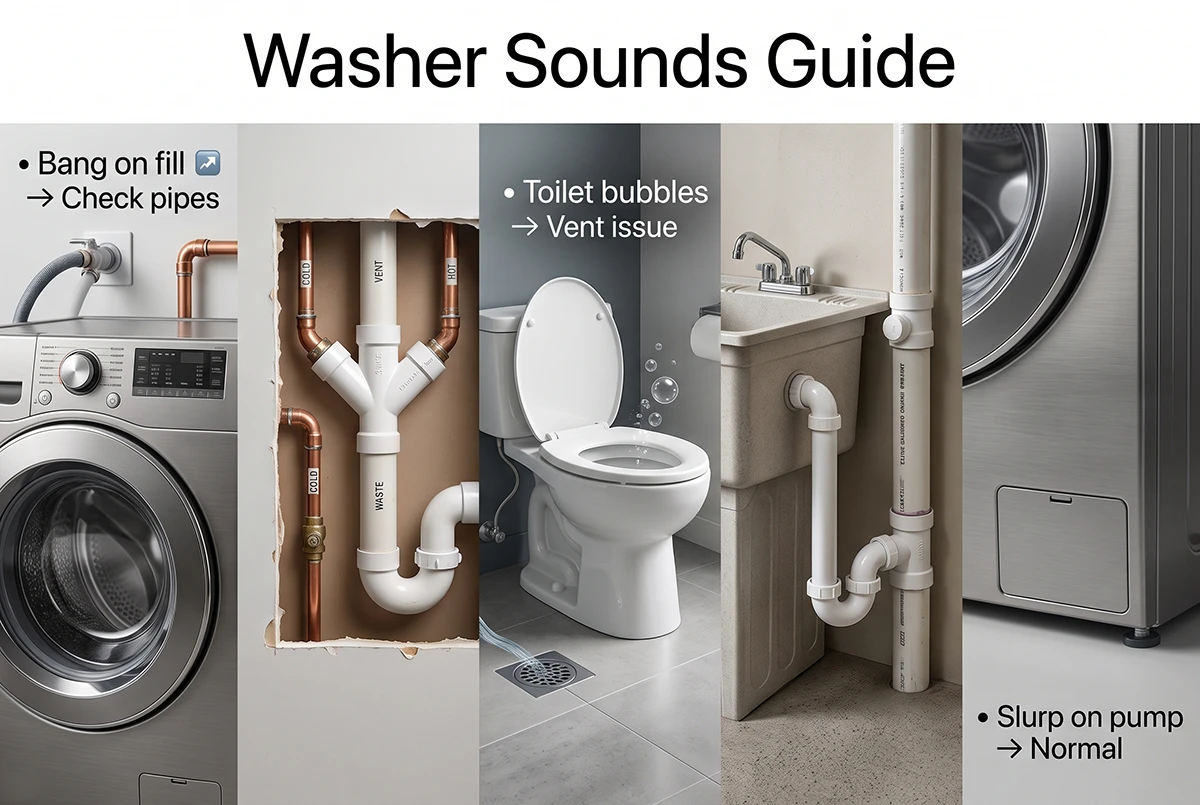
| What you notice | What it may mean | Useful next step |
|---|---|---|
| Toilet bubbles when the washing machine drains | Air is moving through the toilet’s water seal as connected drainage conditions change | Note whether the bowl level rises and whether other drains are affected |
| Bowl water drops or oscillates with a glug | A pressure disturbance may be drawing on the trap seal | Report the level change and any persistent odour |
| A bang when the washer stops filling | A supply-side pressure surge or movement of loose piping may be involved | Record the cycle stage and the location of the bang |
| Slurping from the washer as its pump finishes | Some pump sounds are normal for the appliance | Compare the sound with the model’s operating guidance |
| Water comes up through a toilet, tub or floor drain | Wastewater is backing up | Stop water use and seek urgent help |
GE Appliances explains that sucking or gurgling sounds can occur normally as a washer pumps out water. That explanation applies to sound at the appliance; it does not explain away visible bubbles in a toilet. Similarly, water hammer is a supply-side bang associated with a rapidly closing valve. Treating every noise as a drain blockage can send troubleshooting in the wrong direction.
Why a washer can disturb the toilet water?
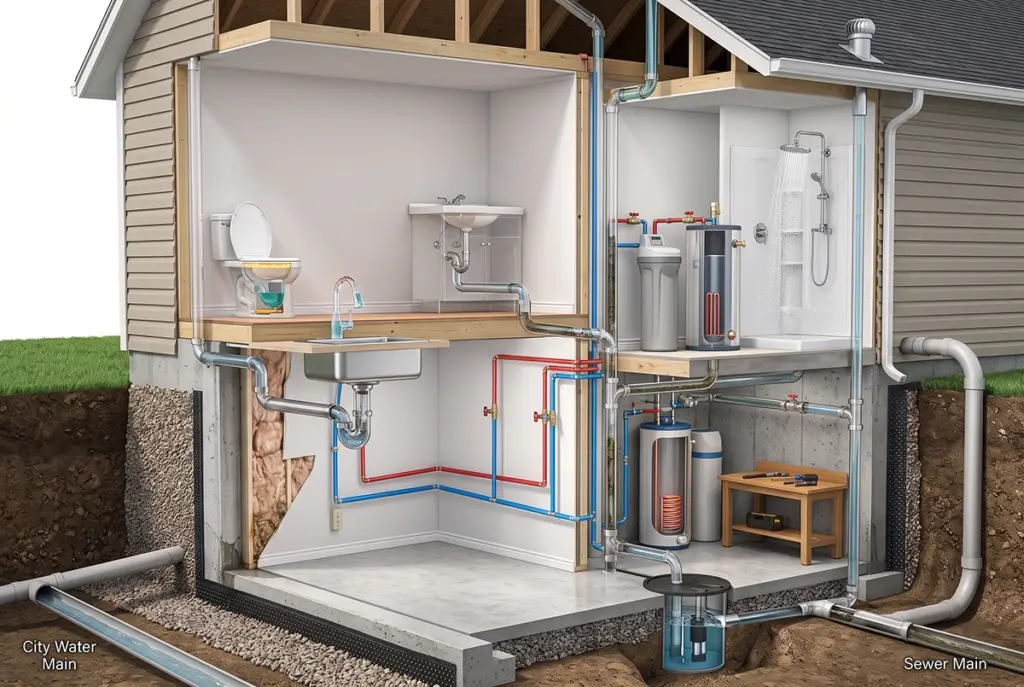
The water held in a toilet’s trap forms a seal between the room and the drainage system. Wastewater must move through the drain while air moves through an appropriate venting arrangement. A washer sends water into that system in a pumped discharge, which can make an existing limitation noticeable.
The fixtures do not have to connect side by side. Their pipes may meet farther along a branch drain, stack or building drain. The layout determines which fixtures can affect one another. Sound alone cannot establish where those connections are or identify the exact section needing work.
A partial restriction in connected drainage
Lint, deposits or other material can restrict a drain. Farther downstream, roots or damaged piping may also obstruct flow. If incoming water cannot move away adequately, displaced air may take a path through a fixture’s water seal. A drain can still pass some water while being restricted, so the absence of an overflow does not prove that it is clear.
Other slow fixtures make a shared restriction more plausible. A bathtub that has already been draining slowly, a floor drain showing wastewater, or recurring trouble at several fixtures provides more information than noise at one toilet. These observations help a plumber choose where to inspect; they do not justify assuming that every connected pipe needs replacement.
Venting and pressure balance
Vents help drainage operate without excessive pressure changes at fixture traps. An obstruction, unsuitable alteration or another venting defect can affect that balance. Negative pressure can pull on a trap seal; positive pressure can push air back through it. The visible behaviour of the bowl helps distinguish the possibilities, although it cannot replace inspection.
An air-admittance valve is also not a universal cure. Oatey explains that these valves admit air to address negative pressure but do not relieve positive pressure from a restricted drain. Adding or replacing one without checking the drainage arrangement may leave the original problem untouched. A plumber needs to assess whether that type of valve is suitable and permitted for the installation.
Recent installation changes
Tell the plumber if the problem began after a washer replacement, laundry relocation, bathroom renovation or drain work. The appliance’s discharge connection and the receiving drainage arrangement deserve review against the model’s instructions and applicable local requirements. There is no single hose height or pipe arrangement that can be prescribed from a noise description.
A new machine can reveal a pre-existing drainage limitation, but timing alone does not prove either an appliance fault or incorrect installation. Keep the model information and any installation paperwork available so the contractor can check the actual setup.
Toilet gurgling when the washer drains in a downstairs bathroom
A lower-level toilet deserves particular attention because a downstream drainage problem may become visible at low fixtures. If your downstairs toilet bubbles when the washing machine drains, note whether a nearby shower or floor drain is also affected and whether any wastewater has appeared there. Do not flush or run those fixtures as an experiment.
The floor level is not proof that the main sewer is blocked. Some lower bathrooms have sewage-ejector systems or other arrangements that change how their waste reaches the building drain. A plumber needs to identify the actual route before deciding whether the issue is in a branch, a pump system, the building drain or a sewer connection.
A downstairs toilet that bubbles without rising wastewater still warrants assessment when the symptom repeats. Once water begins to rise or return through another fixture, stop laundry and other water use rather than waiting to see how much the drain can handle.
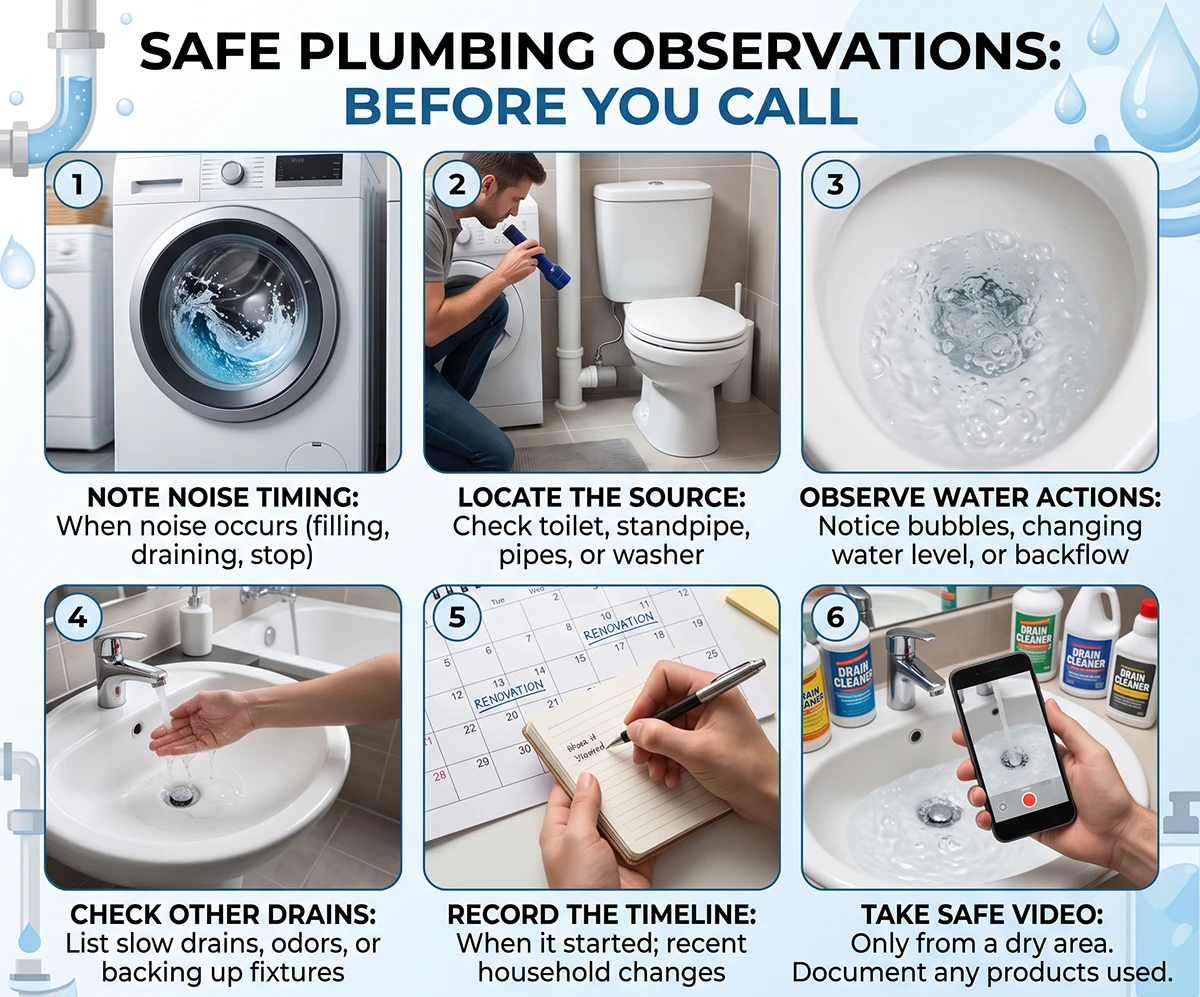
What you can safely record before calling?
Useful observations come from normal use and what has already happened. You do not need to dismantle a fixture, climb onto the roof or open a drain access point to provide a helpful history.
- Record when the sound occurs: filling, active drain pumping, or after the washer stops.
- Identify the source: the toilet bowl, laundry standpipe, washer cabinet or supply pipes.
- Note whether you saw bubbles, a falling water level, a rising level or actual wastewater returning.
- List other fixtures that have already been slow, odorous or backing up.
- Note the first occurrence and relevant changes, such as renovation work, a new appliance or recent flooding nearby.
- Take a short video only if you can do so from a dry, safe place. Record any drain product already used and tell the plumber about it.
A short note such as “toilet bubbles when the washer drains; started yesterday; tub was already slow; no overflow seen” is much more useful than a guessed diagnosis. Include what you did not observe without treating it as proof that the whole drain is clear. Intermittent symptoms can disappear between loads.
Avoid mixing cleaners or adding another product after an unsuccessful treatment. The Canadian Centre for Occupational Health and Safety warns that mixing drain cleaners can release dangerous gases or cause violent reactions. Chemical use can also complicate the work that follows, so accurate product information matters.
When to pause laundry and when to stop using water?
Repeated toilet gurgling when the washing machine drains is a reason to pause further laundry and seek plumbing advice. A functioning toilet after the event does not establish that another full load will drain safely. You can describe the symptom and ask how to limit use until the system is assessed.
Stop the washer, if its controls are safely accessible, and stop using water-using fixtures when:
- Wastewater rises in the toilet or comes back through a tub, shower or floor drain.
- Several fixtures are backing up or water is spreading across the floor.
- Drainage trouble is accompanied by a visible sewage spill.
- Floodwater is near outlets, equipment or electrical panels.
Stay out of contaminated water and keep children and pets away. Do not reach for electrical equipment from standing water. City of Toronto guidance advises limiting drainage during a suspected sewer-backup flood because added water may return inside the property. An emergency plumbing service is appropriate for an active backup or overflow that cannot safely wait.
Persistent sewage odour also needs attention, even without an overflow. It can have several sources, including a disturbed trap seal, and cannot locate a blockage by itself. If the odour is strong or you feel unwell, leave the affected space and get assistance rather than continuing an indoor investigation.
How a plumber finds the cause?
The aim of investigating a bubbling toilet when the washer drains is to explain the interaction between fixtures. Replacing parts at random may leave that interaction unchanged. A useful assessment starts with the symptom history, accessible connections and the pattern across the property.
Check the drainage route and venting arrangement
The plumber may examine the laundry connection, accessible drain and vent piping, and relevant fixtures or access points. In a condo, building drawings and reports from other units can help establish whether a shared system is involved. Access needs to be coordinated; an owner should not open common piping or make alterations on the strength of a noise alone.
The assessment should distinguish a local restriction from a problem farther downstream. It should also consider whether a venting defect is contributing. If you describe the symptom as “the toilet burps when the washer drains,” also mention what happens to the bowl water. That small distinction can improve the starting information without promising a diagnosis over the phone.
Clear confirmed restrictions with an appropriate method
Professional drain cleaning may involve a suitable cable machine or another method selected for the obstruction, pipe condition and access. High-pressure cleaning is not automatically appropriate for every pipe. The method should follow the findings and account for any concern about damage or fragile material.
Clearing a blockage addresses the restriction found at that visit. If symptoms return, the next question is why they recur. Deposits, roots, a structural defect or an unresolved installation issue can require different follow-up work. Keep the service report so the next assessment can build on what was actually found.
Use a camera where it can answer a specific question
A drain camera inspection can help identify visible conditions in accessible piping, including remaining obstructions or damage. It does not clear the drain by itself. A heavily obstructed line may need cleaning before useful footage is possible, and a camera cannot inspect every concealed branch from every access point.
Ask which section was inspected, whether the view was clear, and what the footage supports. A recommendation for structural repair should identify the defect and location rather than rely solely on a noisy toilet. If venting is the concern, additional investigation may be needed beyond footage of a wastewater pipe.
What to expect from the repair recommendation?
The proposed work should connect a finding to an action: remove an identified restriction, correct a verified venting or connection problem, or repair confirmed pipe damage. Ask what access is needed and whether the quotation includes restoration of any opened surfaces. The scope should explain any recommended follow-up inspection.
Toilet bubbling when the washing machine drains should also be checked after the corrective work under conditions the plumber considers safe. The contractor can verify drainage and explain whether any uncertainty remains. A successful test is useful, but it should be interpreted alongside the inspection findings rather than presented as a guarantee that no future blockage can occur.
How to reduce the chance of another blockage?
After the cause has been corrected, a few habits can help protect the shared drain:
- Put wipes and other hygiene products in the appropriate waste bin, including wipes labelled “flushable.”
- Keep fats, oils and cooking grease out of sinks and toilets.
- Follow the washer manufacturer’s maintenance instructions; clean only filters identified as user-serviceable for your model.
- Keep the service report and report renewed bubbling or slow drainage instead of repeatedly running laundry to test the system.
These habits do not repair damaged pipe or a venting defect. Recurring symptoms need follow-up based on the previous findings, not a routine dose of drain cleaner.
For Toronto and GTA properties, contact POM Plumbing with the affected floor, cycle stage, bowl-water behaviour and any other drain symptoms. Those details help frame the visit and determine whether the situation needs urgent attention.
FAQ
Tenants should notify their landlord or superintendent, and condo residents should report suspected shared-drain trouble to management. Give the location and describe any backup. The building can coordinate access and check for related reports. Responsibility for a repair depends on the property and its governing arrangements; the fact that a toilet made the noise does not settle who pays.
Yes. Municipal sewer cleaning can sometimes send air pressure back through a building’s drainage system. Check for a local work notice or contact the municipality if the timing matches. This possibility should not be used to dismiss bubbling that repeatedly follows laundry or occurs with slow drains and rising wastewater.
Do not purchase one solely because it reacts when the washer drains. A replacement toilet will still connect to the same drainage system. Have the cause established first; replacement makes sense only when an identified fixture problem or another planned improvement justifies it.
Toronto directs residents to 311 for a blocked sewer service line or basement flooding. A noisy toilet alone does not prove that the issue is on the City’s side. Tell the City what is happening and follow its reporting guidance; for an active indoor backup, also arrange prompt plumbing help and avoid further drainage.