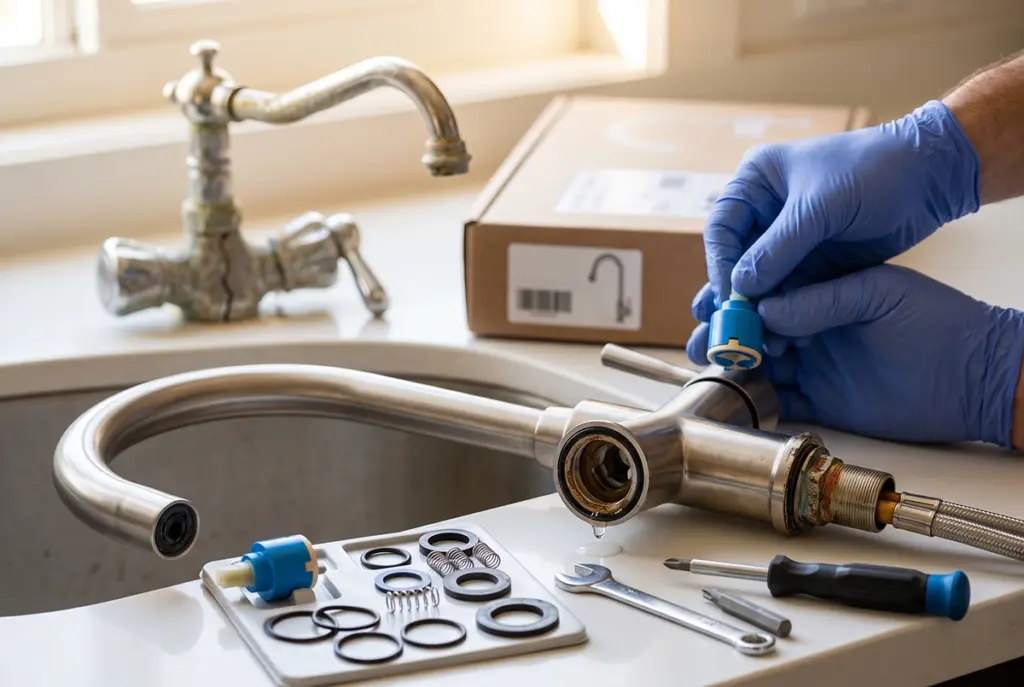



A condo plumbing stack may need replacement when an assessment finds extensive physical deterioration, repeated failures along the same route, or damage that cannot be reliably addressed with a limited repair. A stain, slow drain or old cast iron pipe is a reason to investigate. It does not, by itself, establish that the entire stack has reached the end of its useful life.
The decision about plumbing stack replacement should connect visible symptoms to documented defects and a clearly defined scope. For owners, that means reporting problems promptly and involving management when shared piping may be affected. For a board or property manager, it means comparing repair options, access requirements and the condition of the pipe that would remain after the work.
What is a plumbing stack in a condo?
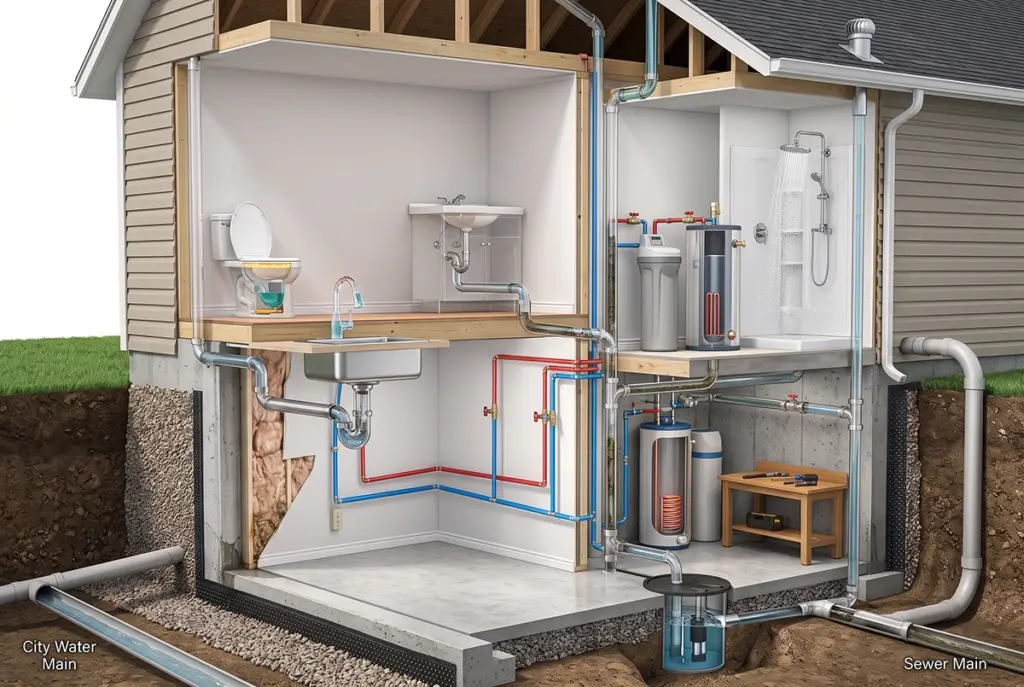
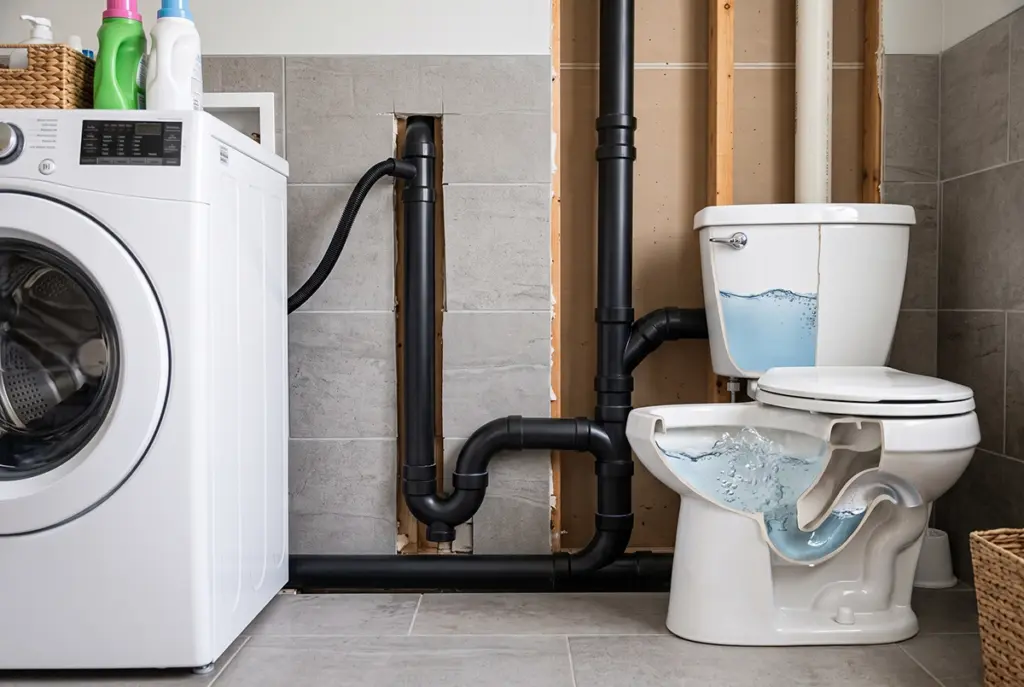
A plumbing stack is a vertical part of the building’s sanitary drainage system. Branch drains carry wastewater from fixtures into the shared drainage route, while connected vent piping helps control air pressure and protect the water seals in traps. A building can have several stacks serving different suites or fixture groups.
This drain-waste-vent system is different from a domestic-water riser, which distributes supply water. Low pressure at a tap or rusty tap water therefore calls for a water-supply investigation; it is not evidence that a drainage stack needs replacement. Establishing which system is involved prevents an expensive recommendation from starting with the wrong problem.
In a condo, parts of the drainage route are often concealed in walls or service chases and may continue through several units. The wet patch visible in one suite may not be directly beside the source. Shared access and reports from connected floors can be important to the investigation.
Warning signs that deserve a closer look
Several plumbing stack problems can produce similar symptoms. A failed joint, an isolated branch leak, an obstruction, a venting defect and deteriorated pipe require different remedies. Record what you can observe safely, then let the inspection establish the source and extent.
Active leaks and recurring dampness
A plumbing stack leak may appear as dripping near an exposed joint, staining around a service chase, or dampness that returns after repairs to the finishes. Notice whether the timing corresponds with drainage use, but do not deliberately run more water to test an active leak. Water can travel along framing or other surfaces before it becomes visible.
If you notice a stack pipe leaking, notify building management promptly. Photographs from a safe location can help show the exact area and whether the problem is changing. Avoid removing covers, opening walls or disturbing corroded material yourself. Condensation, a supply leak or another moisture source may look similar until someone traces it.
Recurring blockages and symptoms across suites
Repeated backups after appropriate cleaning warrant a closer assessment of the drainage route. Reports from several connected suites may help locate a shared problem, especially when their timing is similar. Management should compare those reports with maintenance records rather than treat every complaint as an unrelated fixture issue.
Cleaning can remove an obstruction, but it cannot repair a crack or a failed joint. Conversely, a blocked but otherwise serviceable drain does not automatically need replacement. The inspection should explain whether the recurrence comes from deposits, a physical defect, an unsuitable connection or another condition.
Visible cracks and repeated cast iron repairs
Potential signs of cast iron pipe failure include visible cracks, leakage through a damaged section, and recurring failures at different points along the same run. Surface rust alone does not reveal the remaining condition of the whole pipe. Appearance, age and one photograph cannot establish how much material needs renewal.
If an inspection finds a cast iron stack leaking at one joint, a localized repair may be practical. If there are several documented defects and the surrounding pipe cannot provide dependable connections, a wider replacement scope may be justified. The recommendation should identify that difference instead of treating all old cast iron as equally deteriorated.
Match each symptom to the evidence needed
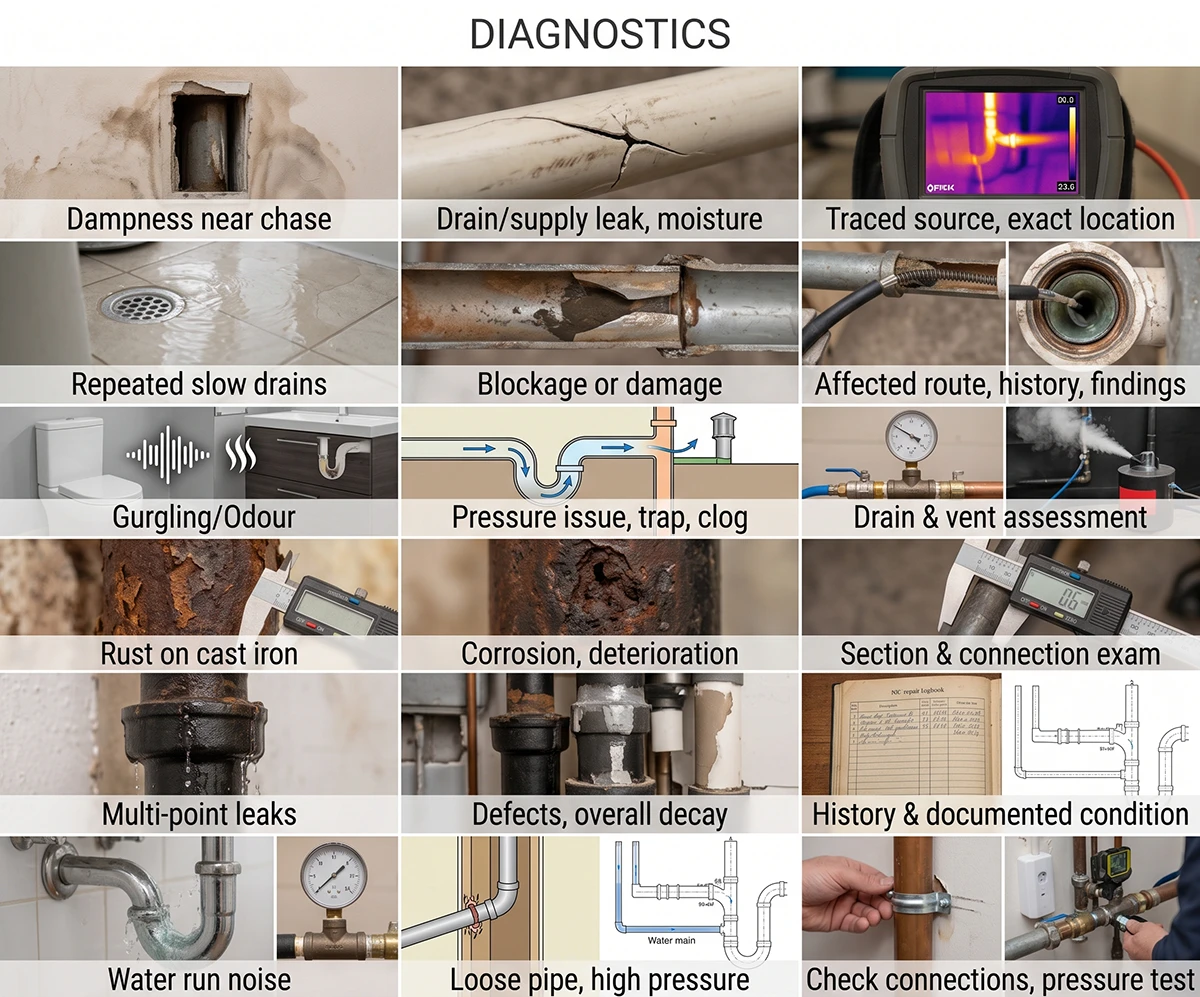
Use the following table to frame an assessment. It separates what a resident can notice from what a contractor needs to establish before proposing major work.
| Observation | Possible explanations | Evidence needed |
|---|---|---|
| Dampness near a stack chase | Drain/supply leak, condensation or other moisture | Traced source, exact pipe and leak location |
| Repeated slow drains or backups | Blockage, faulty connection or pipe damage | Affected route, cleaning history and visible internal findings |
| Gurgling or persistent sewer odour | Pressure imbalance, trap issue, blockage or leakage | Drain and vent assessment rather than sound alone |
| Rust on exposed cast iron | Surface corrosion or more significant deterioration | Examination of the affected section and surrounding connections |
| Leaks at several points on one stack | Multiple local defects or broader deterioration | Dated repair history and documented condition along the route |
A drain stack leaking behind a wall needs prompt attention even when the visible stain is small. The amount of visible damage does not reliably show how much moisture is concealed. At the same time, repairing a stain without finding its source can leave the actual problem unresolved.
What a professional inspection should establish?
The first objective is to identify the affected pipe, material, route and connected fixtures. Management can help by providing drawings, past repair reports and access information. A contractor can then examine accessible piping and select further tests or openings based on what the initial findings suggest.
A useful inspection looks beyond the obvious drip. Visible connections, pipe support and nearby components may influence whether a small repair will hold. Where internal condition matters, a drain camera inspection can document accessible sections and help identify obstructions or visible damage.
Understand the limits of a camera view
Camera footage is valuable evidence, but its coverage depends on access, geometry and visibility. Standing water, deposits or an obstruction can hide part of the pipe. Cleaning may be needed before useful footage is available, and the cleaning method should suit the pipe’s condition.
An ordinary camera does not inspect every concealed exterior surface, measure all remaining pipe-wall thickness or predict a guaranteed number of years of service. Ask which sections were viewed clearly, which were not reached, and whether further investigation would materially change the recommendation. A written limitation is more useful than an unsupported assurance that the entire system is sound.
Ask for findings that support the recommendation
Before approving major work, request a report or scope that identifies:
- The defect and its location, supported by photographs or useful video where available.
- The extent of the assessed piping and any inaccessible areas.
- Whether the surrounding pipe can support a dependable localized repair.
- The proposed treatment and why a smaller intervention would or would not be adequate.
- Access openings, connected branches and any related building work.
- How the completed work will be tested and documented.
These details make quotations easier to compare. They also help a board distinguish an urgent repair needed now from a planned renewal project that requires broader coordination.
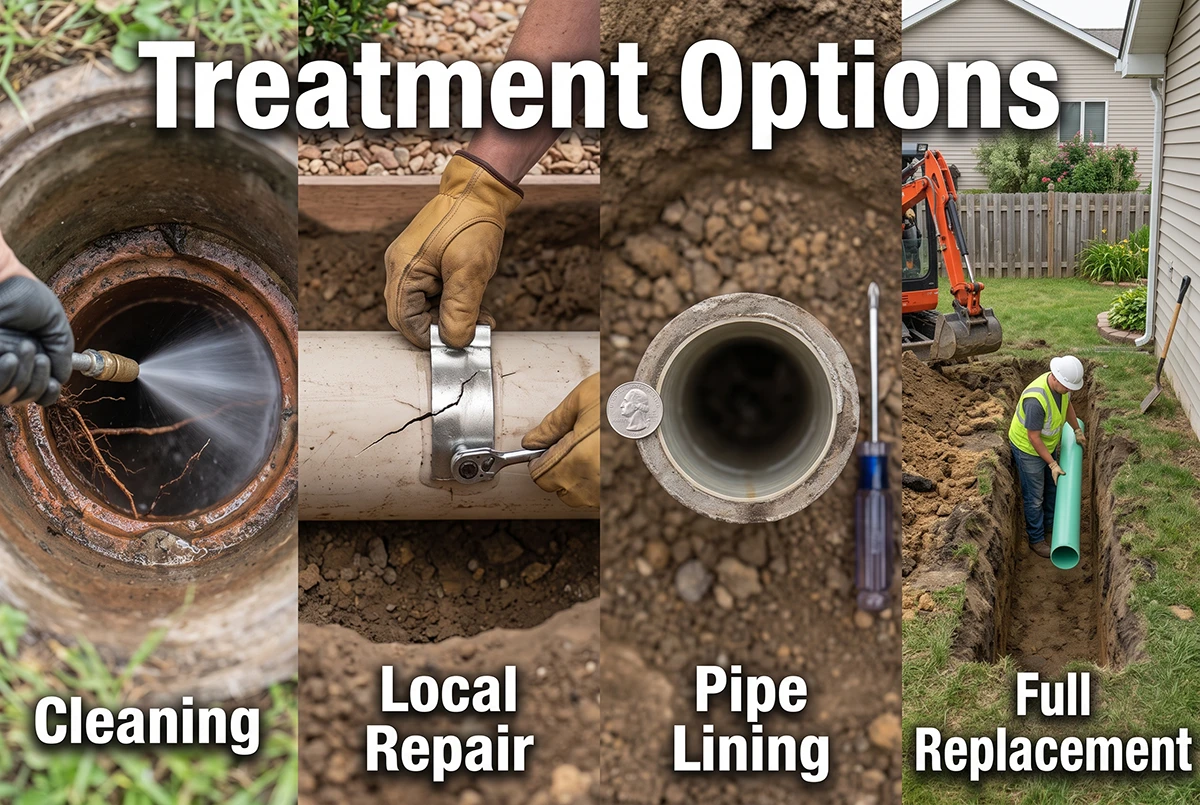
How the main treatment options compare?
The right intervention depends on the defect and the building. Ask for drain repair and replacement options that address the findings, with the boundaries of each option explained. One method should not be presented as suitable simply because it is less disruptive or because the pipe is old.
| Option | When considered | Key limitation or question |
|---|---|---|
| Cleaning | An obstruction is affecting otherwise serviceable drainage | Suitable for this pipe? Is damage still suspected? |
| Localized repair | A joint or short section has an isolated defect | Can the adjacent pipe support reliable connections? |
| Designed lining system | Condition and access suit the specified lining system | Structural lining or coating? How are branches handled? |
| Sectional or wider replacement | Multiple defects make a limited repair unreliable | Included pipes and branches? Access and restoration scope? |
Lining requires a specific design decision
Lining is not a single interchangeable treatment. A structural cured-in-place system and a thin protective coating have different functions. Suitability depends on the particular system, pipe condition, preparation, connections and applicable approvals. Ask what is proposed, what it is intended to restore, and how installation quality will be checked.
Do not assume that every lining method eliminates wall openings or corrects collapsed, badly displaced or unsuitable piping. Equally, it would be inaccurate to say that every lining system is only for superficial corrosion. A building-specific assessment is necessary before comparing it with replacement.
Replacement should have clear boundaries
Cast iron stack replacement might involve a short section, a complete vertical run, or several related runs. Those are different projects. The scope should show where new pipe begins and ends, how branches reconnect, and whether adjoining sections have been assessed.
Material selection also needs to suit the building. Ordinary plastic piping is not automatically interchangeable with cast iron in every high-rise location. Supports, fire separations and other affected assemblies must be addressed as part of the design and installation. The quotation should identify who is responsible for that associated work.
What affects plumbing stack replacement cost?
A useful budget starts with a defined scope rather than an online average for a detached house. The number of affected floors, branches and suites can change both the plumbing work and the coordination required. Difficult access, occupied rooms and finished surfaces can add work beyond the pipe itself.
When comparing cast iron stack replacement cost, ask whether each quotation includes the same items:
- Pipe sections, fittings, branch reconnections and supports.
- Access openings, protection of occupied spaces and removal of old material.
- Any required design documents, permits and inspections.
- Work on affected fire separations and other assemblies.
- Staged drain-use restrictions and any agreed after-hours work.
- Testing, inspection records and project closeout.
- Wall, ceiling, tile and other finish restoration.
- Taxes, allowances and clearly listed exclusions.
A lower quoted price may cover only the plumbing while another includes opening and reinstating finishes. Ask for those boundaries in writing before comparing totals. If the condition of concealed piping is unknown, ask how newly discovered work would be documented and priced before it proceeds.
There is no reliable way to calculate a condo-wide replacement budget from the age of the stack or one leak photograph. An assessment and comparable quotations provide a better basis for deciding between a limited repair and a larger planned project.
How condo owners and managers can prepare?
Residents should report where the problem appears, when it started, which fixtures are affected and whether it has happened before. Include safe photographs and previous repair information. Do not independently authorize alterations to a shared stack or operate communal valves without the building’s process.
Management can check for related reports from connected suites and review the declaration, description and relevant standard-unit or insurance documents. In Ontario, repair and maintenance responsibilities depend on the applicable legal framework and governing documents. The location of a wet wall alone does not determine who pays.
Before work begins, the manager and contractor should confirm the actual approval, permit and inspection requirements. City of Toronto guidance lists installation or modification of plumbing systems among work that can require a permit. The appropriate process depends on the proposed scope and any associated construction.
For shared-stack work, the access plan should identify the suites involved, who needs entry, and when connected fixtures must remain unused. A tap that still supplies water does not mean its drain is available. Clear instructions are important because wastewater from another floor may enter the section being repaired.
POM provides condo and high-rise plumbing services for buildings where access and shared drainage need to be coordinated. When requesting an assessment, management should provide the known drainage route and access constraints so the visit can be planned around the building.
When the situation needs immediate attention?
Active wastewater leakage, an ongoing backup or spreading water calls for prompt help. Stop using the affected fixtures and notify management so it can coordinate other connected suites. Closing a supply valve in one unit does not stop neighbours from discharging wastewater into a shared stack.
Keep people away from contaminated water and unsafe wet areas. Do not touch electrical equipment from standing water or attempt to patch a concealed shared pipe. Report the location and visible conditions to the building’s emergency contact or plumbing contractor, then follow their instructions about access and fixture use.
Once the immediate problem is controlled, ask whether the repair is the final solution or whether further condition assessment is needed. Emergency stabilization and a planned replacement decision can involve different scopes. The building should retain a record of both.
Can maintenance reduce future stack problems?
Maintenance can help limit blockages, but it cannot restore cracked pipe or a failed joint. Residents can protect a shared drainage stack by keeping wipes, hygiene products, fats, oils and cooking grease out of drains. Toronto’s disposal guidance applies even to wipes labelled ‘flushable’.
For condo management, a practical plan is to:
- Keep cleaning reports, leak photographs and repair locations together by stack.
- Ask the contractor to base cleaning methods and intervals on findings and the building’s history.
- Give residents clear disposal and reporting instructions, and review recurring symptoms rather than only repeating cleanings.
Get a documented recommendation before committing
Replacement is most defensible when the findings show why a limited treatment would leave unacceptable or recurring defects. A clear report should also explain when a local repair is sufficient. That evidence helps the board plan the work and gives residents a more useful explanation than a decision based only on pipe age.
To arrange an assessment in Toronto or the GTA, contact POM Plumbing through the appropriate building representative. Share the leak history, affected suites and existing reports so the discussion can focus on the actual condition and required scope.
FAQ
Not automatically. Replacing a drainage stack does not by itself mean every connected fixture must be renewed. Ask the contractor which fixtures can remain, which need temporary removal and reinstatement, and whether damaged fixtures or connections need separate work. Keep any new-fixture allowance distinct from the pipe replacement scope.
Check the proposed access locations with management before closing walls or installing new finishes. Coordinating the projects may avoid reopening completed work. Do not assume that an approved renovation changes the stack project’s timing or that both contractors have the same scope.
It can. Drainage noise depends on the installed system, including the pipe, its support and sound control in the surrounding wall or ceiling. Ask how the replacement design will address noise before finishes are closed. A material name alone does not guarantee that the finished installation will be louder or quieter.
Coverage cannot be assumed. Renewing the pipe, repairing resulting damage, replacing improvements and paying deductibles may be treated differently. Management and the relevant insurer should review the policy and governing documents before anyone relies on reimbursement.
Not automatically. Whether a suite remains usable depends on access, drainage restrictions, safety requirements and the duration of the specific work. Ask management for written information about affected facilities and any arrangements residents need to make; avoid planning around a generic project timeline found online.