


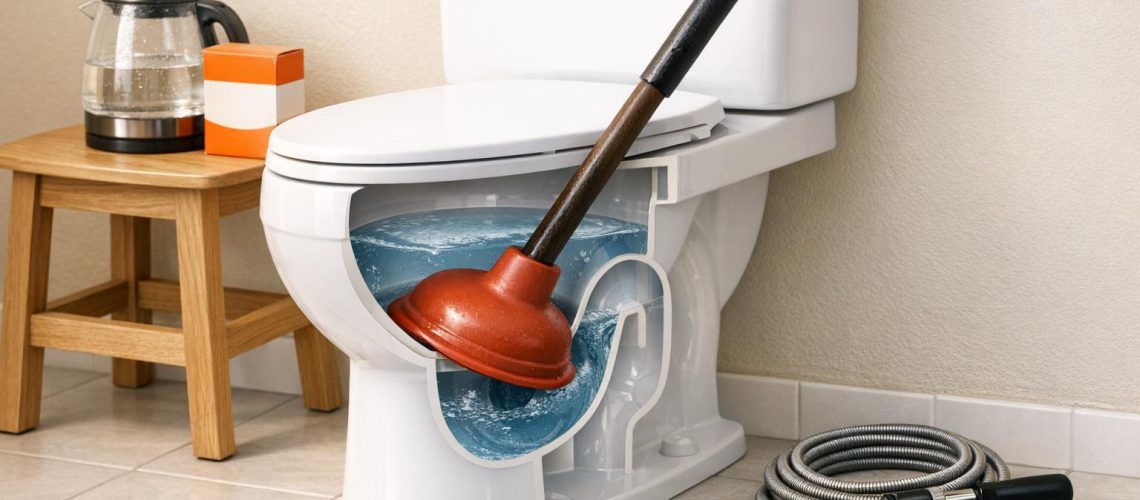

If your toilet is clogged, don’t panic. Most blockages can be resolved without a plumber using simple tools and household items. Here’s what you need to know:
- Stop flushing immediately to avoid flooding.
- Use a flange plunger for most clogs or a toilet auger for tougher blockages.
- Try household remedies like dish soap and hot water or a baking soda and vinegar mix.
Avoid harsh chemicals – they can damage pipes. If the clog persists or affects other drains, professional help may be needed. Prevent future clogs by flushing only toilet paper and human waste, using less paper, and maintaining your plumbing regularly.
Contents
- 1 5 Ways On How To Unclog Any Toilet – With & Without Tools!
- 2 Why Your Toilet Gets Clogged
- 3 DIY Methods to Unclog a Toilet: Quick Overview
- 4 Using a Plunger
- 5 Home Remedies to Unclog a Toilet
- 6 Using a Toilet Snake (Auger)
- 7 When DIY Isn’t Enough
- 8 How to Prevent Future Clogs
- 9 Conclusion
- 10 FAQs
- 11 Related Blog Posts
5 Ways On How To Unclog Any Toilet – With & Without Tools!
sbb-itb-1e3c609
Why Your Toilet Gets Clogged
Knowing what causes a clogged toilet can save you from a lot of trouble. Most blockages are avoidable, and many are common in Toronto homes.
One major culprit is flushing the wrong items. Things like paper towels and facial tissues don’t break down the way toilet paper does, making them a frequent cause of pipe blockages. If you have young kids, toys might also find their way into the toilet. Teaching children what shouldn’t go down the drain can make a big difference.
Another common issue is using too much toilet paper. Even though toilet paper is designed to dissolve, using excessive amounts – especially thicker varieties like 2-ply – can lead to clumps that get stuck in the S-shaped trap. On average, people use 8 to 9 squares per wipe when only 3 to 4 squares are enough. Folding the paper rather than crumpling it can also help it flush more smoothly.
Toronto’s hard water is another factor. With an average of 124 mg/L of calcium carbonate, mineral deposits can build up in the small rim jets under the toilet bowl. Over time, this reduces flush power, making it harder to clear waste. Master Plumber Mike Thompson explains:
"Toronto’s hard water (averaging 124 mg/L calcium carbonate) and aging housing stock create unique repair challenges".
Lastly, older toilet designs can contribute to clogs. Early low-flow models from the mid-1990s often didn’t have enough pressure to push waste through effectively. If your toilet is over 25 years old and frequently clogs, the outdated trapway design might be the issue. Modern high-efficiency toilets, which use just 4.8 litres per flush compared to the 13+ litres of pre-1996 models, are far more effective.
Up next, learn how to handle these common clogs on your own!
DIY Methods to Unclog a Toilet: Quick Overview
Before you dive into unclogging your toilet, make safety your first step. Turn off the shutoff valve located behind your toilet to stop the water flow, slip on a pair of rubber gloves, and resist the urge to flush repeatedly if the bowl is already full. Once you’re prepped, pick a method that matches how tough the clog seems to be.
Some go-to techniques include using a flange plunger for effective suction, pouring dish soap and hot water to help lubricate and clear the pipes, trying the classic baking soda and vinegar reaction to break down waste, or opting for a toilet auger if the clog won’t budge. Each of these approaches will be broken down further in the sections ahead.
Stick to hot tap water – boiling water can crack your toilet’s porcelain. If you’re using a toilet auger, make sure it has a rubber-coated tip to protect the bowl. And if you’ve already tried chemical cleaners, steer clear of mechanical tools right after to avoid splashing harmful substances.
"Plunge the toilet gently to begin with – this will stop the trapped air in the plunger from thrusting backwards and splashing the water everywhere." – Drano® Expert Advice
If the water level in the bowl is high, give it about 10 minutes to lower before you start. This will help you avoid unnecessary spills and messes.
Using a Plunger
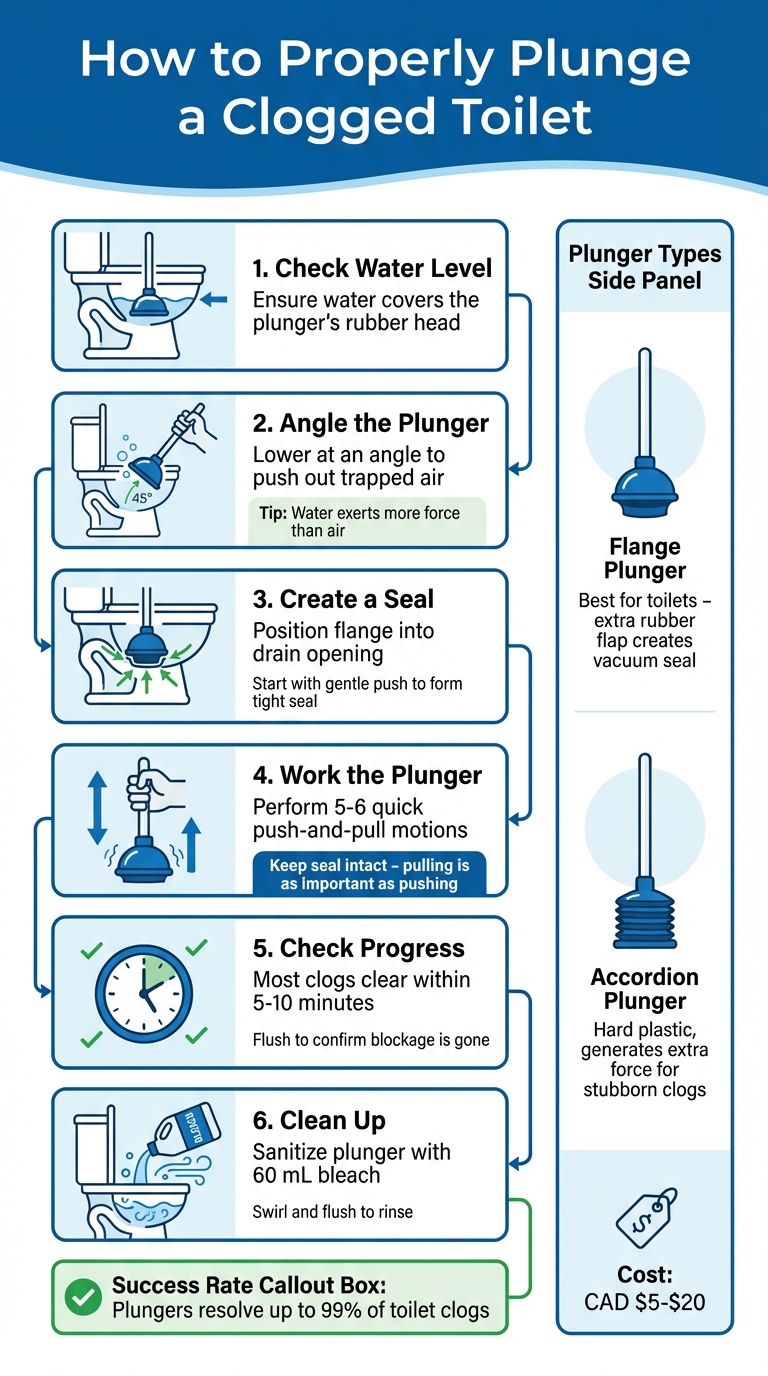
Step-by-Step Guide to Unclog a Toilet Using a Plunger
A plunger is one of the go-to tools for clearing toilet clogs, and for good reason. Plumbers estimate that plungers can resolve up to 99% of clogs. The key to success lies in picking the right plunger and mastering the technique, which can save you from unnecessary frustration.
Types of Plungers
Not all plungers are created equal, and using the wrong one can make the job harder than it needs to be. For toilets, you’ll want to avoid the standard cup plunger – these work best on flat surfaces like sinks or bathtubs. Instead, opt for a flange plunger or an accordion plunger.
- Flange Plunger: This type has an extra rubber flap that extends from the cup, allowing it to fit snugly into the toilet’s drain opening. This creates the necessary vacuum seal to dislodge the clog.
- Accordion Plunger: Made of hard plastic, this plunger features a bellows-like design that generates extra force, making it ideal for stubborn blockages.
Both types are widely available and budget-friendly, typically costing between CAD $5 and CAD $20.
Step-by-Step Plunging Technique
Follow these steps to make sure you’re plunging effectively:
- Check the water level: Ensure there’s enough water in the toilet bowl to fully submerge the rubber head of the plunger.
- Angle the plunger: Lower it into the water at an angle to push out any trapped air. Water exerts more force than air, so this step is crucial.
- Create a seal: Position the flange securely into the drain opening. Start with a gentle push to expel any remaining air and form a tight seal.
- Work the plunger: Perform 5–6 quick push-and-pull motions, keeping the seal intact. The pulling motion is just as important as the pushing, as it helps loosen the clog by moving it back and forth.
- Check progress: Most clogs clear within 5–10 minutes. Once the water drains freely, flush to confirm the blockage is gone.
- Clean up: Sanitize the plunger by swirling it in about 60 mL of bleach, then flush to rinse.
Home Remedies to Unclog a Toilet
No plunger? No problem! You can tackle soft blockages like excess toilet paper or organic material using everyday household items. These approaches are gentle on older pipes and septic systems, making them a safe alternative. Here’s how to do it step by step.
Dish Soap and Hot Water Method
This technique combines lubrication and heat to loosen the clog. The dish soap acts as a slippery agent, while hot water softens the blockage. Here’s what to do:
- Pour 60–125 mL of liquid dish soap (or even shampoo or body wash) into the toilet bowl.
- Let it sit for 1–2 minutes to start working.
- Carefully pour a bucket of hot (but not boiling) tap water from waist height to add pressure and help move the clog.
- Allow the mixture to sit for 15–20 minutes before attempting to flush.
This simple method often works wonders on soft clogs.
Baking Soda and Vinegar Method
The fizzing action of baking soda and vinegar can help dislodge stubborn blockages. To avoid overflow, check that the water level in the bowl is low before starting. Follow these steps:
- Add 1 cup of baking soda to the bowl.
- Slowly pour in 2 cups of vinegar in a circular motion to distribute it evenly.
- Let the fizzy reaction work its magic for 20–60 minutes.
- Flush the toilet to see if the clog clears. If it doesn’t, pour a bucket of hot tap water to help push the blockage through.
If the toilet begins to overflow during this process, turn off the water supply immediately to prevent a mess.
These methods are simple, effective, and use items you likely already have at home!
Using a Toilet Snake (Auger)
When plungers and DIY fixes don’t do the trick, a toilet auger (also known as a closet auger) is your next go-to tool. This handy device features a long, flexible cable – usually between 0.9 and 1.8 metres long – with a hooked head designed to navigate your toilet’s S-trap and tackle stubborn clogs head-on. Unlike regular drain snakes, toilet augers come with a curved plastic or rubber sleeve at the base to protect your porcelain bowl from scratches.
You can find basic models for under CAD $10, while top-tier versions can cost up to CAD $100. Not ready to invest? Many hardware stores across Canada offer rentals for CAD $35–CAD $45 per day. For most clogs that haven’t gone beyond the toilet’s wax seal, a 0.9-metre auger should do the job.
Step-by-Step Guide
Before you start, turn off the water supply valve located behind your toilet to avoid any overflow. Put on rubber gloves and eye protection, and lay towels around the base of the toilet – snaking can bring up some messy debris and water.
"Avoid using boiling water, as it can stress and crack the ceramic." – Jay Bazuzi, Stack Exchange
- Insert the auger head into the drain opening, ensuring the protective sleeve is resting against the bottom of the bowl.
- Push the auger gently until you feel resistance, then turn the handle clockwise while continuing to advance the cable. The rotation helps manoeuvre the cable through bends and either break apart the clog or hook onto it.
- Once you feel the cable engage with the clog, keep turning for a few seconds. Slowly pull the snake back while still rotating to bring any debris out, rather than pushing it deeper.
If the cable gets stuck, don’t force it – excess pressure could damage fragile pipes or the toilet’s internal structure . Instead, reverse the handle’s direction and try approaching the blockage from a slightly different angle. Once the clog is cleared, flush the toilet to ensure everything is flowing smoothly. Then, clean the auger with a diluted bleach solution and dry it thoroughly to prevent rust before storing it .
If you notice multiple drains clogging at the same time or hear gurgling sounds from other fixtures, the issue might be in your main sewer line, which is beyond the reach of a toilet auger. If that’s the case, the next section will guide you on when to seek professional help.
When DIY Isn’t Enough
Sometimes, a clogged toilet signals a problem that goes beyond what a plunger or auger can handle. For instance, if flushing causes water to back up into your shower, sink, or bathtub, the issue likely lies in your main plumbing lines – not just the toilet. This kind of problem needs immediate attention to avoid the risk of sewage flooding your home. You might also notice recurring clogs or strange noises in other fixtures, which are red flags for deeper plumbing issues.
Recurring clogs are a telltale sign of trouble. If you clear a blockage only to have it reappear within days or weeks, the problem could be lurking further down the pipes. Over time, mineral build-up and debris can restrict the flow inside your pipes, creating conditions that DIY fixes simply can’t resolve. Similarly, if you hear gurgling sounds from your sink or tub when you flush, it’s a strong indication of a more serious issue.
At this point, DIY attempts should stop. Hard objects like toys, hygiene products, or cleaning wipes that accidentally get flushed won’t dissolve with hot water or vinegar. These items are also unlikely to budge with a plunger or auger. Professional plumbers have the tools – like drain camera inspections and extraction devices – to locate and safely remove these blockages without causing damage to your plumbing. When solid obstructions or deeper issues arise, expert help is the only way to fully diagnose and fix the problem.
If you’re facing these warning signs, it’s time to call in the professionals. POM Plumbing Service Company, with over 20 years of experience, serves Toronto and the GTA with advanced diagnostic tools and licensed expertise. Whether it’s a simple clog, pipe build-up, or a more serious main line issue, their team can quickly and safely restore your plumbing to working order.
How to Prevent Future Clogs
Once you’ve dealt with a clog, it’s smart to take steps to avoid them in the future. A few simple changes to your habits can make a big difference.
Start by being mindful of what goes down the toilet. Only flush human waste and toilet paper that’s specifically designed for plumbing systems. Steer clear of flushing items like paper towels, tissues, or wipes – even those labelled "flushable." These products often fail to break down properly, leading to stubborn blockages that might require professional help to fix.
Choose toilet paper that dissolves quickly and is biodegradable. Thinner, single-ply options are less likely to cause issues compared to thick, multi-ply varieties. If you find yourself using a lot of toilet paper, consider flushing twice instead of overloading the bowl. This small adjustment can go a long way in preventing future clogs.
It’s also important to educate everyone in your household about proper flushing habits. Make sure children understand that only toilet paper belongs in the toilet. This helps prevent accidental flushes of non-dissolvable items like toys, hygiene products, or cleaning wipes, which can lead to serious plumbing problems.
Beyond daily habits, regular maintenance is essential to keep your plumbing in good shape. Avoid using harsh chemical drain cleaners, as they can corrode pipes over time, leading to costly repairs. Instead, opt for a monthly enzyme-based build-up remover to keep your drains clear. Additionally, inspect your toilet’s components every six months and consider scheduling professional drain cleaning services to remove any mineral build-up.
For a more thorough approach, POM Plumbing Service Company offers maintenance plans tailored to prevent major plumbing issues. Their licensed experts in Toronto and the GTA provide system checks, leak detection, and drain inspections to keep your home’s plumbing running smoothly.
Conclusion
Facing a clogged toilet doesn’t always mean you need to call a plumber right away. The techniques outlined here – plunging, using hot water and dish soap, the baking soda and vinegar method, and a toilet auger – work well for most everyday clogs. A flange plunger is perfect for surface-level issues, while a toilet snake is better suited for deeper blockages. For those looking to avoid harsh chemicals, the baking soda and vinegar approach offers a gentler, eco-conscious solution that’s easier on your pipes.
Preventing clogs is often easier than fixing them. By paying attention to what you flush and keeping up with basic maintenance, you can avoid many plumbing headaches. Simple steps like sticking to biodegradable toilet paper, flushing only appropriate items, and scheduling regular inspections can save you from costly repairs and long-term damage to your plumbing system.
Of course, not every clog is manageable on your own. If you notice water backing up into other drains, hear gurgling sounds, or find that the blockage won’t budge after multiple attempts, it’s time to call in professionals. These symptoms could point to more serious problems like sewer line issues or stubborn mineral buildup, which require specialized tools and expertise.
POM Plumbing Service Company has been serving Toronto and the GTA for over 20 years, offering licensed and insured plumbing solutions. Their team uses advanced diagnostic equipment to pinpoint the exact location of tough clogs and safely clear them without risking damage to your system. Whether you need emergency assistance or want to set up regular maintenance, their transparent pricing and skilled service ensure your plumbing stays in excellent shape.
FAQs
How do I know if the clog is in the toilet or the main sewer line?
If your toilet alone is backing up or draining slowly, the problem is likely confined to the toilet or its immediate drain pipe. However, when multiple fixtures in your home start draining slowly or backing up, it could point to a blockage in the main sewer line. Another warning sign of a deeper issue is water rising in the toilet bowl after flushing or when using other drains in the house.
Can I use a toilet auger if I already poured a chemical cleaner in the bowl?
Yes, you can use a toilet auger after applying a chemical cleaner, but timing and safety are key. Allow the cleaner some time to work on the clog first. When you’re ready, take precautions like wearing gloves to protect your skin. If there’s still chemical residue, flush the toilet with hot water to dilute it before using the auger. Work carefully to avoid causing any damage to the toilet or pipes while clearing the blockage.
When should I replace an old low-flow toilet instead of fixing clogs?
If your old low-flow toilet is outdated, prone to frequent clogs despite your best DIY efforts, or has visible damage like cracks or persistent leaks, it might be time to consider a replacement. When repairs start feeling like a never-ending cycle or fail to resolve the issues, swapping out the toilet can lead to better performance. Plus, it can save you from ongoing plumbing headaches and expenses down the road.