


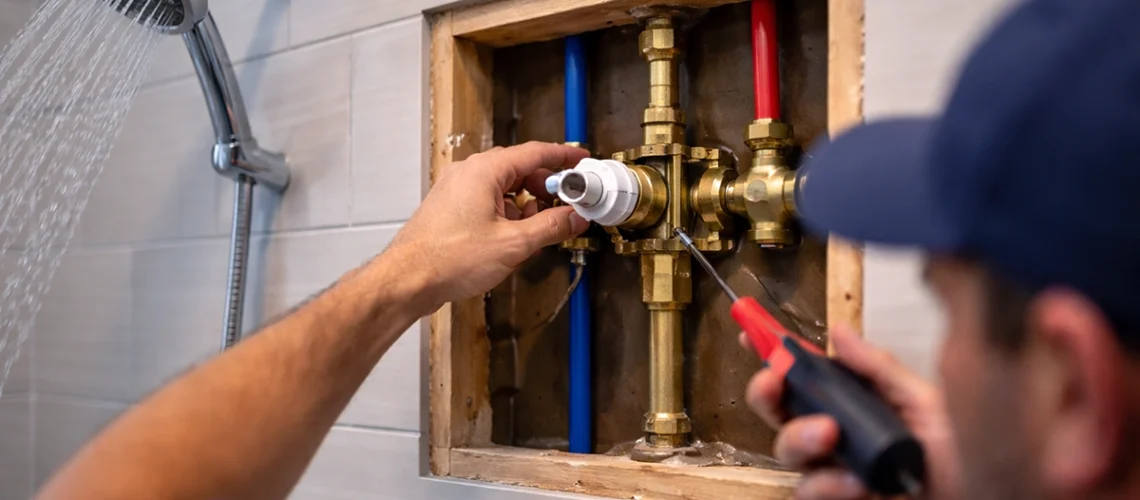

We have all been there: you are enjoying a warm, relaxing shower, and suddenly, without warning, the water turns cold or dangerously hot. You jump back, waiting for the temperature to stabilize, wondering what just happened.
This phenomenon is known as “thermal shock,” and it is not just a nuisance; it is a sign that your plumbing system lacks a critical component or that a specific part has failed. If you’re wondering why your shower water randomly switches between hot and cold, the answer often lies inside your wall within a component called a mixing valve.
In this guide, we will break down the mechanics of shower valves, explain why modern homes are required to have them, and help you decide if it is time for an upgrade.
Contents
What Is a Mixing Valve? The Mechanics Explained
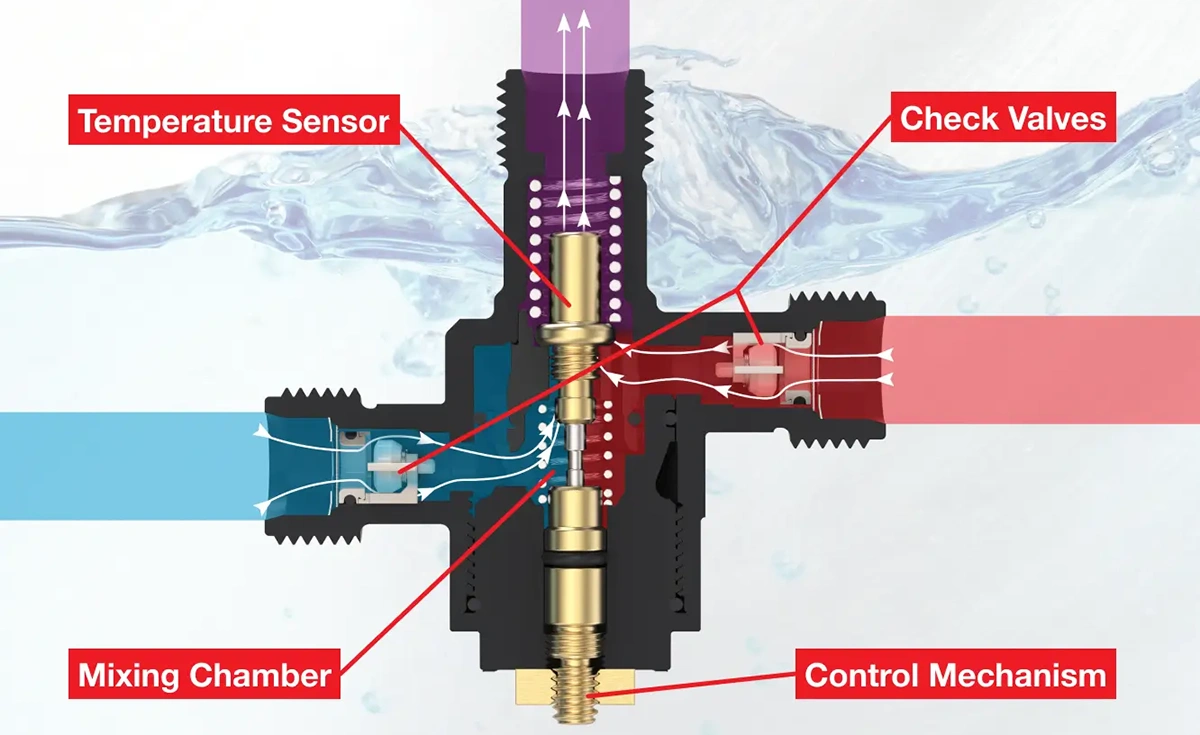
To understand the solution, we must first define the device. What is a mixing valve? In technical terms, it is the heart of your shower faucet. It is a brass component installed behind the shower handle that blends the hot water from your water heater with the cold water from your main supply line.
But a modern mixing valve does more than just blend; it regulates. Shower mixing valve explained simply: It makes sure the water temperature stays steady even if pressures in your home’s pipes change. In larger buildings, it works together with Riser and Zone Valves Replacement to control overall building pressure.
Symptoms of a Missing or Faulty Valve
How do you know if your home lacks this protection or if your existing valve has a bad cartridge? Look for these three signs:
- The “Toilet Flush” Effect. This is the most common sign. If your shower turns cold when the toilet flushes (or becomes very hot), your plumbing system is not balancing pressure properly. When the toilet refills, it uses a large amount of cold water, causing a pressure drop in the cold line. Without a functioning mixing valve, hot water then takes over, potentially scalding anyone in the shower.
- Constant Temperature Adjusting. If your shower temperature varies during use and you frequently need to adjust the handle left or right, the internal cartridge may be clogged with mineral deposits or worn out. This issue is common in areas with hard water.
- Delayed Reaction. Does the water take a moment to start flowing when you turn the handle? That “spongy” feeling is often a sign that the internal mechanism might be beginning to fail.
Comparing Technologies: Thermostatic vs. Pressure Balance
Not all valves are created equal. When upgrading, you will face a choice between two main technologies. Understanding the thermostatic mixing valve vs pressure balance difference is crucial for your comfort and budget.
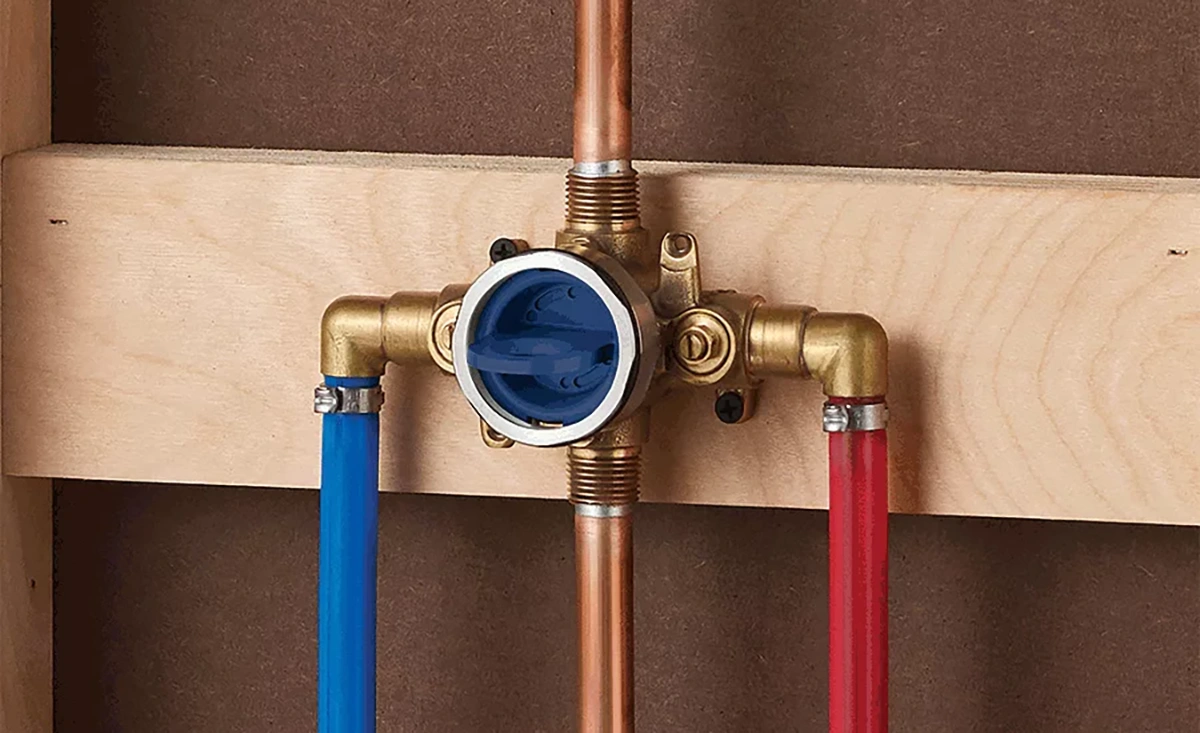
Option A: Pressure Balance Valve (The Standard)
- How it works: It senses changes in water pressure. When cold pressure drops, a piston inside shifts to block some hot water.
- Pros: Lower cost, reliable, standard in most North American homes.
- Cons: It only controls the ratio, not the exact temperature. If you turn down the volume, the temperature might shift.
Option B: Thermostatic Mixing Valve (The Upgrade)
- How it works: It uses a wax element that expands and contracts when heated. It automatically adjusts hot and cold inputs to keep a specific temperature (e.g., 38 °C).
- Pros: You have complete control. You can adjust the temperature with one handle and the water flow with another. Perfect for “rain” shower heads.
- Cons: Higher startup cost.
Safety First: Preventing Scalding
The most critical reason to address these issues is safety. Preventing shower scalding is a top priority, especially for households with children or elderly family members who may have slower reaction times. A sudden burst of hot water can cause serious burns in seconds.
Modern building codes require anti-scald protection. If you live in an older home with two-handle faucets (one for hot, one for cold), you might not have this protection. Installing an anti-scald valve shower system is one of the most effective safety upgrades you can make.
Conclusion: Do You Need a Plumber?
If you’re dealing with these issues, you have two options: replace the internal cartridge (repair) or install a new valve body (renovation). While changing a cartridge can often be a DIY project, replacing the valve usually involves soldering and working behind the wall.
Don’t put up with the “shower dance” any longer. Reach out to POM Plumbing today! We’re here to assess your system and bring back comfort to your bathroom.
FAQ
Yes. Most modern valves have a rotational limit stop (a plastic ring) under the handle. Adjusting this can allow more hot water into the mix if your shower feels lukewarm.
Typically, 10 to 15 years. However, hard water can significantly shorten this lifespan by causing mineral buildup that clogs the piston.
If other faucets are functioning properly, the issue is likely debris inside the mixing valve or a clogged shower head, rather than a problem with your main water line.