


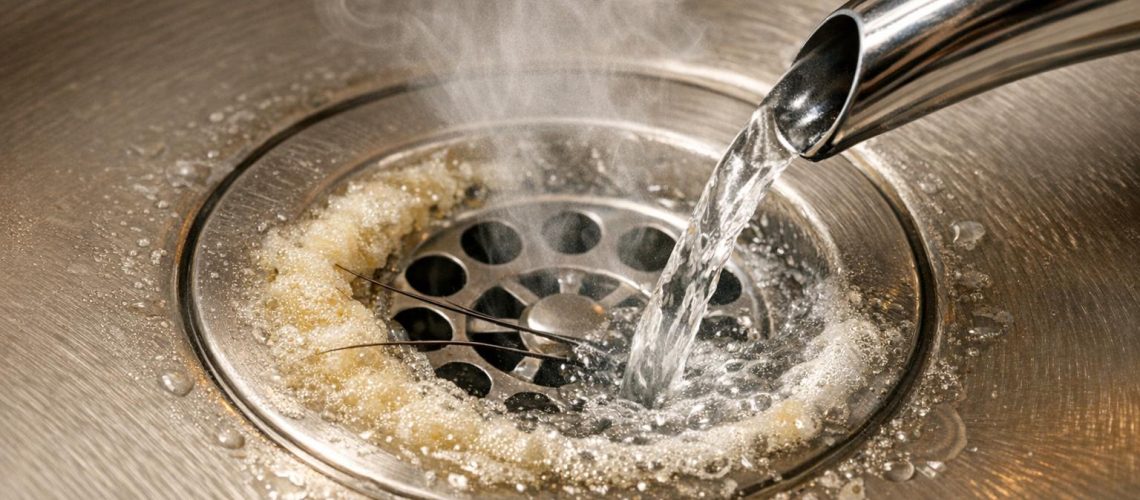

Yes, but only for minor clogs near the drain opening. Boiling water can dissolve grease, soap scum, and light organic debris, making it flow through the pipes more easily. However, it’s ineffective for tougher clogs caused by hair, solid objects, or deeper blockages. Plus, it can damage plastic pipes like PVC or ABS, which are common in modern homes, as these materials aren’t designed to handle boiling water’s high temperature (100°C).
Key Points:
- Works for grease and soap scum near the surface.
- Ineffective for hair, solid debris, or deep clogs.
- Can damage plastic pipes or crack porcelain fixtures.
- Safer alternatives include baking soda and vinegar or a plunger.
If boiling water doesn’t work, avoid repeated attempts as it may worsen the problem or harm your plumbing. For persistent clogs, consider professional solutions like hydro jetting or drain snaking.
Contents
- 1 Boiling Water and Clogged Drains: When It Helps … and When It Hurts!
- 2 How Boiling Water Can Help Clear a Drain
- 3 When Boiling Water Will NOT Fix a Clog
- 4 When Boiling Water Can Actually Damage Your Pipes
- 5 Safer DIY Methods to Try First
- 6 Signs You Need Professional Drain Cleaning
- 7 Professional Solutions for Stubborn Clogs
- 8 Tips to Prevent Future Drain Clogs
- 9 Conclusion
- 10 FAQs
- 11 Related Blog Posts
Boiling Water and Clogged Drains: When It Helps … and When It Hurts!
sbb-itb-1e3c609
How Boiling Water Can Help Clear a Drain
Boiling water can tackle certain types of drain clogs by using heat to break down grease, fats, and oils. When exposed to high temperatures, these substances liquefy, making it easier for them to flow through your pipes. The heat also reduces the stickiness of residues, helping to loosen and flush them away. For soap scum – a mix of soap and hard water minerals – the heat dissolves the soap component, breaking apart the buildup. Additionally, the force of the water helps push softened debris through the drain. This combination of heat and water flow makes boiling water effective for grease, soap scum, and light organic debris near the drain opening. Here’s how to use this method safely.
Step-by-Step Guide to Using Boiling Water
- Clear standing water: Remove as much water as possible from the sink or tub to ensure the boiling water directly reaches the clog.
- Prepare boiling water: Heat about 4 litres of water in a large pot or kettle with a spout to allow controlled pouring.
- Protect yourself: Wear oven mitts and long sleeves to avoid steam burns while handling the boiling water.
- Pour in two stages: Slowly pour half the boiling water into the drain, wait a few minutes for the heat to work on the clog, then pour the rest. Follow up by running hot tap water for about a minute to flush away any remaining debris.
Caution: Only use boiling water if your pipes are made of metal, such as iron or galvanized steel. For plastic pipes like PVC, ABS, PEX, or CPVC, stick to hot tap water (up to 60°C) to avoid damaging the material. When dealing with porcelain fixtures, pour the water slowly to prevent cracks caused by sudden temperature changes.
Note: This method is safe only for metal pipes. For plastic or porcelain risks, refer to the next sections.
Types of Clogs Boiling Water Can Address
Boiling water is particularly effective for clogs caused by grease or cooking oils that have just started to solidify. It’s also useful for dissolving soap scum, as the heat breaks down the fatty acids and minerals that stick to pipe walls. Light organic debris, like small food particles, can also be softened and flushed out with boiling water. However, this technique is best for shallow blockages near the drain opening, as the water cools as it travels further down the pipes.
Keep in mind that while boiling water can clear fresh clogs, it might push melted grease deeper into the system, where it could re-solidify into a more stubborn blockage. For older or deeper clogs, other methods will likely be more effective.
When Boiling Water Will NOT Fix a Clog
Boiling water might seem like a quick fix for clogged drains, but it’s not always the answer. In fact, it’s completely ineffective against some of the most common types of blockages. Knowing when it won’t work can save you time and prevent making the problem worse.
Common Types of Clogs Resistant to Boiling Water
Boiling water won’t help with clogs caused by solid, non-dissolvable objects. Things like utensils, wrappers, sponges, children’s toys, "flushable" wipes, and sanitary products won’t budge with heat. As one plumbing expert put it:
"Unless there’s a block of ice just sitting in your drain, the chances of boiling water unclogging your drain are slim to none."
– Zoom Drain
Hair and fibrous materials are another culprit. Hair, coffee grounds, rice, pasta, and fibrous vegetables don’t break down in boiling water. In fact, heat can make things worse by tightening hair tangles or causing starchy foods (like pasta and potatoes) to stick more firmly to your pipes.
Then there are tree roots and structural intrusions. Boiling water won’t do anything to address these deeper issues or prevent roots from damaging your sewer line. Similarly, clogs caused by soap scum mixed with hard water minerals create a sticky residue that boiling water simply can’t dissolve.
And while boiling water might temporarily melt grease, it doesn’t actually remove it. Instead, it often pushes the grease further down the pipes where it cools and solidifies again. Stefan Gheorghe, Founder and CEO of Homedit, explains:
"Heat doesn’t remove grease from your plumbing system. In many cases, it just changes where the grease ends up."
These limitations become even more pronounced with severe or deep blockages.
Why Boiling Water Fails for Deep or Severe Blockages
For deeper clogs, boiling water faces additional challenges. As it travels through your pipes, the water cools quickly – especially when it encounters standing water or cold pipes during Canada’s frigid winters. By the time it reaches a deeply lodged clog, it’s often no longer hot enough to be effective.
The sheer volume of boiling water needed to tackle a major clog is often impractical and may even damage your plumbing system. Signs like immediate water backup, persistent foul odours, or multiple clogged drains suggest a deep or structural issue that boiling water can’t resolve. In such cases, professional tools and expertise are necessary to clear the blockage .
When Boiling Water Can Actually Damage Your Pipes
Pouring boiling water down the drain might seem like a harmless solution, but it can lead to serious plumbing problems – especially if your home has plastic pipes. Knowing the risks can save you from expensive repairs later.
Risks to Older or PVC Pipes
Plastic pipes, like PVC, are particularly vulnerable to heat. PVC pipes are only designed to handle temperatures up to 60°C (140°F), while boiling water hits 100°C (212°F). As Kirsten Nunez explains:
"PVC can warp when it’s exposed to high temperatures, and it can only handle water temperatures up to 140 degrees Fahrenheit."
Other types of plastic pipes, like PEX and CPVC, fare slightly better, with temperature limits of 93°C (199°F) and 94°C (201°F), respectively. However, repeated exposure to boiling water can still soften these materials, warp joints, and even melt pipe connections over time.
Metal pipes are not entirely safe either. While copper and galvanized steel can withstand much higher temperatures – copper, for instance, can handle up to 1,083°C (1,981°F) – they are still at risk of thermal shock. When cold pipes are suddenly exposed to boiling water, the extreme temperature difference can cause cracks or damage seals, especially those made of rubber or plastic.
Fixtures can also suffer. Toilets, for example, should never come into contact with boiling water. The heat can crack the porcelain or melt the wax ring at the base, leading to leaks. Even porcelain sinks are at risk of developing small cracks from sudden temperature changes.
These risks highlight why boiling water isn’t a safe option for many modern plumbing systems.
How to Determine if Your Pipes Are at Risk
Start by inspecting the pipes under your sinks. PVC pipes are usually white or off-white, CPVC pipes are tan, and ABS pipes are grey or black. Copper pipes have a distinctive reddish-brown hue, while galvanized steel looks silver. If you find plastic pipes, it’s best to avoid using boiling water altogether.
Another thing to look out for is standing water in your sink or drain. If water isn’t flowing, boiling water will pool in one spot, concentrating the heat and increasing the likelihood of damage. During colder months, the risk of thermal shock is even greater, as the temperature difference between the boiling water and cold pipes becomes more extreme.
For safer disposal of hot water, try running cold water at the same time or letting the hot water cool before pouring it down the drain. If you have plastic pipes, consider using mechanical tools like plungers or drain snakes to clear clogs instead of relying on heat.
If your pipes are at risk, stick to safer alternatives for unclogging drains, as outlined in the next section.
Safer DIY Methods to Try First

Comparison of DIY Drain Unclogging Methods: Effectiveness and Safety
If the idea of using boiling water for unclogging makes you nervous about damaging your pipes, there are gentler alternatives worth trying. These methods rely on common household items and simple tools to safely tackle clogs without putting your plumbing at risk.
Baking Soda and Vinegar Method
This tried-and-true method uses a chemical reaction to help clear blockages. When baking soda and vinegar mix, they produce carbon dioxide gas, which creates fizzing pressure that can break down debris inside your pipes.
Here’s how to do it:
- Pour 1 cup (about 240 mL) of baking soda into the drain.
- Follow it with 1 cup (about 240 mL) of white vinegar.
- Quickly cover the drain with a plug or cloth to trap the fizzing action.
- Let the mixture sit for 15 to 30 minutes – or overnight for tougher clogs.
- Flush with hot water (around 80°C for PVC pipes or boiling water for metal pipes) to clear the loosened debris.
This method works well for grease, soap scum, hair, and even mineral deposits. As TapTech explains:
"The combination of baking soda and vinegar creates a powerful alternative to hydro jetting drain cleaning that clears clogs without harsh chemicals."
Salt and Boiling Water Method
Salt’s gritty texture can help scrub away stubborn debris. Combine ½ cup (about 120 mL) of salt with ½ cup (about 120 mL) of baking soda, then pour the mixture down the drain. Follow with 1 cup (about 240 mL) of heated vinegar, wait 15 to 30 minutes, and finish by flushing with hot water.
This method is particularly effective for grease-related clogs, as the salt works to dislodge buildup lining the pipes.
Using a Plunger
Sometimes, a little elbow grease is all you need. A plunger uses mechanical force to push or pull stubborn blockages, particularly solid ones like hair or paper. For sinks and tubs, stick with a flat-cup plunger rather than a toilet plunger.
To use it effectively:
- Fill the sink or tub with enough water to cover the plunger’s rubber cup.
- Block the overflow opening with a wet rag or duct tape to direct the pressure toward the clog.
- Use steady, rhythmic plunging motions to create hydraulic pressure.
Drain Pro Plumbing Services emphasizes the importance of sealing the overflow:
"For sinks and tubs, it’s vital to cover the overflow opening… with a wet cloth to create a seal. This ensures the force you exert with the plunger is focused down the drain."
Comparison of DIY Methods
Here’s a quick breakdown of the pros and cons of these methods:
| Method | Best For | Advantages | Disadvantages |
|---|---|---|---|
| Boiling Water | Grease and soap scum | Quick and simple | Risk of damaging PVC pipes |
| Baking Soda & Vinegar | Minor clogs and odours | Safe for most pipes; eco-friendly | Less effective on solid debris |
| Plunger | Solid blockages (hair, paper) | Immediate results; reusable | Requires effort and proper sealing |
| Salt & Baking Soda | Grease buildup | Abrasive action scrubs pipes | Needs more time to work |
If none of these methods work after a few attempts, it could mean the clog is deeper or more severe, requiring professional intervention.
Signs You Need Professional Drain Cleaning
Indicators of Persistent Drain Issues
Sometimes, home remedies like plunging, using baking soda and vinegar, or pouring boiling water just don’t cut it. If these methods fail, it’s likely the clog is either too deep or too stubborn for basic tools to handle. Recurring clogs often point to more serious problems, such as heavy buildup or even structural damage within your plumbing system.
When multiple fixtures in your home begin draining slowly, the issue might be in your main sewer line. Another red flag is water backing up in one fixture while you’re using another – this often signals a significant obstruction in the mainline.
Foul smells, like sewage, rot, or mould, could mean waste is trapped in your pipes or that sewer gases are leaking. These gases aren’t just unpleasant; they can cause headaches or nausea. Strange sounds, like gurgling or bubbling from your drains, suggest air is trapped behind a blockage. And if you’re noticing an increase in pests like drain flies, fruit flies, or even rodents, it’s likely due to organic matter rotting in your pipes, which points to a persistent clog.
All these signs suggest it’s time to call in the professionals.
Why Professional Services Are Necessary
When drain problems persist, professional help is the best course of action. Experts in drain cleaning have the right tools and expertise to tackle even the toughest clogs without risking damage from harsh chemicals or excessive force. For instance, licensed professionals, such as POM Plumbing Service Company, use advanced techniques like video camera inspections and hydro jetting. These methods not only clear blockages but also remove residue that could lead to future plumbing issues.
If you’re dealing with multiple clogged drains, recurring issues, or lingering odours, it’s a strong indication that a deeper problem – like tree roots invading your sewer lines or solid obstructions – needs attention. Professionals address these root causes safely, ensuring your plumbing system stays in good shape and preventing further complications down the line.
Professional Solutions for Stubborn Clogs
POM Plumbing‘s Expertise in Drain Repair

With over two decades of experience in Toronto and the GTA, POM Plumbing has become a trusted name in tackling tough plumbing issues. They use advanced drain cameras to pinpoint blockages, cracks, or even tree root intrusions with incredible precision – no guesswork involved.
For grease clogs, their technicians rely on hydro jetting, using water pressures between 3,000 and 4,000 PSI to scrub pipes clean, leaving them almost like new. When faced with solid obstructions in older clay or concrete pipes, they turn to professional-grade motorized machines equipped with specialized cutting heads.
"We use state-of-the-art drain cameras to inspect the interior of pipes and locate the source of the problem with pinpoint accuracy – no guesswork involved." – POM Plumbing
After every cleaning, they conduct a post-service camera inspection to confirm the blockage has been fully cleared and to assess the overall condition of the plumbing system. For more severe issues, such as cracked or collapsed pipes, POM Plumbing offers trenchless repairs, which avoid extensive digging, preserve landscaping, and keep costs down.
These solutions are paired with clear pricing and quick turnaround times, ensuring a hassle-free experience.
Custom Quotes and Emergency Services
POM Plumbing combines technical expertise with affordability and reliability. They provide upfront pricing with free estimates, so there are no surprises. Each project is quoted based on its specific requirements, whether it’s a minor sink clog or a more complex sewer line repair that requires municipal permits.
For emergencies, they offer 24/7 services with fast response times. For instance, in August 2024, they resolved a kitchen sink clog in under an hour by diagnosing and replacing rusted drain components, preventing further damage.
"POM was prompt, courteous and thorough… I called Sunday, got a quote Monday, had the work done the following Monday." – Trisha Grant
Comparison of Service Plans
POM Plumbing offers flexible service plans tailored to both residential and commercial clients, ensuring they meet different needs and urgency levels.
| Service Plan | Included Features | Best For |
|---|---|---|
| Basic Plumbing & Repair | Clog removal, fixture repair, part replacement, and testing. | Homeowners dealing with localized issues like a blocked sink or toilet. |
| Maintenance Plans | Annual kitchen stack cleaning, camera inspections, and grease trap maintenance. | Property managers, condo boards, and commercial kitchens. |
| Emergency Services | 24/7 response, hydro jetting, sewer line clearing, and backflow prevention. | Critical situations like sewage backups, flooding, or major pipe bursts. |
For multi-unit buildings, annual kitchen stack cleaning is highly recommended to prevent shared-line backups. All technicians are licensed and insured, and POM Plumbing handles City of Toronto permits for major installations, ensuring compliance with provincial plumbing standards.
Tips to Prevent Future Drain Clogs
Best Practices for Drain Maintenance
Keeping your drains clear starts with controlling what goes into them. Instead of pouring cooking grease, fats, or oils down the drain, toss them in the trash to avoid solid buildup in your pipes. A quick tip: wipe greasy dishes with a paper towel before washing to reduce oil residue.
For showers, tubs, and sinks, consider using hair catchers or mesh screens to trap hair and food particles. Be sure to empty and clean these strainers daily to keep them effective. In the bathroom, remember: only human waste and toilet paper should be flushed. Items like flushable wipes, hygiene products, and paper towels don’t break down properly and can lead to severe blockages.
Simple weekly habits can also help. Running hot water down your drains can dissolve minor grease and soap scum buildup. For a deeper clean, try a monthly mix of 120 ml of baking soda and 120 ml of vinegar, followed by hot water. This natural solution helps break down organic debris without the risk of pipe corrosion caused by harsh chemical cleaners, which are especially harmful to older plumbing systems.
To go a step further, consider professional maintenance plans to keep your drains in top shape and avoid unexpected issues.
Benefits of Scheduled Maintenance Plans
Regular maintenance keeps your plumbing running smoothly and helps prevent costly surprises down the line. Professional inspections – whether annual or semi-annual – are a great way to catch hidden problems like root intrusion or pipe corrosion that DIY methods might miss. For multi-unit properties or commercial kitchens, consistent professional cleaning is essential to prevent shared-line backups and ensure grease traps are functioning properly.
"Regular maintenance is recommended, at least once a month, to prevent clogs and other issues." – POM Plumbing
Scheduled maintenance doesn’t just prevent emergencies; it also extends the life of your pipes and keeps your plumbing running efficiently. Companies like POM Plumbing offer maintenance plans that include camera inspections and advanced cleaning techniques, ensuring your drains stay clear and reliable throughout the year.
Conclusion
Using boiling water for minor clogs might seem convenient, but it’s often a short-term fix. While it can dissolve grease or soap scum temporarily, these materials tend to solidify further down the pipe, causing even bigger blockages. Plus, boiling water can exceed the safe temperature limits for many plastic pipes commonly found in Canadian homes, potentially weakening joints or damaging fixtures.
Instead, consider safer alternatives like plunging, a drain snake, or a mixture of baking soda and vinegar. These methods tackle physical blockages without risking harm to your plumbing. For ongoing maintenance, running hot tap water occasionally, using drain screens, and disposing of grease properly can help keep clogs at bay.
If DIY efforts don’t resolve the issue, it’s time to call in the pros. Persistent clogs, foul odours, or multiple blocked drains are signs that professional intervention is needed. POM Plumbing offers advanced solutions like hydro jetting and motorized augers to clear even the most stubborn clogs without damaging your pipes.
Preventative care is the best way to avoid plumbing emergencies. Regular inspections can catch early signs of issues like root intrusion or pipe corrosion before they turn into expensive repairs. POM Plumbing’s maintenance plans, which include camera inspections and thorough cleanings, ensure your drains stay clear and functional year-round.
Taking care of your drains now can save you from costly repairs down the line. A combination of smart DIY practices and professional support will help maintain the reliability and longevity of your plumbing system.
FAQs
How do I know what type of pipes I have?
To figure out what type of pipes you have in your home, start by checking your plumbing documentation or take a closer look at the pipes themselves. In Canadian homes, the most common materials are PVC, PEX, and copper. If your house is older, you might also come across cast iron or galvanized steel pipes.
Generally, newer homes are equipped with PVC, PEX, or copper pipes, while older plumbing systems are more likely to feature cast iron or galvanized steel.
What should I try before using boiling water?
Before reaching for boiling water to clear a clogged drain, it’s worth trying some safer DIY solutions first. Options like dish soap, baking soda and vinegar, or even a plunger can effectively handle minor clogs caused by grease or soap buildup. These methods are not only simple but also avoid the potential risks of using hot water, such as damaging your pipes. Save boiling water as a last resort, and only for clogs that it’s suitable for.
When should I call a plumber for a clog?
If simple fixes like pouring boiling water, plunging, or using chemical drain cleaners fail to clear the clog – or if the blockage keeps returning – it’s time to call a plumber. Recurring clogs or signs of damaged pipes often need professional tools and expertise to avoid making the problem worse.