



Your plumbing system needs regular care to avoid costly repairs and extend its lifespan. Ignoring maintenance can lead to expensive issues like leaks, frozen pipes, or sewer line failures, especially in Toronto’s harsh climate. Here’s what you need to know:
- Monthly tasks: Check for leaks, test water pressure (40–60 PSI), and inspect toilet components.
- Seasonal tasks: Insulate pipes before winter, flush water heaters, and prepare sump pumps for spring rains.
- Annual tasks: Get professional inspections to catch hidden issues, test and repair sewer lines, and service water heaters.
Skipping these steps can lead to wasted water, higher bills, and emergency repairs costing thousands of dollars. Preventive care helps avoid surprises, reduces water waste, and ensures your system runs efficiently year-round. Whether you’re managing a home, commercial property, or industrial site, a structured maintenance plan is key to protecting your investment.
Contents
- 1 Real Plumber Ultimate Plumbing Maintenance Guide
- 2 What Is a Plumbing Maintenance Checklist?
- 3 Preventive Plumbing Maintenance Checklist
- 4 Building Plumbing Maintenance List
- 5 Seasonal Plumbing Maintenance Tips
- 6 Signs Your Plumbing System Needs Maintenance
- 7 Professional Plumbing Inspection by POM Plumbing
- 8 FAQs
- 9 Related Blog Posts
Real Plumber Ultimate Plumbing Maintenance Guide
sbb-itb-1e3c609
What Is a Plumbing Maintenance Checklist?
A plumbing maintenance checklist is a planned schedule that organizes inspection and upkeep tasks for your plumbing system. Instead of waiting for issues to arise, it focuses on proactive care to avoid problems before they become costly.
Typically, tasks on the checklist are divided into three timeframes:
- Monthly: Look for leaks under sinks, test shutoff valves, and examine toilet flappers for wear.
- Seasonal: Flush the water heater, insulate pipes before winter, and clean out sump pits.
- Annual: Conduct sewer line inspections, test water pressure, and check septic systems.
"A structured ultimate plumbing maintenance checklist helps you catch problems early, keep your system running efficiently, and avoid expensive repairs." – Trillium Facility Solutions
This approach works for both residential and commercial properties, though the demands differ between the two.
For example, commercial restrooms handle far greater usage than those in homes. As a result, commercial checklists must address higher traffic, more complex systems (like larger pipes and grease traps), and stricter health and safety standards. Property managers in commercial settings often need to schedule more frequent inspections and maintain detailed records to comply with local regulations.
The benefits of sticking to a maintenance checklist are undeniable. It helps extend the life of pipes, fixtures, and high-cost appliances like water heaters and sump pumps. Regular upkeep also reduces inefficiencies, prevents water waste, and minimizes the risk of expensive repairs. Plus, documenting maintenance tasks ensures your system stays in good shape and avoids unexpected breakdowns.
Preventive Plumbing Maintenance Checklist
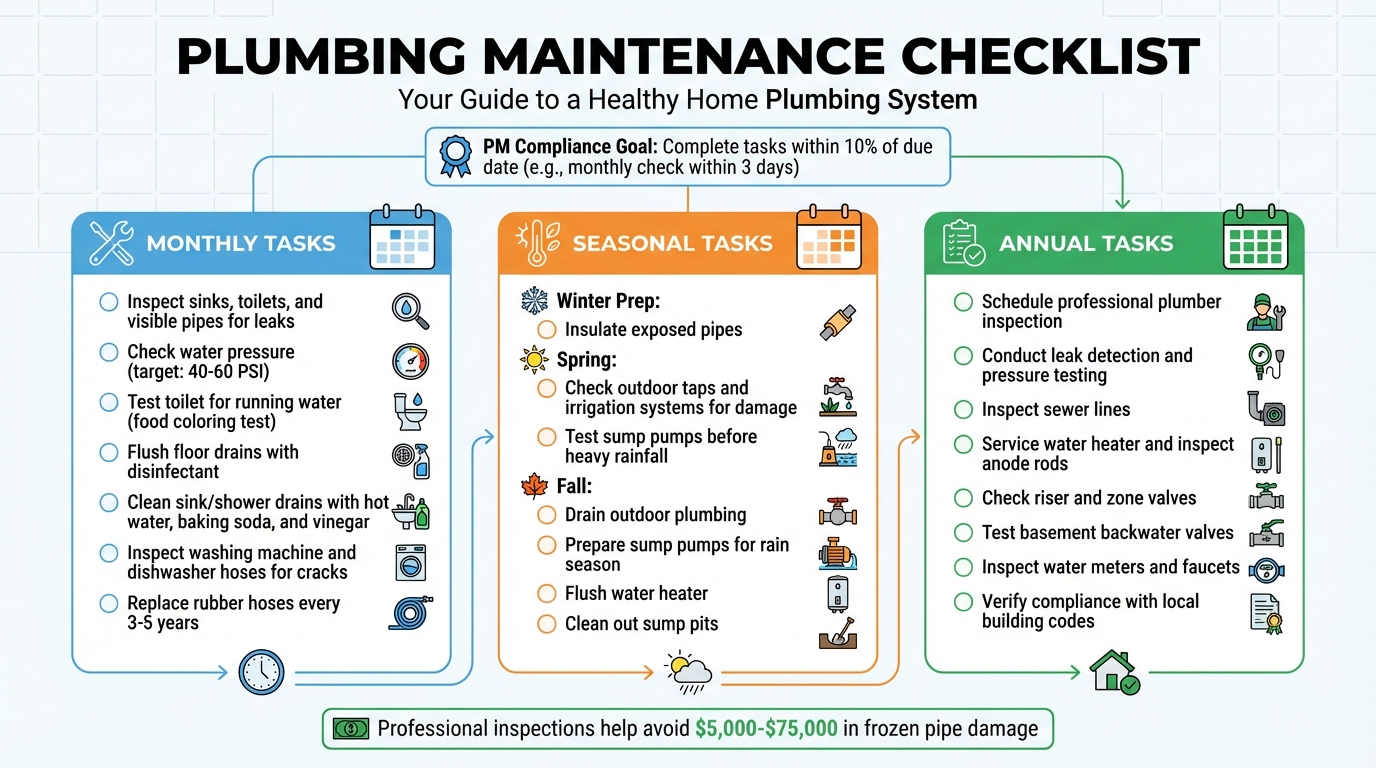
Plumbing Maintenance Schedule: Monthly, Seasonal and Annual Tasks Checklist
A preventive plumbing checklist breaks maintenance tasks into manageable timeframes: monthly, seasonal, and annual. Here’s a detailed breakdown to help you stay on top of your plumbing system.
Monthly Maintenance Tasks
Start by inspecting sinks, toilets, and any visible pipes for signs of moisture or leaks. Even small drips can lead to major water damage and higher utility bills. Check your water pressure, aiming for a reading between 40–60 PSI. Anything outside this range can strain your plumbing and shorten its lifespan.
Toilets often need extra attention. A running toilet can waste thousands of gallons of water each year. Try this quick test: add a few drops of food colouring to the tank, wait 30 minutes, and see if the colour appears in the bowl without flushing. If it does, the flapper or fill valve needs replacing.
Flush floor drains with a bit of disinfectant to prevent bad odours. For sink and shower drains, skip harsh chemicals that can corrode pipes. Instead, use a mix of hot water, baking soda, and vinegar for cleaning. Lastly, inspect washing machine and dishwasher hoses for cracks or bulges. If you’re using rubber hoses, replace them every 3–5 years, or upgrade to braided stainless steel hoses for better durability.
Seasonal Maintenance Tasks
Once you’ve handled the monthly basics, focus on seasonal tasks to prepare for changing weather. Before winter, insulate any exposed pipes to avoid freezing. In spring, check outdoor taps and irrigation systems for damage after months of inactivity. Fall is the time to drain outdoor plumbing and get sump pumps ready for heavy rainfall.
To measure how well you’re keeping up with maintenance, track PM compliance – the percentage of completed tasks versus scheduled ones. Aim to complete tasks within 10% of their due date. For instance, a monthly check should be done within three days of its target date.
Annual Maintenance Tasks
Annual tasks build on monthly and seasonal efforts, ensuring your plumbing system stays reliable for the long haul. Schedule a licensed plumber for a yearly inspection that includes leak detection, pressure testing, and sewer line checks. Professionals use tools to spot hidden issues like corrosion or blockages in walls and ceilings before they become costly problems.
Service your water heater, inspect riser and zone valves, and ensure basement backwater valves are functioning to prevent flooding. Also, check water metres and faucets for leaks or other issues to stop unnecessary water waste.
"Through scheduled inspections, we help clients avoid emergency plumbing repair in Toronto, protect properties from water damage, and extend the lifespan of all systems and fixtures." – POM Plumbing
Annual maintenance also ensures your system meets local building codes, which is crucial for insurance coverage. Many policies require work on major systems to be done by certified contractors.
Building Plumbing Maintenance List
Start by listing all plumbing components – like water heaters, drains, toilets, sump pumps, and main supply lines – to create a detailed maintenance schedule.
Adjust the list based on the type of property you’re managing. For residential properties, focus on fixtures and appliances. This includes checking for leaks under sinks and around toilets, inspecting toilet flappers, cleaning faucet aerators, and testing sump pumps. Commercial buildings, which typically handle heavy usage, require tasks like inspecting public restroom fixtures, testing emergency eye-wash stations, cleaning grease traps in food service areas, and checking riser and zone valves in high-rise structures. For industrial facilities, reliability and compliance are key. Tasks might include pipe diagnosis, monitoring water supply for equipment, and ensuring sewer line shutoff valves are accessible and working. As POM Plumbing highlights, proper pipe diagnosis and upkeep are especially critical for industrial systems where performance is non-negotiable.
Once your list is tailored to the property’s needs, organize tasks by how often they need to be performed. For example:
- Monthly: Inspect for leaks.
- Seasonal: Winterize pipes and test irrigation systems.
- Annually: Perform full-system pressure testing, inspect anode rods, and arrange professional sewer line assessments.
After finalizing the list, use facility management software to schedule, track, and document plumbing services. Digital tools help ensure no tasks are overlooked and keep compliance records up to date. This is particularly important for commercial and industrial properties, where even minor oversights can lead to major disruptions. Maintain detailed logs of work like anode rod replacements, sewer line maintenance, and recurring issues. These records not only protect your investment but also support warranty claims when needed.
Seasonal Plumbing Maintenance Tips
Canada’s climate makes year-round plumbing care a must, with winter preparation being especially important. Surprisingly, only 9% of Canadians fully understand their role in preventing frozen pipes. The stakes are high, as frozen pipes can lead to significant damage. Dennise Roach, Property Claims Manager at AMA Insurance, highlights the risks:
"Frozen pipes are easily preventable. Frozen pipe claims are costly and typically can range from $5,000 – $75,000 to repair".
In one extreme case, a homeowner on vacation faced a staggering $94,000 repair bill after their pipes burst.
To avoid such disasters, there are a few key steps to take before winter sets in. Insulate exposed pipes in areas like basements, attics, and crawl spaces using pipe sleeves or heat tape. Disconnect and drain garden hoses, and shut off indoor valves for outdoor faucets, leaving the outdoor taps open to allow for expansion. Maintain your thermostat at a minimum of 15°C (59°F) even when you’re away, and open cabinet doors under sinks to let warm air circulate around the pipes. During extreme cold, letting a faucet drip can keep water moving and prevent freezing. If you’re planning to be away for more than four days, either drain your plumbing system or arrange for someone to check your home daily. Keep in mind that many insurance policies may not cover damage from frozen pipes if these precautions are ignored.
As the seasons change, your focus should shift to spring and summer maintenance. Inspect outdoor plumbing for any damage caused by winter conditions. For Toronto homeowners, testing sump pumps and backwater valves before spring rains is critical. The City of Toronto even offers subsidies for these installations to help reduce the risk of basement flooding. Additionally, make sure to drain in-ground sprinkler systems and pool supply lines according to the manufacturer’s guidelines.
Stay alert for warning signs like low water pressure, frequent clogs, or water stains, as these could point to hidden plumbing issues. Regular inspections are invaluable. As POM Plumbing explains:
"Through scheduled inspections, we help clients avoid emergency plumbing repair in Toronto, protect properties from water damage, and extend the lifespan of all systems and fixtures".
Signs Your Plumbing System Needs Maintenance
Your plumbing system often gives early warning signs when something’s wrong, and catching these issues early can help you avoid expensive repairs. One of the most noticeable indicators is weak water pressure. This can happen due to calcium or sediment buildup in pipes and fixtures, which restricts water flow and adds unnecessary strain to your system. If you experience a sudden drop in pressure, don’t ignore it – it’s likely to get worse over time.
Another clear warning sign is recurring clogs. While a single slow drain might seem like a minor inconvenience, frequent blockages can point to more serious problems, like tree roots invading your pipes or corroded plumbing. For minor clogs, you can try a simple mix of hot water, vinegar, and baking soda. But if the problem keeps coming back, it’s time to call in a professional. Hidden leaks can also lead to inflated water bills, and a malfunctioning sewer system may cause unpleasant backups, making prompt attention essential.
Unusual odours and discoloured water are other red flags. If you notice foul sewage smells coming from your drains or basement, it could mean there’s a blockage or a problem with your sewer line. Sometimes, these odours are accompanied by gurgling sounds as trapped air tries to escape. Similarly, rusty or tinted water is a sign of trouble, often caused by corroded pipes or sediment buildup in your water heater. These issues can lead to pinhole leaks, burst pipes, or even premature failure of your water heater tank.
A sudden spike in your water bill might also indicate a hidden leak. Something as small as a worn-out toilet flapper can waste several litres of water every hour, driving up costs. Pay attention to unusual sounds like banging, whistling, or gurgling when you turn on faucets – these noises often signal pressure imbalances or blockages that need professional attention. According to POM Plumbing, DIY fixes might only address the symptoms, leaving the root cause unresolved.
Professional Plumbing Inspection by POM Plumbing
DIY plumbing maintenance can help keep your system running smoothly, but when it comes to ensuring everything is in top condition, nothing beats the expertise of certified professionals. POM Plumbing, with over 20 years of experience, offers expert inspections for both residential and commercial systems in Toronto and the Greater Toronto Area. Their team uses cutting-edge diagnostic tools – like video pipe inspection cameras, acoustic leak detectors, and thermal imaging – to uncover hidden issues such as leaks and corrosion.
"Our technicians use advanced equipment for leak detection, drain inspection, and pressure testing to find the exact source of the issue and repair it properly." – POM Plumbing
What sets POM Plumbing apart is their comprehensive approach. Their inspections don’t just address surface-level problems; they assess your entire plumbing system. This includes checking pipes, valves, drains, water supply lines, and sewer connections to ensure compliance with the Ontario Building Code. This is especially important in Toronto, where meeting local regulations protects your property value and insurance coverage. They also verify that critical components like backwater valves, sump pumps, and backflow prevention and pressure relief devices are installed and working as they should.
POM Plumbing offers tiered service plans, including scheduled inspections, emergency response times within two hours for the GTA, and discounts of 10–20% on repairs. Regular inspections can extend the lifespan of your plumbing system by 5–10 years and even lower water bills by as much as 30–50% by catching small leaks early. For instance, one homeowner in Toronto avoided CAD 5,000 in flood damage after an inspection revealed a cracked sewer lateral just in time.
Whether you’re in Mississauga, Vaughan, Markham, or downtown Toronto, their 24/7 service ensures quick response times and detailed reports. These reports are especially valuable during home sales or property assessments. With straightforward pricing and solid warranties, POM Plumbing provides inspections designed to keep your plumbing efficient and reliable all year long.
FAQs
Hidden leaks often reveal themselves through subtle signs. Look out for unexplained spikes in your water bill, damp spots on walls or ceilings, persistent musty odours, or lower-than-usual water pressure. If any of these issues catch your attention, it’s wise to dig deeper or bring in a professional plumber to pinpoint and fix the source.
What should I do if my water pressure is too high or low?
If your water pressure feels unusually high, it might be time to install a pressure-reducing valve. This simple addition can help safeguard your plumbing fixtures from potential damage. On the other hand, if the pressure is too low, start by checking for possible blockages, leaks, or issues with your main water supply. If you’re unable to pinpoint the problem or fix it on your own, reaching out to a professional plumber for an inspection and repair is a smart move.
When should I book a professional plumbing inspection?
If you spot leaks, signs of wear, or other issues with your plumbing, it’s a good idea to schedule a professional inspection. These inspections are especially helpful as part of routine preventive maintenance, particularly during seasonal transitions. Regular check-ups can catch potential problems early, saving you from expensive repairs down the road.