



Installing basement plumbing in Toronto is a critical step for protecting your home against flooding, ensuring proper drainage, and increasing property value. Here’s what you need to know:
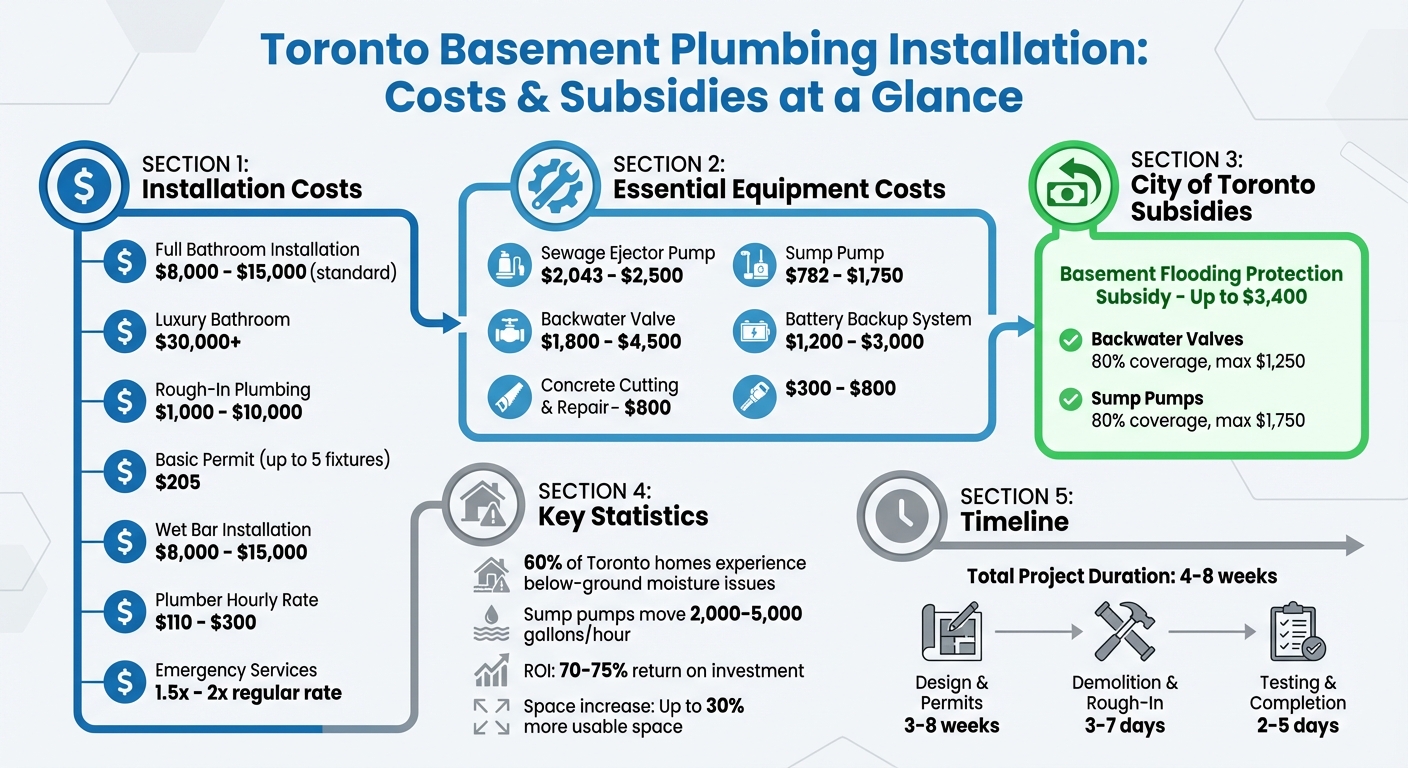
- Costs: A full basement bathroom installation ranges from $8,000 to $15,000, with luxury setups exceeding $30,000. Rough-in plumbing costs $1,000 to $10,000, and permits start at $205.
- Key Components: Includes drains, vents, water supply lines, and additional systems like sump pumps ($782–$1,750), sewage ejector pumps ($2,043–$2,500), and backwater valves ($1,800–$4,500).
- Challenges: Toronto’s clay soil, low sewer elevations, and older homes often require specialized equipment and solutions.
- Subsidies: The City of Toronto offers up to $3,400 in rebates for flood protection installations, including sump pumps and backwater valves.
- Licensed Plumbers: Hiring licensed professionals ensures compliance with the Ontario Building Code, protects your insurance, and simplifies rebate applications.
Proper planning, permits, and professional installation are essential for long-term reliability and compliance. Keep reading for detailed insights into costs, processes, and tips for a successful project.
Toronto Basement Plumbing Installation Costs and Subsidies 2026
Contents
- 1 Basement Drainage Pipes | Underpinning Basement Lowering Toronto
- 2 What New Basement Plumbing Installation Includes
- 3 Basement Plumbing Installation Cost in Toronto
- 4 Basement Plumbing Rough-In Explained
- 5 Installation Process for New Basement Plumbing
- 6 Ontario Building Code and Permit Requirements
- 7 Common Challenges with Basement Plumbing Installation
- 8 When to Hire a Licensed Basement Plumber in Toronto
- 9 Conclusion
- 10 FAQs
- 11 Related Blog Posts
Basement Drainage Pipes | Underpinning Basement Lowering Toronto
sbb-itb-1e3c609
What New Basement Plumbing Installation Includes
Installing basement plumbing involves laying the groundwork for drains, vents, and water supply lines before finishing the walls and floors. This setup connects all basement fixtures to your home’s main plumbing stack and the municipal sewer system.
Core Components of Basement Plumbing
The main elements include drainage and venting systems that meet Ontario Building Code standards to ensure proper water flow and venting safety. You’ll need hot and cold water supply lines running to each fixture, along with drain connections for toilets, sinks, showers, washing machines, or even a wet bar or kitchenette. If your basement lacks pre-existing drains beneath the slab, you may need to break through the floor to connect to the main sanitary drain line. In Toronto, rough-in plumbing costs range from $800 to $1,800 per fixture, while a basic plumbing permit starts at $205 for up to five fixtures.
In addition to these essentials, below-grade basements often require specialized systems.
Additional Systems for Basement Plumbing
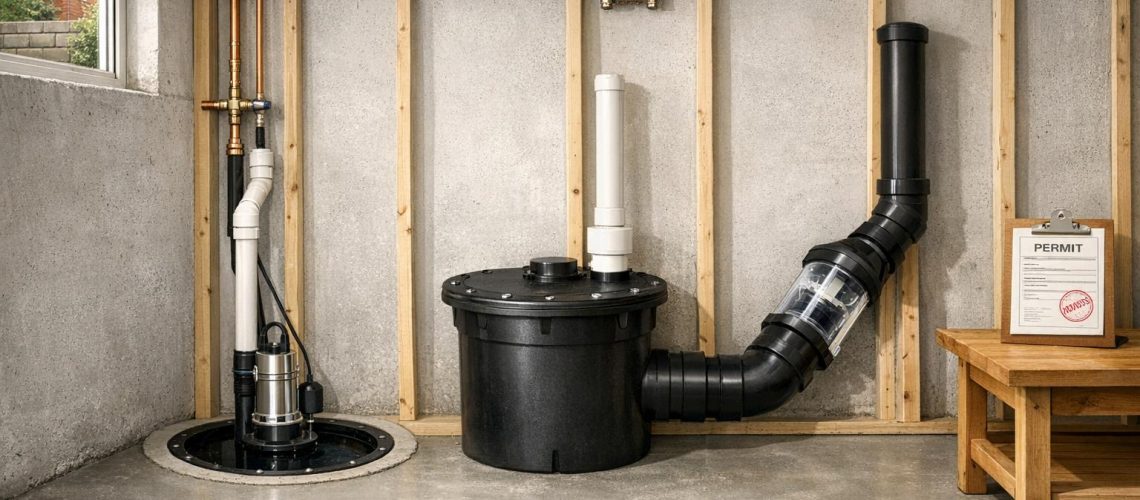
For fixtures located below municipal sewer lines, extra equipment ensures everything works smoothly. A sewage ejector pump, costing between $2,043 and $2,500, is used to lift waste from below-grade bathrooms and laundry rooms to the main stack. Selecting the right sump pump, priced between $782 and Sump pumps, priced between $782 and $1,750, help divert groundwater away from your home’s foundation,750, helps divert groundwater away from your home’s foundation – a critical feature given Toronto’s clay-heavy soil. With around 60% of homes experiencing below-ground moisture issues, sump pumps are almost a necessity.
A backwater valve, which costs between $1,800 and $4,500, is another important component. Installed on the main sanitary drain line, it prevents sewage from backing up into your home during heavy storms.
"A backwater valve isn’t installed on individual drains – it protects your entire home by being installed on the main sanitary drain line."
To help with flood protection, the City of Toronto offers a Basement Flooding Protection Subsidy, covering up to $3,400 for eligible devices.
Because severe storms can cause power outages, battery backup systems ($1,200–$3,000) keep sump and ejector pumps running when the electricity goes out. Standard sump pumps, which move 2,000–5,000 gallons of water per hour, rely on grid power and stop working during outages. Together, these systems provide essential protection against flooding, especially in Toronto’s unpredictable weather conditions.
Basement Plumbing Installation Cost in Toronto
Typical Price Ranges
Installing a complete basement bathroom in Toronto generally costs between $8,000 and $15,000 for a standard three-piece setup. However, if you’re aiming for a luxurious, spa-like design, the price can climb beyond $30,000. The rough-in phase – where drains and vents are placed under the concrete and behind walls – can range from $1,000 to $10,000, depending on the extent of concrete cutting needed and the distance to the main sewer stack. Installing fixtures alone typically costs between $180 and $2,050, depending on the type of fixture.
For those considering adding a wet bar to their basement, expect to budget about $8,000 to $15,000 for the complete installation. Licensed plumbers in Toronto charge hourly rates that fall between $110 and $300, while emergency or after-hours services may cost 1.5 to 2 times the regular rate. Additionally, the City of Toronto charges a basic plumbing permit fee starting at $205 for up to five fixtures, with an extra $16 for each additional fixture.
Several factors can increase these estimates, so it’s important to plan accordingly.
What Increases Basement Plumbing Costs
Concrete work is one of the biggest contributors to higher costs. Cutting and repairing the concrete floor can add $300 to $800, and if the distance from new fixtures to the existing sewer stack is significant, additional trenching and materials may be required. For finished basements, expect to pay an extra $300 to $700 for labour to restore walls and surfaces.
Older homes in Toronto, particularly those built between the 1920s and 1960s, often have outdated cast iron or galvanized pipes. Replacing or working with these materials can add between $200 and $600 to your project. If your basement is located below the municipal sewer line, you’ll need a sewage ejector pump system, which typically costs $1,800 to $6,000 to install. Being aware of these potential costs can help you avoid surprises when demolition or permitting begins.
Other expenses to keep in mind include downtown parking fees ($25–$50 daily), mileage charges for service outside core areas ($1.50–$2.50 per kilometre), and higher costs for condo installations ($1,400–$2,000 per fixture) due to limited access and service restrictions. On the bright side, some costs may be reduced through the City of Toronto’s Basement Flooding Protection Subsidy, which offers up to $3,400 for eligible flood prevention installations.
Basement Plumbing Rough-In Explained
A rough-in lays the groundwork for your basement plumbing system by installing essential components like drains, vents, and water supply lines before walls are closed and floors are finished. Skipping this step or retrofitting plumbing after renovations can be expensive – up to three times the cost of a proper rough-in. The process involves digging trenches 18–24 inches deep into the concrete slab to place drain pipes at a precise slope of 1/4 inch per foot, ensuring proper drainage.
The type of rough-in you’ll need depends on your basement’s position relative to Toronto’s municipal sewer line. If the basement floor is above the sewer line, gravity handles waste flow naturally. If it’s below, a sewage ejector pump system will be required to lift waste upward. Identifying this early helps you avoid costly errors and ensures compliance with Ontario Building Code standards. Below, we break down the two main rough-in methods: gravity drainage and pump-assisted systems.
Gravity Drain Rough-In
If your basement floor sits above the main sewer line exiting your home, waste flows naturally through drain pipes sloped at the required grade. This is the preferred setup in Toronto because it’s simple, requires minimal maintenance, and avoids mechanical components that could fail.
A full bathroom rough-in using gravity drainage typically costs between $3,000 and $5,000 in Toronto. This includes drain lines sized appropriately for each fixture: 3 inches for toilets, 2 inches for showers and tubs, and 1.5 inches for sinks. Water supply lines are usually 1/2-inch PEX or copper for individual fixtures and 3/4-inch for main supply runs. Additionally, venting must extend to your roof or connect to an existing main stack to prevent odours and trap siphoning.
Before digging, check for capped pipes in your basement floor. Many Toronto homes built in recent decades already have rough-ins in place, potentially saving you $3,000 to $5,000. Positioning new fixtures directly below upstairs bathrooms can also save on labour and reduce the need for additional concrete cutting. However, if your basement is below the sewer line, a more complex solution is necessary.
Ejector Pump Setup for Below-Grade Basements
For basements below the municipal sewer line, a sewage ejector pump system is required to lift waste up to the main sewer line. This setup includes a sewage pit (basin), a discharge pipe with a check valve to prevent backflow, and a dedicated 3-inch vent pipe that runs to the roof. Since pump failure can lead to serious sewage backups, proper installation and regular maintenance are crucial.
Adding a sewage ejector pump system increases rough-in costs by $800 to $2,500. The pump itself typically costs $400 to $1,000, and installation involves deeper excavation to accommodate the basin. Unlike gravity systems, ejector pumps require annual inspections and need to be replaced every 7 to 10 years. Installing a battery backup is highly recommended to prevent sewage backups during power outages, especially given Toronto’s severe weather conditions.
| Feature | Gravity System | Ejector Pump System |
|---|---|---|
| Primary Mechanism | Natural slope (1/4" per foot) | Mechanical lift via pump |
| Maintenance | Minimal; occasional snaking | Annual inspection; pump replacement every 7–10 years |
| Cost | Lower (no pump needed) | Higher (adds $800–$2,500) |
| Risk | Sewer backup (mitigated by a backwater valve) | Pump failure or power outage overflow |
These rough-in options form the foundation for the rest of your basement plumbing project, from design to final testing. Proper planning here will save time, money, and headaches down the line.
Installation Process for New Basement Plumbing
Installing new basement plumbing usually takes 4–8 weeks, from the initial planning stages to the final inspection. Each step builds on the one before it, so skipping any steps or rushing through permits can lead to expensive delays or even code violations. Following a phased approach ensures everything complies with the Ontario Building Code and safeguards your investment. Knowing what happens at each stage can help you prepare your space, plan your time, and work efficiently with your plumber.
Design and Permits
The first step is to get scaled, code-compliant drawings of your fixture layout, drainage, and vent paths. Depending on the complexity of the design and the speed of Toronto’s building department, this phase can take anywhere from 3–8 weeks. Permit fees apply, and if you’re adding flood protection like a backwater valve, you’ll need a separate permit, which costs $121.
Submit your plans through the City of Toronto’s online portal along with the required fees. The municipality will review your drawings to ensure they meet Ontario Building Code standards, such as proper drain slopes, vent sizing, and fixture clearances. Delays are common during busy construction seasons or if revisions are needed – especially for legal secondary suites or intricate layouts. Once your permits are approved and designs are finalized, the project moves on to demolition and rough-in work.
Demolition and Rough-In
With permits in hand, the demolition phase begins. This involves cutting through your basement’s concrete slab to create trenches for the drain lines, a process that usually takes 1–2 days. Over the next 3–7 days, plumbers install drain pipes (sloped at 1/4 inch per foot), vent lines, and either copper or PEX water supply lines for each fixture. Before moving forward, this rough-in work must pass a mandatory municipal inspection.
After the inspection is approved, trenches are backfilled with gravel and sealed with new concrete. Framing around plumbing areas adds another 2–5 days to the process. If your basement is below the sewer line, this phase also includes installing and testing a sewage ejector pump system before it’s buried. Once these critical installations are done, the system is tested thoroughly to ensure everything is functioning properly.
Testing and Completion
The final phase takes 2–5 days and includes leak tests, installing fixtures, and securing the final inspection approval. Using standard fixtures can help speed up this process.
Once the inspector signs off, your plumbing system is ready to use. Be sure to keep all permit documentation and inspection records. These are essential if you ever decide to sell your home, as they prove the work was completed legally and up to code.
Ontario Building Code and Permit Requirements
When tackling a basement plumbing project in Toronto, it’s essential to comply with Part 7 of the Ontario Building Code. This ensures your project meets standards for health, safety, and water conservation. Also, securing the necessary permits ahead of time is crucial to avoid fines, failed inspections, or complications when selling your property.
Building and Plumbing Permits in Toronto
Starting February 16, 2026, all permit applications must use the updated "Application for a Permit to Construct or Demolish" form. Applications are submitted through Toronto Building‘s Express web application portal, which also allows you to track the status of your submission online.
| Permit Type (Effective Jan. 1, 2026) | Fee (CAD) |
|---|---|
| Backwater Valves, Sumps, or Interceptors | $38.67 each |
| Buried Piping (Sanitary/Storm/Water) for Single Family Dwellings | $214.79 flat fee |
| Backflow Prevention Devices (requiring testing) | $92.79 each |
If you’re applying for a standalone backwater valve permit for a single-family home, formal plans aren’t required. However, if you’re seeking flood subsidies, you’ll need to submit a "Consent to Enter" form. For more complex projects, you’ll need detailed plans, a Plumbing Data Sheet, and a Schedule 1: Designer Information form.
Important: Plumbing work must remain uncovered until a City of Toronto inspector has approved the installation. Skipping this inspection can lead to significant issues down the road.
These permit requirements ensure your plumbing project meets technical standards and qualifies for any available subsidies.
Code Compliance and Subsidies
Once you have your permits, it’s time to ensure your project aligns with the Ontario Building Code. For instance, every fixture trap must include a vent to block sewer gases. While Air Admittance Valves (AAVs) are allowed, they can only be used if at least one vent stack terminates outdoors, and the AAV is installed at least 100 mm above the fixture’s flood level. Horizontal drainage pipes measuring 3 inches or less must slope downward at a minimum of 1 in 50 (2%), while 4-inch pipes require a slope of at least 1/8 inch per foot.
Homeowners in Toronto can take advantage of the Basement Flooding Protection Subsidy, which offers up to $3,400 per property to help offset installation costs. Here’s what’s covered:
- Backwater valves: 80% of the invoiced cost, up to $1,250.
- Sump pumps: 80% of the invoiced cost, up to $1,750.
To qualify, your contractor must hold a valid City of Toronto business licence in categories T94, T92, T87, or T85. You can confirm this using the City’s Business Licence Lookup tool. Be sure to keep original itemized invoices marked "paid in full" and take photos of the installed devices. These are required for your subsidy claim. Once approved, subsidy payments may take up to 10 weeks to process.
Common Challenges with Basement Plumbing Installation
When tackling basement plumbing projects in Toronto, challenges can crop up even after the design, permits, and installation phases. Knowing what to expect can help you plan your budget and sidestep unexpected costs.
Low Sewer Elevation and Pump Requirements
Toronto basements, particularly those that are lowered or underpinned, often sit below the municipal sewer line. This eliminates the possibility of natural gravity drainage. In such cases, a sewage ejector pump becomes necessary to move waste up to the main sewer line. These systems involve a sealed basin and a 3-inch vent pipe that extends to the roof.
The city’s clay-heavy soil poses another issue – it doesn’t drain well and can create hydrostatic pressure. This pressure often forces groundwater through foundation cracks, with moisture issues affecting about 60% of homes. To combat this, a sump pump system is crucial. It collects groundwater in a basin and pumps it at least 20 feet away from the foundation. However, these systems need regular upkeep and occasional replacement.
"Storms in Toronto often bring a double threat: heavy rainfall and sudden power outages. Unfortunately, this is exactly when you need your sump pump the most." – POM Plumbing
Since power outages often coincide with storms, installing a battery backup system is a smart move. A fully charged backup can run for 8 to 10 hours, depending on how often the pump cycles. Water-powered backup pumps are another option, using municipal water pressure instead of electricity. Keep in mind, though, that these systems use about one gallon of city water for every gallon pumped out.
Aside from pumps, accessing the concrete slab in the basement can present additional hurdles.
Concrete Slab Access and Power Outages
Installing new plumbing in basements often means cutting into the existing concrete floor. This involves using tools like jackhammers or concrete saws to excavate pits – typically 18–24 inches wide and 30 inches deep – and creating trenches for discharge lines. These steps can add $400–$800 to the overall project costs.
Opening the slab also offers a chance to upgrade old clay or cast iron drains to more durable PVC pipes. Before starting, it’s wise to conduct a camera inspection to map out the depth, direction, and condition of the existing underground pipes. This step, which costs around $168–$200, can help avoid accidental damage and ensure efficient planning.
Toronto winters bring their own complications. Discharge pipes can freeze if they’re not properly sloped or insulated, which may cause pump failures. To prevent this, use freeze-resistant lines or bury pipes below the frost line. Regular maintenance is also key – test your sump pump every three months by pouring a five-gallon bucket of water into the pit to ensure the float switch and motor are working properly. Deep-cycle batteries for backup systems should be replaced every 3 to 5 years to ensure they hold a reliable charge.
When to Hire a Licensed Basement Plumber in Toronto
Signs You Need a Licensed Plumber
If you’re dealing with recurring flooding or sewage backups, it might be time to call in a licensed plumber. These issues often point to a system that needs a backwater valve, which stops raw sewage from coming back into your home. Planning a basement renovation? Whether you’re adding a bathroom, laundry room, or kitchen – or converting the space into a legal rental suite – you’ll need a licensed plumber to handle drainage and ensure everything meets local building codes.
Older homes with outdated plumbing systems also require professional evaluation. For instance, if your sump pump isn’t working as it should, a licensed plumber can diagnose and fix the problem. Other warning signs, like musty smells, damp areas, white chalky residue (efflorescence), or cracks in the basement walls, could point to foundation or weeping tile issues that need expert attention. Tackling these problems early can protect your basement’s functionality and even boost your home’s value.
Here’s another reason to go with a licensed professional: the City of Toronto’s Basement Flooding Protection Subsidy Program. This program offers up to $3,400 in rebates, but the catch is that all work must be done by a licensed plumbing contractor.
Recognizing these red flags and acting quickly can save you from bigger headaches down the road while keeping your home safe and up to code.
Benefits of Hiring a Licensed Professional
Hiring a licensed plumber isn’t just about fixing problems – it’s about doing it the right way. In Toronto, only licensed plumbers can pull permits for major plumbing work. If you try to DIY or hire someone unlicensed, you could run into legal and financial trouble. Unpermitted work can void your insurance claims and even cause issues when it’s time to sell your home. Licensed plumbers also carry WSIB and liability insurance, which protects you from unexpected costs if something goes wrong.
Take POM Plumbing Service Company as an example. With over 20 years of experience, they offer what they call the "best warranty in the market", giving homeowners peace of mind for the long haul. Licensed plumbers handle everything from complex permit applications to ensuring compliance with the Ontario Building Code. Plus, they back up their work with warranties on both parts and labour. Many companies even provide 24/7 emergency services for urgent issues like burst pipes or sewage backups.
In terms of cost, you can expect to pay between $110 and $200 per hour for a licensed plumber in Toronto. Emergency or after-hours service usually comes at a premium, with rates ranging from 1.5× to 2× the standard hourly rate.
Choosing a licensed plumber ensures the job is done safely, legally, and with long-term reliability in mind. It’s an investment in your home’s future.
Conclusion
Every stage of basement plumbing – planning, permits, and installation – plays a key role in ensuring safety and protecting your investment. When installing basement plumbing in Toronto, it’s essential to carefully plan, understand the differences between systems like gravity drains and sewage ejector pumps, and adhere to Ontario’s Building Code before starting any work. Costs will depend on your specific needs and site conditions.
Beyond its practical benefits, a properly installed system can boost property value significantly. A professionally finished basement can expand your home’s usable space by up to 30% and provide a return on investment of 70–75%. Plus, as mentioned earlier, the City of Toronto offers subsidies for approved flood-protection installations, which can help offset costs.
Hiring a licensed plumber is not just about meeting code requirements – it also ensures your insurance remains valid. This is where POM Plumbing Service Company stands out.
With over 20 years of experience, POM Plumbing Service Company has become a trusted name for basement plumbing projects across Toronto and the GTA. Their services cover everything from sump pump installations and sewage ejector systems to assisting with municipal rebate applications. They also back their work with what they call the "best warranty in the market". Whether you’re adding a bathroom, creating a legal rental suite, or addressing flooding concerns, their licensed team guarantees the job is done right the first time.
If you’re ready to get started, reach out to POM Plumbing Service Company for a professional assessment and transparent, competitive pricing.
FAQs
Do I need a sewage ejector pump in my Toronto basement?
A sewage ejector pump is often required in Toronto basements where plumbing fixtures, such as basement bathrooms, sit below the main sewer line or septic system. Its job is to pump waste upwards into the sewer line, ensuring everything drains properly. This setup is typical in split-level homes or basements with fixtures positioned lower than the sewer connection.
What permits and inspections are required for basement plumbing in Toronto?
In Toronto, undertaking basement plumbing projects that involve structural changes, plumbing modifications, electrical work, or the addition of a new entrance requires proper permits. To proceed, you’ll need to secure a building permit from the City of Toronto. This process often involves submitting detailed plans, and in certain cases, these plans must include stamps from a licensed engineer or designer. Inspections are also part of the process, ensuring that all work meets local building codes and safety standards.
How do I qualify for Toronto’s basement flooding rebate?
Homeowners in Toronto can take advantage of the city’s basement flooding rebate program by completing specific upgrades, such as installing or replacing a backwater valve, sump pump, or alarms. The program covers up to 80% of the invoiced cost, with maximum rebates of $1,250 for backwater valves and $1,750 for sump pumps. Be sure to review local guidelines to confirm your project meets the necessary requirements.