



For many Canadian homeowners, “going green” is no longer just an environmental statement—it is a financial necessity. With rising utility rates and carbon taxes, the cost of running a home is increasing. Plumbing fixtures, often overlooked, are actually some of the biggest energy and water consumers in your house.
But does energy efficient plumbing save money in the real world, or is it just marketing hype? The truth lies in the data. Modernizing your plumbing infrastructure can yield a significant Return on Investment (ROI) while improving your home’s functionality. Let’s dive into the technical and financial benefits of these upgrades.
Contents
1. Tankless Water Heaters: Efficiency on Demand
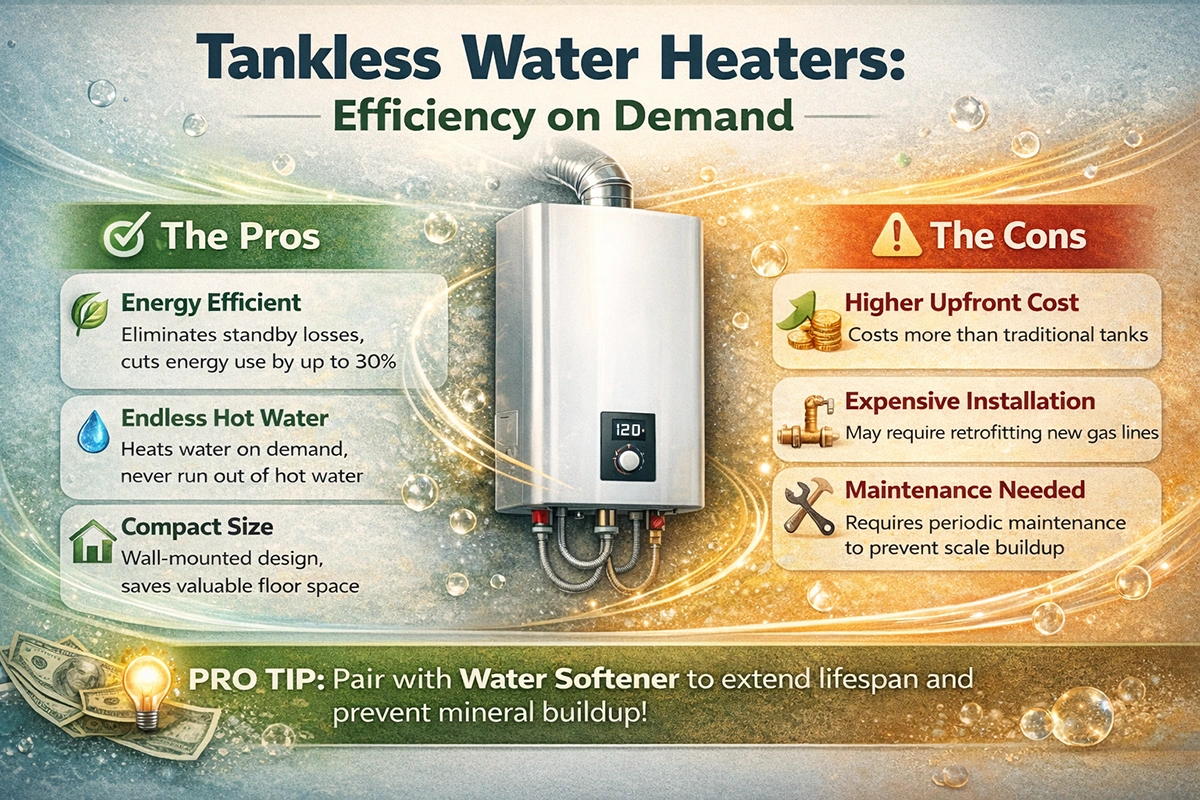
The biggest energy hog in your basement is likely your water heater. Traditional tanks keep 40–60 gallons of water hot 24 hours a day, even when you are asleep or at work. This “standby loss” is a massive waste of gas or electricity.
To decide if an upgrade is right for your home, it is essential to weigh the tankless water heater pros and cons.
- The Pros: Tankless units heat water only when needed. When you open a tap, powerful burners ignite instantly. This eliminates standby energy loss entirely, reducing energy use by up to 30%. Additionally, they are wall-mounted, saving valuable floor space.
- The Cons: They have a higher initial cost compared to a standard tank, and retrofitting may necessitate upgrading gas lines.
Pro Tip: To protect this investment from mineral buildup and ensure longevity, consider pairing your new heater with professional Water Softener Installation.
2. Modern Toilets: High Performance, Low Waste
Back in the 1990s, “low-flow” toilets often experienced frequent blockages. Fortunately, technology has advanced considerably since then. Today, High-Efficiency Toilets feature improved hydraulic systems and larger trap ways.
When evaluating low flow toilets pros and cons, it becomes clear that the technology has matured:
- Efficiency: Flushing makes up nearly 30% of average indoor water use. Modern units flush effectively using only 4.8 litres or less.
- Dual Flush: Many models now feature dual flush options—a light flush (3L) for liquid waste and a full flush for solids. This can save a family of four more than 50,000 litres of water each year.
However, modern designs have improved significantly. If your current unit is constantly running or leaking, a simple Toilet Repair might fix it, but upgrading to a high-efficiency model is often the more cost-effective long-term solution.
3. Faucets and Fixtures: The Hidden Savings
You don’t have to tear down walls to enjoy the benefits of low flow fixtures. Swapping out an old shower head (which uses 9.5 liters per minute) for a Water Sense-certified one (just 7.6 liters per minute) can reduce your water use by 20%.
Best of all, since you’re using less hot water, you’ll also see savings on your gas or electric bill. It’s a wonderful double benefit that helps the new fixture pay for itself in just a few months.
4. Smart Leak Detectors: Protection and Peace of Mind
Efficiency isn’t just about lowering consumption; it’s about preventing resource waste. A tiny pinhole leak can waste thousands of litres of water before a damp patch appears.
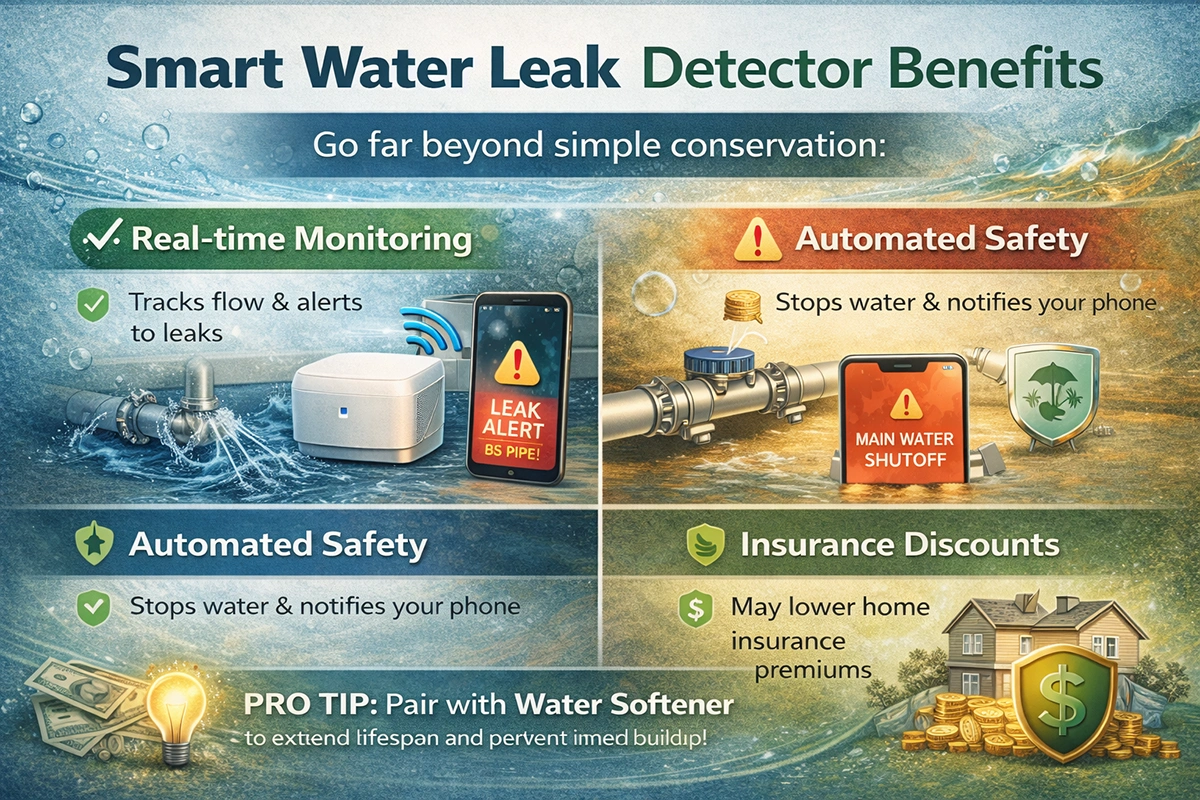
The smart water leak detector benefits go far beyond simple conservation:
- Real-time Monitoring: These WiFi-connected devices monitor flow rates and detect unusual activity, like a burst pipe when you’re not home.
- Automated Safety: They can instantly turn off your main water supply and notify your phone.
- Insurance Discounts: Many insurance companies now offer discounts on premiums for homes equipped with these systems.
5. The Bigger Picture: Sustainability
Let’s take a moment to look beyond our utility bills. The environmental impact of water conservation is profound and creates a positive ripple effect in our community.
Treating and pumping water require a lot of energy. By being conscious of our water consumption at home and using less, we reduce strain on local infrastructure and decrease our carbon footprint, helping create a cleaner, healthier environment.
Thinking about upgrades? Investing in energy-efficient plumbing is a great step toward increasing your home’s value and efficiency. Whether you’re considering replacing your water heater or upgrading to smarter faucets, the friendly experts at POM Plumbing are ready to assist. We can guide you through available rebates and recommend the best products suited to your needs.
FAQ
On average, the energy savings pay for the installation difference in about 3 to 5 years, but the unit lasts 20+ years (twice as long as a tank).
No. Modern aerators mix air into the water stream, increasing the pressure velocity. You get a strong, satisfying spray while using significantly less water.
Clamp-on models are DIY-friendly, but the most effective models (with auto-shutoff valves) require professional installation into the main water line.