



Contents
- 1 Brown or Smelly Water: What It Means and Why It Happens
- 2 Understanding brown water problems
- 3 Why is my water brown? Common causes explained
- 4 Dealing with smelly water issues
- 5 Smelly hot water specific concerns
- 6 Smelly water in bottom of dishwasher problems
- 7 How to get rid of smelly water solutions
- 8 How to fix smelly water from faucet and when to call professionals
Brown or Smelly Water: What It Means and Why It Happens
Turning on your tap and encountering discolored or foul-smelling water can be alarming and unpleasant.
These water quality issues are more common than you might think, affecting homeowners across various regions and plumbing systems.
Understanding the causes behind these problems and knowing when to call a professional plumber can help you address issues quickly, protect your health, and maintain your home’s plumbing infrastructure.
This comprehensive guide will help you identify different types of water quality problems and determine the appropriate course of action.
Understanding brown water problems
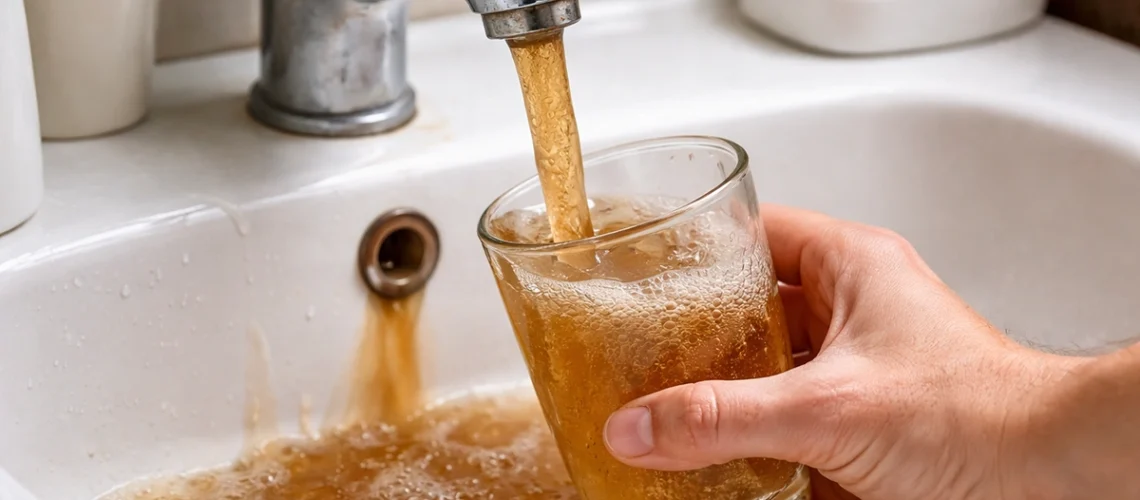
Brown water flowing from your taps is often one of the most visually disturbing plumbing issues homeowners encounter.
The discoloration typically ranges from light tan to dark brown, sometimes appearing almost rusty red.
This issue can affect all water outlets in your home or may be isolated to specific faucets, and understanding the pattern can help identify the underlying cause.
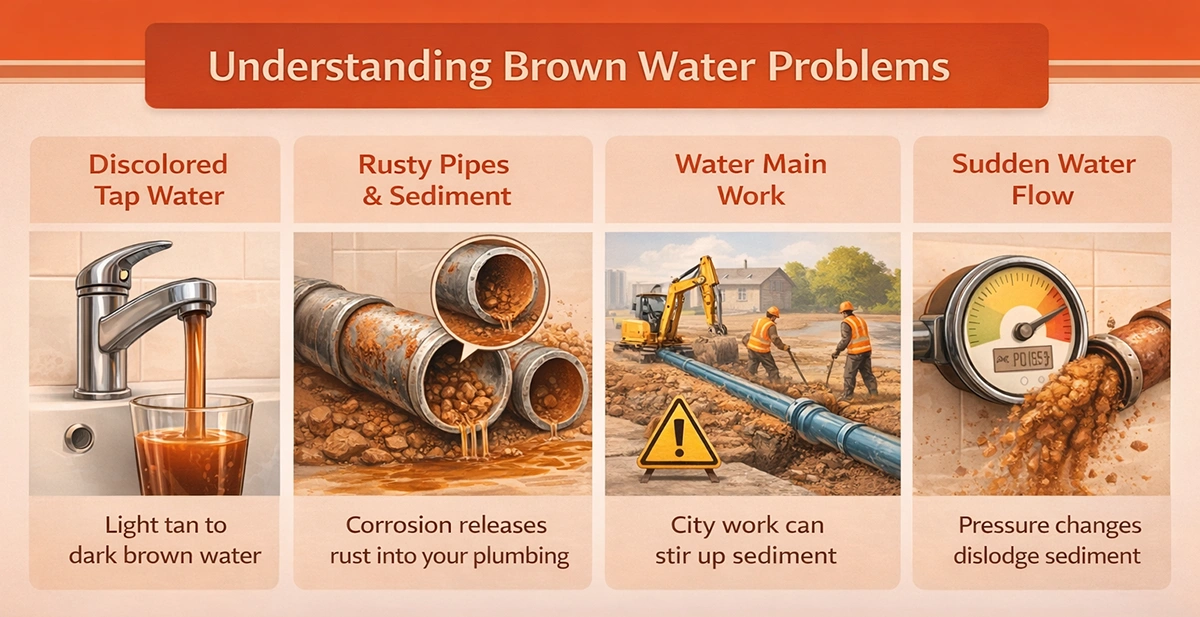
- The most common reason for brown water from tap fixtures is rust and sediment in your plumbing system.
- Older homes with galvanized steel or iron pipes are particularly susceptible to this problem.
- Over time, these metal pipes corrode from the inside, creating rust particles that mix with the water supply.
When water pressure changes or the system experiences sudden flow variations, these accumulated sediments can dislodge and travel through your pipes, eventually reaching your faucets.
Municipal water main work or repairs in your area can also cause temporary brown water issues. When utility companies flush water mains, perform repairs, or change water pressure in the distribution system, sediment that has settled in public water lines can become disturbed.
This sediment then travels through the municipal system into your home’s plumbing. While usually temporary, this type of discoloration can persist for several hours or even days after utility work concludes.
Why is my water brown? Common causes explained
If you’re asking yourself why is my water brown, several factors could be responsible. Beyond pipe corrosion and municipal maintenance, other causes include water heater problems, well water contamination, and seasonal changes affecting water sources.
Each cause has distinct characteristics that can help you diagnose the issue.
Water heater sediment buildup frequently causes brown hot water while cold water remains clear.
Minerals and sediment naturally accumulate at the bottom of water heater tanks over time. When the sediment layer becomes thick enough, it can break apart and enter your hot water lines, causing discoloration.
his problem typically worsens gradually and may be accompanied by rumbling or popping sounds from the water heater as it operates.
For homes with well water systems, brown discoloration might indicate iron or manganese contamination, surface water infiltration, or disturbances to the well itself.
Heavy rainfall can wash sediment and organic matter into wells, while drought conditions might lower water tables enough to draw in sediment-rich water from deeper levels. Changes in groundwater chemistry can also mobilize naturally occurring minerals that cause discoloration.
Seasonal variations sometimes affect municipal water supplies, particularly in areas drawing from surface water sources like rivers and lakes. Spring runoff and autumn leaf decay can introduce organic matter and minerals into water treatment facilities.
While treatment plants work to remove these contaminants, some discoloration may occasionally reach residential areas during peak seasonal changes.
Dealing with smelly water issues
Smelly water presents a different but equally concerning problem. Water odors can range from mild to overpowering and may indicate various underlying issues, some more serious than others. The specific smell often provides important clues about the contamination source and the urgency of the situation.
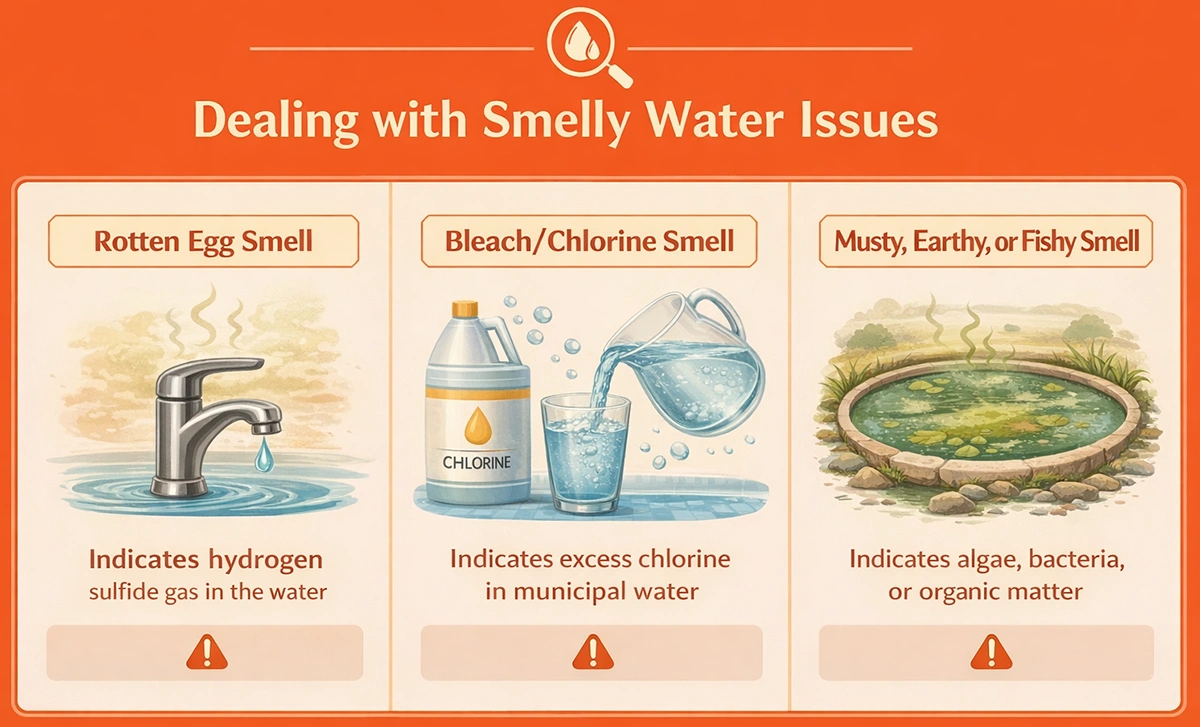
Smelly water from tap fixtures most commonly smells like rotten eggs, which indicates hydrogen sulfide gas presence. This sulfurous odor can result from several sources including bacterial activity in water heaters, reactions between water and magnesium anode rods in heater tanks, or naturally occurring sulfur compounds in groundwater.
While unpleasant, low levels of hydrogen sulfide are generally not harmful, though higher concentrations can pose health risks and corrode plumbing fixtures.
A bleach or chlorine smell typically indicates excessive disinfectant in municipal water supplies.
Water treatment facilities add chlorine to kill bacteria and pathogens, but sometimes chlorine levels spike temporarily, especially after system maintenance or during periods of high contamination risk. While properly chlorinated water is safe to drink, the strong smell can be off-putting and may irritate sensitive individuals.
Musty, earthy, or fishy odors often point to algae, bacteria, or organic matter in the water supply. These smells are more common with surface water sources and typically intensify during warmer months when algae blooms proliferate.
While usually not indicating dangerous contamination, these odors suggest water quality issues that warrant attention and possible treatment system adjustments.
Smelly hot water specific concerns
- When you notice smelly hot water but cold water smells fine, the problem almost certainly originates in your water heater. This distinction is crucial for diagnosis because it narrows the issue to a single appliance rather than your entire plumbing system or water source.
- Several water heater components and conditions can create odor problems.The magnesium anode rod inside water heaters is designed to prevent tank corrosion by attracting corrosive elements in the water. However, sulfate-reducing bacteria sometimes colonize water heaters and react with the magnesium anode rod, producing hydrogen sulfide gas. This reaction creates the characteristic rotten egg smell that many homeowners associate with hot water problems.
- Water heaters that sit unused for extended periods or operate at low temperatures provide ideal conditions for bacterial growth. Bacteria thrive in warm, stagnant environments, and water heaters set below 140°F may not reach temperatures sufficient to kill microorganisms. Vacation homes, guest bathrooms, or systems with malfunctioning thermostats commonly develop bacterial odor problems for this reason.
- Temperature and pressure relief valve issues, sediment accumulation, and corroding tank interiors can also contribute to hot water odors. As tanks age, protective liners deteriorate, exposing metal surfaces that react with water chemistry. Combined with sediment that creates anaerobic pockets where bacteria flourish, older water heaters become increasingly prone to odor generation.
Smelly water in bottom of dishwasher problems
Finding smelly water in bottom of dishwasher units is another common complaint related to water odor issues. This stagnant water often develops unpleasant smells between wash cycles, particularly if dishes sit for several days before the dishwasher runs. Several factors contribute to this specific problem, most relating to drainage and cleaning habits.
Dishwashers rely on proper drainage to remove food particles and wastewater after each cycle. When drain hoses become kinked, clogged, or improperly installed, water may pool at the bottom of the dishwasher tub. This standing water provides an ideal environment for bacteria and mold growth, quickly developing foul odors that transfer to dishes during subsequent wash cycles.
Food debris trapped in filters, spray arms, and along door gaskets decomposes over time, creating unpleasant smells. Many homeowners don’t realize dishwashers require regular cleaning beyond simply running wash cycles. Accumulated food particles, grease, and detergent residue create biofilm layers where bacteria proliferate, generating persistent odors that ordinary wash cycles cannot eliminate.
Garbage disposal connections sometimes allow sewer gases to enter dishwasher drain lines when air gaps or high loops are absent or improperly installed. This plumbing deficiency permits odorous gases to travel backward through the drain hose into the dishwasher, creating smells that seem to originate from the appliance itself when the actual problem lies in drain system design.
How to get rid of smelly water solutions
Addressing how to get rid of smelly water depends entirely on identifying the underlying cause. Different problems require different solutions, ranging from simple DIY fixes to professional plumbing interventions. Starting with the least invasive approaches makes sense before escalating to more complex solutions.
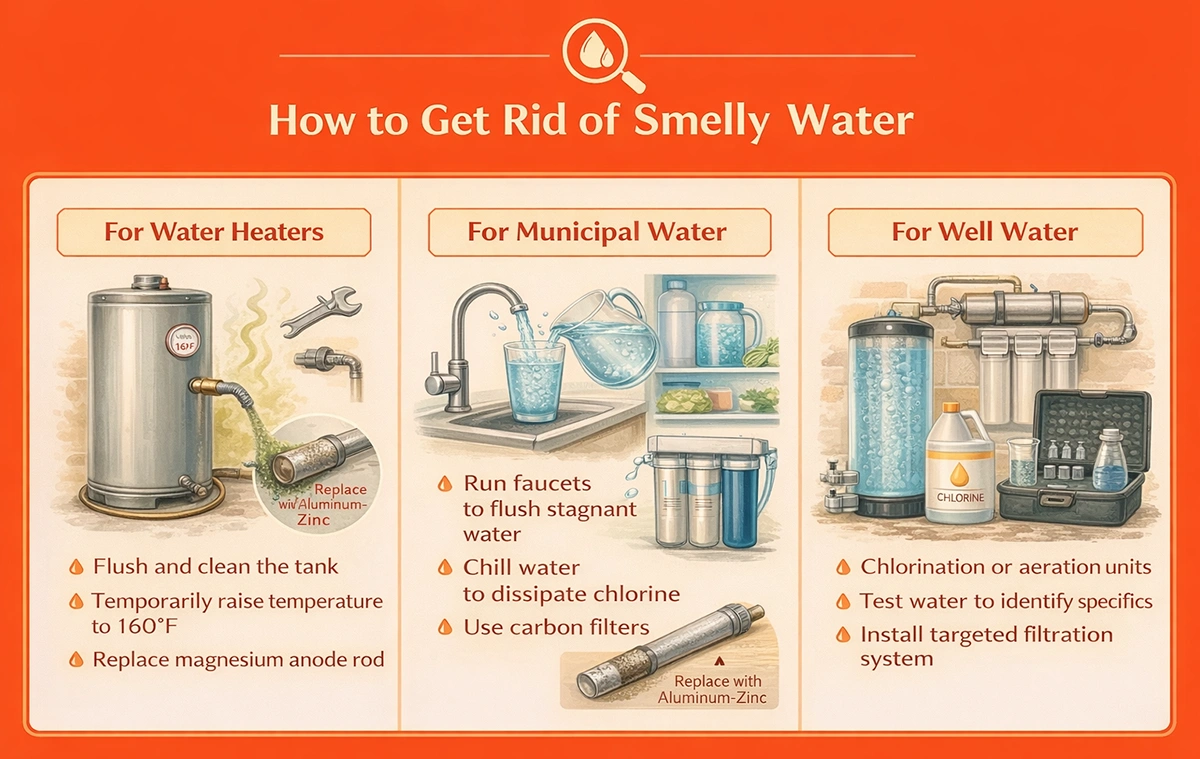
For hydrogen sulfide smells from water heaters, flushing the tank to remove sediment and bacteria can help. Temporarily raising water temperature to 160°F for several hours kills bacteria, though you must remember to reduce temperature afterward to prevent scalding hazards. Replacing magnesium anode rods with aluminum-zinc alternatives eliminates the chemical reaction that produces hydrogen sulfide when sulfate-reducing bacteria are present.
When asking how do you get rid of smelly water from municipal sources, sometimes the simplest solution is running faucets for several minutes to flush out stagnant water in pipes. If chlorine smell is the issue, filling a pitcher and refrigerating it allows chlorine to dissipate naturally. Carbon filters effectively remove chlorine taste and odor while also addressing many organic compounds that cause earthy or musty smells.
Well water odor problems may require more comprehensive solutions including chlorination systems, aeration units, or specialized filtration equipment. Professional water testing identifies specific contaminants present, allowing targeted treatment approaches. Shocking wells with chlorine bleach can temporarily eliminate bacterial contamination, though recurring problems indicate the need for permanent treatment systems.
How to fix smelly water from faucet and when to call professionals
Learning how to fix smelly water from faucet outlets starts with determining whether the problem is localized or system-wide. Running both hot and cold water from multiple fixtures throughout your home helps establish the problem’s scope. If only one faucet produces smelly water, the issue likely involves that specific fixture or its immediate supply line rather than your entire plumbing system.
Aerator cleaning sometimes resolves localized odor problems. Faucet aerators trap debris and minerals, creating small pockets where bacteria can grow and produce odors. Removing and soaking aerators in vinegar solution dissolves mineral deposits and kills bacteria. For persistent problems, replacing aerators entirely is inexpensive and often effective.
However, many water smelly problems require professional intervention.
If discoloration or odors persist after basic troubleshooting, worsen over time, or appear suddenly without explanation, calling a licensed plumber is advisable.
Professionals have diagnostic tools and expertise to identify hidden problems that homeowners cannot detect, including corroded pipes within walls, failing water heaters, or contaminated well systems.
Significant brown water issues, especially when accompanied by pressure changes or visible particles, may indicate serious pipe deterioration requiring replacement.
Similarly, strong sulfur odors that don’t respond to water heater maintenance might signal well contamination or sewer line problems that only professionals can properly address. Health concerns should always prompt immediate professional consultation, as some water contaminants pose serious health risks that aren’t always detectable by smell or appearance alone.
Conclusion
Water quality problems like brown discoloration and unpleasant odors are common plumbing issues with various potential causes. While some situations allow for simple DIY solutions, others require professional plumbing expertise to diagnose and resolve properly.
Understanding the difference between temporary nuisances and serious problems helps homeowners make informed decisions about when to attempt fixes themselves and when to call qualified plumbers. Regular plumbing maintenance, prompt attention to water quality changes, and professional inspections help prevent minor issues from becoming major problems, ensuring your home’s water remains safe, clean, and pleasant for daily use.