


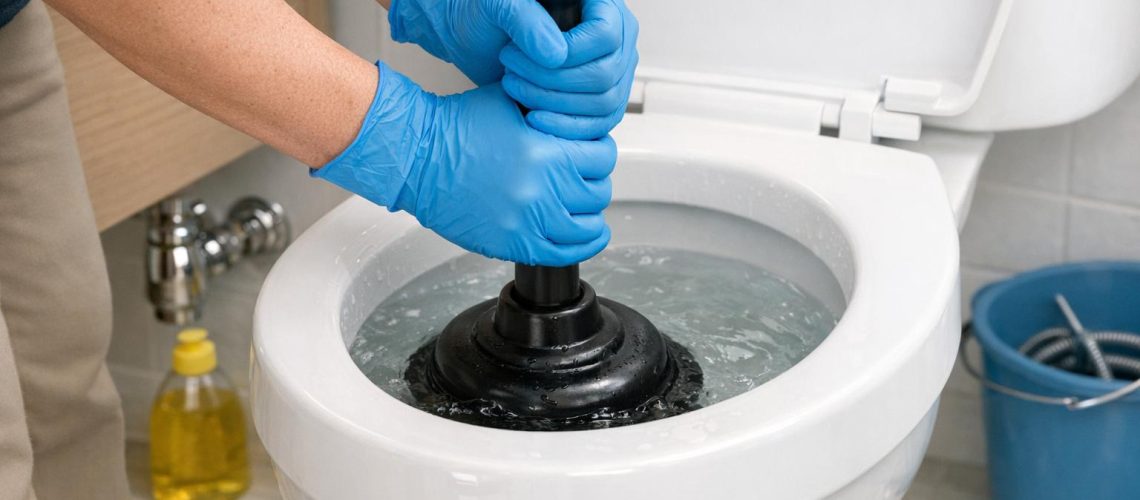

Dealing with a clogged toilet can be stressful, but most blockages can be resolved without calling a plumber. If your toilet is full of waste and water, follow these steps:
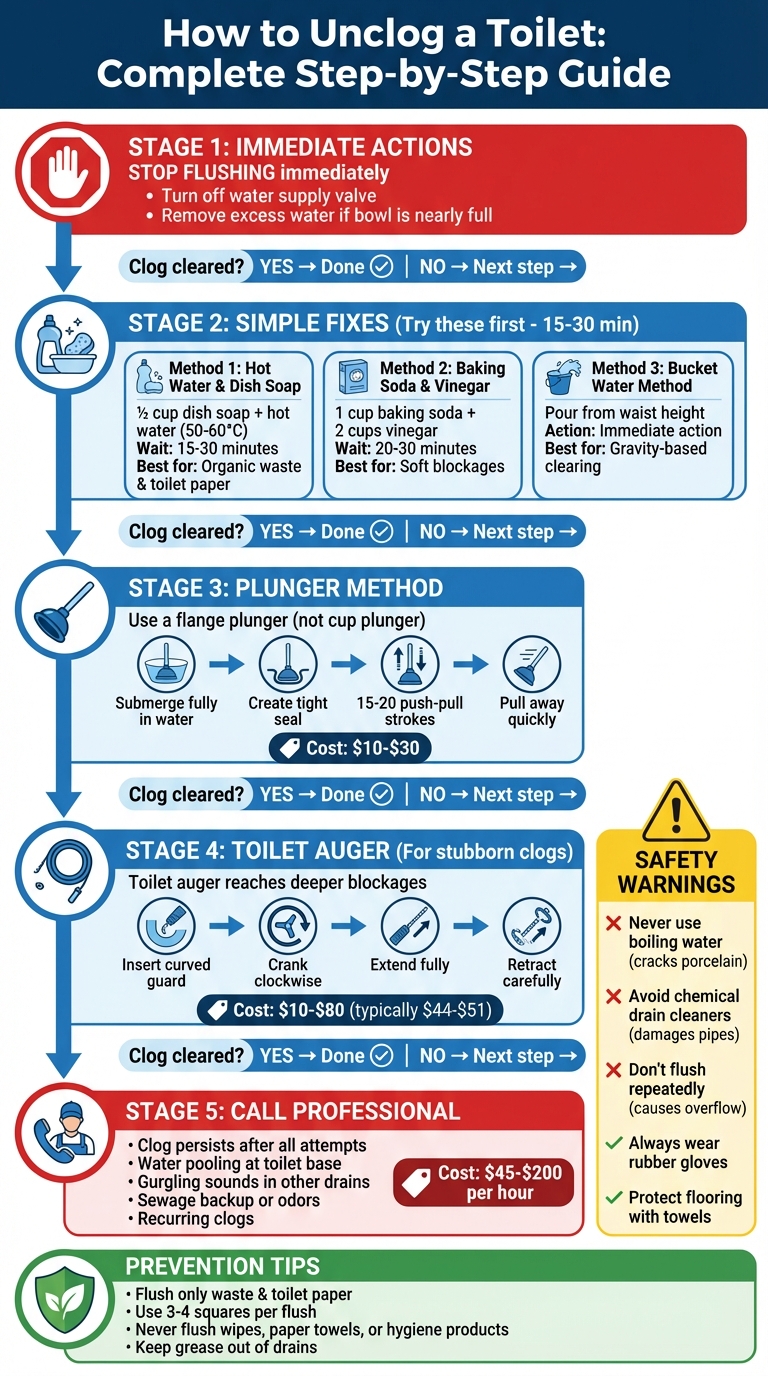
- Stop flushing immediately to avoid overflow. Turn off the water supply or stop the tank refill manually.
- Remove excess water using a cup or a wet/dry vacuum if the bowl is nearly full.
- Try simple fixes first: Use hot (not boiling) water and dish soap, baking soda and vinegar, or pour water from a height to push the clog through.
- Use a plunger correctly: A flange plunger creates a better seal for toilets. Submerge it fully in water and plunge with steady motions.
- For tough clogs, a toilet auger can reach deeper blockages. Avoid chemical drain cleaners as they can damage pipes.
To prevent future clogs:
- Flush only waste and toilet paper.
- Avoid flushing wipes, paper towels, or other non-degradable items.
- Use minimal toilet paper and flush in stages if needed.
If the clog persists, or if you notice recurring issues or sewage odours, it may indicate a deeper plumbing problem. In such cases, contact a professional plumber to avoid further damage.
Step-by-Step Guide to Unclog a Toilet: From Simple Fixes to Advanced Solutions
Contents
- 1 The #1 Trick to Unclog a Toilet When It’s About to Overflow
- 2 Why Toilets Get Clogged with Poop and Water
- 3 Safety Precautions Before You Start
- 4 Quick Methods to Unclog a Toilet Without Tools
- 5 How to Unclog a Toilet Using a Plunger
- 6 Advanced Solutions for Stubborn Clogs
- 7 Common Mistakes When Trying to Unclog a Toilet
- 8 How to Prevent Future Toilet Blockages
- 9 When to Call a Professional Plumber
- 10 Conclusion
- 11 FAQs
- 12 Related Blog Posts
The #1 Trick to Unclog a Toilet When It’s About to Overflow
sbb-itb-1e3c609
Why Toilets Get Clogged with Poop and Water
Using too much thick, ultra-soft, multi-ply toilet paper (like 3-ply or 4-ply) can lead to clogs. Instead of breaking down in water, this type of toilet paper tends to expand, overwhelming your drainage system. While most people use 8–9 squares per flush, just 3–4 squares are enough.
Another common culprit is flushing non-flushable items. Even though some wet wipes are labelled "flushable", they don’t break down like toilet paper and can easily snag on imperfections in your pipes. Other items like paper towels, facial tissues, feminine hygiene products, cotton swabs, and dental floss can also expand and create blockages. As Dr HVAC puts it:
Your toilet is not a trash can. It’s made for human waste and toilet paper only.
Low water pressure is another issue. Early low-flow toilets from the mid-1990s often lacked the power to clear waste effectively. These models used only 6 litres per flush compared to the 13–26 litres used by older, conventional toilets. On top of that, if your plumbing vents – those pipes on your roof – get blocked by leaves, bird nests, or debris, the resulting air pressure imbalance can weaken your toilet’s flushing ability even further.
Mineral buildup from hard water is another factor. Over time, calcium and magnesium deposits can clog the toilet’s jets, reducing water flow. Combine that with a blocked toilet trap (the curved part designed to catch paper), and what starts as a small issue can quickly turn into a major clog.
Finally, deep sewer line problems like tree roots invading pipes or grease build-up can cause waste to back up. When blockages occur far down the main line, they often affect the entire plumbing system and usually require professional help to resolve.
Understanding these common causes can help you address clogs more effectively and take steps to prevent them in the future.
Safety Precautions Before You Start
First things first: stop flushing. Each flush pushes more water into the blocked toilet, increasing the risk of an overflow. Shut off the water supply by turning the valve located behind or beside the toilet. If the valve isn’t accessible or the water level is rising quickly, open the tank and stop the refill by lifting the float or pressing down the flapper.
Protect yourself. Always wear rubber or disposable gloves to guard against harmful bacteria like E. coli. Toilet water, often referred to as "black water", carries bacteria that can pose serious health risks. If there’s a chance of splashing, consider wearing safety glasses. To safeguard your flooring, place old towels or newspapers around the base of the toilet.
If the bowl is nearly full, you’ll need to remove some water. Use a cup to bail water into a bucket until the bowl is about half-full. For a quicker option, a wet/dry vacuum set to "wet" mode can handle the job efficiently.
Skip the harsh chemicals. Everest Plumbing advises against using caustic drain cleaners like Drano:
"Never use harsh chemicals like Drano when dealing with a clogged toilet. These chemicals can be extremely dangerous for your drainage system… a small splash could potentially cause burn or even more serious issue to skin".
Not only are these chemicals harmful to your plumbing, but their fumes are toxic and can cause respiratory problems. Similarly, avoid pouring boiling water into the toilet. The intense heat can crack the porcelain, leading to leaks or even sharp edges. Stick to hot tap water instead – it’s much safer.
Once the clog is cleared, don’t forget to clean up. Disinfect all tools and wash your hands thoroughly with soap and water. With these precautions in place, you’ll be ready to address the clog without needing to call in a professional.
Quick Methods to Unclog a Toilet Without Tools
No plunger? No problem. Here are three simple methods using everyday household items to tackle clogs caused by organic waste or toilet paper. These techniques are safe and easy to follow, especially when paired with basic precautions.
Hot Water and Dish Soap Method
Dish soap works as a lubricant, helping the blockage slide through the pipes, while hot water helps break down organic material and grease. Start by pouring ½ cup of dish soap into the toilet bowl and let it sit for 15–20 minutes. Meanwhile, heat a bucket of tap water to around 50–60°C (avoid boiling water, as it can damage the porcelain). Pour the hot water into the bowl from waist height – this added height creates extra force to push the clog through. Wait another 15–30 minutes before flushing. If you don’t have dish soap, you can substitute it with liquid hand soap, shampoo, or body wash – just skip bar soap.
Baking Soda and Vinegar Method
This classic combo creates a fizzy reaction that can help loosen soft clogs. Pour 1 cup of baking soda into the bowl, followed by 2 cups of white vinegar in a circular motion. The fizzing action builds pressure and helps break down organic material. Let the mixture sit for 20–30 minutes (or even overnight for tougher clogs). Once the fizzing stops and the water level drops, flush the toilet. Make sure the bowl isn’t too full before starting to avoid any overflow during the reaction.
Bucket Water Method
This method relies on gravity and speed to act as a liquid plunger. Fill a large bucket with several litres of water. Stand over the toilet and pour the water quickly and directly into the centre of the bowl from waist height. The force and weight of the water can help push the clog through the trap. For an added boost, pour ½ cup of dish soap into the bowl beforehand to reduce friction and make it easier for the clog to move.
| Method | Ingredients | Wait Time | Best For |
|---|---|---|---|
| Hot Water & Soap | ½ cup dish soap + hot water (50–60°C) | 15–30 minutes | Organic waste and toilet paper |
| Baking Soda & Vinegar | 1 cup baking soda + 2 cups vinegar | 20–30 minutes | Soft blockages |
| Bucket Water | Large bucket of water | Immediate | Gravity-based clearing |
How to Unclog a Toilet Using a Plunger
If simpler methods haven’t worked, it’s time to grab a flange plunger. Unlike the standard cup plunger meant for sinks, a flange plunger has a narrow rubber extension designed to fit snugly into the toilet drain, creating a vacuum seal. You can usually find one for $10 to $30. Here’s a step-by-step guide to using it effectively.
First, make sure the rubber cup of the plunger is fully submerged in water. If there’s not enough water in the bowl, add some; if it’s too full, carefully remove the excess to avoid messy splashing. When inserting the plunger, tilt it slightly to let the cup fill completely with water – this eliminates air pockets. As Gilbert Olivarez from Plumbing Resource explains:
Technique matters more than strength.
Water is key to transmitting force, so ensuring the plunger cup is full is crucial for success.
Position the plunger directly over the drain hole, keeping it vertical. Gently wiggle it to ensure the flange creates a tight seal against the porcelain. Start with a light downward press to release any trapped air, then perform 15–20 strong push-pull strokes. The upward motion is especially important, as it creates suction to help break up the clog.
Once you’ve finished plunging, quickly pull the plunger away from the drain to create a final surge of water. If the water drains as it should, test the toilet with a flush. Keep your hand near the shut-off valve just in case the bowl starts to overflow. After clearing the clog, rinse the plunger in the flushing water and clean it with a disinfectant solution.
A word of caution: never use a plunger after applying chemical drain cleaners. This method is a reliable next step when other household fixes don’t work, helping you keep your toilet in working order. Preventive tips for avoiding future clogs are covered later in this guide.
Advanced Solutions for Stubborn Clogs
When a plunger just doesn’t cut it, a toilet auger (also called a closet auger) is the next tool to try. This handy device features a flexible cable housed within a metal tube, along with a rubber sleeve designed to protect the toilet’s porcelain surface. You can pick one up for anywhere between $10 and $80, with well-regarded models like the Ridgid K-3 typically falling in the $44 to $51 range. Compared to the cost of calling a plumber, it’s a much more budget-friendly option. Think of it as the step between DIY plunging and hiring a professional.
Important safety tip: Never use an auger if you’ve already applied chemical drain cleaners. For your protection, grab a pair of heavy-duty rubber gloves and place old towels around the toilet base to catch any mess. Also, make sure the water level in the bowl is just right for safe auger use. Safety first, even when tackling more advanced fixes.
The auger allows you to target deeper clogs with precision. To get started, fully retract the crank handle so the auger head aligns with the tube. Insert the curved bowl guard into the toilet drain, then push the crank down while turning it clockwise. Keep going until the cable is fully extended or until you hit firm resistance. Always wear gloves and handle the tool carefully to avoid injury or damage.
If you feel resistance, crank the handle clockwise to break up the blockage. If needed, alternate directions to loosen stubborn debris. When retracting the cable, continue cranking clockwise to avoid snagging. Once the water level in the toilet drops, remove the auger and test the flush. Keep your hand near the shut-off valve in case of unexpected overflow.
Still no success after a few tries? The clog might be too deep or caused by a solid object that only professional tools can handle. Stop there to avoid pushing the blockage further or risking pipe damage. Clean the auger cable thoroughly and apply a light coat of oil to prevent rust. If the auger doesn’t solve the problem, it’s time to consider calling in the pros.
Common Mistakes When Trying to Unclog a Toilet
When dealing with a clogged toilet, it’s easy to make mistakes that can unintentionally make the problem worse. Here are some pitfalls to avoid:
One frequent misstep is using boiling water to clear the clog. While hot water can help soften blockages, pouring boiling water into the toilet bowl risks cracking the porcelain. Instead, let the water cool to about 82°C (180°F) before pouring it in.
"Never pour boiling water directly into the toilet bowl clog. It may crack the porcelain." – Integrity Plumbing Solutions
Another mistake is flushing repeatedly when the toilet is already clogged. Each flush adds more water to the bowl, increasing the likelihood of an overflow. Worse yet, it can push the blockage deeper into the plumbing system, making it harder to resolve.
Using too much chemical drain cleaner is another common error. These products can corrode pipes, damage the toilet bowl, and harm the bacteria in septic systems. Plus, once they enter the wastewater system, they can be harmful to the environment. Safer alternatives include enzyme-based cleaners or natural remedies like baking soda and vinegar.
Finally, plunging too aggressively can cause more harm than good. Excessive force can break the wax seal at the base of the toilet, leading to leaks and unpleasant sewer gas odours. Instead, use steady, controlled plunging motions to avoid damage.
How to Prevent Future Toilet Blockages
Keeping your toilet clog-free not only saves you time but also avoids hefty repair bills. Treating your toilet like a garbage bin is a recipe for disaster, often leading to backups and costly damage.
Be mindful of what you flush. Toilets are designed for human waste and toilet paper – nothing else. Items like wipes, paper towels, facial tissues, tampons, pads, dental floss, cotton swabs, and hair should never go down the drain. Even "flushable" wipes don’t break down as easily as toilet paper and are a leading cause of blockages. To avoid this, keep a waste bin nearby for such items. For context, Square One Insurance shared a case in August 2023 where flushing kitty litter caused over $60,000 in damage to a home, and a single plastic shaving cream cap led to $2,000 in repairs. Paying attention to what you flush is a simple yet effective way to avoid these expensive mishaps.
Use toilet paper wisely. Stick to using 3–4 squares of toilet paper per flush. If you need more, flush in stages instead of overwhelming the system. Folding toilet paper rather than crumpling it also helps it dissolve more easily.
Ensure proper water flow. Your toilet relies on a steady water supply to function properly. Make sure the water supply valve is fully open and check that the tank fills completely. Mineral deposits can clog rim jets, so clean them regularly. Avoid using in-tank cleaners, as they can damage internal parts over time.
Keep grease out of your plumbing. Cooking oils and fats should never go down the drain. Instead, let them cool and solidify in a container before discarding them in the trash. Small actions like these, combined with regular maintenance, can go a long way in keeping your plumbing clear and trouble-free.
When to Call a Professional Plumber
Sometimes, no amount of plunging or DIY tricks will clear a stubborn clog. If you’ve tried everything and the blockage still won’t budge, it’s time to bring in a professional. Persistent clogs often signal deeper problems in your drain pipes or even the main sewer line – issues that basic tools can’t fix. Continuing to plunge or flush repeatedly could lead to overflows or water damage, which can end up costing way more than a plumber’s visit.
Knowing when to call for help starts with recognizing the signs of serious plumbing trouble. For instance, water pooling around the base of your toilet might mean a broken wax ring or a loose flange. Gurgling sounds during or after flushing could point to a blocked vent line or trapped air in your pipes. And if you notice sewage backing up into other fixtures or catch the unmistakable smell of sewer odours, that’s a system-wide problem that needs immediate attention. Addressing these issues promptly can save you from significant damage down the line.
Recurring clogs are another major warning sign. If the same toilet keeps clogging even after you’ve cleared it, there could be a structural issue like cracked pipes, tree roots invading the lines, or a blockage in the main sewer line. Older homes in the Greater Toronto Area are especially prone to these problems due to aging plumbing systems, as noted in December 2020. Professional plumbers can use CCTV drain cameras to inspect your pipes and identify the exact source of the problem without relying on guesswork.
For those in Toronto and the GTA, POM Plumbing offers 24/7 emergency services to tackle severe clogs, sewage backups, leaking toilets, and burst pipes. With over two decades of experience, their fully equipped service trucks often resolve emergencies on the first visit. Hiring licensed professionals, who typically charge between $45 and $200 per hour, ensures that repairs meet local building codes – a crucial factor for many home insurance claims related to water damage.
If your toilet starts to overflow, shut off the water supply valve immediately and call a professional to prevent further damage. Steer clear of chemical drain cleaners for tough clogs, as they can harm your pipes and pose health risks. POM Plumbing also offers upfront pricing and free estimates across areas like Toronto, Mississauga, Oakville, Brampton, Burlington, Richmond Hill, Vaughan, Markham, Milton, and Scarborough.
Conclusion
This guide covered both quick fixes and advanced techniques for dealing with clogged toilets. In most cases, a toilet clogged with waste doesn’t immediately require professional help. Simple methods like using hot water combined with dish soap or a baking soda and vinegar reaction can often do the trick. Tools like plungers and augers are also highly effective for clearing most blockages. As Gilbert Olivarez from Plumbing Resource explains:
Technique matters more than strength
So, focus on using proper methods rather than relying solely on force.
Safety should always come first. Wear rubber gloves and eye protection, and steer clear of harsh chemicals that can harm your pipes and pose health risks. If the toilet bowl is nearly full, remove about half the water before plunging to avoid messy overflows. These small but important precautions can make a big difference in managing clogs effectively.
Preventing clogs is always easier than fixing them. Only flush human waste and toilet paper – skip items like "flushable" wipes, paper towels, and feminine hygiene products, which don’t break down properly. For larger loads, a courtesy flush can help break up waste and reduce the risk of clogs forming.
If your DIY efforts don’t resolve the issue, it’s time to call in the pros. Persistent clogs, gurgling sounds in other drains, or multiple backed-up fixtures often signal a main sewer line problem that requires specialized tools and expertise. POM Plumbing offers 24/7 emergency services in areas like Toronto, Mississauga, Oakville, Brampton, and more. With over 20 years of experience, they provide reliable service and transparent pricing.
Quick action can save you from costly repairs down the line. As POM Plumbing points out:
A minor clog can turn into a significant blockage if not addressed. Over time, the obstruction can move deeper into the plumbing system, making it more challenging and costly to remove.
FAQs
How do I know if the clog is in the toilet or the main sewer line?
If you’re trying to figure out whether the clog is in the toilet or the main sewer line, take a look at how other fixtures are behaving. Are sinks or bathtubs draining slowly or making gurgling noises? That usually points to a problem in the main sewer line. However, if everything else is working fine and only the toilet is clogged, the issue is likely confined to the toilet or its nearby drain.
What’s the safest way to disinfect the toilet and tools after an overflow?
To clean up safely after an overflow, start by putting on rubber gloves to protect your hands. Use a toilet-safe disinfectant or an enzyme-based cleaner for the job. Apply the cleaner to all affected surfaces, including the toilet bowl, seat, handle, and any tools you used. Be sure to let the cleaner sit for the amount of time specified on the label to ensure it works effectively. After that, rinse everything thoroughly with clean water. Steer clear of harsh chemicals like pure lye or acid-based cleaners, as these can harm your toilet’s porcelain surface and damage the pipes. This approach helps ensure germs are properly eliminated.
Can a clogged toilet mean a blocked plumbing vent on the roof?
A clogged toilet isn’t always about what’s in the bowl – it could actually be tied to a blocked plumbing vent on your roof. These vents are essential for proper airflow in your plumbing system. When they’re obstructed, you might notice slow draining, strange gurgling sounds, or even water backing up in the toilet. Clearing the vent can often resolve these issues and get things flowing smoothly again.