




As the snow melts and the ground thaws, most Canadian homeowners naturally shift their focus to landscaping, gardening, and outdoor projects. However, the transition from winter to summer puts a unique and often underestimated strain on your home’s infrastructure. Increased water usage, rapid root growth, and severe summer storms can all lead to unexpected disasters if you aren’t prepared.
To help you enjoy a worry-free season, we have compiled a comprehensive, professional plumbing checklist for homeowners. Following these detailed steps can save you from costly emergency calls in the middle of a July heatwave and ensure your summer is filled with relaxation, not repairs.
Contents
1. Inspect Outdoor Faucets and Hose Bibs
Your outdoor taps have likely been dormant for months. During this time, the freeze-thaw cycle of winter can cause “silent leaks” inside the pipes that feed these taps, even if you drained them last autumn.
Start your season by carefully checking outdoor faucets for leaks. Here is how to do it properly:
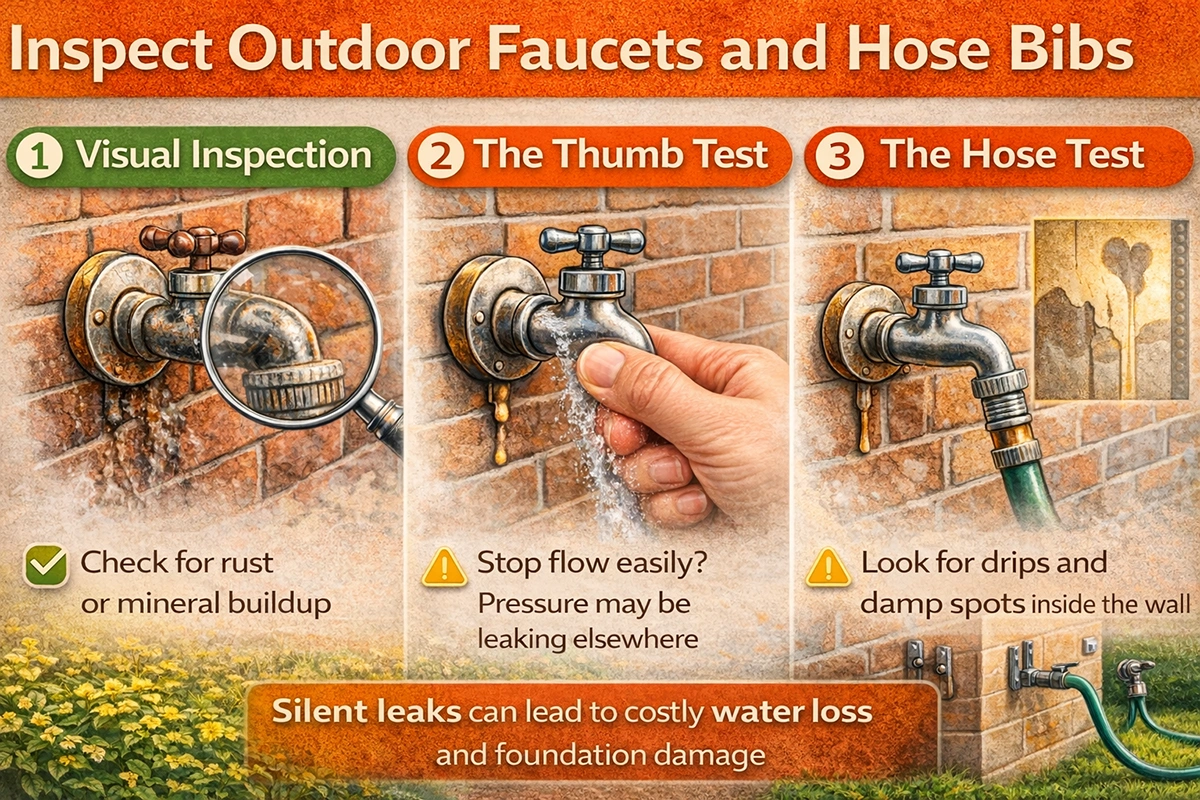
- Visual Inspection: Before turning anything on, check the exterior tap for rust or mineral buildup.
- The Thumb Test: Place your thumb over the spigot opening. If you turn the water on and can stop the flow easily with your thumb, the water pressure is likely escaping through a crack somewhere else in the pipe.
- The Hose Test: Attach a garden hose and turn the water on full. If you see water dripping from the handle stem or, worse, damp spots appearing on your basement drywall inside, the pipe may have cracked during a freeze. Addressing this early helps avoid significant water loss and possible foundation issues.
2. Irrigation and Sprinklers: Tune-Up Time
A lush lawn requires a well-functioning irrigation system, but turning it on after a long winter isn’t as simple as flipping a switch. Before you set your timer for the season, thorough sprinkler system maintenance is mandatory.
Walk your property while the system runs through a full cycle. Look for:
- Misaligned Heads: Ensure sprayers are directing water onto the grass, not your driveway or house siding.
- Broken Components: Look for heads that are cracked (shooting geysers of water) or failing to pop up due to debris.
- Underground Leaks: Keep an eye out for soft, soggy patches of grass or areas that are unusually green compared to the rest of the lawn. This often indicates a cracked underground pipe, which can silently drive up your water bill by hundreds of dollars.
3. The Hidden Threat: Sewer Lines
Summer is the prime growing season for trees and shrubs. Seeking moisture and nutrients, aggressive roots can infiltrate even tiny cracks in your main sewer line, causing blockages and backups.
If you live in an older neighbourhood with mature trees, you are at a higher risk. Many homeowners hesitate because of the price, but a sewer line inspection cost (usually a few hundred dollars) is a small price to pay for peace of mind compared to the thousands required to clean up a sewage flood. A professional Drain Camera Inspection can spot root intrusion deep within the pipe before it causes a complete sewage backup into your basement. Watch out for warning signs like slow-draining bathtubs or gurgling sounds from your toilet.
4. Kitchen Disposal Care
Summer brings barbecues, corn on the cob, and fresh fruit salads. Unfortunately, it also brings garbage disposal smells. High temperatures accelerate food decomposition in your pipes, leading to unpleasant odours that can permeate your kitchen.
To keep your disposal running smoothly:
- Watch What You Grind: Avoid putting fibrous materials (corn husks, celery, watermelon rinds) down the disposal, as they can tangle the blades. Also, never pour grease from your summer BBQ down the drain—it solidifies and causes stubborn clogs.
- Deodorize: If odours develop, run the disposal with cold water and grind a cup of ice cubes mixed with lemon or orange peels. The ice scours the blades, while the citrus neutralizes bacteria.
5. Storm Readiness: Sump Pumps
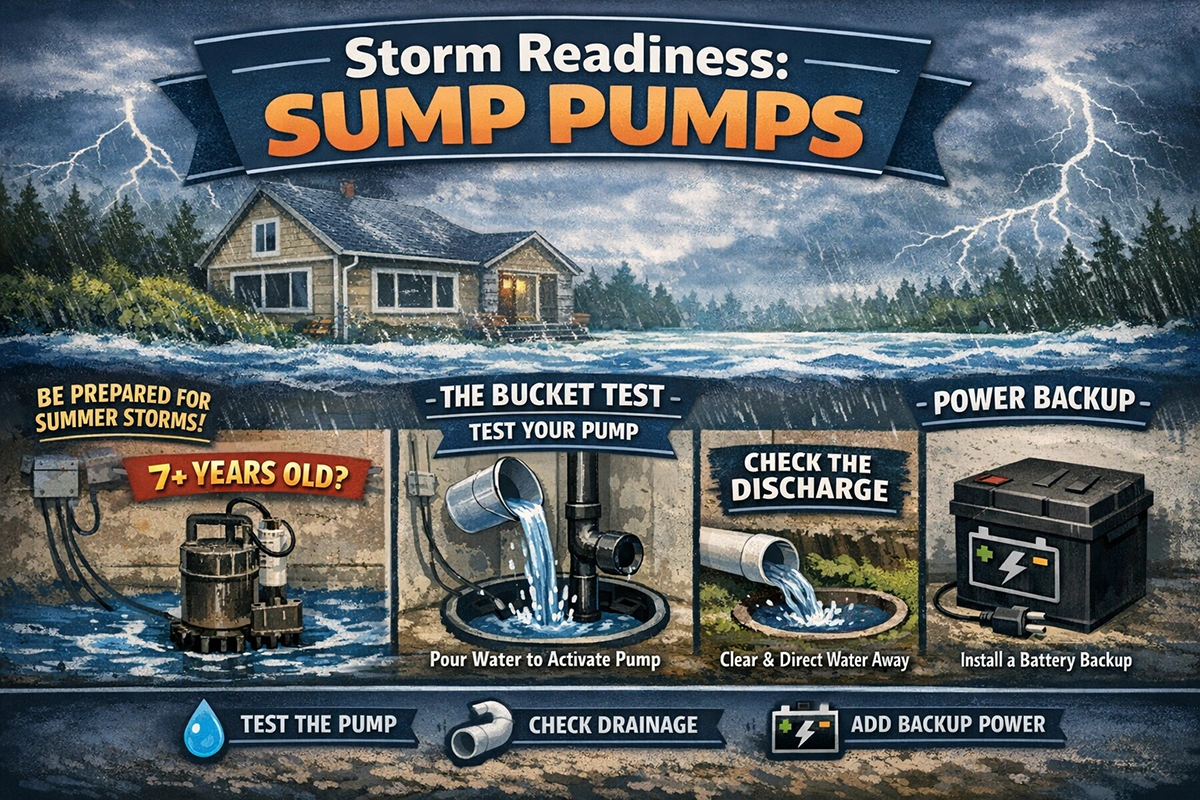
Summer thunderstorms in Canada can deliver large amounts of water in minutes. When the ground is saturated, your sump pump becomes your basement’s last line of defense against flooding. A seized pump during a storm guarantees a flooded basement. If your unit is over 7 years old, schedule a Sump Pump Installation & Replacement before heavy rains begin.
General summer plumbing maintenance must include testing your sump pump mechanism.
- The Bucket Test: Pour a bucket of water slowly into the sump pit to ensure the float switch activates automatically and pumps the water out effectively.
- Check the Discharge: Ensure the drainage pipe outside is clear of debris and directs water away from your foundation.
- Power Backup: Consider installing a battery backup system. Summer storms often bring power outages, and a seized or unpowered pump during a heavy rainstorm guarantees a flooded basement.
6. Vacation Mode Strategy
Heading to the cottage or flying abroad for a well-deserved break? Don’t leave your house vulnerable while you are gone. A solid vacation plumbing checklist involves more than just locking the doors.
- Shut Off the Main Valve: This is the only 100% guarantee against floods while you are away. If a pipe bursts while you are in Europe, the damage could be catastrophic.
- Water Heater: Turn the dial to “Vacation” mode. This keeps the pilot light on but stops heating water unnecessarily, saving you money on energy bills.
- Double-Check Drains: Ensure all taps are tightly closed and no toilets are running.
- Ask a Neighbor: Have someone check on the house periodically to ensure there are no visible leaks or issues.
Conclusion
A little preparation now helps you relax later. By addressing these tasks early in the season, you ensure your home runs all summer smoothly. Whether you need a camera inspection for your sewer line or assistance with a tricky sprinkler system, the friendly experts at POM Plumbing are ready to help. Don’t let plumbing issues ruin your summer fun — contact us today!
FAQ
Humidity encourages mold growth in the rubber seal of front-loaders. Leave the door open between loads to allow it to dry out.
Never. Grease is liquid at high temperatures but solidifies deep in your pipes when it cools (especially underground), creating stubborn clogs. Always dispose of BBQ grease in a container.
Common signs include gurgling toilets, slow-draining bathtubs, or sewage smells in the yard.
Clear leaves and debris from patio or driveway drains to ensure summer rain can flow freely away from your foundation.
