


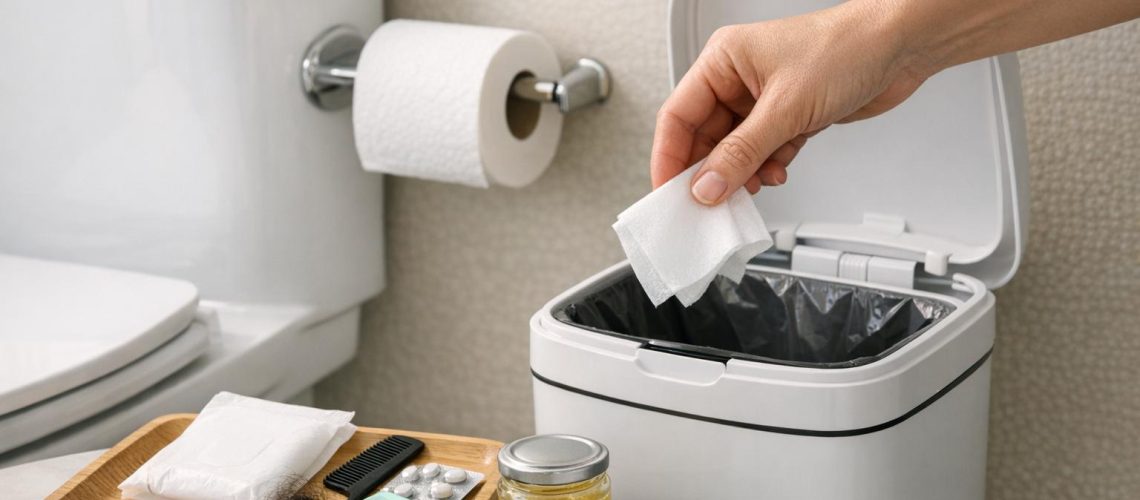

Flushing anything other than pee, poo, and toilet paper can lead to costly repairs, clogged pipes, and even environmental damage. Despite claims, items like "flushable" wipes, paper towels, and feminine hygiene products don’t break down in water, causing blockages at home and in municipal systems. These clogs can result in basement flooding, sewage backups, and expensive plumbing bills – sometimes exceeding CAD $60,000.
Key things to avoid flushing:
- "Flushable" wipes
- Paper towels and tissues
- Feminine hygiene products
- Cotton products (swabs, balls)
- Hair and dental floss
- Grease, oils, and food waste
- Medications and chemicals
Pro Tip: Keep a small trash bin in your bathroom for non-flushable items to avoid plumbing issues. If you notice slow drainage, gurgling sounds, or weak flushing, act quickly to prevent major damage. For persistent problems, consult a professional plumber.
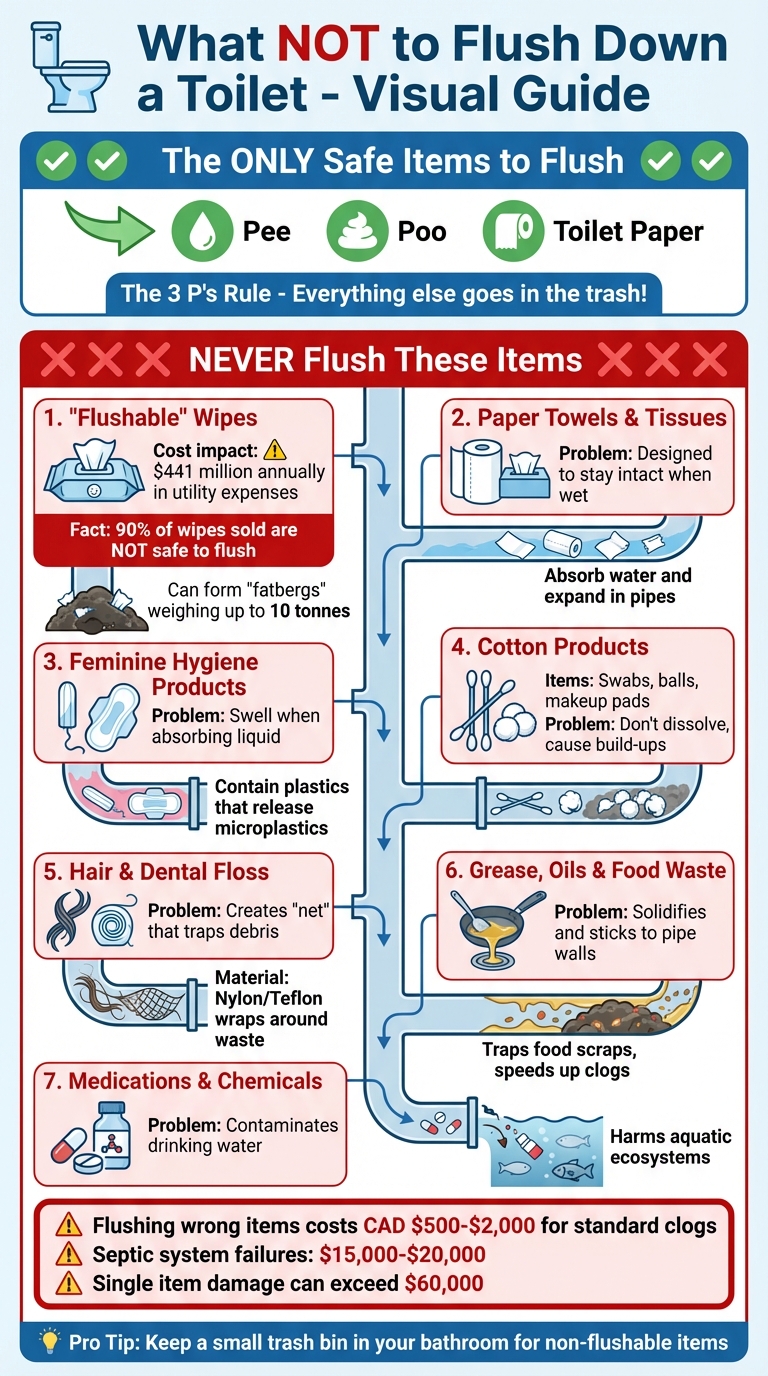
Items Never to Flush Down Your Toilet – Quick Reference Guide
Contents
- 1 10 Things You Should NEVER Flush Down the Toilet
- 2 How Toilets and Plumbing Systems Work
- 3 The Only Things You Should Flush
- 4 Items You Should NEVER Flush
- 5 Why Flushing the Wrong Items Is So Expensive
- 6 Signs You’ve Flushed Something You Shouldn’t Have
- 7 What to Do If Your Toilet Is Already Clogged
- 8 Tips from Plumbers to Prevent Toilet Clogs
- 9 Conclusion
- 10 FAQs
- 11 Related Blog Posts
10 Things You Should NEVER Flush Down the Toilet
sbb-itb-1e3c609
How Toilets and Plumbing Systems Work
Your toilet and the plumbing connected to it are built for one purpose: moving water-soluble materials that break down quickly. Across Canada, plumbing systems – from your bathroom toilet to the municipal sewer mains under your street – are designed to handle only the "3 P’s": pee, poo, and toilet paper. Anything beyond that risks disrupting the system.
Toilet paper works because it’s specifically made to disintegrate within minutes of contact with water. This quick breakdown allows it to flow smoothly through your home’s narrow pipes, past the sewer connection, and into the municipal system without causing blockages. Proper maintenance is essential to prevent sewer backup and protect your property. Modern water-efficient toilets in Canada use 4.8 litres or less per flush, meaning there’s limited water available to move waste through the pipes. That’s why it’s crucial for materials to dissolve quickly.
Other items, however, don’t follow these rules. Paper towels and facial tissues, for instance, are designed to stay intact when wet, so they hold their structure as they travel through the pipes. Feminine hygiene products absorb liquid and expand, making them prone to getting stuck in the plumbing. Hair and dental floss are even worse – they don’t dissolve at all. Instead, they form a “net-like shape” that traps other debris, leading to stubborn clogs.
When non-flushable items enter the system, they don’t break down while travelling through the pipes. This can result in fouled valves, clogged pumps, and even untreated wastewater overflowing into the environment. For rural homes with septic tanks, the same rule applies. These systems rely on materials breaking down quickly to ensure proper operation and avoid costly maintenance issues.
The Only Things You Should Flush
It’s straightforward: only urine, faeces, and toilet paper belong in the toilet – nothing else. This "Three Ps" rule exists because plumbing systems, from your toilet to municipal sewer lines, are built to handle materials that break down quickly in water.
Toilet paper is specifically designed to dissolve in water within minutes. This quick disintegration helps prevent clogs, with each flush typically using about 11 litres of water.
Other paper products, like paper towels and facial tissues, are made to be strong and absorbent, even when wet. Unlike toilet paper, these products don’t disintegrate easily. Instead, they absorb water, expand, and can get caught on imperfections in pipes, leading to blockages.
If you ever run out of toilet paper and use tissues or paper towels as a substitute, make sure to throw them in the garbage rather than flushing them. Keeping a small trash bin in your bathroom can save you from common plumbing issues and their solutions.
Now that you know what’s safe to flush, let’s dive into items that should never go down the drain.
Items You Should NEVER Flush
Flushing the wrong items can lead to expensive plumbing repairs and harm the environment. Here’s what you should always keep out of your toilet.
"Flushable" Wipes
Despite the claims on their packaging, "flushable" wipes are a leading cause of clogs. Made with synthetic fibres that don’t break down in water, these wipes cost water utilities around $441 million annually in extra operating expenses. Shockingly, about 90% of wipes sold are not actually safe to flush. When they catch on pipe imperfections, they combine with grease to form "fatbergs" – massive blockages that can weigh up to 10 tonnes .
"From my perspective, that flushable term is a dodge and can be claimed because the products can be flushed down and through a toilet. Unfortunately, where wipes are concerned, wipes do attract and collect."
- Dave Yates, Master Plumber and Owner, Yates PHCP-PVF
For homes with septic systems, the risks are even greater. Wipes can clog leach fields, leading to system failures that cost $15,000 to $20,000 to fix. At the Moffitt Cancer Centre, frequent sewage backups caused by flushed wipes were reduced dramatically after installing Traptex plumbing guards, cutting incidents from two or three per week to just one or two per month.
To avoid these issues, use a lined trash bin for wipes or consider a bidet as a plumbing-safe alternative.
Paper Towels and Tissues
Unlike toilet paper, paper towels and tissues are designed to stay intact when wet. They absorb water, expand, and easily get stuck in pipes. Since most residential drain pipes are only about 10 centimetres (4 inches) wide, even these seemingly harmless items can cause serious blockages. Always throw them in the trash, especially if you’re using them as a stand-in for toilet paper.
Feminine Hygiene Products
Tampons and pads are another major no-no. They swell when they absorb liquid, blocking pipes and causing clogs. Many also contain plastics, which release microplastics into waterways as they break down. Instead of flushing, always dispose of these items in a lined trash bin.
Cotton Products
Cotton swabs, balls, and makeup pads don’t dissolve like toilet paper. Their absorbent nature means they can cause build-ups in your plumbing. To avoid costly repairs, make sure these items go in the trash.
Dental Floss and Hair
Dental floss and hair are notorious for causing stubborn clogs. Floss, often made from nylon or Teflon, wraps around other debris to form dense masses . Hair, on the other hand, tangles into a "net" that traps waste and clings to pipe walls, worsening blockages over time .
| Item | Primary Material | How It Clogs Pipes |
|---|---|---|
| Dental Floss | Nylon or Teflon | Wraps around debris, forming solid masses |
| Hair | Organic Keratin | Creates a "net" that traps waste |
Clearing these clogs with professional help can cost hundreds of dollars. To prevent this, use stainless steel or silicone drain covers in sinks and showers to catch hair before it enters your pipes.
Grease, Oils, and Food Waste
Fats, oils, and grease (commonly referred to as FOG) might be liquid when hot, but they solidify as they cool, sticking to pipe walls and narrowing the water flow . This sticky residue traps food scraps, speeding up the formation of clogs . Food waste itself can also get stuck in pipe bends, making matters worse .
| Common Sources of FOG | Proper Disposal Method |
|---|---|
| Meat drippings, bacon grease | Let harden, then scrape into trash/green bin |
| Lard, shortening, butter | Dispose of in trash/green bin |
| Cooking oil (large amounts) | Collect in a sealed container for drop-off |
| Sauces, dressings, gravy | Scrape into trash/green bin; do not flush |
| Dairy products (milk/cream) | Avoid pouring large amounts down the drain |
Never pour grease down the sink or toilet. Instead, let it cool and harden in a container before throwing it out. Scraping food and grease off dishes before washing can also help keep your pipes clear.
Medications and Chemicals
Flushing medications and chemicals can harm both your plumbing and the environment. Pharmaceuticals don’t break down in wastewater treatment plants, potentially contaminating drinking water and harming aquatic ecosystems. Many Canadian communities offer pharmaceutical take-back programmes at local pharmacies or waste management facilities. For household chemicals like paint thinners, pesticides, and cleaning products, always use designated hazardous waste collection sites for disposal instead of flushing them.
Why Flushing the Wrong Items Is So Expensive
Flushing items that don’t belong in your plumbing system can lead to surprisingly high costs. For standard blockages, repair bills typically range from CAD $500 to $2,000. However, if the clog occurs in a lateral pipe – the one connecting your home to the city’s sewer system – expenses can climb even higher.
"If wipes get stuck in your home lateral pipe, a clog could cost you thousands to fix."
The financial impact doesn’t stop there. Sewer backups can flood basements, requiring expensive professional restoration. Septic systems are also vulnerable; for example, something as small as dental floss can tangle around mechanical parts, potentially burning out motors. Even minor items have been known to cause thousands of dollars in damage.
Improper flushing doesn’t just affect individual households – it strains public infrastructure too. Municipalities spend millions clearing blockages caused by non-flushable items. Scott Moorhead, General Manager of Water and Waste at Townsville City Council, shared:
"The average yearly spend to clear these blockages is $2 million"
- Scott Moorhead, Water and Waste General Manager, Townsville City Council
Ultimately, these costs often trickle down to residents through higher utility bills and service fees.
To address these problems, companies like POM Plumbing Service Company offer solutions such as drain cleaning, camera inspections, and backflow prevention. With over 20 years of experience serving Toronto and the GTA, their licensed technicians can help clear tough clogs or create maintenance plans to prevent future issues. These hefty financial consequences underline the importance of spotting and addressing improper flushes early – something we’ll dive into in the next section.
Signs You’ve Flushed Something You Shouldn’t Have
Your plumbing system has a way of letting you know when it’s in trouble, and ignoring these signs can lead to expensive repairs.
One of the most common indicators is slow drainage. If water takes longer than usual to drain from your toilet, sink, or tub, it’s often due to a buildup of grease or debris narrowing the pipes’ interior walls. This issue tends to worsen over time, so catching it early is crucial.
Another telltale sign is gurgling noises. If you hear bubbling sounds coming from your toilet or nearby drains after flushing, it means air is trapped by a blockage. As Barker & Sons Plumbing explains:
"If you hear gurgling elsewhere (shower, sink). That means the line’s filling" – Barker & Sons Plumbing
When this happens in multiple fixtures, it could point to a more serious issue, like a backup in the main sewer line.
A weak or incomplete flush is another red flag. If your toilet struggles to clear waste, grease or debris may be partially blocking the pipes. Frequent clogs, even with minimal toilet paper, often signal a deeper obstruction. In severe cases, you might notice water backing up into the toilet bowl, rising dangerously close to the rim, or spilling into other areas like showers or basement floor drains.
It’s worth noting that most residential sewer pipes are only about 10 centimetres (4 inches) wide at their largest, making them prone to blockages from even small items. For example, Square One Insurance reported in September 2025 that a single flushed shaving cream cap caused over CAD $2,000 in damages, while excess toilet paper led to more than CAD $5,000 in water damage.
If you spot any of these warning signs, stop flushing immediately. A second flush is one of the main culprits behind toilet overflows. Instead, locate the shutoff valve behind your toilet and turn it clockwise to stop the water flow. Addressing the issue promptly can save you from costly emergency repairs down the line.
What to Do If Your Toilet Is Already Clogged
If your toilet is clogged, resist the urge to flush again. A second flush could turn a minor blockage into a messy, flooded bathroom. Instead, carefully remove the tank lid and either lift the float ball or cup to stop the tank from refilling, or press the flapper down to seal the drain. Then, locate the silver shutoff valve behind your toilet and turn it clockwise to cut off the water supply.
Once the water is off, scoop out excess water from the bowl until it’s about half full. This step minimizes splashing and gives you space to work. Now, grab the right tool for the job – a flange or accordion plunger. Standard cup plungers, which are meant for flat surfaces like sinks, won’t create the seal needed for a toilet. Position the plunger so it traps water, not air, and use a vigorous push-pull motion for 15–20 strokes, focusing on strong suction during the upstroke.
If plunging doesn’t work, there are other methods to try. For softer blockages, the lubrication method can be effective. Pour ½ to 1 cup of dish soap into the bowl, followed by a bucket of hot (not boiling) tap water poured from waist height. Let the mixture sit for 10–20 minutes to help loosen the clog. Enzyme cleaners can also work well – they use bacteria to break down organic waste over a 24-hour period without harming your pipes. Andrew Chandler, Lead Plumbing Technician, advises:
"Most clogs you can clear yourself. The key is usually a good plunge."
Avoid using boiling water or harsh chemicals like Drano, as they can damage your toilet’s porcelain and pipes.
If none of these methods work, or if you notice multiple fixtures backing up, it’s time to call in a professional. Before testing the toilet, turn the water supply back on slowly while keeping your hand on the shutoff valve. If the water level starts rising again, shut it off immediately to avoid flooding. Remember, most residential pipes are only about 10 centimetres (4 inches) wide, making them prone to clogs. Acting quickly can save you from costly water damage, which can exceed CAD $5,000. For stubborn clogs or widespread backups, contact POM Plumbing Service Company for expert assistance with drain repairs.
Tips from Plumbers to Prevent Toilet Clogs
Avoiding toilet clogs can be as simple as following the "3 P’s" rule: only flush pee, poop, and (toilet) paper. Teaching this to everyone in the household, especially kids, can save you from future headaches. Show children how much toilet paper is appropriate to use and remind them that the toilet is not a toy. These small habits can go a long way in keeping your plumbing trouble-free.
Add a small trash bin near every toilet. This simple addition makes it easier to toss items like wipes, tissues, and hygiene products rather than flushing them. If your area collects organic waste, consider using a Green Bin for items like paper towels and facial tissues. Jessica Bennett, Editor at Better Homes & Gardens, sums it up perfectly:
"A toilet is not a replacement for your garbage can".
For sinks, install stainless steel or silicone strainers to catch hair and debris before they go down the drain. When it comes to grease and cooking oils, let them cool and harden in a container before throwing them out – never pour them down the sink. And for expired medications, use pharmacy take-back programs instead of flushing them, as wastewater treatment plants often can’t filter these substances.
Another helpful step is scheduling regular maintenance with POM Plumbing Service Company. Professional pipe camera inspections can identify hidden build-up before it becomes a problem. This preventive measure is far more affordable than emergency drain services, which can cost hundreds of dollars, not to mention the potential expense of water damage repairs. Regular maintenance also helps prevent fatbergs – massive clogs of grease and wipes that can block entire sewer systems.
Conclusion
Following the Three Ps rule – pee, poo, and toilet paper – is crucial for avoiding expensive repairs and protecting the environment. Toronto-GTA plumbing systems are designed to handle only these three items. Anything else, from so-called "flushable" wipes to medications, can create blockages that lead to costly damage.
These habits also have a broader impact. Proper flushing helps safeguard Canadian waterways and eases the burden on wastewater treatment facilities. For example, the City of Toronto has detected traces of pharmaceuticals in water sources due to improper disposal of medications. Additionally, flushing non-flushable items can result in fatbergs and large-scale blockages, potentially causing basement flooding across entire neighbourhoods.
If you’re dealing with slow drains, frequent clogs, or suspect improper flushing has caused an issue, POM Plumbing Service Company is here to assist. With over 20 years of experience in Toronto and the GTA, our licensed and insured experts use cutting-edge diagnostic tools to address plumbing problems before they escalate. Reach out today for help with drain repair, maintenance, or emergency plumbing services.
FAQs
Are “flushable” wipes ever really safe to flush?
No, “flushable” wipes are not actually safe to flush. Despite the label, they often don’t break down quickly enough in water. This can lead to clogs in your plumbing, resulting in expensive repairs. Beyond your home, these wipes can also block municipal wastewater systems, adding to larger-scale problems.
To prevent these issues, it’s better to toss wipes in the garbage – even if the packaging claims they’re flushable.
Is it safe to flush cat litter?
No, flushing cat litter down the toilet is not a good idea. Even if the packaging says it’s "flushable", it can lead to clogged pipes and create problems for plumbing systems. On top of that, it may negatively affect wastewater treatment facilities and the environment. The safest way to dispose of cat litter is by sealing it in a bag and throwing it in the garbage. This avoids plumbing issues and helps protect local ecosystems.
When should I stop DIY and call a plumber for a clog?
If your DIY fixes aren’t cutting it, it’s time to call a plumber. Persistent clogs, frequent backups, slow-draining sinks, or overflowing toilets are clear signs of a bigger issue. When tools like plungers or drain snakes fail – or even worsen the situation – it’s best to bring in a professional. This can help avoid further damage and save you from expensive repairs down the line.