


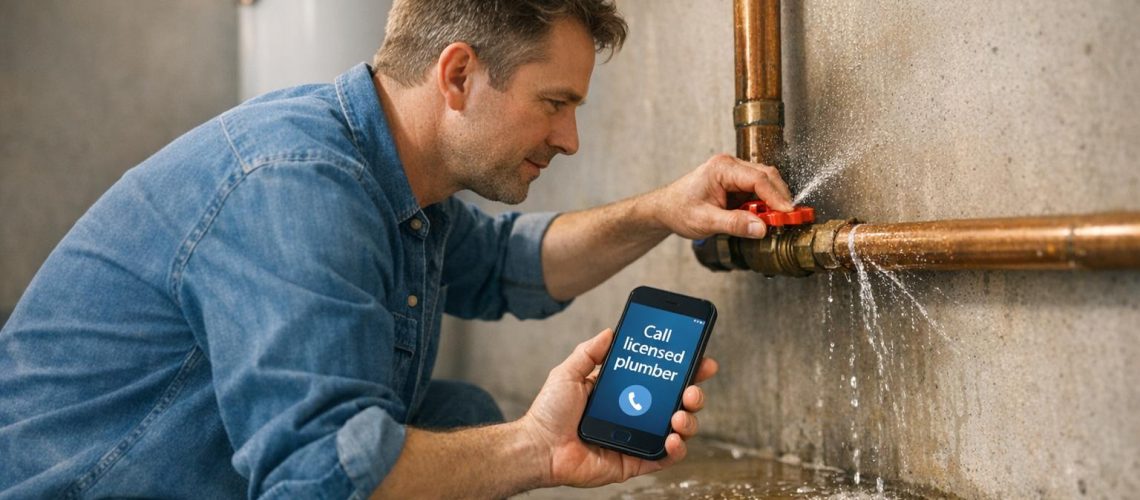

When plumbing emergencies strike, quick action can save you from costly damage and stress. From burst pipes to sewer backups, knowing what to do in a plumbing emergency can make all the difference. Here’s a summary of key takeaways to help you stay prepared:
- Burst Pipes: Shut off the main water supply immediately. Frozen pipes are a common issue in Canadian winters.
- Overflowing Toilets: Turn off the toilet’s supply valve and avoid flushing again.
- Sewer Backups: Stop all water use and call a plumber right away. Check your insurance for sewer backup coverage.
- Water Heater Failures: Turn off the water and power supply to the heater if it’s leaking or malfunctioning.
- Gas Leaks: If you smell gas, evacuate your home and call 911 or your utility provider from a safe location.
Prevention Tips:
- Insulate pipes to avoid freezing in winter.
- Keep drains clear of grease, hair, and debris.
- Regularly inspect your water heater and plumbing systems.
Emergency Actions:
- Shut off the main water supply.
- Turn off electricity if water is near outlets or appliances.
- Document damage for insurance claims.
- Contact a licensed, insured emergency plumber.
Acting fast can minimize damage and reduce repair costs. Don’t wait for problems to worsen – routine maintenance and a trusted plumber’s contact info can save you time and money.
Controlling Plumbing Emergencies | Ask This Old House
sbb-itb-1e3c609
Most Common Emergency Plumbing Situations
Plumbing emergencies often catch you off guard. Whether it’s a sudden leak or an unpleasant odour, these situations demand immediate attention. Let’s break down some of the most common scenarios you might face.
Burst Pipes
Burst pipes can wreak havoc on your home, especially in Canada, where freezing temperatures are a major culprit. When water freezes, it expands, putting pressure on pipes until they crack. Thawing can worsen the issue, causing sudden splits. Other factors like old piping materials or high water pressure can also lead to bursts.
Signs to watch for include water stains on walls or ceilings, a sudden drop in water pressure, or no water flow at all. If you suspect a frozen pipe, turn off the main water supply right away to minimize damage.
"Stopping a heavy leak should take precedence over not having water for a little while." – David Balkan, CEO, Balkan Sewer And Water Main
Overflowing Toilets
Few things escalate faster than an overflowing toilet. The first step is to locate the supply valve behind the toilet and turn it clockwise to stop the water. If you can’t access the valve, lift the tank lid and press down on the rubber flapper to prevent more water from entering the bowl.
Avoid flushing again when the water level is high – it can make the situation worse. If only one toilet is affected, the issue may be isolated. But if multiple fixtures are backing up, it could signal a larger problem in the plumbing system.
Severe Drain Clogs
When multiple drains back up at the same time, it’s a clear sign of an emergency. In older Toronto areas like East York and Leaside, tree roots often invade aging clay pipes. Grease buildup and heavy rainfall can also overwhelm drainage systems.
Skip the chemical drain cleaners – they rarely address the actual problem and can harm older pipes. Stop using water fixtures immediately and call a plumber. Sewer line camera inspections, which typically costs CAD $200–$400 in Toronto, can pinpoint the blockage.
Sewer Line Backups
A sewer backup is one of the messiest and most expensive plumbing emergencies. Warning signs include sewage odours indoors, gurgling drains, or raw sewage coming up through floor drains or toilets. If this happens, stop all water use immediately.
Damage from sewer backups can be severe, especially in finished basements. Homeowners in Toronto should review their insurance policies, as many don’t automatically cover sewer backups. Adding this coverage usually costs between CAD $50 and CAD $150 annually. Additionally, the City of Toronto offers subsidies of up to CAD $3,400 through its Basement Flooding Protection Subsidy Program for backwater valve installations, which can help prevent future issues.
Water Heater Failures
Water heater problems range from losing hot water to active leaks or even a tank rupture. If you spot water pooling around the unit, hear unusual sounds like popping or rumbling, or notice discoloured water, act quickly.
Turn off the cold water supply valve at the top of the tank. For gas water heaters, switch to the "pilot" or "vacation" setting; for electric ones, shut off the breaker. Avoid trying to move or drain a severely damaged tank on your own.
Gas Line Plumbing Emergencies
A gas leak is a serious safety hazard. If you smell something like rotten eggs or sulphur near appliances or gas lines, leave your home immediately, leaving the door open behind you, and call 911 or your gas utility from outside. Don’t try to investigate, use switches, or even operate your phone until you are safely away from the building.
Major Water Leaks
Major water leaks – those spreading across floors, soaking walls, or coming from supply lines – can cause severe structural damage and lead to mould growth within 24 to 48 hours. If the leak is too large to control with a towel or by shutting off a local valve, turn off the main water supply and contact a licensed plumber as soon as possible.
What to Do Before the Plumber Arrives
Taking prompt action can help keep a plumbing issue from spiralling into a bigger, more expensive problem.
Shut Off the Main Water Supply
In most plumbing emergencies, your first move should be to stop the water flow. Find your main shut-off valve, which is typically located where the water enters your house. For a ball valve, turn it a quarter-turn so the lever is perpendicular to the pipe. For a gate valve, twist it clockwise until it stops. After shutting off the main supply, open a low-level tap to drain any leftover water and relieve pressure. If the problem is isolated to a specific fixture, use the shut-off valve behind it instead. Make sure every adult in your home knows where the main valve is and how to use it.
Turn Off Electricity If Needed
Water and electricity don’t mix – ever. If water is seeping near outlets or electrical panels, head to your breaker box and cut the power to the affected area. This is especially important in spaces with appliances like washing machines, dishwashers, or water heaters. If the water heater is part of the issue, you may also need to turn off the gas supply. To do this, rotate the gas valve 90° so it’s perpendicular to the pipe. And whatever you do, don’t step into standing water until you’re absolutely sure the power is off.
Contain Water and Document Damage
Grab buckets, towels, or anything that can help contain the water, and move valuable items out of harm’s way. Before cleaning up, take detailed photos and videos of the leak, any standing water, and any damaged items. This documentation is essential for insurance claims. Don’t throw away damaged materials until an insurance adjuster has inspected them, and keep all receipts for emergency repairs or temporary accommodations. When the plumber arrives, let them know what steps you’ve already taken – like which valves you shut off or whether the gas or electricity was turned off. This information can help speed up the repair process.
How to Prevent Plumbing Emergencies
Skipping regular maintenance can lead to plumbing disasters. By adopting a few simple habits throughout the year, you can keep your pipes, drains, and water heater functioning smoothly – and avoid the costly emergencies we mentioned earlier.
Insulate Pipes Before Winter
Canadian winters are notoriously harsh on plumbing. Pipes can freeze at -7°C, and if left unprotected, they might burst within 4–6 hours. In Toronto, fixing a burst pipe can cost over CA$3,000, but with proper precautions, you can avoid this expense. Focus on insulating pipes in unheated spaces like basements, crawl spaces, garages, and exterior walls. Foam pipe insulation sleeves are budget-friendly, costing about CA$2–CA$5 per 6-foot section, while electric heat tape for higher-risk areas costs CA$30–CA$100. Seal any gaps around pipes with caulk or spray foam to block drafts, and keep your thermostat set to at least 13°C – even if you’re away. When temperatures dip below -15°C, let faucets connected to exposed pipes drip slightly to keep water moving and reduce pressure.
| Outdoor Temperature | Risk Level | Recommended Action |
|---|---|---|
| Above -4°C | Low | Ensure heat tape works; follow standard precautions |
| -4°C to -7°C | Moderate | Open cabinet doors; let faucets drip |
| -7°C to -15°C | High | Maintain a continuous drip; check pipes regularly |
| Below -15°C | Extreme | Actively monitor pipes; leave water running slowly |
Keep Drains Clean and Clear
Clogs don’t happen overnight – they’re the result of grease, hair, soap scum, and debris building up over time. To prevent severe blockages or even sewer backups, pay attention to what goes down your drains. Avoid pouring cooking grease down the sink, use a hair catcher in the shower, and never flush so-called "flushable" wipes, which can cause serious issues. Sewer backups account for 15% of summer plumbing emergencies, with basement floods causing damages ranging from CA$10,000 to over CA$50,000 when mould remediation and structural repairs are factored in. Keep in mind that standard home insurance doesn’t typically cover sewer backups unless you’ve added a specific endorsement, so it’s worth checking your policy.
Investing in professional drain cleaning can also help. In cities like Toronto, this service usually costs between CA$100 and CA$300 – a small price compared to the expense of fixing a major backup.
Inspect and Maintain Your Water Heater
Water heaters often go unnoticed until they break down, yet they’re responsible for 12% of winter home emergencies. Replacing one can cost anywhere from CA$3,000 to CA$5,000, including installation. To avoid this, check your water heater regularly for leaks, corrosion, or strange noises – these can be early signs of trouble. If your water isn’t heating as well as it used to or your energy bills are creeping up, it could mean the appliance is losing efficiency. Scheduling a professional inspection every fall ensures your water heater is ready for the high-demand winter months and helps you avoid unexpected breakdowns.
Plumbing Tools Every Homeowner Should Keep on Hand
Having the right tools on hand can make all the difference during a plumbing emergency. While you may not be able to fix major issues, these essentials can help you minimize damage until a licensed plumber arrives.
Adjustable Wrench and Plumber’s Tape
An adjustable wrench is a must-have for tightening fittings, shutting off valves, or even turning off the gas supply at the meter. A standard 8- or 10-inch wrench, priced between CA$10 and CA$30, is sufficient for most household plumbing tasks.
Plumber’s tape – also known as PTFE or Teflon tape – provides a temporary watertight seal for threaded pipe connections. This can help slow or stop minor leaks until repairs are made. To apply, wrap the tape clockwise around the pipe threads 3 to 5 times so it tightens as the fitting is screwed on. A roll costs just CA$1 to CA$4, making it a budget-friendly addition to your toolkit.
When leaks occur, everyday household items can also help you manage the situation.
Buckets and Towels
Buckets and towels are invaluable for containing leaks. Place a bucket under an active drip or, if water is pooling behind a ceiling bulge, poke a small hole in the centre to drain the water into a bucket below. This simple step can prevent the ceiling from collapsing under the weight. A 5-gallon bucket, costing CA$5 to CA$10, is easy to store and ready when you need it.
Heavy towels are perfect for soaking up spills or creating makeshift "dams" to redirect water away from sensitive areas like electrical outlets, baseboards, or furniture. Quick action here can protect your home from structural damage and prevent a minor leak from escalating into a major renovation project.
Wet/Dry Vacuum
For larger amounts of standing water, a wet/dry vacuum is far more efficient than towels. It’s a powerful tool for removing water from floors, carpets, and tight spaces, which is crucial since mould can start growing within 24 to 48 hours of water exposure. Home-use models typically hold 5 to 12 gallons and range in price from CA$50 to CA$150.
Before using a wet/dry vacuum for water, always remove the paper filter to avoid damage. If water has reached outlets, appliances, or your electrical panel, shut off power at the breaker box before operating the vacuum. Safety should always come first.
"Do not use electrical appliances near standing water – this includes fans, shop vacs, and space heaters until the area is confirmed safe by a professional." – HYDROPRO
When to Call an Emergency Plumber
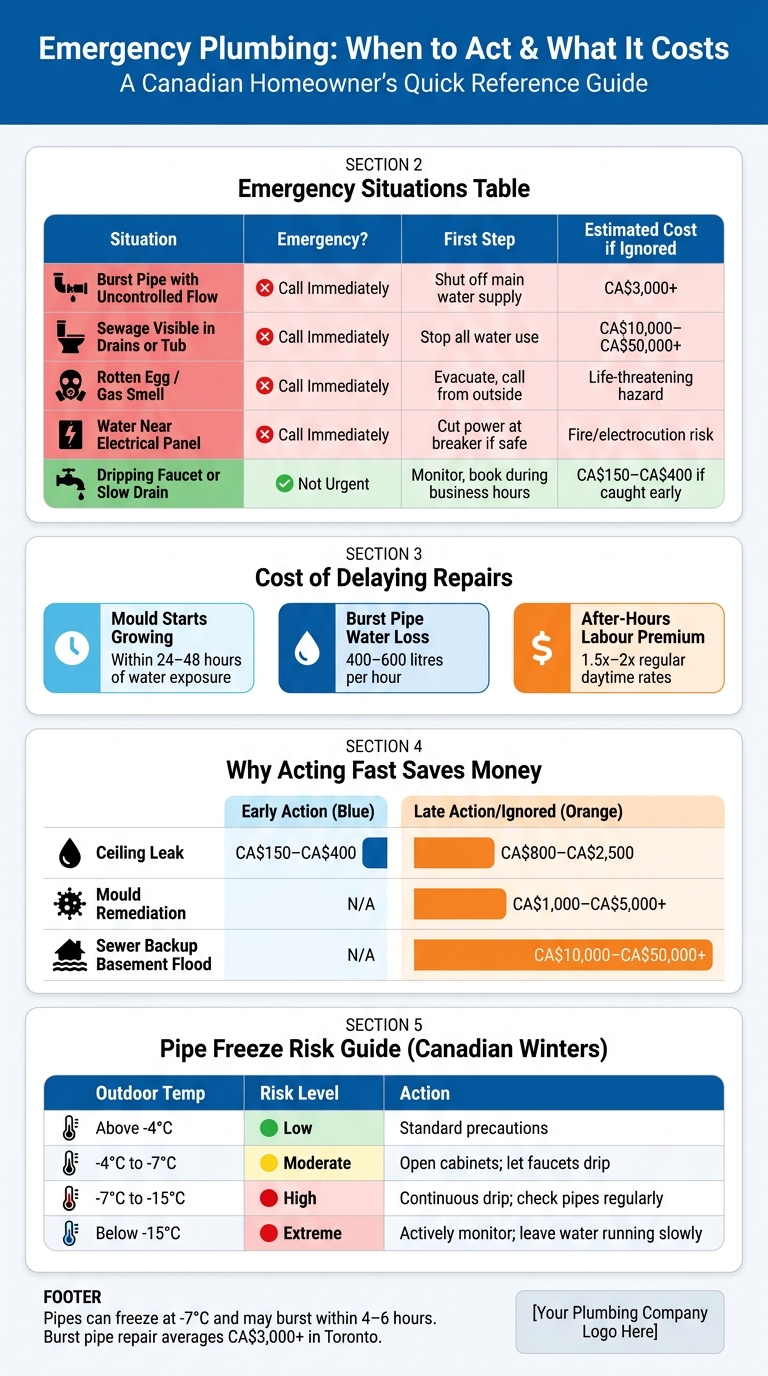
Emergency Plumbing Situations: When to Act & What It Costs
Once you’ve taken steps to manage the situation, it’s important to know when it’s time to bring in a professional. While not every plumbing issue needs immediate attention, some problems simply can’t wait.
Burst Pipes or Uncontrolled Leaks
If shutting off the local valve doesn’t stop the water, it’s time to call an emergency plumber. A burst pipe can release a staggering 400 to 600 litres of water every hour, which can quickly damage floors, walls, and even lead to mould. Uncontrolled leaks – like a water meter running even when no taps are open, unexpected warm spots on the floor, or a sudden drop in water pressure – could point to hidden issues such as slab or underground leaks. These need to be addressed immediately to prevent further damage.
Sewage Backups or Gas Odours
If multiple drains are gurgling, backing up, or you see sewage in a bathtub or floor drain, stop all water use and call an emergency plumber right away. Sewage isn’t just unpleasant – it carries harmful bacteria and pathogens that can pose serious health risks.
A rotten egg smell is a clear sign of a natural gas leak. In this case, avoid using light switches, phones, or even starting your car in the garage.
"Gas leaks are a ticking time bomb. If you smell gas, don’t delay! Call a professional plumber who can detect the source of the leak and fix it right then and there." – Transou’s Plumbing & Septic
Evacuate the building immediately, and once you’re at a safe distance, call your gas utility company and an emergency plumber. Similarly, water heater issues or electrical hazards should never be ignored and require professional help as soon as possible.
Water Heater or Electrical Risks
If your water heater is leaking heavily, making strange rumbling or popping noises, or has stopped producing hot water during extremely cold weather, it’s time to call a plumber – especially if your household includes elderly residents or young children. For gas-powered units, shut off the gas valve before making the call if you notice active leaks.
Water near electrical panels is a serious safety hazard, with risks of fire or electrocution. If it’s safe and you’re not standing in water, shut off power at the breaker box first, then call an emergency plumber immediately.
| Situation | Emergency? | First Step |
|---|---|---|
| Burst pipe with uncontrolled flow | Call immediately | Shut off main water supply |
| Sewage visible in drains or tub | Call immediately | Stop all water use immediately |
| Rotten egg / gas smell | Call immediately | Evacuate, call from outside |
| Water near electrical panel | Call immediately | Cut power at breaker if safe |
| Dripping faucet or slow drain | No | Monitor, book during business hours |
The Cost of Ignoring Plumbing Emergencies
Overlooking a plumbing emergency does more than just allow the problem to linger – it amplifies both the damage and the financial burden. What starts as a minor issue, like a small leak, can spiral into a much bigger and more expensive problem.
Water Damage and Mould Growth
Water has a way of making things worse quickly. Once it escapes, it seeps into structures, causing damage within hours. And if left unchecked, mould can start growing on porous surfaces in just 24–48 hours.
"A ceiling leak that’s ignored becomes a mould problem within 24–48 hours. Act fast." – RenoHouse Team
When mould takes root, the issue becomes more than just fixing a plumbing problem. Professional mould remediation can cost anywhere from CA$1,000 to CA$5,000+, and that’s on top of the structural repairs that will likely be required. Health Canada emphasizes the importance of addressing mould quickly, stating, "Mould can affect indoor air quality and should be addressed by controlling moisture and fixing leaks promptly".
Repairs Get Harder and More Expensive Over Time
Delaying plumbing repairs doesn’t just allow the problem to grow – it makes the repairs more complicated and costly. For instance, a slow leak under a sink can warp cabinet floors and weaken drywall, turning what could have been a simple repair into a full cabinet replacement. Similarly, a ceiling leak left unchecked might escalate into a major overhaul costing CA$800–CA$2,500, compared to a quick patch job that would have been CA$150–CA$400 if addressed early.
Insurance often covers sudden damage but typically excludes issues caused by gradual leaks. Ignoring repairs can even void your insurance claims. On top of that, waiting until the problem becomes an emergency means paying higher after-hours labour rates – 1.5 to 2 times more than regular daytime rates.
Health and Safety Risks
The risks of ignoring plumbing problems extend beyond your wallet. Sewage backups can spread harmful bacteria, while stagnant water near electrical systems poses serious shock and fire hazards. These dangers, combined with escalating repair costs, highlight the importance of acting immediately to prevent further damage and ensure safety.
How to Choose a Reliable Emergency Plumbing Service
When a pipe bursts in the middle of the night or sewage backs up on a long weekend, you don’t have the luxury of time to browse through endless options. Being prepared and knowing what to look for ahead of time can save you from unnecessary stress.
Understanding common emergencies and the steps to take immediately can help you choose a service you can count on.
Check for Licensing and Insurance
In Ontario, plumbers are required to have a provincial licence to legally work on your home. Before agreeing to any repairs, ask to see their credentials. On top of licensing, insurance is essential. This protects you from any liability if something goes wrong during the job. A dependable plumbing service will carry at least CA$2 million in liability insurance and have Workers’ Safety and Insurance Board (WSIB) coverage. If a contractor is unwilling to provide this information, consider it a red flag.
Look for 24/7 Availability and Transparent Pricing
Just because a company advertises 24/7 service doesn’t mean they always have a plumber ready to respond. Some rely on answering services, leading to delays of up to two hours. To avoid this, confirm they have someone on call who can respond immediately.
Clear and upfront pricing is another hallmark of a reliable service. A good company will provide a phone estimate, outlining whether materials, callout fees, and taxes are included. They should also clarify if the callout fee will be deducted from the final bill.
"Any plumbing service should be able to give you a rough estimate over the phone before sending someone to your home, giving you the opportunity to shop around for a suitable price." – blogTO
Choose a Plumber Familiar with Local Plumbing Systems
Toronto’s mix of housing – ranging from century-old homes to modern condos – means plumbing issues can vary greatly by neighbourhood. A plumber with extensive experience in the GTA will know how to tackle these unique challenges effectively. They’ll also be familiar with local municipal procedures, which can be crucial in emergencies.
With over 20 years of experience in Toronto and the GTA, POM Plumbing brings this kind of local knowledge to every job, whether it’s a historic home or a newly built high-rise.
Conclusion
Plumbing emergencies often come out of nowhere. A burst pipe or a clogged drain can quickly spiral into a bigger problem, leading to structural damage, mould growth, and weeks of inconvenience. Acting fast is crucial – shutting off the water immediately can save you from a much larger headache.
Staying on top of routine maintenance is one of the best ways to avoid these issues. Simple steps like insulating your pipes before winter, keeping your drains clear, and regularly testing your sump pump can go a long way. But when an emergency does happen, having the contact information of a licensed, insured plumber already saved can make all the difference. During extreme cold snaps (−20°C or colder), plumbers often see call volumes jump 3–5 times higher than usual. By finding and vetting a reliable service in advance, you’ll be prepared to tackle emergencies without unnecessary stress.
FAQs
Where is my home’s main water shut-off valve?
In most Canadian homes, you’ll find the main water shut-off valve in the basement, usually near the front wall where the water line enters the house. Alternatively, it might be in the utility room close to the water heater or furnace. If your home doesn’t have a basement, check the crawl space instead. The valve is typically one of two types: a gate valve with a round handle or a ball valve with a lever handle. Knowing where this valve is located is essential to quickly stop water flow and prevent damage in case of an emergency.
What should I do if I can’t stop a leak with a local shut-off?
If the local shut-off valve fails to stop the leak, turn off the main water supply immediately to prevent further damage. Then, get in touch with a professional plumber as soon as possible for help. Avoid trying to handle complicated repairs on your own, as this might make the situation worse. Acting quickly is essential to address the problem safely and properly.
Will my home insurance cover a sewer backup?
In Canada, home insurance policies generally don’t cover sewer backup damage unless you’ve specifically added it as an endorsement to your policy. This type of coverage isn’t part of standard insurance plans. To know if you’re protected, review your policy details or reach out to your insurer for clarification.
