



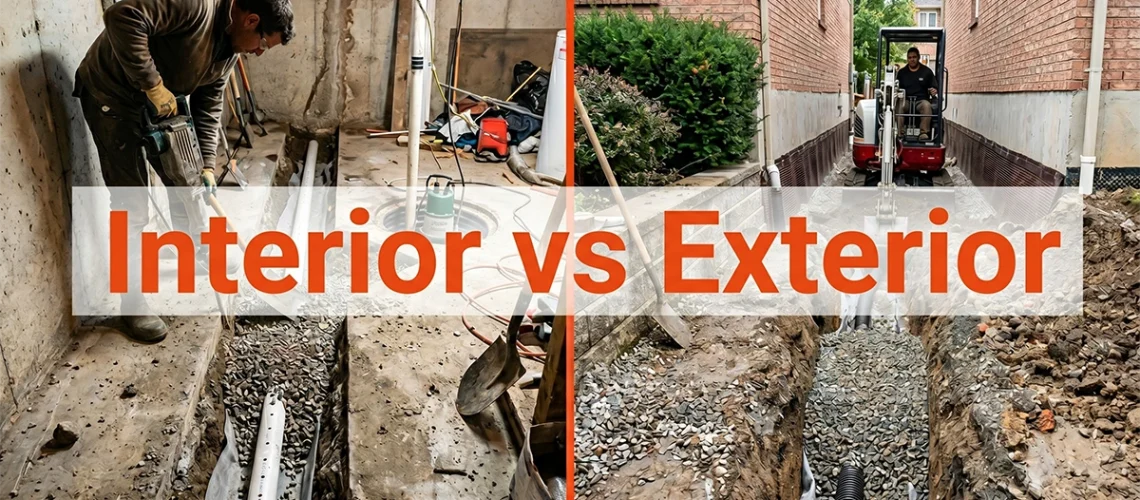

Water is getting into your basement. You search for a solution and land on two options: an interior french drain or an exterior french drain. Both sound like they do the same thing. They do not.
The difference matters because choosing the wrong system means spending thousands of dollars on work that does not fix the actual source of your problem. This guide explains how each system works, where each one fails, and how to figure out which one your situation actually calls for.
Where Is the Water Coming From?
This is the question that determines everything. Before comparing systems, you need to know how water is entering your foundation, because interior and exterior drains solve different problems.
There are three main entry points:
- Water seeping through cracks or gaps in the foundation wall, driven by saturated soil pressing against the exterior
- Water rising up through the floor slab due to hydrostatic pressure from a high water table below
- Surface water pooling against the foundation from poor grading or runoff
An exterior french drain intercepts the first and third scenario before water reaches the wall. An interior french drain handles the second, and also catches wall seepage after it enters. Choosing based on cost or convenience rather than entry point is where most mistakes happen.
How an Interior French Drain Works
An interior system, also called a drain tile or weeping tile system in Ontario, runs along the inside perimeter of the basement floor at the wall-slab joint. A contractor cuts through the concrete, lays a perforated pipe in a gravel bed, and patches the floor. Water that enters through the walls or rises from below drains into the pipe and gets pumped out through a sump pit.
The system does not block water from entering. It captures it the moment it does and removes it before it spreads.
Where interior drainage works well:
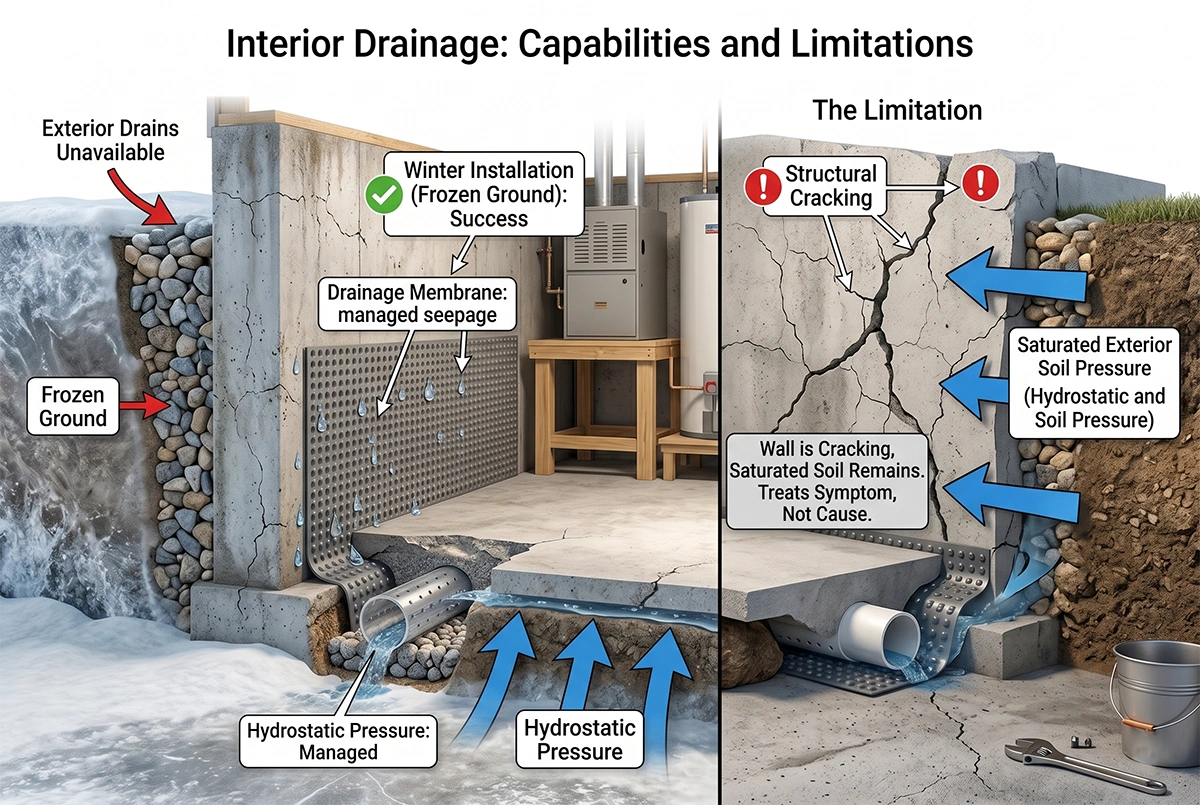
- Hydrostatic pressure pushing water up through the slab — exterior drains do not address this at all
- Seepage through foundation walls in an existing home where excavation is not feasible
- Winter installation, when frozen ground makes outdoor excavation impossible in the GTA
- Situations where budget is a real constraint
Where it falls short: an interior system does not address saturated soil pressing against your foundation walls. The water still reaches the wall — the system just manages it after entry. If the foundation wall is cracking from exterior water pressure, interior drainage treats the symptom while the structural issue continues.
The other limitation is sump pump dependency. The system only works if the pump does. A battery backup unit is a required part of any complete interior drainage installation. A proper weeping tile installation accounts for pump sizing, pipe slope, and gravel bed depth relative to the actual water volume the system needs to handle.
How an Exterior French Drain Works
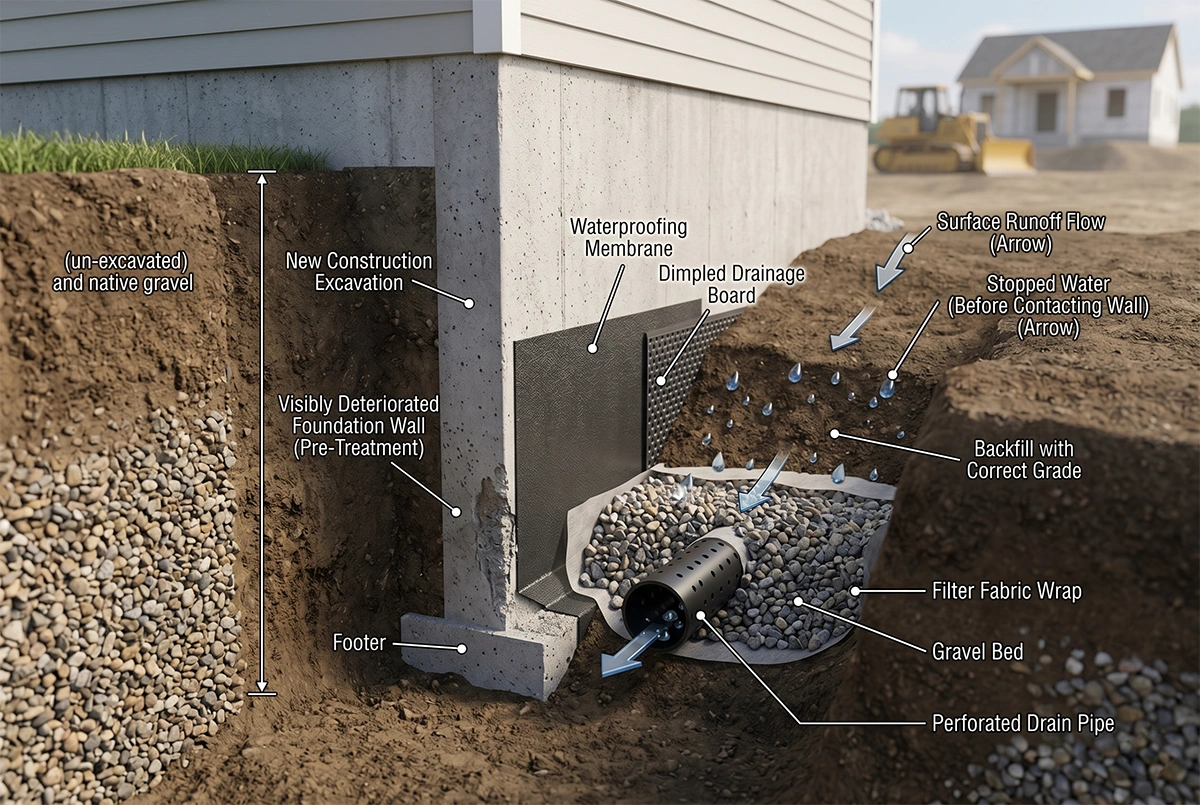
An exterior system is installed at footing level, outside the foundation wall. That means excavating six to eight feet deep around the perimeter. A perforated pipe goes in against the footing surrounded by gravel and filter fabric. Before backfilling, a waterproofing membrane is applied to the exposed foundation wall.
The exterior approach stops groundwater before it contacts the wall. It relieves hydrostatic pressure on the exterior side and protects the foundation from long-term water exposure. For new construction, this is the most logical time to install it — the foundation is already exposed and the incremental cost is low.
Where exterior drainage works well:
- New construction, where installation happens before backfilling
- Foundation walls visibly deteriorating from water contact on the exterior
- Properties where surface runoff and poor grading drive water toward the foundation
- Situations where stopping water at the source is the priority and site access allows it
Where it falls short: an exterior drain does not solve hydrostatic pressure from below. If your water table rises and pushes water up through the slab, an exterior perimeter drain does nothing about it. For most existing Toronto and GTA homes, exterior excavation is also a major undertaking. Removing interlock, patios, or sections of driveway and restoring all of it adds substantially to the cost. Understanding what proper drainage systems involve is what separates an informed decision from an expensive mistake.
Side-by-Side Comparison
The core difference between an interior and exterior french drain comes down to where in the water’s path each system intervenes.
| Feature | Interior French Drain | Exterior French Drain |
| Stops water at the source | No | Yes |
| Handles hydrostatic pressure from below | Yes | No |
| Works for existing homes | Yes | Difficult |
| Installation season | Year-round | Spring through fall |
| Sump pump required | Always | Usually |
| Impact on landscaping | None | Significant |
| Relative cost | Lower | Higher |
| Best for | Seepage, hydrostatic pressure, existing builds | New construction, wall deterioration, surface runoff |
Neither system is universally better. The right choice depends on the source of your water problem, not on which system costs less upfront.
Which System Is Right for Your Property?
The right choice depends on where water is entering and what site conditions allow.
Interior french drain is the right system when:
- Water rises through the slab or seeps through walls in an existing home
- Exterior excavation is blocked by a driveway, porch, or hardscaping
- Work needs to happen year-round, including winter
Exterior french drain makes more sense when:
- The building is under new construction
- The foundation wall itself is deteriorating and needs exterior repair regardless
Some properties need both. A failed original weeping tile combined with hydrostatic pressure from below is not an either-or situation. A proper site assessment identifies where water is entering before any installation decisions are made.
Do Not Overlook Sewage Backup
A french drain handles groundwater infiltration. It will not stop sewage backup, which is a separate problem. When the city sewer surcharges during a heavy storm, wastewater reverses through your floor drain and a french drain does nothing to prevent it.
A backwater valve closes automatically when flow reverses. Many Toronto properties on combined sewer connections are at risk. Installing one alongside a drainage upgrade costs less than scheduling it as a separate job.
Getting the Installation Right
A french drain with incorrect pipe slope, undersized gravel, or a sump pit that cannot handle peak water volume will underperform regardless of which system you choose. The details that matter:
- Pipe diameter and slope toward the sump pit
- Gravel gradation and bed depth
- Filter fabric quality
- Sump pit size relative to expected water volume
These rarely appear in a basic quote but determine whether the system still works a decade later. Pomp Plumbing works with residential and commercial properties across Toronto and the GTA. Contact the team for an assessment before committing to any installation.
FAQ
It depends on where water is entering. Interior systems handle hydrostatic pressure and wall seepage in existing homes. Exterior systems stop water before it reaches the wall — best for new construction or when the foundation wall needs repair. A site assessment gives a definitive answer before any money is spent.
For most existing Toronto homes where exterior excavation is not feasible, yes. It resolves basement moisture year-round, does not disturb landscaping, and handles hydrostatic pressure from below — something an exterior system cannot do.
Yes, when installed in the right situation. An exterior system provides the most complete protection by stopping water before it contacts the foundation wall. It does not address water rising from below, and retrofitting one on an existing home is a major, costly undertaking.
For most existing Toronto and GTA homes, an interior weeping tile system is the more practical choice. Clay-heavy soil and flat lot grading create hydrostatic pressure conditions that interior drainage handles directly. Exterior systems make more sense for new construction.
You spend money on work that does not solve the problem. The wrong system leaves the actual source of water entry unaddressed. Getting the diagnosis right before installation is what determines whether the fix holds.
