


If you notice a sewage smell in your home, it’s more than just unpleasant – it could indicate a plumbing issue that needs immediate attention. Sewer gas, which smells like rotten eggs, contains harmful substances like methane and hydrogen sulfide. There are several common causes of sewer gas odors, including dry drain traps, clogged drains, vent pipe blockages, or a failed toilet seal. Ignoring these issues can lead to health risks, costly repairs, or even safety hazards.
Quick Actions to Take:
- Ventilate Immediately: Open windows and doors to let fresh air in.
- Inspect Drains: Run water in unused sinks or floor drains to refill dry traps.
- Check Toilets: Look for wobbling or moisture around the base, indicating a failed wax seal.
- Avoid Ignition Sources: Methane is flammable, so avoid sparks or open flames.
If the smell persists or the issue affects multiple areas, it’s time to call a licensed plumber. Sewer gas exposure can cause symptoms like headaches, nausea, or dizziness and should never be ignored. Regular maintenance, such as flushing unused drains and inspecting vent pipes, can help prevent odours from returning.
7 Sources of Sewer Smell in Your Home | Where to Find that Smell!
sbb-itb-1e3c609
Common Causes of Sewage Smells in the House
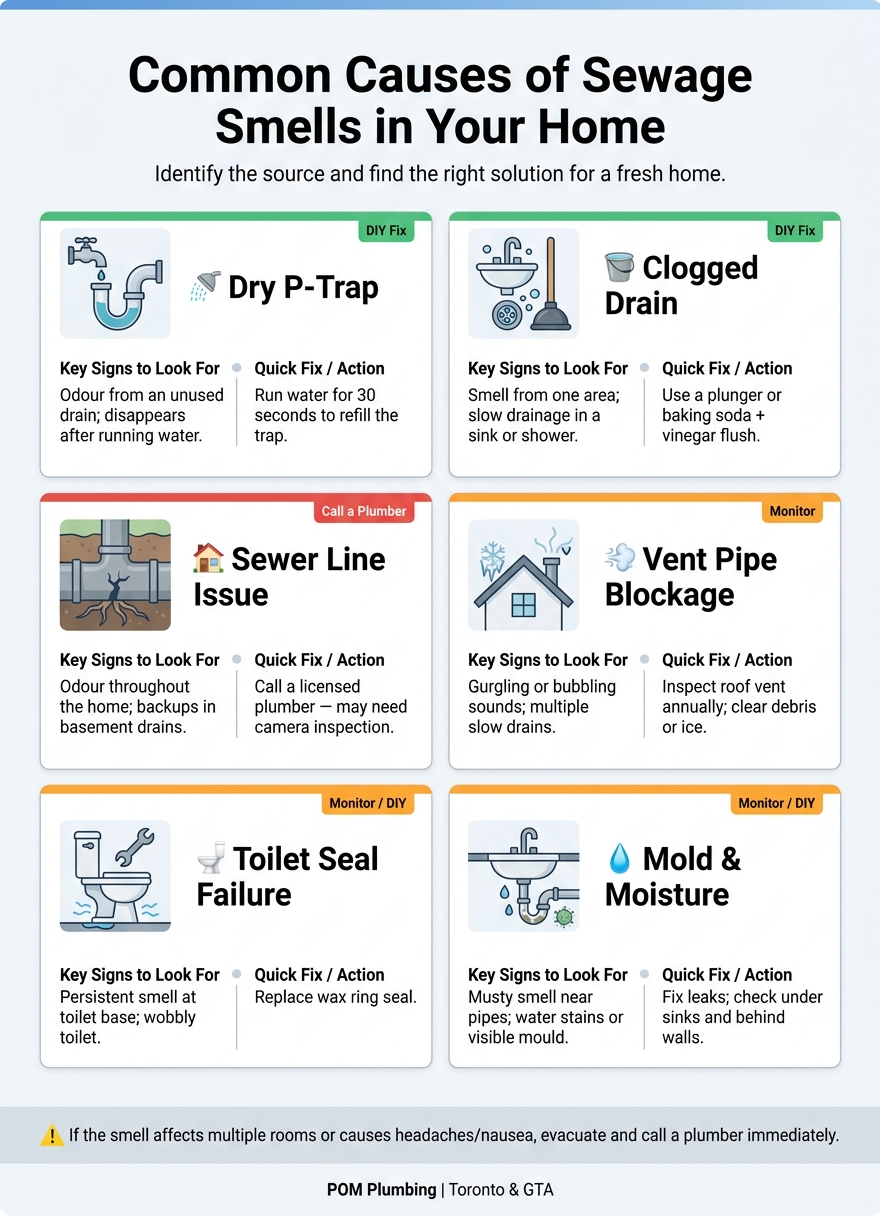
Common Causes of Sewage Smells: Signs, Sources & Fixes
Sewage odours often point to plumbing problems. To tackle the issue, start by identifying the source from these common culprits.
Dry or Empty Drain Traps
Every drain – whether it’s in a sink, shower, or floor – has a U-shaped pipe called a P-trap. This pipe holds water, acting as a barrier to keep sewer gases from escaping into your home.
"Drains are equipped with a U-shaped pipe, called a trap, which blocks odors when full of water. Infrequently used drains and sinks will dry out, allowing these odors… to escape." – Office of Environmental Health and Safety, Princeton University
If a drain hasn’t been used for a while, the water in the trap can evaporate, breaking the seal and letting odours seep through. This is especially common in guest bathrooms, basement floor drains, or utility sinks. A quick fix? Let the water run for a minute to refill the trap.
Clogged or Blocked Drains
A slow-draining sink or shower can be more than just annoying. It often signals a buildup of hair, soap scum, or other debris. As bacteria thrive in these blockages, they can release unpleasant smells – even before a full clog occurs.
Sewer Line Problems
When the odour seems to come from multiple spots in your home, the main sewer line could be the problem. Cracks, blockages, or tree roots invading the line can cause sewer gases to back up into your house. This issue often first appears in lower-level fixtures, like basement floor drains.
Vent Pipe Issues
Plumbing systems are designed with vent pipes that extend through the roof, allowing sewer gases to escape outside. If these vents become blocked – by bird nests, leaves, or even ice during harsh Canadian winters – gases may get forced back into your home. A tell-tale sign? Gurgling or bubbling sounds in the toilet or drains when water runs elsewhere in the house.
Toilet Seal Failures
Toilets are sealed to the floor with a wax ring to prevent gases from escaping. Over time, this seal can wear out, especially if the toilet shifts or becomes unstable. If you notice a persistent smell near the toilet or if it wobbles slightly when you sit on it, the wax ring likely needs replacing.
Mold and Moisture Problems
If you’ve ruled out plumbing as the source, the smell might come from mould or mildew. Damp spots under sinks, behind walls, or near leaky pipes can create musty odours. Even a small, slow leak can lead to mould growth, so check for water stains or other signs of moisture.
Each of these issues requires specific attention to resolve the smell and prevent further damage.
| Cause | Key Signs to Look For |
|---|---|
| Dry P-Trap | Odour from an unused drain; disappears after running water |
| Clogged Drain | Smell from one area; slow drainage in a sink or shower |
| Sewer Line Issue | Odour throughout the home; backups in basement drains |
| Vent Pipe Blockage | Gurgling or bubbling sounds; multiple slow drains |
| Toilet Seal Failure | Persistent smell at toilet base; wobbly toilet |
| Mold and Moisture | Musty smell near pipes; water stains or visible mould |
Is Sewer Gas Dangerous?
Sewer gas poses serious risks and requires immediate attention. This gas is a blend of various substances, including hydrogen sulfide, ammonia, methane, carbon dioxide, sulfur dioxide, and nitrous oxides. Some of these gases are toxic, while others are extremely flammable, creating a dual threat to both health and safety.
Hydrogen sulfide, the gas responsible for the distinct rotten egg smell, is particularly concerning. It is colourless, highly toxic, and can even be explosive. At higher concentrations, it can impair your sense of smell, making it harder to notice the odour as gas levels rise.
"At high concentrations, hydrogen sulfide can interfere with the sense of smell, making it harder to use the gas’s distinct odor as a warning sign." – Wisconsin Department of Health Services
The impact of sewer gas exposure depends on how much gas is present and how long you’re exposed. Low-level exposure might cause eye irritation, a sore throat, or coughing. Moderate exposure can lead to symptoms like headaches, nausea, dizziness, and fatigue. However, severe or prolonged exposure could result in seizures, coma, or even death. Another danger is oxygen displacement by methane or carbon dioxide in confined spaces. If oxygen levels drop below 12%, unconsciousness can occur very quickly.
Beyond health concerns, methane’s flammability adds another layer of danger. If you suspect a gas leak, avoid using electrical switches or creating any sparks.
"Hydrogen sulfide has shown to be toxic to the oxygen systems of the body. In high amounts it can cause adverse symptoms, organ damage, or even death." – Healthline
Understanding these risks highlights why it’s so important to act quickly if sewer gas is detected. Awareness of the dangers can make all the difference in protecting both your health and your home.
What to Do Right Away When You Smell Sewage
If you notice a sewage smell, your first priority should be safety. Start by ventilating your home – open windows and doors to let fresh air in. If the smell is strong or concentrated in a specific area, like a basement, leave that space immediately. Avoid using any open flames or ignition sources, such as gas stoves, matches, or lighters. Methane, a component of sewer gas, is highly flammable, and even a small spark could pose a danger if gas has accumulated indoors.
"If you believe there are high concentrations of sewer gas in an enclosed space, evacuate the building and call the fire department for help." – Wisconsin Department of Health Services
Once your home is ventilated and you’ve ruled out an immediate emergency, take a few minutes to inspect your drains. Run water for about one to two minutes in every sink, shower, and floor drain, especially in areas like bathrooms or utility rooms that aren’t frequently used. Also, check the base of each toilet – if you notice wobbling or moisture around the base, it might mean the wax ring seal is failing and allowing gas to escape.
After addressing these potential sources, keep an eye on the health of everyone in your household. Watch for symptoms such as headaches, nausea, dizziness, or irritation in the eyes. If anyone’s condition worsens or someone loses consciousness, seek emergency medical care right away and contact a professional plumber. While a sewage smell doesn’t always indicate a severe issue, it’s never something to take lightly.
How to Find the Source of the Odour
Once you’ve ventilated the area and confirmed it’s safe, the next step is tracking down the source of the odour. Start by walking slowly through your home, paying attention to where the smell is strongest. If the odour is concentrated in a single bathroom, it’s likely tied to a specific fixture, like a dry P-trap or a failed toilet seal. However, if the smell is noticeable in multiple rooms or throughout the house, the issue might lie with a blocked vent stack or a deeper problem in the main sewer line.
Take a closer look at drains and toilets for clues. Fixtures that don’t get much use – like those in guest bathrooms or basement floor drains – are common culprits. When these drains sit unused for weeks, the water in the P-trap can evaporate, eliminating the barrier that keeps sewer gases out.
Check toilets by gently rocking them. Any movement could mean the wax seal has failed, allowing sewer gas to escape even if there’s no visible water leak. Don’t forget to inspect the sewer cleanout plug, usually located in the basement or near the home’s foundation outside. A loose or cracked cleanout cap is a frequent cause of odours, especially when changes in indoor air pressure occur.
Here’s a quick reference table to help identify the issue based on where and when the odour appears:
| Where You Notice It | When It Happens | Most Likely Cause |
|---|---|---|
| One rarely used bathroom | Constant or after a long absence | Dry P-trap |
| One regularly used bathroom | After flushing or always | Failed wax seal |
| Basement floor drain | Constant | Dry floor drain |
| Multiple rooms or whole house | Constant or worsening | Blocked vent stack |
| Laundry area | During or after laundry | Washing machine drain trap or hose |
| Near cleanout cap | Constant | Loose or missing cleanout plug |
| Comes and goes randomly | Windy days | Vent stack too short or downdraft |
Lastly, pay attention to sounds while running water. If you hear gurgling in a drain when flushing a nearby toilet, it could mean a blocked vent pipe or a clog in the main sewer line. Slow drainage across multiple fixtures at the same time also points to a main line issue. By combining sound cues with odour intensity, you can usually zero in on the problem and decide if it’s something you can fix yourself.
DIY Fixes for Minor Sewage Odours
After identifying the source of the smell, you can tackle some common culprits: dry drain traps, minor drain clogs, and loose toilet seals.
Refilling Dry Drain Traps
A P-trap is designed to hold water, creating a seal that blocks sewer gases from escaping. When a drain isn’t used for a while – like in a guest bathroom or a basement floor drain – the water can evaporate, breaking that seal.
The solution is straightforward: run water for about 30 seconds. This should refill the trap and restore the barrier. To prevent it from drying out again, run water through unused drains weekly.
If the odour returns quickly even after refilling, the issue might not be evaporation but rather a pressure problem in your vent stack. In such cases, it’s best to consult a professional. Meanwhile, you can temporarily cover the drain with a stopper or plastic lid. If the smell subsides while it’s covered, you’ve likely found the source.
"A siphon could pull out just enough water to leave a millimetre of air open in the trap, which is enough to cause your issues." – jay613, Stack Exchange Contributor
Clearing Minor Drain Buildup
Skip chemical drain cleaners. These products can damage pipes over time and often fail to fully clear blockages.
Instead, try these safer methods:
- Plunger: Use steady, forceful strokes to dislodge any buildup.
- Baking Soda and Vinegar:
- Start by pouring a pot of boiling water down the drain.
- Add 1 cup of baking soda, followed by a mixture of 1 cup of vinegar and 1 cup of water.
- Cover the drain and let it fizz for 5–10 minutes.
- Finish with another pot of boiling water to flush everything out.
For blockages that a plunger can’t reach, a plumbing snake (or drain auger) can break up clogs deeper in the pipe without causing damage.
If odours persist after clearing the drain, it’s time to check the toilet seal.
Checking Toilet Seals
A toilet that wobbles, even slightly, is a warning sign. Movement often means the wax ring is compromised or the floor bolts are loose, allowing sewer gas to escape.
To check, gently push on each side of the toilet. If it rocks, the seal is likely damaged. Even if the toilet feels secure but there’s a smell near the base, the wax ring might still need replacing.
Replacing a wax ring is a doable DIY task, but it requires shutting off the water, emptying the tank and bowl, disconnecting the supply line, and lifting the toilet off the floor. After cleaning off the old wax, you’ll place a new ring on the flange, lower the toilet back down, and press firmly to create a tight seal. Tighten the floor bolts snugly, but not too much – overtightening can crack the porcelain. Reconnect the water supply, flush a few times, and check for leaks or odours.
"This form of toilet repair is not an overly complicated process, but it does involve some heavy lifting, and many people are uncomfortable with it." – Vaughan HVAC
If you’re unsure about lifting the toilet or suspect the flange might be damaged, it’s wise to call a plumber. Attempting the repair without confidence could lead to a cracked toilet or an improperly sealed base. Should these fixes fail to resolve the issue, professional help is your best bet.
When to Call a Professional Plumber
If basic fixes fail and the smell comes back within a day or two, it’s a strong sign that the problem goes beyond surface-level issues. When DIY efforts don’t hold up, certain warning signs make it clear that professional help is necessary.
You should call a plumber right away if you notice multiple drains gurgling or draining slowly at the same time, sewage backing up into a basement drain or shower, or a persistent sewer odour that minor repairs haven’t resolved. These symptoms often indicate more serious problems like blockages, venting issues, or even damage to the main sewer line.
"Tree roots can grow around or into underground sewer pipes. Believe it or not, this is one of the most common sewer line problems." – Jason Peavey
If anyone in your home experiences headaches, nausea, or dizziness along with the smell, it’s critical to act fast. Sewer gas contains methane and hydrogen sulfide, which can be dangerous in confined spaces. These symptoms suggest that gas levels may already be dangerously high. In such cases, professional tools and expertise are essential to identify and fix the issue before it worsens.
Licensed plumbers have the equipment to tackle these problems effectively. They use tools like sewer cameras to pinpoint underground cracks or blockages, smoke tests to detect hidden leaks in walls, and hydrojetting to remove stubborn clogs caused by grease or debris – far beyond what a plunger or drain snake can achieve.
POM Plumbing Service Company, with over 20 years of experience, specializes in handling these exact problems. Serving Toronto and the GTA, they offer licensed, insured plumbers and emergency services for urgent situations. Getting a professional evaluation early can save you from turning a manageable issue into an expensive disaster while ensuring your home stays safe and functional.
How to Prevent Sewage Smells in the Future
Stopping sewage odours before they start is much easier than dealing with a major plumbing issue. A few simple habits can keep your home smelling fresh and your plumbing in good shape.
One key step is to flush rarely-used drains regularly. Drains in guest bathrooms, basement floors, or utility sinks often go unused, causing their P-traps to dry out. When this happens, sewer gas can sneak in through the pipes. Running water through these drains for just 30 seconds keeps the water seal intact and prevents odours. At the same time, avoid pouring cooking grease or oil down the kitchen sink. Over time, these substances can coat the pipes, leading to blockages and unpleasant smells.
Another helpful habit is to use a baking soda and vinegar solution as part of your routine maintenance. Simply pour 125 mL (½ cup) of baking soda into the drain, followed by 250 mL (1 cup) of vinegar. Cover the drain and let the mixture sit for 30–60 minutes, then flush it with hot water. For PVC pipes, stick to hot tap water to avoid damage. This simple process helps keep your drains clean and odour-free.
It’s also important to inspect your toilet base periodically. If the toilet wobbles, it could mean the wax ring seal is failing, which might allow sewer gas to escape. Additionally, check your roof vent pipes once a year. Leaves, ice, or even animal nests can block these vents, trapping gases and causing gurgling sounds in your drains. Clearing any obstructions ensures proper airflow and prevents odour problems.
By sticking to these straightforward practices, you can prevent small plumbing issues from turning into larger, more expensive repairs.
"Professional plumbing service helps detect minor issues early, preventing them from becoming costly repairs." – Noonan Energy
Conclusion
A sewage smell in your home isn’t something to ignore – it can signal underlying issues that may worsen over time.
Sewer gas isn’t just unpleasant; it’s a health hazard. It contains methane and hydrogen sulfide, which can cause symptoms like nausea, dizziness, and headaches. Prolonged exposure can lead to more serious health concerns. If the odour is strong or widespread, avoid using open flames until you’ve identified the source.
Sometimes, simple fixes can address the problem. Running water through unused drains or checking for a loose toilet seal can often resolve minor issues. But if the smell lingers or affects multiple drains, it’s time to call in a licensed plumber. More complex problems, like symptoms of a broken sewer line or blocked vents, require professional tools such as camera inspections or smoke testing.
For over 20 years, POM Plumbing Service Company has been helping homeowners and property managers in Toronto and the GTA solve plumbing issues at their root. Our licensed plumbers use advanced diagnostic tools to tackle problems efficiently. Don’t wait – address persistent sewage odours promptly to avoid unnecessary stress, costs, and potential health risks.
FAQs
How can I tell if the smell is sewer gas or something else?
Sewer gas smells tend to stick to a specific drain or room, often near a dry P-trap. The odour can get worse when water is running or the plumbing system is active. Sewer gas contains hydrogen sulfide and methane, both of which can be harmful at high levels. If you’re unsure about the source, check nearby drains and watch for these signs to pinpoint the problem.
Why does the sewage smell get worse at night or on windy days?
Sewage odours often seem stronger at night or during windy conditions. This happens because changes in air pressure and atmospheric conditions can make it easier for gases from your plumbing system to escape. Blocked or damaged vents, as well as cracks in pipes, can worsen the problem. Checking your plumbing system and fixing any issues quickly can help keep these unpleasant smells under control.
Is it safe to stay in the house while waiting for a plumber?
If you suspect a sewer gas leak or notice signs of a sewer backup, staying in the house can be dangerous. Sewer gas exposure poses serious health risks. It’s safer to leave the premises and wait for professional help to address the problem. Your safety should always come first.